

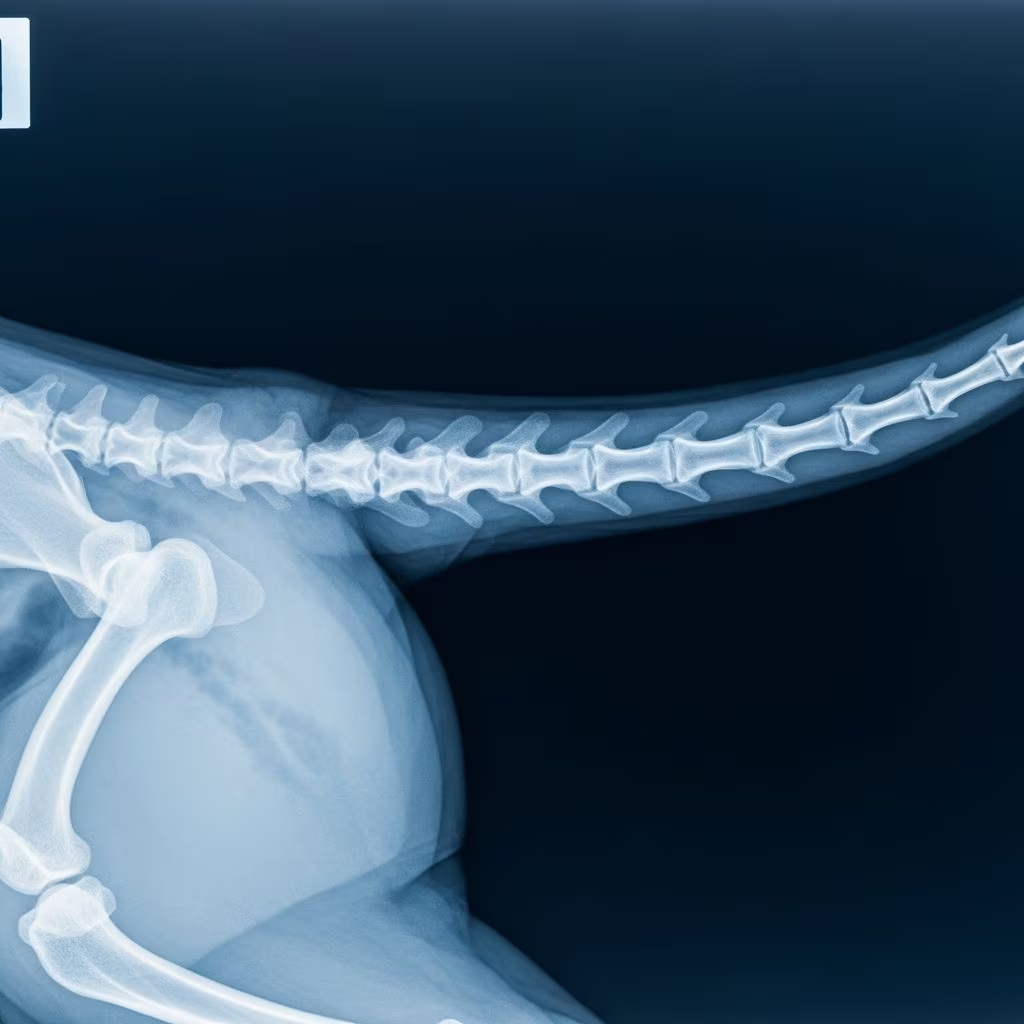
Yes, cats have bones in their tails, specifically **19 to 23 caudal vertebrae** in long-tailed breeds, making the tail a vital extension of the spine. These flexible bones, surrounded by muscles, nerves, and blood vessels, enable essential functions like balance, communication, and agility, far beyond a simple appendage.
Cat Tail Anatomy Basics
A cat’s tail is a sophisticated structure combining **bones, muscles, nerves, blood vessels, and soft tissues**. At its core are the **caudal vertebrae**, numbering 19 to 23 in typical long-tailed domestic cats, though this varies by breed and individual. These vertebrae extend from the spine’s sacral region, starting largest at the base and tapering to tiny ones at the tip.
Between each vertebra lie **intervertebral discs**—soft, cushioning pads that provide flexibility for curling, swishing, and precise movements. This design allows cats to execute acrobatic feats, like mid-air twists during jumps.
- Caudal Vertebrae Count: 19–23 in long-tailed cats; fewer in bobtails like Japanese Bobtail (5–10) or tailless Manx (0).
- Size Gradient: Largest near the base for strength; smallest at tip for finesse.
- Flexibility Mechanism: Discs and elastic ligaments enable 180-degree bends.
Humans, by contrast, have only 3–5 fused caudal vertebrae forming the coccyx, highlighting cats’ evolutionary adaptations for predation and climbing.
How Many Bones Are in a Cat’s Tail?
The tail houses **22–23 caudal vertebrae** in most domestic cats, contributing significantly to the total feline skeleton of **230–250 bones**—more than humans’ 206 due to the elongated spine and tail. Breed variations affect this: Manx cats may have 0–1, while polydactyl breeds add extra paw bones elsewhere.
| Cat Type | Tail Vertebrae | Total Skeleton Bones (Approx.) |
|---|---|---|
| Long-tailed (e.g., Domestic Shorthair) | 19–23 | 230–250 |
| Bobtail (e.g., American Bobtail) | 10–15 | 220–240 |
| Tailless (e.g., Manx) | 0–5 | 210–230 |
These tail bones are part of the **caudal region** of the spine, which includes 52–53 total vertebrae: 7 cervical, 13 thoracic, 7 lumbar, 3 sacral, and 22–23 caudal. The tail’s bony structure supports dynamic roles beyond skeletal count.
What Is a Cat’s Tail Made Of?
Beyond bones, the tail comprises **muscles, nerves, blood vessels, skin, and fur**. **Muscles** (e.g., sacrocaudalis dorsalis medialis, lateralis, ventralis) originate from the sacrum and lumbar vertebrae, inserting via tendons along caudal vertebrae for segmented control. Key muscles include:
- Sacrocaudalis Dorsalis Medialis (SDM): Lifts tail dorsally.
- Sacrocaudalis Ventralis (SVL/SVM): Bends tail ventrally; enables rapid flicks.
- Coccygeus Muscles: Lateral curving and rolling.
**Nerves** (4–7 paired caudal nerves) innervate muscles for fine movements, while **blood vessels** supply oxygen-rich blood. The **periosteum** covers bones for growth/repair, and marrow produces blood cells.
Cat Tail Functions: More Than Meets the Eye
The tail is a **multifunctional organ** for survival, communication, and proprioception (body position awareness).
Balance and Agility
During leaps (up to 5x body length), the tail acts as a **counterweight**, adjusting mid-air for right-side-up landings via the “righting reflex.” It stabilizes during sprints and climbs, compensating for short-tailed breeds via enhanced inner ear or limb adjustments.
Communication
Tail positions convey emotions:
- Upright (question mark): Friendly greeting.
- Low/tucked: Fear or submission.
- Thrashing: Aggression or overstimulation.
- Slow swish: Focus (hunting).
- Puffed: Threat display.
This visual language aids social bonding in feral colonies.
Other Roles
- Thermoregulation: Heat dissipation via blood vessels.
- Scent marking: Glands at base deposit pheromones when raised.
- Protection: Shields genitals during fights.
Cat Tail Injuries and Health Issues
Tail vulnerabilities stem from its spinal extension: injuries can cause pain, paralysis, or incontinence. Common issues:
- Fractures/”Tail Pull”: From slams (e.g., doors) or trauma; base fractures risk nerve damage.
Dislocation or luxation from falls/fights.
- Infections/Abscesses: Bite wounds lead to swelling.
- Nerve Damage: “Flaccid tail” from avulsion; may recover with rest.
- Hyperesthesia Syndrome: Skin rippling, aggression; neurological.
**First Aid:** Immobilize, prevent licking, seek vet for X-rays/surgery (amputation if severe). Prognosis good for tip injuries; poor for spinal cord damage.
When to See a Vet for Tail Problems
Consult a vet if you notice:
- Dragging/limp tail (nerve injury).
- Swelling, bleeding, or wounds.
- Pain vocalization or hiding.
- Litter box accidents (incontinence).
- Balance loss or wobbling.
Early intervention prevents complications like infections or chronic pain. Vets use imaging and nerve blocks for diagnosis.
Cat Breeds With Unique Tails
Tail morphology varies:
- Manx (Tailless): Genetic mutation; 0 vertebrae, but rising taillessness risk spina bifida.
- Japanese Bobtail: Pom-pom tail (9–13 vertebrae).
- American Bobtail: Short, curved (10–15 vertebrae).
- Cymric: Longhair Manx variant; tailless.
These don’t hinder function much, thanks to adaptations.
Final Thoughts
Cats’ tails are bony marvels with **19–23 caudal vertebrae**, powering balance, expression, and survival. Protect this delicate structure from trauma—prompt vet care ensures your cat’s tail wags happily. Understanding tail anatomy deepens appreciation for feline grace.
Frequently Asked Questions (FAQs)
What are cat tail bones called?
**Caudal vertebrae**—19–23 small, flexible bones extending the spine.
Can a cat’s tail heal if broken?
Yes, minor fractures heal with rest/splinting; severe cases need surgery or amputation.
Why do some cats have no tail?
Genetic mutations (e.g., Manx); fewer/no caudal vertebrae, but functional adaptations.
Do all cats have the same number of tail bones?
No—19–23 typical; varies by breed (e.g., 0 in tailless).
Is a cat’s tail connected to its spine?
Yes, directly as caudal extension; injuries can affect bladder/bowel control.
References
- Cat Skeletal System: A Closer Look at Feline Anatomy — Vet Today. 2023. https://vettoday.com/blog/pet-health/cat-skeletal-system/
- Structure and Function of the Tail in Cats — PetPlace.com. 2022-05-15. https://www.petplace.com/article/cats/pet-health/structure-and-function-of-the-tail-in-cats
- Do Cats Have Bones in Their Tails? Feline Anatomy Explained — Catster. 2024-08-20. https://www.catster.com/cat-health-care/do-cats-have-bones-in-their-tails/
- Anatomical structure and action of the tail muscles in the cat — PubMed (J Vet Med Sci). 1995-04. https://pubmed.ncbi.nlm.nih.gov/7696400/
- First Aid for Injured Tails in Cats — VCA Animal Hospitals. 2024. https://vcahospitals.com/know-your-pet/first-aid-for-injured-tails-in-cats



