

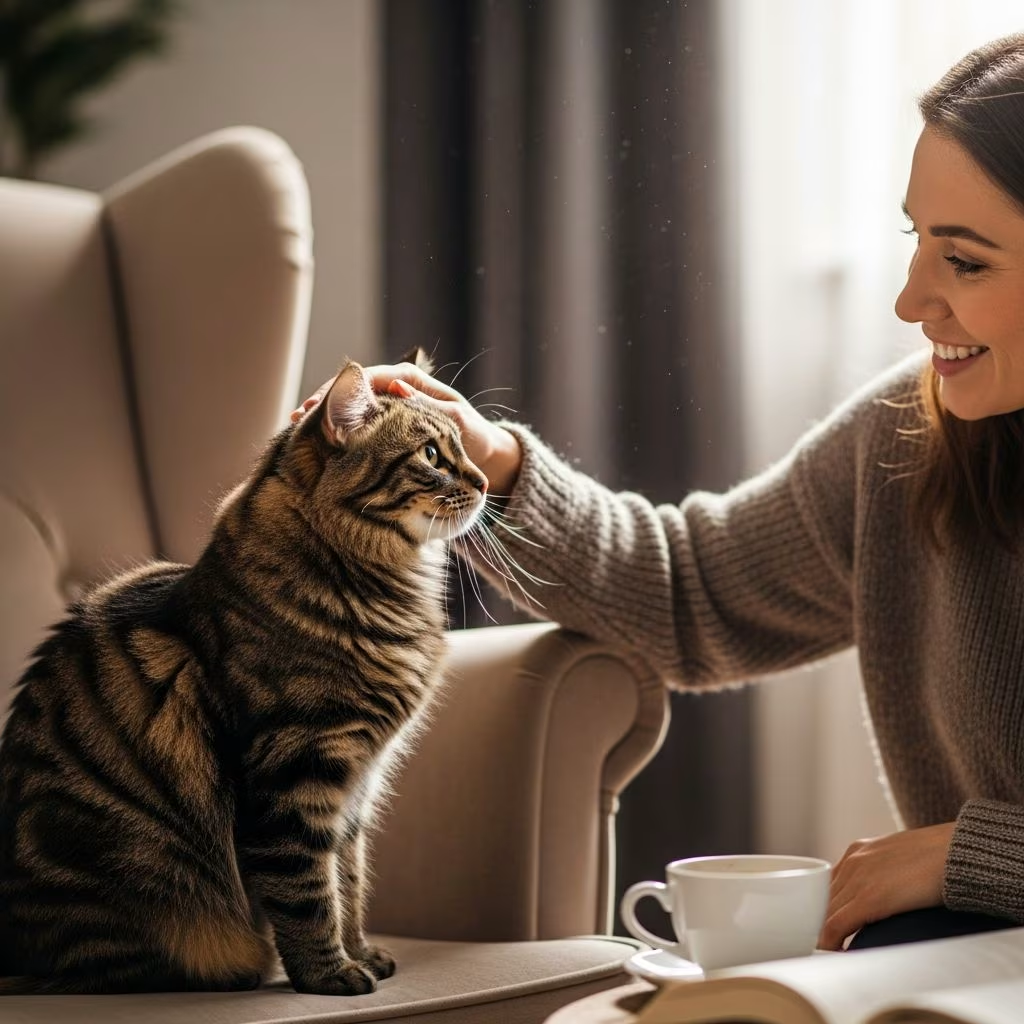
Cats do not recognize humans as “alpha” leaders in a hierarchical sense, unlike the debunked wolf-pack theory sometimes misapplied to dogs. Instead, cats view their human companions as sources of food, affection, and comfort, treating them more like beneficial roommates than dominant figures.
Understanding Feline Social Behavior
Cats are **facultatively social** animals, meaning they can choose to interact socially when resources are abundant, such as in a home environment, but they do not form rigid pack structures like wolves or dogs. In the wild, cats maintain spacing through communication, marking, and schedules to minimize close contact, embodying a “living apart together” dynamic.
Domestic cats’ socialization begins early with their mother, influencing kitten development. Social bonds form primarily between mothers and offspring, with females showing more affiliative behaviors like grooming toward both sexes. Cats socialized to humans develop independent attachments, often treating people like an extended “mother” figure through behaviors such as rubbing, kneading, and seeking pets.
Unlike dogs, which may perceive family units hierarchically, cats see household members as individuals providing specific benefits. A cat begging for food isn’t submitting to an alpha; it’s learned behavior associating the human with meals.
The Myth of the Alpha Theory in Cats
The **alpha theory**, popularized by outdated wolf studies, has been thoroughly debunked for both dogs and cats. Cats lack the evolutionary history of close-knit packs, preferring independence. They avoid conflict by spacing out or relocating when possible, as fighting risks injury and death.
People often anthropomorphize cats as seeing humans as “hairless apes” or “can openers,” which humorously captures their pragmatic view. Your cat’s affection stems from positive associations—feeding, play, petting—not dominance submission.
- Cats prioritize personal space: They define *personal distance* for intimate contacts (e.g., trusted family) and *social distance* for acquaintances.
- Socialization to humans is separate from cat-to-cat bonds; well-socialized cats interact consistently with people.
- Early exposure shapes tolerance: Cats raised with other species form attachments accordingly, but strongest bonds remain with felines.
Do Cats View Humans as Leaders?
No, cats do not view humans as leaders or alphas. Their interactions resemble a kitten-mother dynamic, selectively bred for behaviors like leg-rubbing and purring during petting. Studies show cats initiate contact more with owners who comply, fostering mutual interactions rather than obedience.
Factors influencing cat-human bonds include human availability, sex, and age. Women often form stronger bonds due to calmer interactions, while juveniles may elicit weaker responses. Cats respond to human emotions, especially owners’, using vocalizations and rubbing to alleviate negative moods.
| Factor | Influence on Bond | Source Insight |
|---|---|---|
| Owner Compliance | Higher compliance leads to more reciprocal interactions | |
| Human Gender | Stronger with women; cat behaviors drive differences | |
| Cat Personality | Open owners have less anxious cats | |
| Emotional Cues | Cats match and respond to owner emotions |
Signs of an “Alpha” Cat and What They Mean
While cats don’t have alphas, some exhibit **Alpha Cat Syndrome**—bullying, chasing, or persisting in unwanted behaviors like ignoring commands or pursuing others. This isn’t dominance but learned persistence, often from lack of correction.
These cats act like “mad scientists,” intensely pursuing desires without regard for others. In multi-cat homes, they may intimidate peers, who avoid rather than submit.
- Doesn’t stop when told “no”
- Continues punished behaviors
- Chases or bullies other cats/pets
- Demanding of attention or resources
Such behaviors arise from unmet needs or poor boundaries, not hierarchy. Cats are trainable; positive reinforcement and consistency modify actions.
How Cats Choose Their Favorite Human
Cats select favorites based on positive experiences: who feeds, plays, or provides gentle affection most reliably. They bond through routine interactions, preferring calm, compliant humans.
- Food Provider: The person dispensing meals gains top status.
- Play Partner: Interactive play builds trust.
- Affection Source: Gentle petting in preferred spots strengthens ties.
- Consistent Presence: Reliable routines foster security.
To become the favorite, engage daily with treats, toys, and respect for the cat’s space.
Improving Your Relationship with Your Cat
Enhance bonds without alpha myths:
- Use positive reinforcement: Reward desired behaviors.
- Respect signals: Allow retreat to build trust.
- Provide enrichment: Toys, scratching posts reduce stress.
- Socialize early: Expose kittens to household dynamics.
- Monitor health: Behavior changes may signal issues.
Research emphasizes mutual compliance and emotional attunement for welfare.
Frequently Asked Questions (FAQs)
Do cats have alphas?
No, cats do not form alpha hierarchies; they are independent and avoid rigid dominance structures.
Why does my cat beg from me specifically?
Your cat associates you with food delivery, not as an alpha—it’s effective learned behavior.
Can I train an alpha-like cat?
Yes, through positive methods; they respond to consistency and rewards.
How do cats see their humans?
As beneficial providers in a mother-kitten-like bond, not leaders.
What if my cat bullies others?
Address with environmental changes, training, and veterinary checks for underlying causes.
References
- Does My Cat Have an Alpha Human? Vet-Reviewed Social Facts — Hepper. 2023. https://articles.hepper.com/does-my-cat-have-an-alpha-human/
- Feline Social Behavior — Veterian Key. 2016-10-27. https://veteriankey.com/feline-social-behavior/
- Unanswered Questions and Hypotheses about Domestic Cat (Felis silvestris catus) Social Behavior and Cognition — PMC/NIH. 2021-10-20. https://pmc.ncbi.nlm.nih.gov/articles/PMC8532687/
- Do You Have an Alpha Cat? — Feline Engineering. Accessed 2026. https://felineengineering.com/blog/alpha-cat/
- The Cat-Human Relationship and Factors That Affect It — Psychology Today. 2020-03-05. https://www.psychologytoday.com/us/blog/animal-emotions/202003/the-cat-human-relationship-and-factors-that-affect-it
- Know the Types: The Alpha — Way of Cats. Accessed 2026. https://www.wayofcats.com/blog/know-the-types-the-alpha/38
- How Cats Choose Their Favorite Human — Union Lake Veterinary Hospital. Accessed 2026. https://unionlakeveterinaryhospital.com/blog/how-cats-choose-their-favorite-human



