

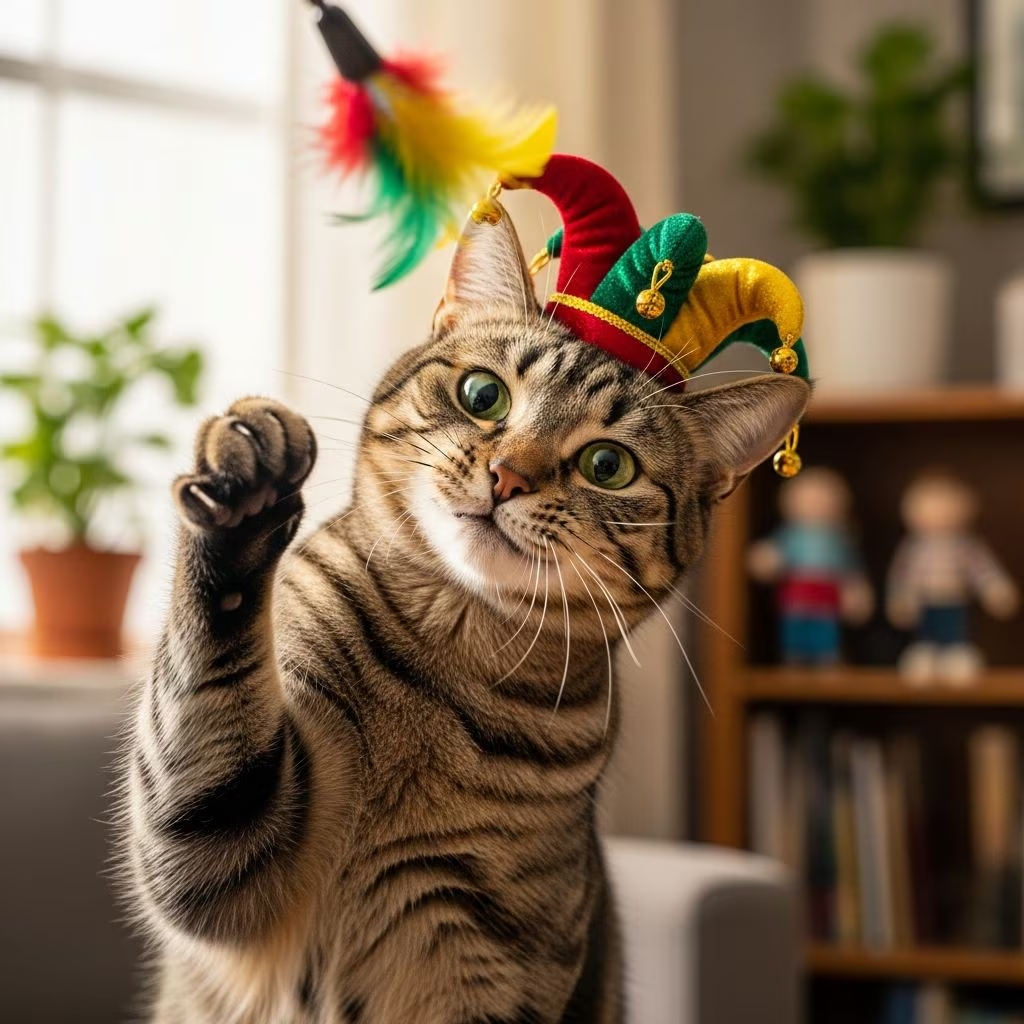
Cat owners worldwide cherish their pets’ quirky behaviors that never fail to elicit laughter. But do cats actually possess a **sense of humor**, or are they simply entertaining us unintentionally? Meet Olga, a mischievous feline whose antics suggest she might just be the class clown of the cat world. This article delves into Olga’s comedic ways while examining scientific evidence on feline emotions, playfulness, and whether cats can truly ‘get’ a joke.
Introducing Olga: The Queen of Cat Comedy
Olga isn’t your average cat. With her **exaggerated facial expressions** and penchant for absurd antics, she turns everyday moments into comedy gold. Picture this: Olga squeezing into a tiny box that’s clearly too small, only to emerge with a triumphant, wide-eyed stare as if to say, ‘Nailed it!’ Her owner can’t help but burst into laughter at these displays.
Olga’s humor shines in her **defiance of logic**. She’ll knock a glass off the counter, pause mid-fall to lock eyes with you, and then proceed as if it’s the most natural thing. Is this deliberate mischief, or pure feline instinct? Whatever the case, Olga’s behaviors align with what makes cats endlessly funny to humans.
- Box Obsession: Olga defies physics by fitting into impossibly small spaces, emerging victorious every time.
- Stare-Downs: Her judgmental glare after a prank is priceless, mimicking human exasperation.
- Playful Chaos: Chasing laser pointers or ‘hunting’ dust bunnies with dramatic pounces.
These traits aren’t unique to Olga; they’re hallmarks of cat comedy that keep viral videos flooding our feeds.
The Science Behind Cat Humor
Does science support the idea that cats like Olga have a **sense of humor**? Humor in humans often stems from unexpected events, incongruity, or exaggerated responses—elements cats master effortlessly. Research indicates that **unexpected behaviors** trigger dopamine release in our brains, linking cat antics to joy.
A study published in Animals explored cats’ ability to recognize emotions cross-modally, integrating visual cues like facial expressions with sounds such as hisses or purrs. Cats looked longer at matching emotional faces, showing they form mental representations of emotions in both felines and humans. They exhibited higher stress to negative emotions like anger or hisses, suggesting emotional intelligence that could underpin playful ‘humor’.
While cats don’t vocalize laughter like primates, their **body language** signals playfulness: dilated pupils, play bows, tail flicks, and purring during interaction. Neuroscientist Dr. Jaak Panksepp’s work on mammalian play systems implies cats share emotional frameworks for joy and mischief, even if not ‘humor’ per se.
Why Cats Seem So Funny: Breaking Down the Antics
Cats Love to Defy Logic
Cats like Olga epitomize absurdity. Why wedge into a cereal box or knock items off tables while staring defiantly? These actions **defy logic**, tapping into human humor rooted in the unexpected. Olga once chased her tail in circles for minutes, only to stop abruptly and act innocent—pure comedic timing.
Why It’s Funny: The mismatch between a cat’s graceful reputation and clumsy mishaps creates hilarious contrast. Science links this to evolutionary play signals that promote bonding.
Their Facial Expressions Are Priceless
Olga’s face is a humor goldmine: the ‘caught in the act’ wide eyes, slow blinks of contentment, or narrowed ‘judgmental stare’. These mimic human emotions, making interactions relatable and funny.
Why It’s Funny: Humans anthropomorphize these expressions, wired to empathize. Cats’ emotional recognition enhances this, as they respond to our faces too.
Cats Have Endless Curiosity
‘Curiosity killed the cat’ rings true with Olga, who investigates everything—from faucets to curtains—often leading to comedic mishaps like getting stuck or flooding the sink.
Why It’s Funny: Their bold explorations yield absurd, relatable fails that brighten our day via dopamine hits from surprise.
Mischievous Behaviors That Crack Us Up
Olga’s pranks, like hiding toys or ambushing feet, seem calculated. Cat behaviorist Dr. Mikel Delgado notes cats learn cause-and-effect, repeating actions that elicit reactions—like laughter—suggesting awareness of our amusement.
| Cat Antics | Olga’s Example | Why Funny |
|---|---|---|
| Box Fitting | Squeezes into tiny vases | Defies physics |
| Object Knocking | Stares while pushing glasses | Defiant eye contact |
| Tail Chasing | Circles dramatically then stops | Perfect comedic pause |
| Judgmental Stare | Glares post-mischief | Mimics human sass |
Do Cats Actually Laugh?
No evidence shows cats laugh vocally like rats’ chirps during play. BBC Earth confirms cats lack laughter capability, but their play signals—like purring and rolling—indicate joy. Olga’s ‘smiles’ (open-mouth pants during play) might seem like grins, but they’re exertion signs.
Vet-reviewed insights affirm cats strike our funny bones without needing their own humor sense. Great apes show proto-humor, but cats’ mischief attracts attention, strengthening bonds.
Expert Perspectives: Humor or Instinct?
Experts like Dr. Delgado argue cats enjoy reactions without grasping ‘jokes’. Play is an emotional system promoting social bonds, per Panksepp. Olga repeats laugh-inducing antics, hinting at learned playfulness.
- Play Signals: Tail flicks, bows indicate fun intent.
- Emotional Smarts: Recognize human happiness/anger, modulating behavior.
- Attention-Seeking: Mischief earns engagement, reinforcing behaviors.
Olga’s Daily Comedy Routine
Olga’s routine: Morning box conquests, midday stares, evening ambushes. Owners report similar patterns, suggesting innate playfulness mistaken for humor.
Frequently Asked Questions (FAQs)
Q: Do cats have a sense of humor?
A: Cats lack human-style humor but show playfulness via body language. Their antics amuse us through surprise and exaggeration, as seen with Olga.
Q: Can cats laugh?
A: No vocal laughter, but play chirps or purrs signal joy. Rats laugh ultrasonically; cats use physical cues.
Q: Why do cats knock things over?
A: Curiosity and hunting instincts. Olga stares for reaction, learning it prompts interaction.
Q: Do cats understand our laughter?
A: They recognize happy emotions cross-modally and may repeat behaviors for positive responses.
Q: Is my cat mischievous on purpose?
A: Likely cause-and-effect learning. Olga enjoys the chase and attention her pranks bring.
Conclusion: Olga’s Legacy of Laughter
Whether cats have true humor or not, Olga proves they master comedy. Their emotional intelligence fosters bonds filled with joy. Next time Olga pulls a stunt, cherish the shared laughs—it’s the magic of cat companionship.
References
- Why Cats Are So Funny: The Quirky Truth Behind the Laughs — Lofty Loo. 2023. https://loftyloo.com/blogs/cat-talk-blogs/why-cats-are-so-funny
- Emotion Recognition in Cats — PMC – PubMed Central. 2020-07-22. https://pmc.ncbi.nlm.nih.gov/articles/PMC7401521/
- Funny Bone: Do Pets Have a Sense of Humor? — Union Lake Pet Services. 2023. https://unionlakepetservices.com/blog/funny-bone-do-pets-have-a-sense-of-humor
- Do Cats Have a Sense of Humor? — Asheville Cat Weirdos. 2023. https://ashevillecatweirdos.org/do-cats-have-a-sense-of-humor/
- Do Cats Have a Sense of Humor? — Cats.com. 2023. https://cats.com/do-cats-have-a-sense-of-humor



