

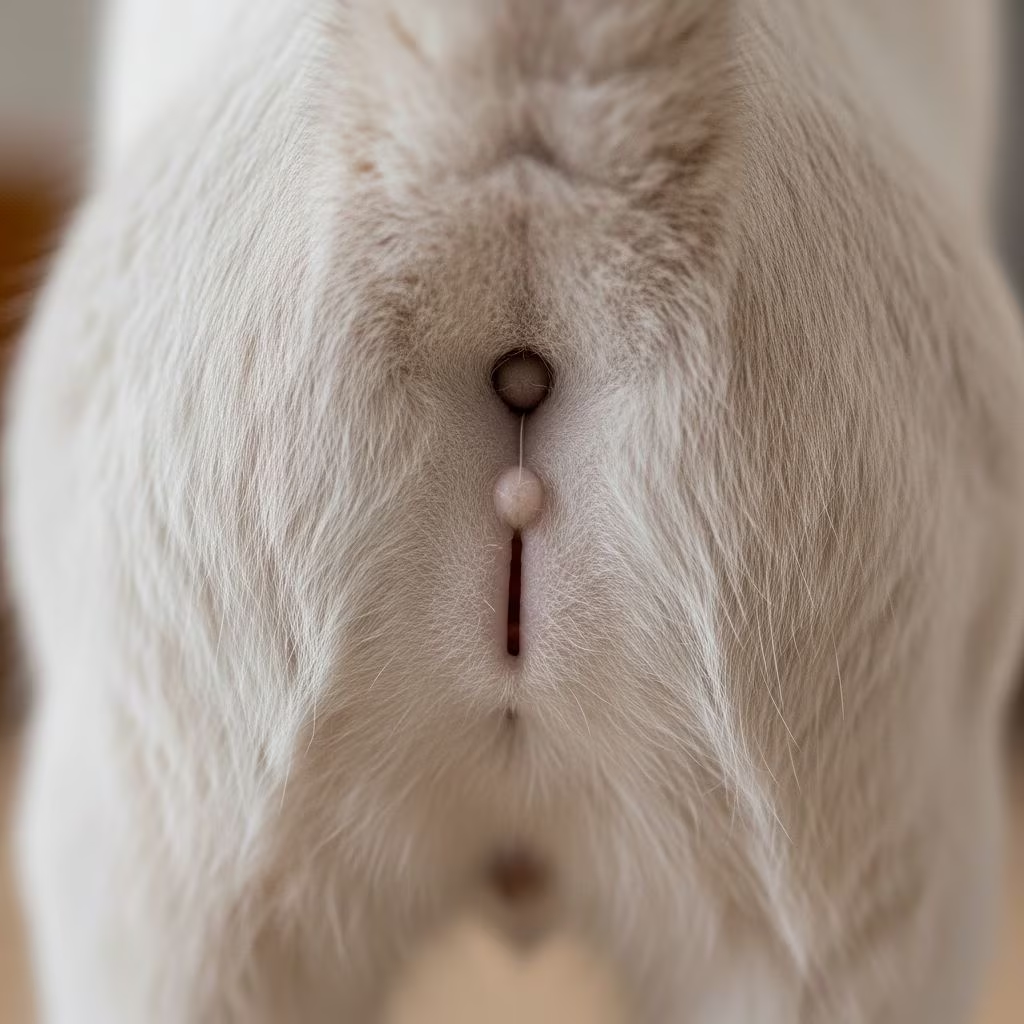
Yes, female cats, known as queens, possess a clitoris as part of their reproductive anatomy. Located just inside the vulva, this structure is present in all female mammals, including cats, though its role and prominence differ from humans. While the human clitoris is primarily associated with sexual pleasure, in felines, its function is less about pleasure and more tied to reproductive mechanics, with mating often appearing painful rather than enjoyable for the queen.
Understanding the female cat’s reproductive system is crucial for pet owners, especially those dealing with intact females. This article delves into the anatomy, location, functions, and health considerations of the clitoris and surrounding structures, drawing from veterinary sources to provide a comprehensive overview.
The Female Feline Reproductive Tract
The reproductive tract of a female cat is a sophisticated system designed for ovulation, fertilization, pregnancy, and birth. It includes the ovaries, oviducts (fallopian tubes), uterus, cervix, vagina, vulva, and clitoris. These organs work in harmony during the estrous cycle, which is unique in cats as they are induced ovulators—meaning ovulation occurs only after mating stimulates it.
The ovaries, paired almond-shaped organs located behind the kidneys, produce eggs and hormones like estrogen and progesterone. Eggs are stored in follicles until mating triggers their release via luteinizing hormone. From there, eggs travel through the oviducts to the uterus.
The uterus in cats is Y-shaped, with two long horns extending from the ovaries and joining into a shorter body. This bicornuate structure allows multiple fetuses to develop in each horn during pregnancy. The uterine walls consist of a muscular myometrium for contractions during birth and an endometrium lining rich in blood vessels for nourishing embryos.
Where Is the Clitoris Located in Cats?
The clitoris in female cats is situated just inside the vulva, specifically in the ventral commissure or clitoral fossa at the caudal vestibule. It is a small, erectile structure made of cavernous tissue, homologous to the penis in males. Unlike in dogs, where the vulva swells dramatically during estrus, the cat’s vulva shows only mild edema, making the clitoris less externally visible.
The vulva itself is the external opening of the reproductive tract, located ventral to the anus in the perineum. It consists of two labia forming a cleft, with the clitoris nestled inside the ventral part. This positioning protects it while allowing involvement in mating.
- Vulva: External genitalia, vertical slit below the tail.
- Clitoris: Internal, ventral to vulvar cleft, erectile tissue.
- Vestibule: Area just inside vulva where clitoris resides.
What Does the Clitoris Do in Cats?
The exact function of the feline clitoris remains somewhat mysterious, but it is not primarily for pleasure as in humans or primates. Cats possess an os clitoridis, or baubellum—a small bone within the clitoris found in many mammals—which may aid in copulation mechanics. However, research suggests it could relate to intersexual conflict or lock-and-key genital evolution rather than pleasure.
During mating, the male cat’s barbed penis stimulates the vagina and cervix, inducing ovulation. Queens often vocalize loudly and exhibit aggressive behaviors post-mating, indicating discomfort rather than enjoyment. The clitoris may play a minor sensory role, but scientists caution against anthropomorphizing feline sexual experiences.
In health contexts, an enlarged clitoris can signal chronic irritation, intersex conditions, or hormonal imbalances. Veterinary exams may note this during spay procedures or reproductive assessments.
Female Cat Anatomy Diagram
Visualizing the anatomy helps clarify positions. The ovaries sit dorsally in the abdomen, connected by oviducts to the uterine horns. The uterus descends to the cervix, which guards the vagina leading to the vulva and clitoris externally. Mammary glands line the ventral abdomen in pairs.
| Organ | Location | Function |
|---|---|---|
| Ovaries | Behind kidneys | Egg production, hormone secretion |
| Oviducts | Between ovaries and uterus | Egg transport, fertilization site |
| Uterus (Y-shaped) | Abdominal midline | Fetal development |
| Cervix | Uterus-vagina junction | Barrier against infection, birth passage |
| Vagina | Pelvic canal | Sperm passage, birth canal, urethral protection |
| Vulva & Clitoris | Perineum | External opening, potential sensory role |
Estrous Cycle in Cats
Cats are seasonally polyestrous, cycling multiple times from spring to fall if not pregnant or ovulating. The cycle includes proestrus (calling, rubbing), estrus (mating receptive), and interestrus. Follicle-stimulating hormone grows follicles, producing estrogen; mating triggers luteinizing hormone for ovulation and progesterone shift.
Without mating, cats return to anestrus. Spaying prevents cycles, reducing risks like pyometra or mammary cancer.
Common Reproductive Health Issues
Female cats face specific health challenges:
- Pyometra: Uterine infection, life-threatening, common in intact older queens.
- Dystocia: Difficult birth due to uterine structure or kitten size.
- Intersex Conditions: Rare, may enlarge clitoris or alter genitalia.
- Mammary Tumors: High malignancy risk without early spay.
Regular vet checks and spaying are recommended.
Spaying and Reproductive Anatomy
Spaying (ovariohysterectomy) removes ovaries and uterus, eliminating heat cycles and cancer risks. It preserves urinary function but may lead to incontinence in rare cases. Performed early, it prevents clitoral or uterine issues.
Frequently Asked Questions (FAQs)
What is the clitoris in a cat?
The clitoris is a small erectile structure inside the vulva, made of cavernous tissue homologous to the male penis.
Do all female mammals have a clitoris?
Yes, all female placental mammals have a clitoris, though size and function vary.
Is mating painful for female cats?
Mating often causes pain due to penile barbs, leading to vocalization and aggression.
Can you see a cat’s clitoris?
It’s internal, just inside the vulva, not prominently visible like in some species.
Does the clitoris have a bone in cats?
Yes, cats have an os clitoridis (baubellum), a small bone aiding structure.
Conclusion
Female cats do have a clitoris, integral to their reproductive anatomy alongside the vulva, vagina, cervix, uterus, and ovaries. While not focused on pleasure, it contributes to the complex mechanics of feline reproduction. Pet owners should prioritize spaying to mitigate health risks and understand these systems for better care. Consult a veterinarian for personalized advice.
References
- Do Cats Have a Clitoris? Vet-Reviewed Reproductive Anatomy — Hepper. 2023. https://articles.hepper.com/do-cats-have-a-clitoris/
- Structure and Function of the Female Feline Reproductive Tract — PetPlace. 2023. https://www.petplace.com/article/cats/pet-health/structure-and-function-of-the-female-feline-reproductive-tract
- The Gonads and Genital Tract of Cats — Merck Veterinary Manual. 2024. https://www.merckvetmanual.com/cat-owners/reproductive-disorders-of-cats/the-gonads-and-genital-tract-of-cats
- Normal feline reproduction: The queen — PMC – NIH. 2024. https://pmc.ncbi.nlm.nih.gov/articles/PMC10845401/
- Reproductive system of the dog and cat Part 1 — BVNA. 2023. https://bvna.org.uk/blog/reproductive-system-of-the-dog-and-cat-part-1-the-female-system-by-victoria-aspinall/
- Os clitoridis — Wikipedia (citing primary sources). 2023. https://en.wikipedia.org/wiki/Os_clitoridis



