

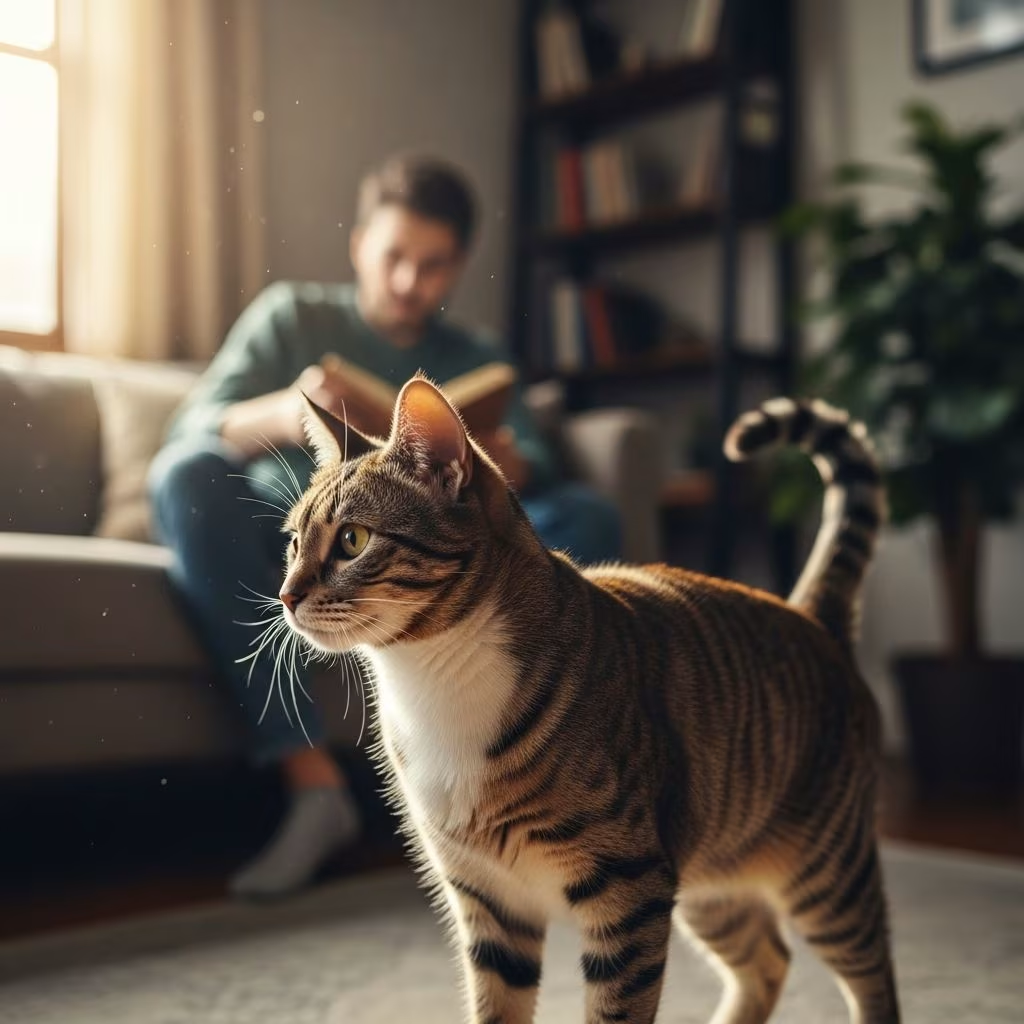
Cats challenge the stereotype of being distant pets by displaying protective behaviors toward their owners, using keen senses to detect threats and respond instinctively. These actions reveal a deep bond similar to human relationships, supported by studies showing comparable attachment levels.
The Instinctual Drive Behind Feline Protection
Felines possess heightened senses that enable them to monitor their environment closely, often positioning themselves as silent sentinels for their human companions. Their superior hearing and smell allow detection of subtle changes, such as unfamiliar scents or sounds, prompting alert postures or vocal warnings.
This vigilance stems from territorial instincts where humans are viewed as part of the cat’s core group. Rather than overt guarding like dogs, cats employ subtle strategies, including positioning near entry points or shadowing owners during perceived risks. Research indicates these behaviors mimic wild feline patterns adapted to domestic life.
Real-Life Accounts of Cats in Action
Numerous documented cases highlight cats intervening in crises. One feline roused its owner from carbon monoxide-induced unconsciousness through persistent licking, potentially averting tragedy. Similarly, cats have alerted families to intruders by unusual meowing or agitation, outperforming traditional watchdogs in stealthy detection.
In child protection scenarios, cats have confronted aggressive dogs attacking young humans, using hisses and swats to divert threats. Medical emergencies also see feline involvement; diabetic owners report cats nudging them awake during hypoglycemic episodes, urging medical attention. These stories underscore cats’ attunement to human distress signals.
Protecting Vulnerable Family Members
Cats and Infants
Cats often exhibit nurturing tendencies toward human babies, curling beside them for warmth in cold conditions or vigilantly watching over sleeping infants. This maternal extension treats newborns as fragile clan members, with some felines hissing at approaching strangers to maintain a safe perimeter.
Guardians During Sleep
At night, cats adopt strategic positions like bed edges to oversee sleeping owners, growling softly at anomalies. Their sensitivity to environmental shifts ensures quick responses to potential intrusions, blending rest with readiness.
Scientific Perspectives on Cat-Human Attachments
A 2011 study revealed cat-human bonds parallel human-human connections in emotional depth, challenging aloof stereotypes. Physiological research measures oxytocin and cortisol levels during interactions, confirming stress reduction and bonding hormones in positive engagements.
Human-cat dynamics involve mutual initiation of contact, with compliance symmetry fostering trust. Guidelines for interactions emphasize cat comfort to enhance these bonds, tested in shelter settings. Such findings affirm cats’ capacity for loyalty expressed through proximity and attentiveness.
Signs Your Cat Acts as Your Protector
- Heightened Alertness: Ears perked, tail twitching at unfamiliar noises.
- Positioning: Stationing between you and perceived threats.
- Vocal Cues: Unusual yowls or chatters signaling danger.
- Physical Intervention: Swatting or blocking access to you.
- Affectionate Vigilance: Increased rubbing or following during stress.
Breeds Known for Strong Protective Traits
Certain breeds amplify these instincts due to size, temperament, and socialization. Maine Coons, with their robust build and sociable nature, frequently top lists for owner devotion, shadowing and defending family.
| Breed | Key Protective Traits | Size |
|---|---|---|
| Maine Coon | Social, vigilant, physically imposing | Large |
| Abyssinian | Alert, playful defender | Medium |
| Bengal | Energetic, territorial watchdog | Medium |
| Sphynx | Affectionate, heat-seeking guardian | Medium |
Why Cats Perceive Threats to Their Humans
Cats read human cues like body language and tone, forming judgments on strangers. New entrants into the home trigger possessiveness, manifesting as clinginess or aggression to safeguard resources—including owners. This possessiveness arises from reliance on humans for sustenance and security.
Barometric changes or illness scents prompt hyper behaviors, like zooming, as preparatory defenses. Aggression may redirect from unresolvable stimuli, targeting safe outlets like owners if frustrated.
Encouraging Healthy Protective Behaviors
To nurture positive guardianship without excess, provide enrichment like high perches for oversight. Consistent routines build security, reducing unfounded alerts. Socialization from kittenhood expands tolerance thresholds.
Monitor for overprotectiveness signaling anxiety; consult vets for behavioral interventions. Reward calm vigilance to reinforce desired responses.
Common Myths About Feline Loyalty
- Myth: Cats are indifferent. Reality: They bond deeply but subtly.
- Myth: Only dogs protect. Reality: Cats use stealth over bravado.
- Myth: Protectiveness means aggression. Reality: Often preventive monitoring.
Frequently Asked Questions
Do cats recognize their owners’ emotions?
Yes, cats discern moods via voice, posture, and scent, offering comfort during distress.
Why does my cat follow me everywhere?
This shadowing reflects bonding and mild possessiveness, ensuring your safety.
Can cats detect illness in humans?
Instances show cats sensing changes like low blood sugar or toxins, prompting alerts.
Are female cats more protective?
No universal gender difference; maternal instincts may heighten in spayed females.
How to stop excessive protectiveness?
Desensitize gradually, enrich environment, and seek professional behaviorists if needed.
Deepening the Human-Feline Partnership
Understanding these protective layers enriches coexistence. Cats’ subtle loyalty—through watchful eyes and timely interventions—proves they cherish their humans as fiercely as any pack animal. By respecting their instincts and fostering secure environments, owners unlock profound companionship.
References
- Are Cats Protective of Their Humans? — Hill’s Pet Nutrition. 2023-01-15. https://www.hillspet.com/cat-care/behavior-appearance/are-cats-protective-of-humans
- Can Cats Protect Humans? — PetCareRx. 2024-05-20. https://www.petcarerx.com/article/can-cats-protect-humans/3347
- Editorial: Exploring cats: their behaviors and human-cat interactions — PMC (National Library of Medicine). 2023-12-01. https://pmc.ncbi.nlm.nih.gov/articles/PMC10728866/
- Are Cats Possessive of Their Owners? — Cats.com. 2024-02-10. https://cats.com/are-cats-possessive-of-their-owners
- Feline Behavior Problems: Aggression — Cornell University College of Veterinary Medicine. 2023-11-05. https://www.vet.cornell.edu/departments-centers-and-institutes/cornell-feline-health-center/health-information/feline-health-topics/feline-behavior-problems-aggression



