

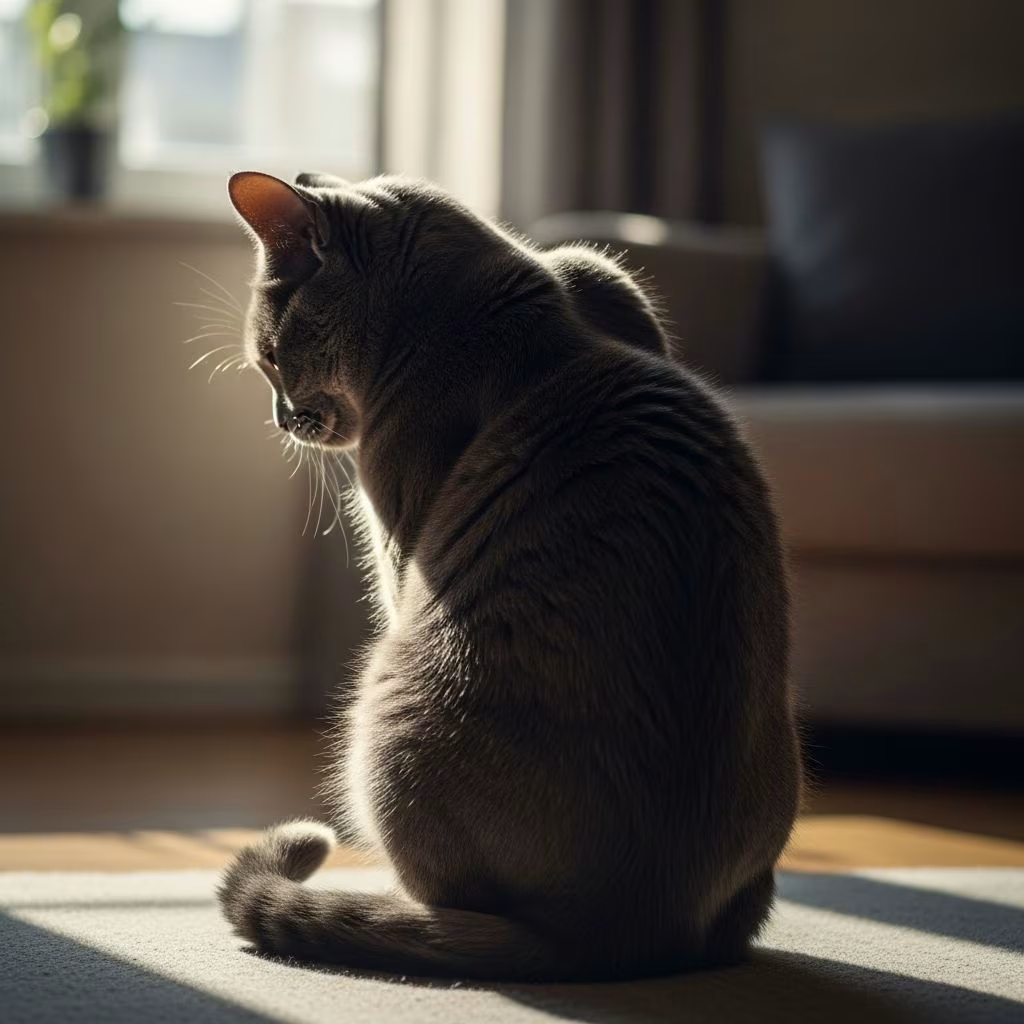
Cats are often seen as independent and aloof creatures, but emerging research challenges this stereotype by showing they can experience grief similar to dogs when losing a companion pet. A study surveying over 400 cat owners found that surviving cats displayed behavioral changes like reduced appetite, increased vocalization, and searching for the deceased pet, regardless of whether the lost companion was another cat or a dog.
Signs Your Cat Is Grieving
Recognizing grief in cats requires observing subtle shifts in their daily routines, as felines express emotions differently from humans or dogs. Common indicators include:
- Loss of appetite: Cats may eat less or refuse food entirely, a significant change since they typically graze frequently.
- Increased vocalization: More meowing, crying, or yowling, especially at night, as if calling for the missing companion.
- Hiding or withdrawal: Seeking solitude in unusual spots, avoiding interaction, or appearing fearful and confused.
- Searching behaviors: Sniffing familiar spots, wandering the house, or looking for the lost pet.
- Changes in sleep and play: Sleeping more or less, reduced interest in toys, and less overall activity.
- Clinginess or aloofness: Suddenly seeking more attention from owners or becoming unusually distant.
- Overgrooming: Excessive licking leading to bald patches, a stress response common in anxious cats.
These signs often intensify if the cats had a close bond, measured by time spent together. In the Oakland University study, cats who cohabited longer with the deceased showed stronger reactions.
Scientific Evidence: Do Cats Really Grieve?
Historically, cats were thought to lack deep emotional bonds due to their solitary evolutionary roots as predators from less social ancestors. However, a 2024 study published in Applied Animal Behaviour Science provides compelling evidence otherwise. Researchers surveyed 412 caregivers of 452 cats whose households lost a companion animal (cat or dog). Results showed grief-like behaviors in surviving cats, including decreased eating, playing, and sleeping, alongside increased hiding, attention-seeking, and searching.
The study, led by Brittany Greene and Jennifer Vonk, found no significant difference in grief intensity between cats losing feline vs. canine companions, suggesting cross-species bonds. A prior 2016 survey corroborated this, noting persistent changes six months post-loss. Yet, researchers caution about anthropomorphism—owners’ grief might influence perceptions. Caregivers with stronger attachments to the deceased pet reported more pronounced changes in survivors, while those with avoidant bonds noted fewer.
Experts like Vonk, a cat owner herself, argue the data points to genuine feline emotions, akin to canine grief but subtler due to cats’ stoic nature as both predators and prey. Cats attune to household disruptions, reacting to owners’ stress, which could amplify observed behaviors.
| Behavior Change | Prevalence in Study (% of Cats Affected) | Associated with Companion Type |
|---|---|---|
| Increased vocalization | High (reported frequently) | No difference (cat or dog loss) |
| Reduced appetite/play | Moderate to high | Stronger with longer cohabitation |
| Hiding/searching | Common | Linked to bond strength |
| Attention-seeking | Variable | Possibly influenced by owner grief |
This table summarizes key findings from the primary study, highlighting behavioral patterns.
How Long Does Cat Grief Last?
Grief duration varies by individual cat, bond strength, and household dynamics. The 2016 study observed signs persisting up to six months, though most cats showed improvement within weeks. Recent research indicates acute phases last 2-4 weeks, with lingering effects if unaddressed. Factors prolonging grief include:
- Close daily interaction with the deceased.
- Owner’s unresolved mourning, as cats mirror human emotions.
- Environmental changes, like moving furniture or routines post-loss.
Monitor for normalization: returning appetite, playfulness, and routine behaviors signal recovery. Persistent issues beyond two months warrant veterinary checks for underlying health problems mimicking grief.
Do Cats Grieve Humans Differently?
While most studies focus on pet-to-pet loss, anecdotal and preliminary evidence suggests cats grieve human companions too. Signs mirror pet loss: vocalizing at empty chairs, sleeping on the person’s bed, or reduced activity. Cats form attachments, especially with primary caregivers providing food and affection. Unlike dogs’ overt dependence, cats’ independence tempers displays, but bonded felines show confusion and withdrawal after a human’s death or prolonged absence.
Research gaps exist here; pet-loss studies dominate due to clearer household comparisons. However, experts note cats’ sensitivity to routine disruptions, implying human loss impacts them profoundly, often subtly through stress behaviors.
How to Help a Grieving Cat
Supporting a cat through grief involves patience, consistency, and environmental stability. Key strategies include:
- Maintain routines: Feed, play, and sleep on schedule to provide security.
- Increase quality time: Gentle petting, interactive toys, and pheromone diffusers reduce anxiety.
- Enrich the environment: New scratching posts, window perches, or puzzle feeders combat boredom.
- Avoid sudden changes: Keep the deceased pet’s items if comforting, but remove if distressing.
- Monitor health: Rule out illness with vet visits; appetite loss can lead to hepatic lipidosis.
- Consider companions: Introducing a new pet cautiously after stabilization, matching temperament.
Professional behaviorists recommend against forcing interaction; let the cat initiate. Pheromone products like Feliway mimic calming scents. Most cats adapt within 1-3 months with support.
FAQs
Do cats grieve the loss of another cat?
Yes, cats exhibit grief-like behaviors such as searching, vocalizing more, and eating less after a feline companion’s death, per surveys of hundreds of owners.
Do cats grieve dogs?
Absolutely; studies show similar grief responses whether the lost pet was a cat or dog, challenging assumptions of interspecies indifference.
How do you know if your cat is grieving?
Look for appetite changes, hiding, increased meowing, lethargy, or searching behaviors lasting over a week, distinct from illness.
How long do cats grieve for?
Typically 2-6 weeks for acute grief, with full recovery in 1-6 months depending on the cat and support provided.
Should I get a new cat if my cat is grieving?
Not immediately; wait until the grieving cat stabilizes (1-3 months), then introduce slowly to avoid added stress.
Can cats sense when another pet is dying?
Anecdotal reports and behavior studies suggest cats may detect illness through scent and behavior changes, altering interactions.
References
- Cats Mourn Lost Pets, Even Dogs: Study | WION Podcast — WION. 2025-05-12. https://www.youtube.com/watch?v=Cbt-yAXOuks
- Cats grieve after death of companion pets, similar to humans — Interesting Engineering. 2024-08-08 (inferred from context). https://interestingengineering.com/science/cats-grieve-companion-pets-death
- Of course cats grieve! But how to research it …? — Mind Matters. 2024-08-08. https://mindmatters.ai/2024/08/of-course-cats-grieve-but-how-to-research-it/
- When Cats Grieve: Understanding Feline Loss and How to Help — Pet Professional Guild. 2024 (recent). https://www.petprofessionalguild.com/pet-owners/pets-and-their-people/pets-and-their-people-blog/when-cats-grieve-understanding-feline-loss-and-how-to-help/



