

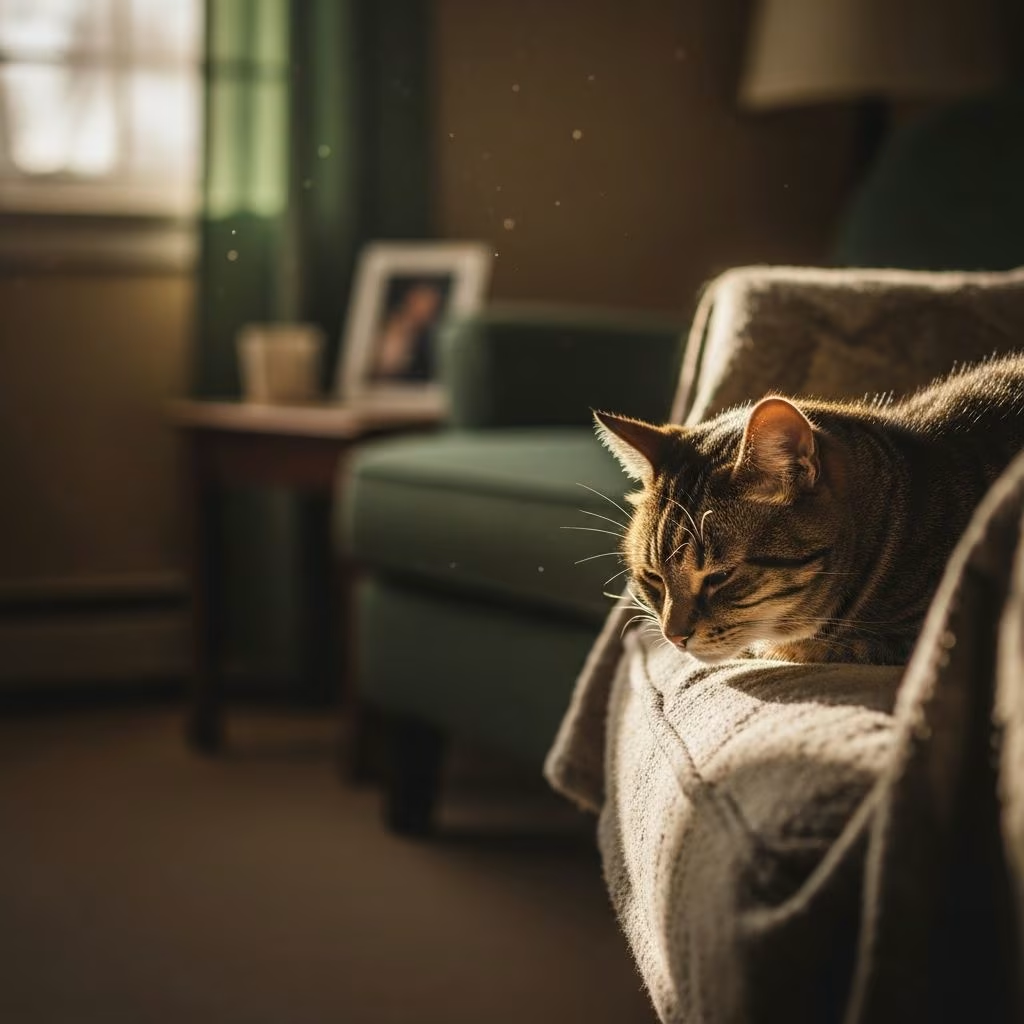
Cats form deep emotional bonds with their owners, and emerging research indicates they may indeed grieve when these companions are lost, displaying behaviors like increased vocalization, reduced appetite, and clinginess.
Table of Contents
- Signs of Grief in Cats
- The Science Behind Cat Grief
- Do Cats Grieve Specifically for Humans?
- How Long Does Cat Grief Last?
- Helping Your Cat Cope with Loss
- Why Do Some Cats Eat Their Deceased Owners?
- Frequently Asked Questions
Signs of Grief in Cats
When a cat loses a companion—be it another pet or their human owner—they often exhibit noticeable changes in behavior that mirror human grief responses. These signs include lethargy, withdrawal, and shifts in daily routines.
- Increased vocalization: Cats may meow more frequently or loudly, as if calling for their missing companion. About 70% of grieving cats show altered vocal patterns, becoming either more talkative or unusually quiet.
- Reduced appetite and activity: Many cats eat less, sleep more, or play less. Studies report 46% experience decreased appetite after losing a feline companion, with similar patterns for human loss.
- Clinginess and attention-seeking: Surviving cats often become more affectionate, following owners around or seeking extra pets and cuddles.
- Hiding or searching behaviors: Cats might hide in unusual spots, wander the house sniffing familiar areas, or appear to look for the lost one.
- Changes in sleep patterns: Some cats suffer insomnia, while others sleep excessively or switch sleeping locations.
These behaviors typically emerge within days of the loss and can intensify if the bond was strong. Owner reports from surveys of over 450 cats confirm that daily interactions and time spent together predict grief intensity.
The Science Behind Cat Grief
Recent studies challenge the myth of cats as aloof, emotionless creatures. Research published in Applied Animal Behaviour Science surveyed caregivers of 452 cats who lost a companion animal, revealing grief-like responses tied to relationship quality.
Key findings include:
- Cats with close bonds showed more fearfulness, attention-seeking, and reduced play/sleep/eating.
- Longer cohabitation and positive interactions amplified these effects.
- Grief signs appeared regardless of whether the deceased was a cat or dog, suggesting cross-species bonding.
Earlier work by Jessica Walker in 2016 found 75% of cats displayed changes like clinginess and anxiety after a companion’s death. However, studies rely on owner observations, which may be biased by human grief—caregivers with stronger attachments reported more intense cat behaviors.
Alternative explanations posit these changes as survival instincts: detecting death might signal environmental danger, prompting hiding or vigilance, as seen in birds and insects. Yet, persistent affection-seeking aligns better with emotional grief.
| Study | Sample Size | Key Grief Behaviors Observed | Source |
|---|---|---|---|
| Greene & Vonk (2024) | 452 cats | Attention-seeking, hiding, reduced appetite/play | |
| Walker (2016) | Multiple pets | Affection increase, vocalization, anxiety | |
| VCA Hospitals | Assessed patterns | 65% showed 4+ changes: appetite drop, sleep shifts |
Domestication has made cats more social than their solitary wild ancestors, enabling group living and bonds that evoke grief upon separation.
Do Cats Grieve Specifically for Humans?
While much research focuses on pet-to-pet loss, evidence suggests cats grieve human owners similarly. VCA Animal Hospitals notes cats react to any companion loss—human or animal—with mourning behaviors like altered routines and clinginess toward surviving family.
Anecdotal reports and owner surveys describe cats searching for deceased owners, vocalizing at their spots, or becoming depressed. Strong attachments, marked by grooming, sleeping together, and play, predict deeper responses.
One extreme behavior—scavenging a deceased owner—may stem from attempts to revive them via nudging, licking, or nipping, escalating when unsuccessful. This occurs even with ample food, ruling out pure hunger.
Critics argue owner grief projection influences perceptions, but consistent patterns across studies support genuine feline emotions.
How Long Does Cat Grief Last?
Grief duration varies by bond strength and individual temperament. Most studies report peak behaviors in the first weeks, subsiding over 2-6 months, though some cats show lingering changes.
- Short-term (days-weeks): Acute vocalizing, appetite loss.
- Medium-term (1-3 months): Clinginess, sleep disruptions.
- Long-term (beyond 3 months): Rare, but possible in deeply bonded cats.
Factors like age, health, and environment influence recovery. Kittens or seniors may grieve longer due to dependency.
Helping Your Cat Cope with Loss
Support your grieving cat with patience and routine maintenance:
- Maintain familiar schedules for meals, play, and litter to provide stability.
- Increase quality time: Extra grooming, interactive toys, and gentle play reduce isolation.
- Monitor health: Appetite loss can lead to hepatic lipidosis; consult a vet if persisting over days.
- Introduce scents: Items from the deceased may comfort without confusion.
- Avoid rushing new pets: Allow mourning time to prevent added stress.
- Pheromone diffusers or calming supplements can ease anxiety.
If behaviors persist beyond two months or include aggression/self-harm, seek veterinary behaviorist help to rule out medical issues.
Why Do Some Cats Eat Their Deceased Owners?
This disturbing behavior, though rare, has been documented. Theories include:
- Revival attempts: Starts with licking/nudging; progresses to biting if unresponsive.
- Stress response: Extreme distress overrides norms.
- Opportunistic scavenging: Survival instinct, but often occurs with food available.
It underscores cats’ pragmatic nature but doesn’t negate emotional bonds—many non-eating cats still grieve profoundly.
Frequently Asked Questions (FAQs)
What are the signs my cat is grieving their owner?
Cats may vocalize more, eat less, hide, seek attention, or search for the owner. Up to 65% show multiple changes.
Do cats grieve dogs or other pets too?
Yes, grief signs are similar for cat or dog companions, based on bond strength.
How long do cats grieve?
Typically weeks to months; stronger bonds prolong it.
Can my grief affect how I see my cat’s behavior?
Possibly—studies note owner attachment influences reports, but patterns hold across surveys.
What if my cat eats less after loss?
Monitor closely; vet intervention may be needed to prevent health issues.
References
- Do cats grieve? Research suggests they do — Phys.org. 2024-08-05. https://phys.org/news/2024-08-cats-grieve.html
- Cats grieve after death of companion pets, similar to humans — Interesting Engineering. 2024-08. https://interestingengineering.com/science/cats-grieve-companion-pets-death
- Cats Mourn Lost Pets, Even Dogs: Study | WION Podcast — YouTube/WION. 2025-05-12. https://www.youtube.com/watch?v=Cbt-yAXOuks
- Of course cats grieve! But how to research it …? — Mind Matters. 2024-08. https://mindmatters.ai/2024/08/of-course-cats-grieve-but-how-to-research-it/
- Do Cats Mourn? — VCA Animal Hospitals. Accessed 2026. https://vcahospitals.com/know-your-pet/do-cats-mourn
- New study reveals cats actually grieve – even for dogs — Indy100. 2024. https://www.indy100.com/science-tech/do-cats-grieve-owner-dog



