

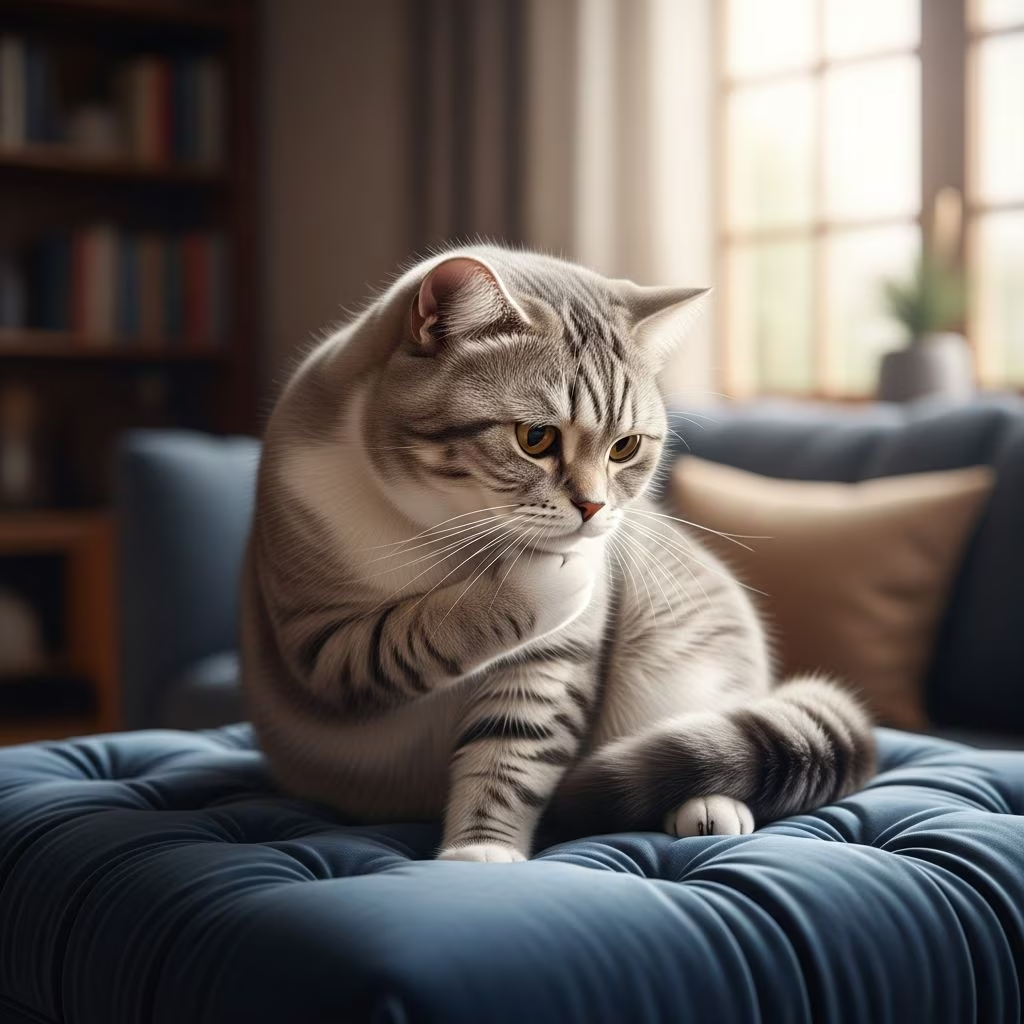
Cats are often portrayed as independent and emotionally aloof, but emerging research reveals they possess complex emotional lives and can indeed experience something akin to hurt feelings. While cats don’t process emotions exactly like humans, they form deep bonds with their owners and react to rejection, stress, or negative interactions with behavioral changes indicating emotional distress.
Table of Contents
- A Quick Overview of Cat Emotions
- 7 Signs Your Cat’s Feelings Are Hurt
- Do Cats Sense When You’re Upset?
- How to Avoid Hurting Your Cat’s Feelings
- Cat Emotional Intelligence: What Science Says
- Frequently Asked Questions
A Quick Overview of Cat Emotions
Cats experience a spectrum of emotions including joy, fear, contentment, and stress, processed through their limbic system similar to humans. Unlike dogs, cats evolved as solitary hunters, leading to more subtle emotional expressions. However, domestication over thousands of years has attuned them to human cues, allowing them to form secure attachments.
Recent studies confirm cats distinguish emotional states in humans and conspecifics via multimodal cues—visual, vocal, and now olfactory. For instance, cats match facial expressions with corresponding sounds, suggesting a mental representation of emotions. This emotional attunement means mistreatment or neglect can lead to ‘hurt feelings’ manifested as withdrawal or anxiety.
7 Signs Your Cat’s Feelings Are Hurt
Recognizing when your cat’s feelings are hurt requires observing subtle body language and behavioral shifts. Humans often misinterpret these cues due to positivity bias, correctly identifying happy signals but missing distress 30% of the time. Here are the key indicators:
- Hiding or Avoiding Interaction: A cat that once sought affection now hides under furniture or avoids you, signaling emotional withdrawal from perceived rejection.
- Changes in Vocalization: Increased meowing, hissing, or growling when approached indicates frustration or fear. Purring isn’t always positive—cats purr to self-soothe during stress.
- Tail and Ear Positions: Tail twitching rapidly or lashing shows agitation; flattened ears backward signal severe stress or threat perception.
- Altered Eating or Grooming: Loss of appetite or over-grooming (leading to bald patches) reflects anxiety from emotional upset.
- Aggressive Play or Scratching: Sudden aggression during play or unprovoked swats suggests redirected frustration from hurt feelings.
- Excessive Sleeping or Lethargy: Cats retreat into sleep as a coping mechanism for emotional distress, unlike their usual active demeanor.
- Right Nostril Dominance in Stress: In experiments, stressed cats sniff fear scents more with their right nostril, linking to brain areas processing intense emotions like fear.
These signs often cluster; a single cue might indicate physical issues, so consult a vet to rule out health problems.
Do Cats Sense When You’re Upset?
Yes, cats are remarkably perceptive to human emotions, detecting them through scent, voice, posture, and facial expressions. A 2023 study from the University of Bari Aldo Moro found cats react strongly to human fear scents, showing severe stress behaviors like retreating and ear flattening when exposed to sweat from fearful individuals. This response was more pronounced than to neutral or physical stress odors.
Cats use nostrils differently: the right nostril (linked to the right brain hemisphere) processes negative, arousing emotions like fear, explaining heightened stress to fear scents. Happiness odors didn’t elicit distinct responses, possibly because cats need visual/auditory cues alongside scent for positive emotions, or they respond to general arousal levels.
Other research supports this: Cats match human emotional faces with voices cross-modally and adjust behavior based on owner vs. stranger emotions, preferring owners displaying positive cues. High-neuroticism owners may foster more anxious cats, while open personalities correlate with calmer felines. Cats even alleviate owner negative moods through rubbing and vocalizing.
| Human Emotion | Cat Response | Primary Cue |
|---|---|---|
| Fear | Severe stress (retreat, flattened ears) | Scent (right nostril) |
| Happiness | No distinct change; needs multimodal cues | Scent + visual/vocal |
| Negative Mood | Increased vocalizations, rubbing | Proximity/posture |
| Positive | Relaxed approach (left nostril) | Scent + voice |
How to Avoid Hurting Your Cat’s Feelings
To prevent emotional distress in your cat, prioritize positive interactions and respect their boundaries. Key strategies include:
- Respect Personal Space: Let your cat initiate contact; forcing cuddles leads to resentment and hiding.
- Use Consistent Routines: Sudden changes in feeding or playtime cause anxiety—maintain predictability.
- Positive Reinforcement: Reward desired behaviors with treats and praise instead of punishment, which instills fear.
- Enrich Environment: Provide scratching posts, toys, and perches to prevent boredom-induced frustration.
- Read Body Language: Slow blinks signal trust; respond in kind to build emotional security.
- Socialization: Early exposure to people and stimuli reduces fear responses later.
- Monitor Stress: Use pheromone diffusers or vet-prescribed calming aids for anxious cats.
Building a secure base fosters attachment akin to infant-caregiver bonds observed in cat-owner studies.
Cat Emotional Intelligence: What Science Says
Cats rival dogs in emotional intelligence, forming attachments and empathizing selectively. Cat psychologist Kristyn Vitale notes cats view owners as secure bases, returning for comfort after exploration. fMRI studies show human brain areas activate similarly when stroking real cats vs. toys, especially in females, improving mood.
Despite independence, cats prefer human interaction over toys and discriminate owner emotions accurately. Misreading cues stems from human bias, not cat subtlety—training improves recognition. These insights challenge aloof stereotypes, revealing cats as attuned companions responsive to our emotional worlds.
Frequently Asked Questions (FAQs)
Do cats get their feelings hurt like humans?
Cats experience emotional distress from rejection or stress, manifesting as behavioral changes, though not identical to human ‘hurt feelings’.
Can cats smell human emotions?
Yes, cats detect fear scents strongly, triggering stress responses via nostril-specific processing.
Why does my cat hide from me?
Hiding often signals hurt feelings, fear, or stress from recent negative interactions; rebuild trust gradually.
Do cats understand when you’re sad?
Cats sense sadness through cues and may comfort via proximity or rubbing, especially with owners.
How can I tell if my cat is stressed?
Look for tail twitching, ear flattening, hiding, or appetite loss; combine vocal and visual cues accurately.
Are some cats more sensitive emotionally?
Yes, personality and owner traits influence sensitivity—open owners have calmer cats.
References
- Cats and human emotions: A stronger bond than we thought? — Noldus. 2025-04-02. https://noldus.com/blog/cats-react-to-human-emotional-scents
- Unanswered Questions and Hypotheses about Domestic Cat (Felis catus) – Human (Homo sapiens) Interactions — NIH/PMC. 2021-10-20. https://pmc.ncbi.nlm.nih.gov/articles/PMC8532687/
- Understanding Cat Behavior: New Study — Cat Wisdom 101. Accessed 2026. https://catwisdom101.com/understanding-cat-behavior-new-study/
- What’s going on inside your cat’s head? — American Psychological Association (APA). Accessed 2026. https://www.apa.org/news/podcasts/speaking-of-psychology/cat-human-bond



