

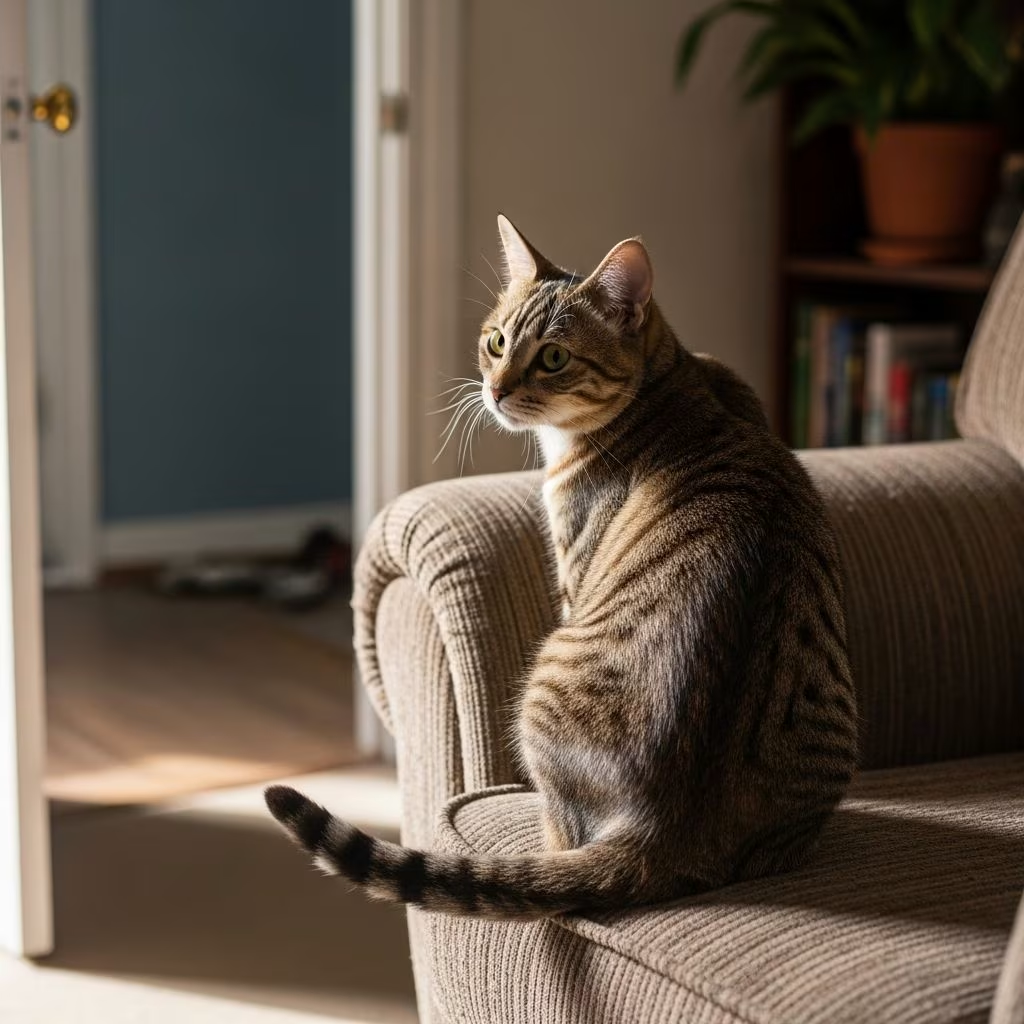
Cats are often seen as independent creatures, but many form deep emotional bonds with their owners. When you leave, some cats may display behaviors that seem like anger, such as excessive meowing or scratching furniture. However, these actions typically stem from separation anxiety rather than true \”madness\” or anger. Separation anxiety in cats occurs when they experience distress from being alone, leading to stress responses that mimic upset or frustration.
Understanding this distinction is key for cat owners. While cats don’t feel emotions like humans, their reactions to absence can indicate genuine anxiety. This article explores the signs, causes, and solutions to help your cat thrive when you’re away.
Table of Contents
- Signs Your Cat Has Separation Anxiety
- What Causes Separation Anxiety in Cats?
- Other Reasons for These Behaviors
- How to Help Your Anxious Cat
- Preventing Separation Anxiety
- Frequently Asked Questions (FAQs)
Signs Your Cat Has Separation Anxiety
Recognizing separation anxiety early can prevent escalation. Cats with this issue show specific behaviors, often worsening when alone. Veterinary sources consistently list these common indicators.
- Excessive Vocalization: Cats may meow, yowl, cry, or moan loudly as you prepare to leave, while you’re gone, or upon your return. This is a distress signal, not just attention-seeking.
- Destructive Behavior: Scratching furniture, knocking over objects, or chewing items—especially if new or only when alone—signals stress release.
- Inappropriate Elimination: Urinating or defecating outside the litter box, often on your bed or clothing, to reclaim your scent.
- Overgrooming or Excessive Self-Grooming: Licking fur to the point of bald spots or skin irritation, more common in females.
- Changes in Appetite: Refusing food, eating too quickly (leading to regurgitation), or altered drinking habits when you’re away.
- Restlessness and Hiding: Pacing, inability to settle, following you everywhere before departure, or hiding in closets/beds.
- Extreme Attachment or Clinginess: Constant following, demanding attention, or distress when you move rooms.
- Vomiting or Digestive Issues: Hairballs, food vomiting, or diarrhea in extreme cases.
- Exuberant or Desperate Greetings: Over-the-top excitement or agitation when you return.
To confirm, use a pet camera to monitor behavior while away. Behaviors only during absences strongly suggest anxiety.
What Causes Separation Anxiety in Cats?
Several factors increase risk. Cats aren’t born anxious but develop it from circumstances.
- Strong Human Bond: Cats preferring one owner over others or pets are prone.
- Breeds: Ragdolls, Siamese, Burmese often attach deeply.
- Lifestyle: Indoor-only cats without companions rely solely on you.
- Lack of Experience: Kittens never left alone or bottle-raised miss early independence training.
- Life Changes: Moves, new homes, routine disruptions, or early weaning from mother.
- Insufficient Stimulation: Boredom from lack of socialization or enrichment.
Single-pet households amplify risks, as cats lack alternative social outlets.
Is It Anger or Something Else?
Cats don’t \”get mad\” like humans; behaviors labeled as anger often mask anxiety, boredom, or medical issues. Rule out health problems first—litter box issues may signal urinary tract infections. Destructive acts could be play or territorial marking, not spite.
| Behavior | Possible Anxiety Sign | Other Causes |
|---|---|---|
| Meowing Excessively | Distress when alone | Hunger, heat, or illness |
| Scratching Furniture | Stress relief | Boredom, need for claws trimming |
| Elimination Outside Box | Scent mingling | UTI, dirty litter |
| Not Eating | Anxiety refusal | Dental pain, new food |
Consult a vet to exclude medical causes before assuming behavioral issues.
How to Help Your Anxious Cat
Treatment involves gradual desensitization, enrichment, and sometimes medication. Start slow and be consistent.
- Gradual Alone Time: Leave for 5-10 minutes, reward calm returns with treats. Extend durations.
- Scent Comfort: Leave worn clothing or blankets for familiar smells.
- Enrichment Toys: Puzzle feeders, interactive toys, cat trees to combat boredom.
- Play and Cuddles: Daily sessions before/after absences build security.
- Calming Aids: Pheromone diffusers (Feliway), anxiety wraps, or vet-prescribed meds for severe cases.
- Pet Sitter/Camera: Check-ins or monitoring reduce isolation.
- Remove Cues: Pocket keys early; don’t make departures dramatic.
- Companions: Consider another cat if compatible, but introduce slowly.
- Professional Help: Behaviorists for persistent issues.
Positive reinforcement is crucial—ignore bad behaviors, reward good ones.
Preventing Separation Anxiety in Cats
Proactive steps from kittenhood build resilience.
- Expose to short absences early.
- Provide multi-level environments and toys.
- Maintain routines.
- Socialize with varied people/pets.
- Use carriers positively for boarding practice.
Indoor cats benefit from window perches for stimulation.
Frequently Asked Questions (FAQs)
Do cats get mad when you leave?
No, cats don’t experience anger like humans. What appears as \”madness\” is usually separation anxiety or stress from being alone.
How long can you leave a cat alone?
24-48 hours max with setups; daily check-ins ideal for anxious cats. Puppies need more frequent attention.
Can all cats get separation anxiety?
Yes, but higher risk in bonded, indoor-only, or certain breeds like Siamese.
Is cat separation anxiety curable?
Often manageable with training and enrichment; severe cases may need lifelong management.
What if my cat pees on my bed?
Clean thoroughly, rule out medical issues, then address anxiety with scents and desensitization.
References
- Separation Anxiety in Cats – 7 Signs & 9 Ways to Help — Sploot Vets. 2023. https://www.splootvets.com/post/separation-anxiety-in-cats-signs-symptoms-ways-to-help
- Separation Anxiety – Indoor Pet Initiative — The Ohio State University. Accessed 2026. https://indoorpet.osu.edu/cats/problem-solving/separation-anxiety
- 8 Signs of Separation Anxiety in Cats And What to Do About Them — Hickory Veterinary Hospital. 2023. https://www.hickoryvet.com/services/cats/blog/8-signs-separation-anxiety-cats-and-what-do-about-them
- Separation Anxiety in Cats — ASPCA Pet Health Insurance. Accessed 2026. https://www.aspcapetinsurance.com/resources/separation-anxiety-in-cats/
- Cat Separation Anxiety: Symptoms, Causes, and How To Help — Rover. Accessed 2026. https://www.rover.com/blog/cat-separation-anxiety/
- Cats and separation anxiety — Cats Protection. Accessed 2026. https://www.cats.org.uk/cats-blog/does-my-cat-have-separation-anxiety
- Can Cats Have Separation Anxiety? — PetMD. 2024. https://www.petmd.com/cat/conditions/behavioral/can-cats-have-separation-anxiety



