

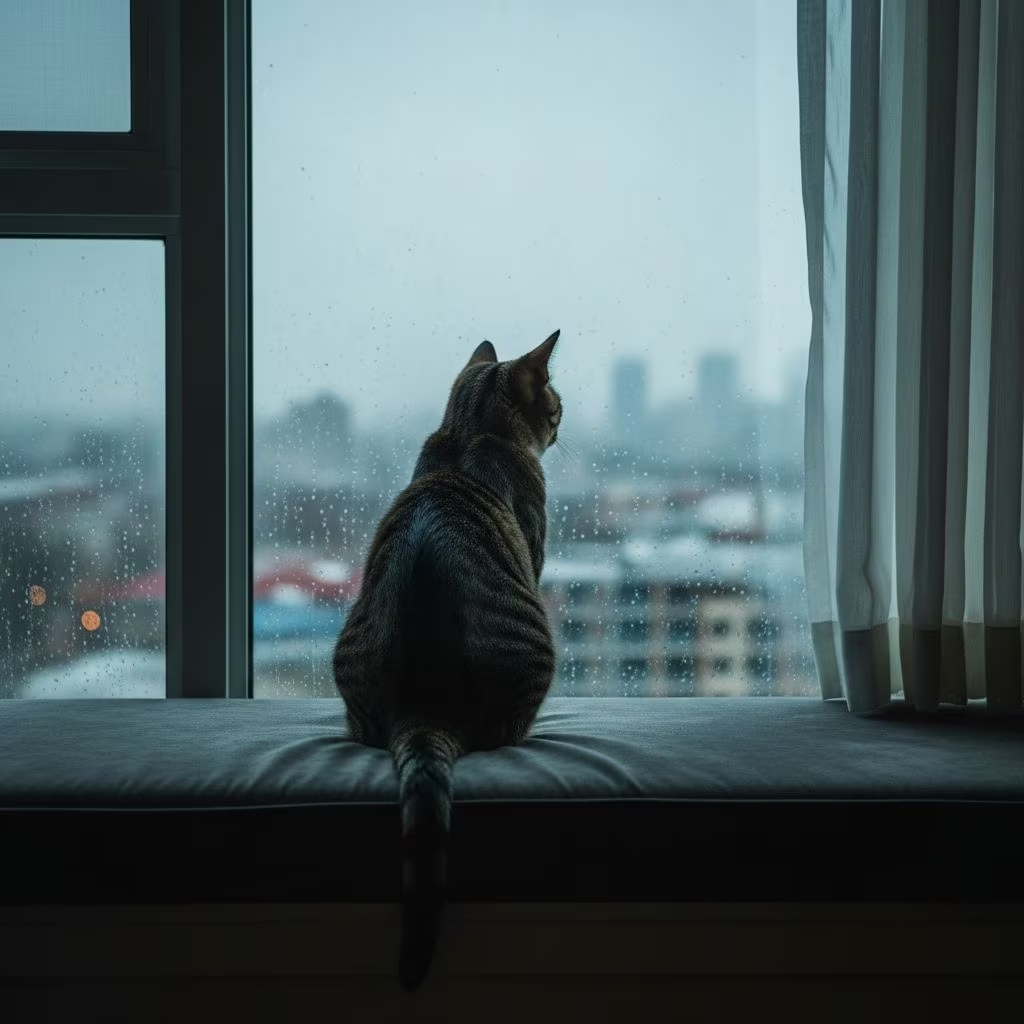
Do Cats Get Lonely? Understanding Feline Solitude
The question of whether cats experience loneliness is one that pet owners frequently ask themselves, especially those who work long hours or travel regularly. Unlike dogs, which are known pack animals with strong social hierarchies, cats have traditionally been perceived as solitary, independent creatures that prefer their own company. However, modern behavioral research reveals a more nuanced picture of feline emotional complexity. Cats do indeed experience loneliness, though they may express it differently than their canine counterparts.
The Nature of Feline Independence
Cats are by nature more independent than dogs, a characteristic rooted in their evolutionary history as solitary hunters. Research published in scientific journals has demonstrated that adult cats appear to be more autonomous, even in their social relationships, and do not necessarily depend on others to provide a sense of protection in the same way dogs do. This independence does not, however, mean that cats are incapable of forming deep emotional bonds or that they never experience loneliness.
While cats may not seek reassurance from their owners in unfamiliar situations the way dogs do, they still develop social preferences and close relationships. The key distinction is that feline relationships are not typically based on a need for safety and security, but rather on companionship and mutual interest. Understanding this fundamental difference helps pet owners better interpret their cat’s behavior and emotional needs.
Can Cats Actually Feel Lonely?
Recent behavioral studies have increasingly recognized that cats are more social than previously believed. A 2019 study found that cats can become attached to humans and show signs of stress when separated from them. This research challenges the long-held stereotype that cats are indifferent to their owners’ presence or absence.
Cats experience loneliness differently than dogs, but the feeling is real nonetheless. When cats are left alone for extended periods, they may display behavioral changes indicating emotional distress. These signs can be subtle and are often misinterpreted by owners who are unfamiliar with feline body language and vocalizations.
Signs Your Cat May Be Feeling Lonely
Recognizing the signs of feline loneliness is essential for responsible pet ownership. Cats communicate their emotional state through various behavioral indicators:
- Excessive vocalization, particularly when their owner leaves or is absent
- Destructive behavior, such as scratching furniture or knocking objects off shelves
- Decreased appetite or changes in eating habits
- Lethargy or excessive sleeping beyond their normal patterns
- Increased clinginess or demand for attention when the owner is home
- Litter box issues unrelated to medical conditions
- Over-grooming or other stress-related behaviors
- Withdrawal from normal activities or hiding more frequently
It’s important to note that some of these behaviors may indicate medical issues, so consulting with a veterinarian is advisable if they persist.
The Difference Between Loneliness and Separation Anxiety
While loneliness and separation anxiety are related, they are not identical conditions. Separation anxiety is a specific stress response that occurs when a cat is separated from its owner or from another cat it has bonded with. Loneliness, on the other hand, is a more general emotional state that can occur even when cats are not experiencing the acute stress of separation.
Research has suggested that some cats show signs of separation anxiety similar to dogs, though studies indicate they are generally more independent. What researchers previously interpreted as separation anxiety might actually be signs of frustration or learned behavior rather than a true attachment-based anxiety response. Nevertheless, the emotional discomfort cats experience when left alone for extended periods is still valid and deserves attention from caring pet owners.
Factors That Influence Feline Loneliness
Not all cats experience loneliness to the same degree. Several factors influence how your cat handles solitude:
Age and Life Stage
Kittens and younger cats tend to be more social and may struggle with loneliness more than senior cats. However, this varies significantly by individual personality. Some older cats develop stronger bonds with their owners and may experience more distress when separated.
Individual Personality
Cats display diverse personality types that affect their social needs. Research has identified different clusters of cats that cope differently with stress and social situations. Some cats are naturally more outgoing and social, while others are inherently shy or reserved. Your cat’s baseline personality significantly influences their need for companionship.
Environmental Enrichment
The quality of a cat’s environment plays a crucial role in managing loneliness. Cats with access to windows for bird watching, climbing structures, toys, and interactive puzzles are better equipped to entertain themselves during periods alone.
Early Socialization
Cats that were well-socialized early in life and exposed to various people and environments typically handle alone time more gracefully than those with limited social experiences.
Prior Experience with Solitude
Cats that have a history of being left alone may adapt better to longer periods of solitude than those who are unaccustomed to it.
The Emotional Bond Between Cats and Their Owners
Research demonstrates that cats can provide significant emotional support to their owners while also benefiting from human companionship. A study involving isolated older adults found that cat companions could effectively decrease feelings of loneliness. The attachment to a pet appears to mediate the relationship between loneliness and general health for older people, suggesting that the human-cat bond is mutually beneficial.
Cats are particularly well-suited as companions for individuals with certain health limitations. Unlike dogs, they don’t require walks or intense physical exercise, making them ideal companions for owners with arthritis, heart disease, or other health conditions that limit mobility. Additionally, cats are more self-sufficient than dogs but remain social enough to engage their owners in play and interaction.
How to Prevent Loneliness in Your Cat
If you’re concerned about your cat experiencing loneliness while you’re away, several practical strategies can help:
Environmental Enrichment
Provide your cat with stimulating toys, puzzle feeders, and climbing structures. Window perches allow cats to observe outdoor activity, which provides natural entertainment. Rotate toys regularly to maintain novelty and interest.
Consider a Feline Companion
Some cats benefit from having another cat companion, though introductions must be handled carefully. Not all cats are suited to multi-cat households, so assess your cat’s personality before introducing a second pet.
Interactive Play Before Departure
Engage your cat in vigorous play sessions before leaving home. A tired cat is more likely to sleep through periods of solitude and less likely to engage in destructive behaviors.
Maintain a Consistent Routine
Cats thrive on predictability. Maintaining consistent feeding times, play schedules, and departure/arrival routines can reduce anxiety and provide a sense of security.
Use Technology
Consider using automatic feeders, water fountains, and interactive cameras that allow you to monitor and interact with your cat remotely. Some cats respond positively to the sound of their owner’s voice through these devices.
Hire a Pet Sitter
For extended absences, hiring a pet sitter to visit your home can provide both social interaction and the reassurance of human presence.
Calming Aids
Consult with your veterinarian about pheromone diffusers or other calming products designed to reduce stress in cats.
When to Seek Professional Help
If your cat displays persistent signs of loneliness or separation anxiety despite your efforts to address them, consult with your veterinarian or a certified animal behaviorist. They can rule out medical conditions and develop a tailored behavior modification plan if necessary. Some cats may benefit from short-term medication to manage anxiety during the adjustment period.
The Science of Cats and Companionship
Growing scientific evidence supports the notion that cats have more complex social and emotional lives than stereotypes suggest. While cats may not form the same type of secure attachment relationships that dogs do—where the owner serves as a primary source of safety—they do develop meaningful social bonds and can suffer emotionally when these connections are disrupted.
Research indicates that cats benefit from companionship and that their owners benefit from cat companionship as well. The relationship is reciprocal, though expressed differently than in dog-human relationships. Understanding and respecting the unique way cats experience social connection allows pet owners to better meet their feline friends’ emotional needs.
Frequently Asked Questions
Q: How long can a cat be left alone safely?
A: Most experts recommend that adult cats should not be left alone for more than 24-48 hours. Kittens, senior cats, and those with medical conditions may need more frequent check-ins. Fresh water, multiple litter boxes, and adequate food should always be available during absences.
Q: Do indoor cats get lonelier than outdoor cats?
A: Indoor cats may experience more loneliness during extended alone time since they don’t have outdoor stimulation. However, providing adequate environmental enrichment indoors can effectively prevent loneliness.
Q: Is it better to have two cats instead of one?
A: While some cats enjoy feline companionship, others prefer solitude. Personality compatibility is crucial. Introducing a second cat should be done gradually, and not all cats are suited to multi-cat households.
Q: What are signs that my cat is genuinely lonely versus just bored?
A: Loneliness often manifests as increased vocalization, clinginess, and stress-related behaviors. Boredom typically results in destructive play or less enthusiasm for normal activities. Both issues require environmental enrichment and attention, though loneliness may indicate a need for more social interaction.
Q: Can medication help if my cat has severe separation anxiety?
A: Yes, your veterinarian may recommend anti-anxiety medication for severe cases, particularly during transitional periods. However, medication works best when combined with behavioral modification and environmental management strategies.
Q: Should I change my work schedule to prevent my cat’s loneliness?
A: While spending time with your cat is beneficial, dramatic schedule changes may not be necessary. Most cats adapt well to regular schedules when provided adequate enrichment and attention during your time together. Consistency is more important than quantity in many cases.
References
- Domestic Cats (Felis silvestris catus) Do Not Show Signs of Secure Attachment to Their Owners — Professor Daniel Mills, University of Lincoln. 2015-09. https://doi.org/10.1371/journal.pone.0135109
- Fostering a Cat Can Ease Loneliness — University of Georgia College of Public Health. 2023. https://publichealth.uga.edu/fostering-a-cat-can-ease-loneliness/
- UGA Research Finds That Cats Are the Pur-fect Cure for Loneliness — Boom Athens, University of Georgia. 2023. https://boomathens.com/uga-research-finds-that-cats-are-the-pur-fect-cure-for-loneliness/
- Common Misconceptions About the Social Behavior of Domestic Cats — National Center for Biotechnology Information. 2024. https://pmc.ncbi.nlm.nih.gov/articles/PMC10841747/
- Do Cats Get Lonely When You’re Gone? — PetMD. 2024. https://www.petmd.com/cat/general-health/do-cats-get-lonely
- Benefits of Being a Cat Lover According to Science — Healthline. 2024. https://www.healthline.com/health/benefits-of-being-cat-lover



