

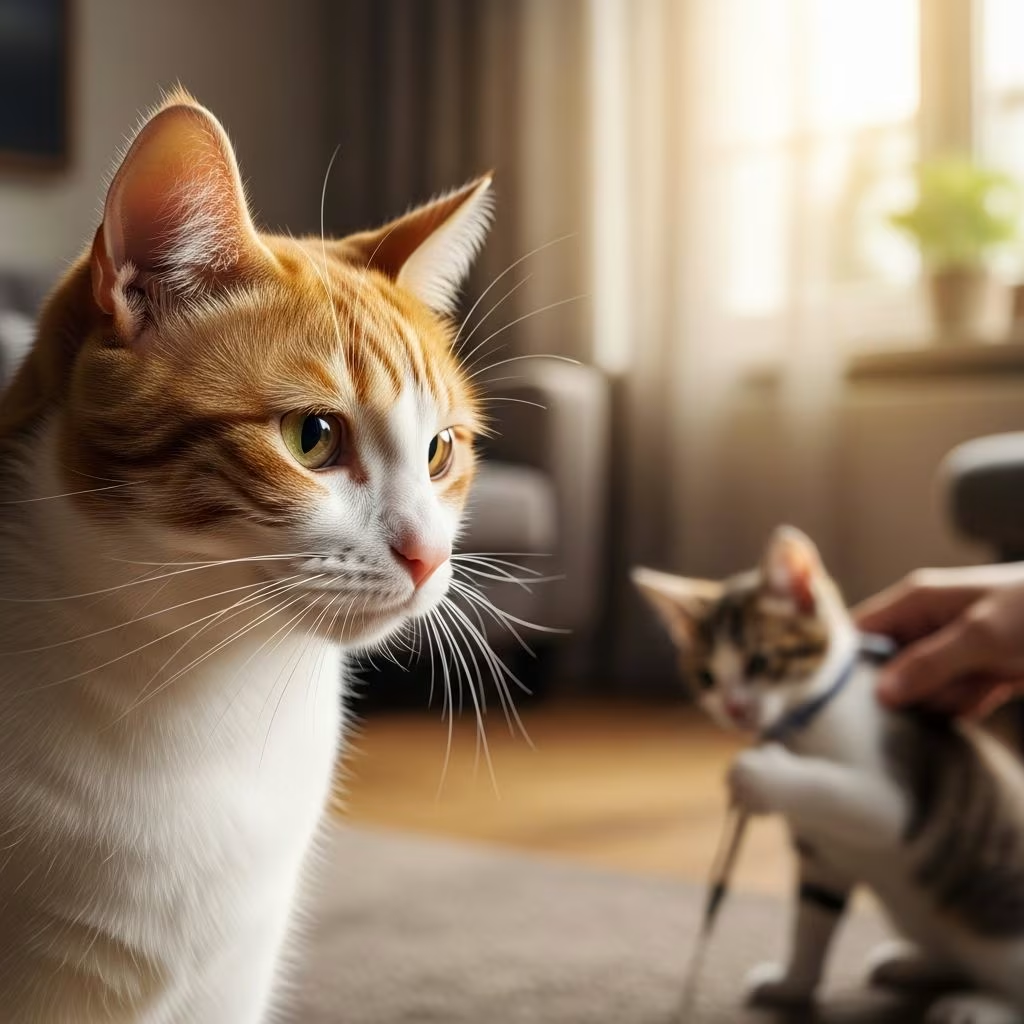
Do Cats Get Jealous? Understanding Feline Emotions and Social Dynamics
The question of whether cats experience jealousy is one that many cat owners ponder when they notice their feline companions exhibiting unusual behaviors. While we cannot directly access a cat’s thoughts or emotions, we can observe their behavior and make reasonable inferences about their emotional states. Just as we assume humans feel jealousy based on their behavioral responses and expressions related to anxiety, anger, and fear, we can similarly observe cats and conclude that they likely experience jealousy. The behaviors cats display when they feel threatened in their relationships or territory ownership are remarkably similar to those we recognize as jealous responses in humans. These include monitoring situations closely and attempting to protect their valued relationships and resources.
Cats are complex creatures with emotional capacities that extend beyond simple hunger and contentment. They form strong bonds with their owners and can experience distress when those bonds feel threatened. Understanding that cats can experience jealousy helps pet owners recognize and address problematic behaviors more effectively, leading to happier, more harmonious households.
What Signs Indicate a Jealous Cat?
Recognizing jealousy in cats requires careful observation of behavioral changes and patterns. Since we cannot directly know how a cat is feeling, paying close attention to their actions provides valuable clues about their emotional state. Jealous cats often display a variety of behaviors that reflect their attempt to monopolize attention, protect resources, or eliminate perceived competitors.
Behavioral Indicators of Feline Jealousy
One of the most common signs of jealousy in cats is acting possessive of their pet parents or other household members. This possessiveness can manifest toward a dog, another cat, a rabbit, a child, or anyone else the cat likes to be social with. Aggressive responses represent another clear indicator, though the intensity varies among individual cats. Some jealous cats may only display threats such as hissing and growling, while others escalate to scratching and biting.
Many cats seek extra attention when experiencing jealousy by approaching their owners more frequently, rubbing against them, or positioning themselves directly in front of their owners or on top of items they are working with. This attention-seeking behavior reflects the cat’s desire to reestablish their bond and reassert their importance in the household.
Additional Behavioral Changes
Jealous cats may exhibit destructive behaviors, including clawing at furniture, knocking items over, or shredding household objects. Excessive vocalization is another indicator, as some cats express their stress and upset through increased meowing, yowling, or other vocalizations. Conversely, other cats respond to negative emotions by hiding or displaying evasive behavior, sneaking away or avoiding other household members. Some jealous cats engage in excessive grooming as a self-soothing mechanism, making this behavioral change a useful indicator of emotional distress.
Additional signs include marking territory outside the litter box or spraying to claim spaces important to them, increased hiding, clingy behavior as a way to cope with stress, and blocking access to the owner when another pet is nearby.
Common Triggers for Jealousy in Cats
Understanding what causes jealousy in cats helps owners prevent or minimize these unwanted behaviors. Any change to a cat’s routine that results in them receiving less of something they enjoy can trigger jealous reactions. Several specific situations commonly provoke jealousy in felines.
Major Household Changes
Adopting a new pet into the household represents one of the most significant triggers for feline jealousy. Whether the new addition is another cat, a dog, a rabbit, or another animal, resident cats often feel threatened by the newcomer’s presence and the attention they receive. The arrival of a new family member, such as a baby or spouse, can also trigger jealous responses as cats adjust to sharing their owner’s attention.
Changes in Attention and Routine
When a pet parent becomes preoccupied or extra busy with work, giving more attention to another pet, or begins a relationship with a new person, cats can develop jealous behaviors. Seeing other household members receive good things like food, treats, attention, and playtime can distress resident cats. Changes in routine that result in less attention from household members or situations where a cat’s close companion bonds more strongly with a new pet can all contribute to jealous feelings.
Resource Competition
Competition for resources such as food, toys, sleeping spots, and affection creates prime conditions for jealousy to develop. Cats are territorial animals with an instinctive need to maintain control over their space and their owner’s attention. When they perceive that another animal or person is receiving more of these valued resources, they may respond with jealous behaviors.
The Role of Health Issues in Jealous Behavior
Pet owners often overlook the connection between underlying health issues and jealous behaviors in cats. If cats have health problems that limit their access to certain areas of the house, the resulting frustration can manifest as jealousy. For example, an injured or older cat that cannot jump onto the bed may become jealous if other pets spend hours there receiving affection from family members. Similarly, an overweight cat unable to access certain perches while other cats enjoy those spaces may develop jealous responses.
Health issues that prevent a cat from participating in normal social interactions or activities they previously enjoyed can contribute significantly to jealous behaviors. Identifying and addressing these underlying health concerns is therefore essential for managing jealousy effectively and improving the cat’s overall quality of life.
Managing and Preventing Jealousy in Cats
Successfully managing feline jealousy requires a multi-faceted approach that addresses the cat’s need for attention, security, and resources. Prevention is often more effective than treating established jealous behaviors, but both strategies employ similar principles.
Maintaining Attention and Routine
To prevent and manage feline jealousy, focus on ensuring your cat receives sufficient attention, playtime, treats, and toys. Giving the jealous cat extra attention and maintaining his favorite routines goes a long way toward making him happy. Consistency in daily interactions helps reassure cats that their bond with their owner remains strong despite changes in the household.
When managing jealousy that arises from attention being given to another pet or person, continue your attention to the other individual while verbally reassuring the jealous cat that you still love them. Wait for a point when the cat is not showing bad behavior to transfer your attention to them, reinforcing positive behaviors rather than the jealous responses.
Creating Safe Spaces and Managing Resources
Provide jealous cats with additional cozy perches or good sleeping spots if they are acting jealous or if an impending change is coming. Keeping the new cat or kitten away from the jealous cat’s toys and sleeping places also helps reduce tension. Each cat in a multi-cat household should have separate spaces where they feel secure and can access their own resources without competition. This environmental management reduces triggers for jealous behavior and gives each cat control over their own territory.
Managing New Introductions
When introducing new pets or people to the household, do so gradually rather than forcing immediate interaction. Slow, controlled introductions allow resident cats time to adjust to the newcomer’s presence and reduce the shock of sudden environmental changes. If a baby or new pet is arriving, resident cats may need even more expressions of love than before because they become hyperaware that they must share their owner, and not every cat adapts well to this change.
What to Avoid
Certain strategies actually worsen jealous behavior and should be avoided. Forcing interaction between a cat and the being or thing they feel threatened by only increases stress and makes the situation worse for all parties involved. Yelling at or punishing a jealous cat backfires, as the cat feels their world has been turned upside down and any punishment only makes them feel more threatened and damages your relationship.
Understanding the Difference Between Jealousy and Territoriality
While jealousy and territorial behavior are related, they are not identical. Territorial behavior stems from a cat’s instinct to protect their space and control their environment. Jealousy, on the other hand, involves the cat perceiving that another individual is receiving something valued that they feel entitled to—whether that is attention, resources, or status within the household hierarchy. However, both behaviors often occur simultaneously, as cats protect both their territory and their relationships with family members.
The Science Behind Feline Jealousy
Research on feline jealousy provides some insight into whether cats genuinely experience this emotion. A study examining domestic cats’ reactions to their owners and unknown individuals observed that cats reacted more intensely toward a soft-toy cat previously petted by their owner compared to their reaction to a non-social object, such as a furry cushion. This differential response suggests that cats recognize valued relationships and may experience something akin to jealousy when they perceive their owner’s attention being directed elsewhere.
However, researchers note that while some cognitive bases for jealousy appear to exist in cats, the absence of certain behaviors indicative of jealousy reported in human infants and dogs means firm conclusions about the existence of jealousy in domestic cats require further investigation with more ecologically valid procedures. Nonetheless, the observable behaviors cats display—possessiveness, monitoring, resource guarding, and attempts to regain attention—are consistent with jealous responses.
Frequently Asked Questions (FAQs)
Q: Is my cat jealous of my other cat?
A: A jealous cat may show signs like hissing, swatting, blocking access to their owner when they feel another cat is receiving more attention or resources. Look for changes in behavior such as increased aggression, attention-seeking, or destructive actions that coincide with the presence of another cat or changes in attention dynamics.
Q: How can I tell if my cat is jealous versus just anxious?
A: While anxiety and jealousy may produce similar behaviors, jealousy typically involves possessive actions directed specifically at the perceived rival or a clear attempt to monopolize the owner’s attention. Jealousy is expressed in the context of a valued relationship, whereas general anxiety may not be relationship-specific.
Q: What are the signs of a jealous cat?
A: Signs of a jealous cat include aggression such as hissing and swatting, attention-seeking behavior, destructive actions, marking territory outside the litter box, increased vocalizing or hiding, and physically blocking access between the owner and the perceived rival.
Q: How do I deal with a jealous cat?
A: To deal with a jealous cat, provide extra attention, maintain routines, use interactive toys, gradually introduce new pets, and ensure each cat has separate spaces for eating, sleeping, and play. Avoid punishing the cat or forcing interactions, as these strategies worsen the behavior.
Q: Can health problems cause jealous behavior in cats?
A: Yes, health issues that limit a cat’s access to certain areas or prevent them from participating in normal activities can contribute to jealous behaviors. Addressing underlying health concerns is important for managing jealousy effectively.
Q: How long does it take to resolve jealousy in cats?
A: The timeline for resolving jealous behavior varies depending on the cat’s personality, the specific trigger, and how consistently the recommended strategies are applied. Some cats adjust quickly to changes, while others require weeks or months of patient management and reassurance.
Q: Should I separate jealous cats from other pets?
A: Temporary separation can help reduce stress during initial introductions and provide safe spaces for each cat. However, complete permanent separation may not address the underlying jealousy. Gradual, supervised interaction combined with positive reinforcement typically yields better long-term results.
References
- How I’m Managing a Jealous Cat in My Multi-Cat Home — Petful. 2024. https://www.petful.com/behaviors/cats-jealous-of-each-other/
- Do Cats Get Jealous? Exploring Feline Emotions and Social Dynamics — Kinship. 2024. https://www.kinship.com/cat-behavior/jealousy-in-cats
- Domestic cats’ reactions to their owner and an unknown individual — Journal of Veterinary Behavior, Universidad de Córdoba. 2023. https://journals.uco.es/index.php/pet/article/view/12176
- Jealous Cat? It’s Not About Love, But Territory – Here’s How You Solve It — Sparkle Cat. 2024. https://www.sparklecat.com/diary/jealous-cat-not-love-but-territory-how-solve



