

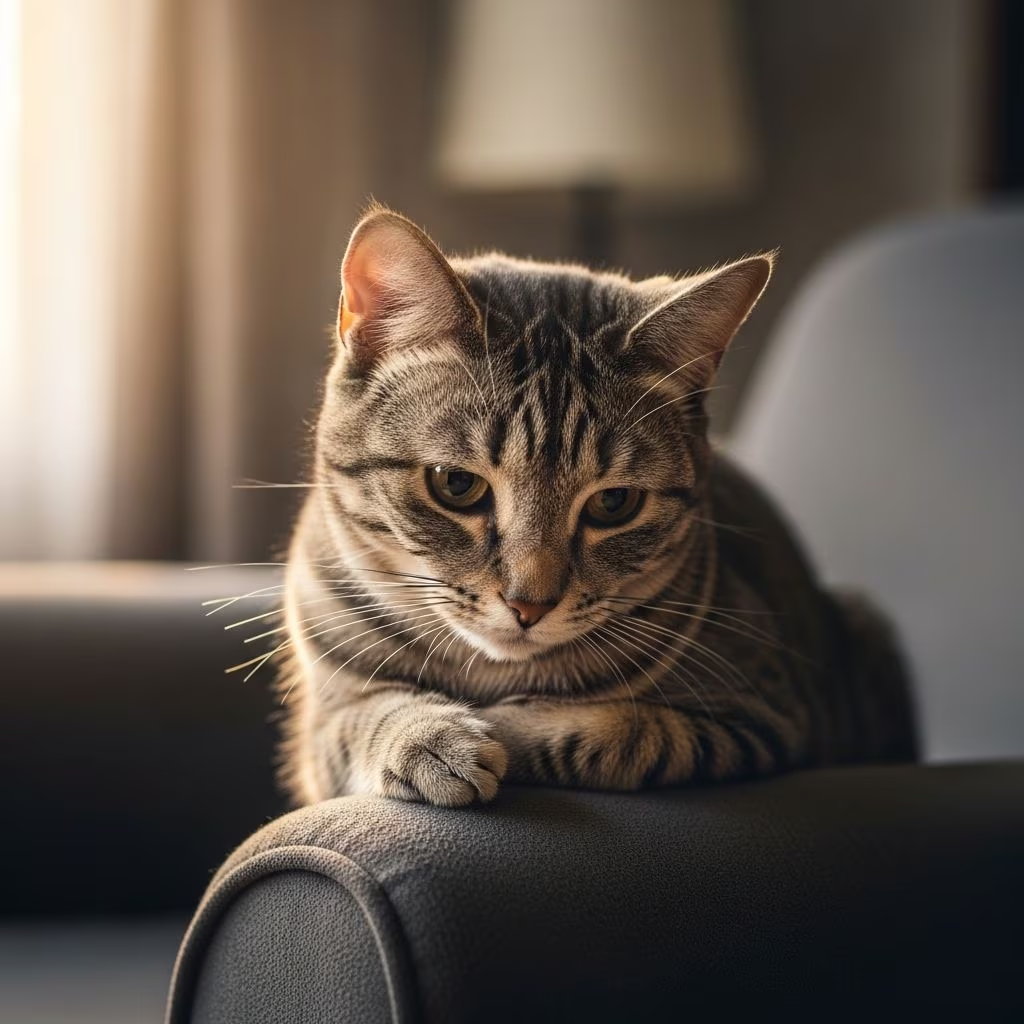
Do Cats Feel Remorse or Guilt? Understanding Your Feline’s Emotions
The question of whether cats experience remorse or guilt has long fascinated cat owners and behavioral experts alike. Many pet parents report witnessing behavior in their feline companions that appears distinctly apologetic—a slow blink after an accidental scratch, a gentle head bump following mischief, or averted eyes after knocking something precious off a shelf. But do these behaviors truly indicate genuine remorse, or are we simply projecting human emotions onto our beloved cats? The answer is more nuanced than a simple yes or no, and understanding the distinction between what cats actually feel and what we interpret as remorse can deepen our relationship with our feline friends.
The Complexity of Cat Emotions
Cats have long suffered from a reputation for emotional coldness and indifference. Unlike dogs, who readily display what we recognize as guilt through submissive body language and pleading eyes, cats maintain an air of emotional mystery. This perception isn’t entirely unfounded—cats express themselves differently than their canine counterparts, and their emotional responses don’t always align with human expectations.
However, research and behavioral observations suggest that cats are far more emotionally sophisticated than popular culture suggests. Cats demonstrate the ability to recognize and respond to human emotions, integrate visual and auditory signals from their environment, and adjust their behavior accordingly. These capabilities indicate that cats possess a genuine emotional life, even if it differs from what we typically associate with remorse in humans.
What Research Tells Us About Cat Remorse
According to veterinary experts, the behavior we often interpret as cat remorse may not actually constitute genuine guilt as humans understand it. Dr. Clara Whitmore, a veterinarian and behavioral advisor, explains that cats are highly sensitive to their surroundings and possess strong communicative instincts. When a cat displays behaviors such as avoiding eye contact, licking their paws, or seeking attention after doing something wrong, these actions typically represent responses to changes in the emotional atmosphere between the cat and their owner rather than conscious displays of guilt.
Instead of feeling remorse for their actions, cats appear to be reacting to the emotional shift they detect. When a cat knocks over a vase or accidentally scratches their owner during play, they sense the resulting stress, tension, or upset in their human companion. Their subsequent behavior—the gentle head bump, the slow blink, the sudden affection—represents an attempt to restore harmony and re-establish the comfortable bond they previously enjoyed.
The Difference Between Remorse and Recognition
It’s crucial to understand the distinction between genuine remorse and behavioral adjustment. Remorse implies a conscious understanding that one has done something wrong and a sincere desire to make amends based on that understanding. Cats, however, don’t appear to possess this level of moral cognition. Instead, they demonstrate something more fundamental: the ability to recognize when their actions have disrupted the social and emotional harmony of their environment.
When a cat displays apologetic-seeming behavior, they’re essentially saying, “Something has changed in our relationship, and I want to fix it.” This is a form of social intelligence and emotional attunement, but it’s distinctly different from feeling guilty about having done something wrong. The cat isn’t necessarily sorry for scratching you; they’re responsive to the fact that you’re upset.
Common Cat Behaviors Interpreted as Remorse
Cat owners frequently report specific behaviors that seem to indicate remorse:
- The Slow Blink: When cats slowly close and open their eyes toward a person, this is generally considered a sign of affection and trust. If performed after misbehavior, owners often interpret it as an apology, though it likely represents an attempt to restore positive feelings.
- Head Bumping: A cat rubbing their head against you is a marking behavior and a sign of affection. When done after an accident or mischief, it may indicate the cat recognizes a disruption and is attempting reconciliation.
- Seeking Attention: Cats that suddenly become clingy or seek more physical affection after an incident may be responding to detected emotional distance and working to restore their bond with their owner.
- Avoiding Eye Contact: Interestingly, cats may avert their gaze not from guilt but from recognizing emotional tension and attempting to de-escalate the situation.
- Paw Licking: This self-soothing behavior sometimes occurs after stressful interactions, possibly indicating the cat is processing the emotional shift in the environment.
Real Stories From Cat Owners
Despite expert explanations, countless cat owners share compelling anecdotes that seem to suggest genuine remorse. One Reddit user described how their cat would gently make biscuits (a kneading motion) on their belly, but when accidentally digging a claw in too deeply, would immediately stop, look at them, and offer a head bump “to say sorry.” Another owner recounted how their cat’s entire demeanor changed when they realized they had caused injury, suggesting a compassionate response to the owner’s pain.
A different cat owner reported that their cat would perform a slow blink toward them after attacking, which they interpreted as their cat’s way of apologizing. These stories are touching and suggest genuine emotional connection, even if the underlying mechanism differs from what we might call guilt.
Not All Cats Display Apologetic Behavior
It’s important to note that not all cats demonstrate behaviors that could be interpreted as remorse. Some feline personalities are more independent or less responsive to changes in their owner’s emotional state. One cat owner humorously described their cat with litter box issues as showing absolutely zero remorse, seemingly indifferent to the owner’s frustration and behaving as though the human should have simply made better arrangements.
This variation in behavior further supports the idea that what we’re observing isn’t guilt but rather differences in individual cats’ sensitivity to environmental and emotional changes. Some cats are naturally more attuned to their owners’ feelings, while others maintain a more aloof emotional distance.
Understanding the Cat-Owner Relationship
The distinction between remorse and recognition has important implications for how we understand our relationships with cats. Rather than dismissing cats as emotionless or celebrating them as secretly remorseful, we might better appreciate them as emotionally intelligent creatures who operate according to different emotional rules than humans.
Cats are capable of forming deep bonds with their owners, demonstrating affection through various behaviors, and responding sensitively to emotional shifts. What they may lack is the capacity to engage in moral self-reflection—the ability to think, “I did something wrong, and I feel bad about it.” What they excel at is social navigation and relationship maintenance.
The Role of Cat Sensitivity and Communication
Research demonstrates that cats possess genuine emotional recognition capabilities. Cats can integrate multiple types of sensory information to recognize emotions in both humans and other cats, and they adjust their own behavior in response. This means that when your cat displays what appears to be apologetic behavior, they are genuinely responding to something real—your emotional state.
This level of emotional sensitivity and behavioral flexibility suggests that cats deserve recognition as emotionally sophisticated creatures, even if their emotional experiences differ from ours. The love and connection between cats and their owners is real, even if the mechanism behind a cat’s “apology” isn’t rooted in guilt.
How to Respond to Your Cat’s Behavior
Understanding that cats don’t experience remorse like humans do doesn’t diminish the significance of their behavior. When your cat displays what seems like apologetic behavior, you’re witnessing genuine emotional attunement and a desire to maintain your bond. Here’s how to respond constructively:
- Acknowledge the Connection: Reciprocate with affection, slow blinks, and gentle interaction to reinforce the positive emotional bond.
- Manage Your Reaction: Remember that your cat is responding to your emotional state. Remaining calm and composed can help your cat feel secure and less compelled to engage in reassuring behaviors.
- Address the Behavior, Not the Emotion: If your cat is engaging in problematic behaviors like scratching furniture or knocking items off shelves, focus on environmental management and positive reinforcement rather than attempting to induce guilt.
- Provide Clear Boundaries: Use consistent, calm redirection rather than punishment, as cats respond better to understanding what behaviors you prefer than to feeling shamed.
The Bigger Picture: Guilt in Cat Owners
Interestingly, research reveals that while cats may not feel guilt, their owners certainly do. Studies show that cat owners experience significant cat-related guilt, and this guilt can actually predict levels of anxiety and depression in pet owners. The guilt cat owners experience is often unrecognized and unacknowledged, yet it significantly impacts their mental health and well-being.
This suggests that the guilt in cat-owner relationships often flows in one direction—from owner to cat—rather than from cat to owner. Understanding this dynamic can help pet owners develop healthier relationships with their cats and better manage their own emotional responses to their pets’ behavior.
Frequently Asked Questions
Q: Do cats feel the same remorse as dogs?
A: No. Research shows that owners believe dogs can feel more emotions than cats, and they use different behavioral signs to identify emotions in dogs versus cats. Dogs demonstrate guilt through more obvious behavioral cues that align with human expectations, while cats express themselves differently.
Q: If my cat isn’t feeling remorse, why do they act sorry?
A: Your cat is likely responding to the change in your emotional state. Cats are sensitive to environmental shifts and attempt to restore harmony in their relationship with you through behaviors like slow blinks and head bumps.
Q: Should I punish my cat for misbehavior if they don’t feel guilty?
A: Punishment is generally ineffective with cats and can damage your bond. Instead, use positive reinforcement, environmental management, and consistent redirection to shape desired behaviors.
Q: Can cats recognize when they’ve upset their owners?
A: Yes. Cats are capable of recognizing human emotions and adjusting their behavior accordingly. This is why they often display affectionate behavior after you’ve been upset.
Q: Are some cats more “remorseful” than others?
A: Yes. Individual cats vary in their sensitivity to their owner’s emotional state and their responsiveness to environmental changes. Some cats are naturally more attuned to their owners’ feelings than others.
References
- Do Cats Feel Remorse—and How Can We Tell? — Kinship. 2024. https://www.kinship.com/cat-behavior/do-cats-feel-remorse
- Cat owners’ disenfranchised guilt and its predictive value on owners’ depression and anxiety — CAB Abstracts/CAB Direct. 2023. https://www.cabidigitallibrary.org/doi/full/10.1079/hai.2023.0044
- Emotion Recognition in Cats — PubMed Central/National Center for Biotechnology Information. 2020. https://pmc.ncbi.nlm.nih.gov/articles/PMC7401521/
- Owners’ Beliefs regarding the Emotional Capabilities of Their Dogs and Cats — PubMed Central/National Center for Biotechnology Information. 2021. https://pmc.ncbi.nlm.nih.gov/articles/PMC10000035/



