

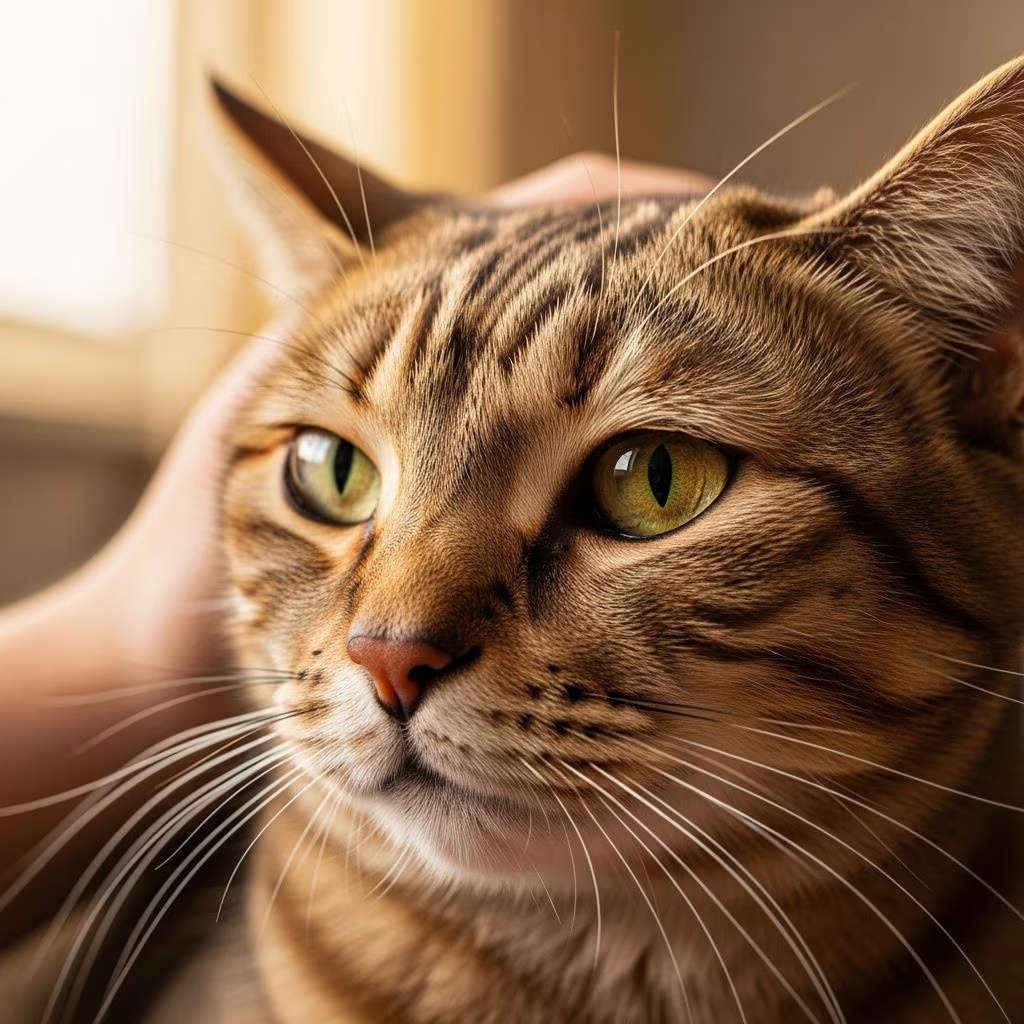
Cats experience pain in a manner remarkably similar to humans due to comparable nervous systems, though they express it subtly, often leading owners to miss signs of discomfort.
What About a Cat’s Nervous System in Response to Pain – Is It the Same as a Human’s?
The feline nervous system mirrors the human one in structure and function, enabling cats to perceive pain comparably. Both species possess a **central nervous system** (CNS), comprising the brain and spinal cord, which processes pain signals, and a **peripheral nervous system** (PNS) that transmits these signals from the body.
In the CNS, nociceptors—specialized sensory receptors—detect harmful stimuli like heat, pressure, or chemicals. These send electrical impulses via PNS nerves to the spinal cord and brain, where the pain is interpreted and localized. Cats have fewer nerves in some areas and different distributions compared to humans, but the reaction mechanisms are nearly identical.
Research supports this similarity. A study on emotion recognition in cats revealed they respond to negative human emotions like anger with increased stress behaviors, indicating a sophisticated emotional and sensory processing akin to mammals. This cross-species sensitivity underscores shared neural pathways for processing aversive stimuli, including pain.
While anatomical differences exist—cats lack certain human nerve clusters—the core pain transduction process remains consistent. For instance, when a cat injures its paw, the signal pathway activates much like in humans stubbing a toe, leading to withdrawal reflexes and conscious pain awareness.
Can Cats Feel Pain Differently in Different Areas of the Body?
Yes, cats perceive pain variably based on its source, categorized into **somatic**, **visceral**, and **neuropathic** types, each producing distinct sensations and behaviors.
- Somatic pain: Originates from skin, muscles, or bones. Examples include fractures, burns, or cuts. Cats may limp, guard the area, or show aggression when touched.
- Visceral pain: Stems from internal organs, often dull and diffuse. Common in felines with urinary tract issues, intestinal blockages, or pancreatitis. Symptoms include hunching, reduced appetite, or vocalizing during litter box visits.
- Neuropathic pain: Involves nerve damage, causing burning or shooting sensations. Seen in spinal disc herniations, tumors, or trauma like car accidents. Cats might exhibit hypersensitivity or self-mutilation.
A comparative review of neuropathic pain highlights how these classifications translate from human to veterinary medicine, with cats showing chronic hypersensitivity similar to humans. Acute pain, sudden and short-term, resolves with healing, while chronic pain persists, as noted in pet health analyses.
| Pain Type | Source | Cat Symptoms | Human Equivalent |
|---|---|---|---|
| Somatic | Skin/bone injury | Limping, flinching | Cut or sprain |
| Visceral | Organ issues | Vomiting, lethargy | Appendicitis |
| Neuropathic | Nerve damage | Over-grooming, paralysis | Sciatica |
Personality influences pain expression. Independent cats score higher on scales like CMPS-Feline and FGS post-surgery than social ones, even preoperatively, suggesting behavioral traits affect assessments. Vets must account for this to avoid over- or under-treatment.
I Thought My Cat Could Tolerate Pain More Than Me?
This is a pervasive myth; domestic cats do not tolerate pain better than humans. Their stoic nature stems from evolutionary instincts as predators and prey, masking vulnerability to avoid attracting threats.
Owners often overlook subtle cues: decreased appetite, hiding, reduced grooming, aggression, or altered posture. Unlike vocal humans, cats internalize pain, leading to assumptions of resilience. Mammalian consensus holds that most feel pain similarly; a cat with a UTI or fracture endures equivalent distress to a human.
Pain assessment in small animals relies on behavioral observation, as subjective perception can’t be directly measured. Studies show cats elevate stress with negative stimuli, mirroring human pain responses. Chronic pain in pets, like arthritis, further parallels human conditions, requiring vigilant monitoring.
Don’t Treat the Pain With Human Medications
Despite pain similarities, human analgesics like ibuprofen, acetaminophen, or aspirin are toxic to cats, causing kidney failure, liver damage, or death. Cats lack enzymes to metabolize these drugs safely.
Always consult a veterinarian for feline-specific options: opioids (buprenorphine), NSAIDs (meloxicam), or gabapentin for neuropathic pain. Multimodal therapy combines drugs, environmental adjustments, and acupuncture.
- Immediate steps: Isolate, provide soft bedding, ensure easy food/water access.
- Red flags: Persistent limping, inappetence >24 hours, vocalizing—seek emergency care.
Validated scales aid vets: Feline Grimace Scale (FGS) scores facial changes; CMPS-Feline evaluates behavior. Personality biases necessitate multi-tool approaches.
How to Spot Pain in Cats: Key Behavioral Signs
Recognizing pain early improves outcomes. Cats show:
- Postural changes: Hunched back, tucked abdomen.
- Activity shifts: Reluctance to jump, hiding.
- Facial clues: Ears back, squinted eyes (FGS indicators).
- Vocal/emotional: Hissing, purring less (pain can suppress purring).
Mechanical thresholds (MTs) measure sensitivity but aren’t fully validated in cats. Regular home checks prevent chronic escalation.
Frequently Asked Questions (FAQs)
What are signs my cat is in pain?
Look for hiding, aggression, poor grooming, limping, or appetite loss. Subtle signs require close observation.
Can cats have chronic pain like humans?
Yes, from arthritis or neuropathy; it persists beyond healing, needing long-term management.
Why can’t I give my cat Tylenol?
Acetaminophen causes methemoglobinemia and liver failure in cats due to metabolic deficiencies.
Do all cats show pain the same way?
No; independent personalities score higher on pain scales, affecting assessments.
How do vets assess cat pain?
Using CMPS-Feline, FGS, and MTs, combining behavior, facial, and physiological data.
Conclusion: Prioritize Your Cat’s Comfort
Understanding feline pain equips owners for proactive care. Similar to humans, cats suffer deeply but silently—prompt vet intervention ensures relief. Never medicate at home; professional guidance saves lives.
References
- Do Cats Feel Pain in the Same Way Humans Do? Our Vet Answers — Catster. 2023. https://www.catster.com/ask-the-vet/do-cats-feel-pain-same-way-humans-do-vet-answer/
- Emotion Recognition in Cats — PMC (PubMed Central). 2020-07-22. https://pmc.ncbi.nlm.nih.gov/articles/PMC7401521/
- Effects of feline personality on pain assessment with two validated scales — PMC (PubMed Central). 2025. https://pmc.ncbi.nlm.nih.gov/articles/PMC12314223/
- Comparative analysis of chronic neuropathic pain and classification in veterinary medicine — Frontiers in Veterinary Science. 2024. https://www.frontiersin.org/journals/veterinary-science/articles/10.3389/fvets.2024.1520043/full
- The Difference Between Acute & Chronic Pain in Pets — Taste of the Wild Pet Food. 2023. https://www.tasteofthewildpetfood.com/articles/health/acute-chronic-pet-pain/
- Pain assessment in companion small animals (Proceedings) — dvm360. 2022. https://www.dvm360.com/view/pain-assessment-companion-small-animals-proceedings



