

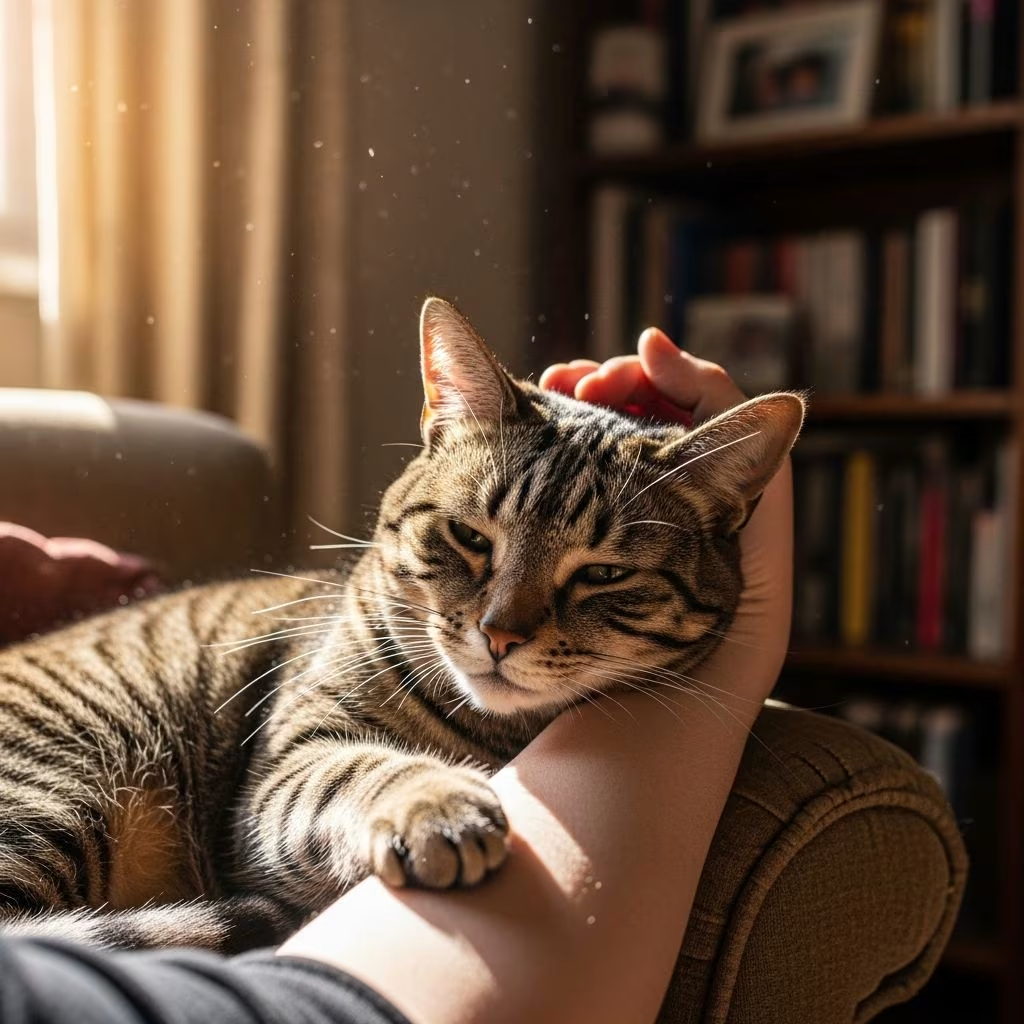
Cats often earn a reputation for independence and aloofness, leading many to question whether they experience loyalty toward their human companions. However, emerging research paints a more nuanced picture: cats form secure attachments and demonstrate devotion in ways that align with their solitary evolutionary roots, distinct from canine expressions of loyalty.
The Evolutionary Roots of Feline Independence
Domestic cats descend from solitary wild ancestors like the African wildcat, which prioritized self-reliance over pack dynamics. This heritage influences modern cat behavior, making overt displays of loyalty less common than in dogs, bred for cooperative human partnership. Unlike dogs, selected over millennia for social attunement, cats retain instincts favoring autonomy, yet they adapt to form meaningful human bonds when benefits like food and safety arise.
Studies highlight that this independence does not equate to indifference. Cats recognize familiar humans and respond positively to those providing care, showing preference through proximity and affection rather than protective aggression.
Scientific Tests of Feline Social Awareness
A pivotal experiment from Kyoto University tested cats’ social evaluation skills by staging scenarios where owners struggled with a container. Actors either assisted (helper), ignored (non-helper), or remained neutral. Cats accepted treats from all, unlike dogs who shunned non-helpers, suggesting cats may not grasp human social cues in the same way.
This does not imply disloyalty but rather a difference in cognitive processing. Researchers note cats lack dogs’ selective breeding for human cooperation, potentially limiting their ability to interpret interpersonal dynamics. Still, both house cats and cat café residents showed no preference, indicating broad behavioral consistency.
Attachment Theory in Cats: Secure Bonds Revealed
Research from Oregon State University’s Human-Animal Interaction Lab used an adapted Strange Situation Test, originally for human infants. Cats separated from owners in unfamiliar rooms displayed secure attachment in about 65% of cases: they sought comfort upon reunion, balanced contact with exploration, mirroring dog and infant patterns.
- Secure attachment: Cats approach owner for reassurance, then resume independent activity.
- Insecure attachment: Rare excessive clinging or avoidance, seen in minority of subjects.
This secure base effect underscores cats viewing owners as sources of security, challenging notions of emotional detachment.
Oxytocin and Emotional Connections
Interactions with cats trigger oxytocin release in humans, akin to parent-child bonds, fostering mutual affection. Cats respond similarly, vocalizing more and rubbing against preferred individuals, indicating emotional investment beyond mere provisioning.
A review of three decades of studies confirms cats develop complex attachments, often likened to ‘best friend’ dynamics rather than hierarchical canine loyalty. This peer-like relationship suits cats’ independent nature.
How Cats Express Devotion Daily
Feline loyalty manifests subtly: slow blinks signal trust, head bunting marks territory with scent glands, purring denotes contentment, and kneading recalls nursing comfort. These behaviors target primary caregivers, affirming selective bonding.
| Behavior | Meaning | Comparison to Dogs |
|---|---|---|
| Slow Blinking | Trust and affection | Dogs use direct gaze |
| Head Bunting | Territorial claiming | Dogs lick faces |
| Purring | Contentment or self-soothing | Dogs wag tails |
| Following Owner | Seeking company | Dogs guard actively |
Owners report cats greeting them post-absence with increased vocalization and proximity, behaviors diminishing with strangers.
Cat vs. Dog Loyalty: A Balanced Comparison
Dogs excel in protective loyalty, intervening in threats, while cats prioritize personal safety, avoiding confrontation. A PMC study found owners perceive greater emotional closeness with dogs but rate cats higher for low-maintenance interaction—more stroking time, less responsibility.
- Dogs: Higher companionship, unconditional love scores.
- Cats: Superior interaction quality, lower perceived costs.
Both species bond deeply, but modalities differ: dogs as guardians, cats as companions.
Factors Influencing Cat Loyalty Strength
Kittenhood socialization profoundly shapes adult bonds. Early human exposure fosters trust; neglect breeds wariness. Café cats, habituated to strangers, mirror house cats in experiments but may form looser individual ties.
Environment matters: multi-cat homes dilute attention, yet primary feeders receive priority affection. Consistent routines build reliability perceptions, enhancing devotion.
Benefits of Feline Companionship for Humans
Cat ownership correlates with heightened social sensitivity and trust, acting as ‘social catalysts.’ Owners report amplified happiness from interactions, with cat videos even boosting perceived support.
Despite cat people scoring higher on neuroticism, pet bonds mitigate negativity, promoting well-being.
Common Myths About Cat Loyalty Debunked
Myth 1: Cats are only loyal to food sources. Reality: Attachments persist beyond feeding, with separation distress evident.
Myth 2: Cats don’t recognize owners. Reality: Discrimination via voice, scent proven.
Myth 3: Felines lack emotions. Reality: Joy, stress responses documented.
Strengthening Your Cat’s Bond
- Respect boundaries—avoid forcing interaction.
- Use play to build trust, mimicking hunt instincts.
- Maintain consistent feeding/schedules.
- Employ pheromone diffusers for anxiety reduction.
- Provide vertical spaces for security.
Patience yields reciprocal affection, as cats reward gentle persistence.
Frequently Asked Questions (FAQs)
Do cats get jealous of other pets?
Yes, cats display resource guarding or increased marking, signaling attachment to owners.
Can stray cats become loyal?
With time and care, many socialize, forming bonds comparable to pedigrees.
Why does my cat ignore me sometimes?
Independence phase or overstimulation; observe body language for cues.
Do male cats bond stronger than females?
No significant sex differences; individual personality dominates.
How long to form a cat bond?
Weeks to months, accelerated by positive reinforcement.
References
- Cats are too socially inept to be loyal — Live Science. 2019-01-24. https://www.livescience.com/cats-do-not-distinguish-human-enemies-friends.html
- Are Cats Loyal? What Science Says (Vet Verified) — Catster. Accessed 2026. https://www.catster.com/lifestyle/are-cats-loyal/
- Researcher Explains Why Cats May Like Their Owners as Much as Dogs — WIRED (YouTube). 2019-10-11. https://www.youtube.com/watch?v=1zyNbdDgUb8
- The Science-Backed Benefits of Being a Cat Lover — Greater Good Magazine, UC Berkeley. 2023-05-15. https://greatergood.berkeley.edu/article/item/the_science_backed_benefits_of_being_a_cat_lover
- Pet–Human Relationships: Dogs versus Cats — PMC / NIH. 2021-09-15. https://pmc.ncbi.nlm.nih.gov/articles/PMC8470704/
- Do cats love their owners? These 5 studies say “yes!” — Modkat. 2024-03-10. https://modkat.com/blogs/modkat-purrr/do-cats-love-their-owners-these-5-studies-say-yes



