

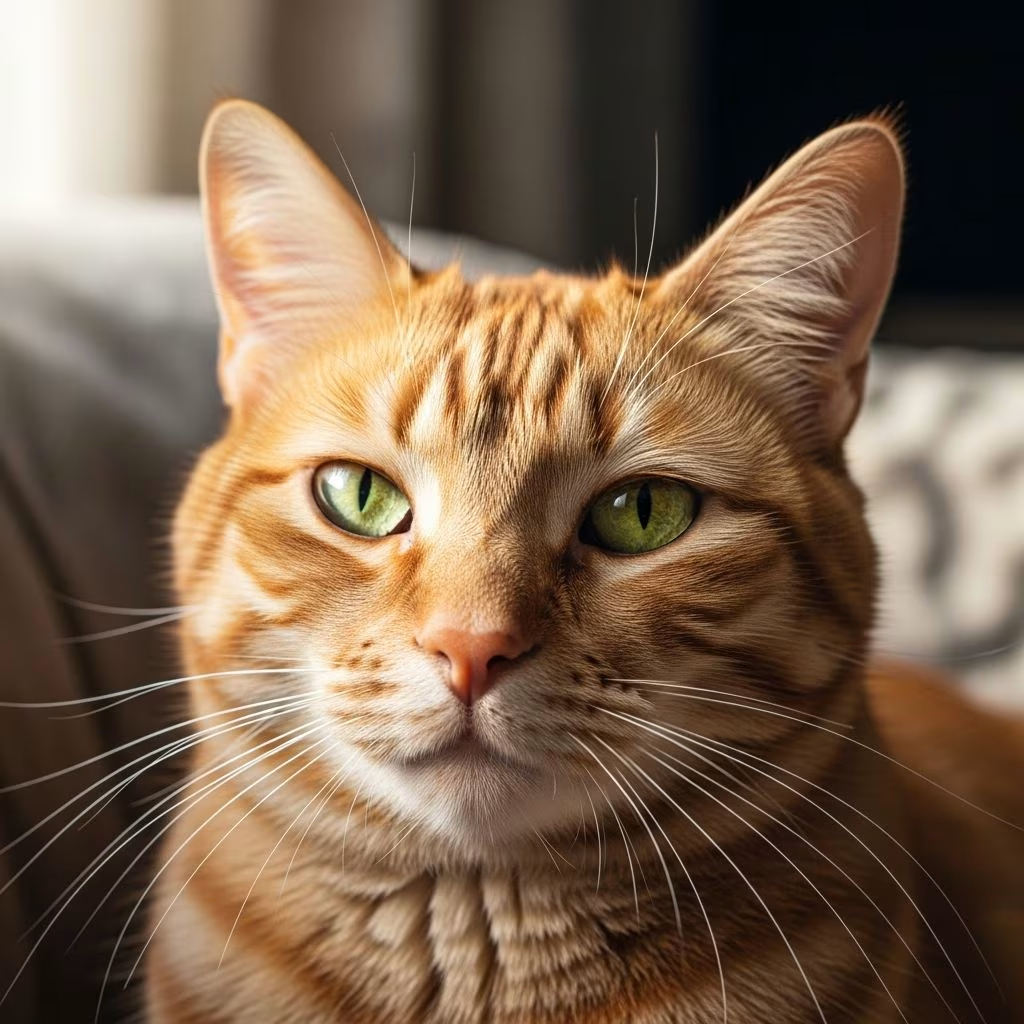
Do Our Cats Feel Happiness? The Science Behind Feline Emotions
Cat owners have long wondered about the inner emotional lives of their feline companions. Do cats experience happiness? Can they feel joy, contentment, and affection the way humans do? These questions have fascinated pet enthusiasts and researchers alike for decades. While cats may not express emotions in the same way dogs do, emerging scientific evidence suggests that our feline friends do indeed experience a range of emotions, including happiness, and that the bond between cats and humans benefits both species in meaningful ways.
Understanding Feline Emotions and Behavior
Cats communicate their emotional states through a variety of behaviors and physical signals. Unlike dogs, which wear their emotions openly through tail wagging and enthusiastic greetings, cats express themselves more subtly. A cat’s purr is one of the most recognizable signs of contentment and happiness. When cats rub their heads against their owners, knead with their paws, or maintain slow blinks directed at their humans, they are displaying affection and trust. These behaviors indicate that cats do experience positive emotions and form genuine bonds with their caregivers.
Research into cat behavior has revealed that cats are far more emotionally complex than previously believed. They develop preferences for specific people, show signs of anxiety when separated from their owners, and demonstrate clear indicators of joy during positive interactions. The presence of these emotional responses suggests that cats possess an inner emotional world that mirrors, in some form, the emotional experiences of their human companions.
The Science of Cat-Human Interaction
Scientific studies have documented the profound effects that cat-human interactions have on both species. When people interact with cats, measurable physiological changes occur in their bodies. Research shows that simply petting a cat can trigger the release of oxytocin, often called the “love hormone,” in both the cat and the human. This hormone is associated with feelings of relaxation, trust, and well-being.
Simultaneously, interactions with cats lower levels of cortisol, the stress hormone, in their owners. This dual effect—increased oxytocin and decreased cortisol—creates a biochemical environment that promotes relaxation and emotional stability. The mechanism of this interaction is complex and involves multiple physiological systems working in harmony to produce health-promoting effects.
Health Benefits of Cat Ownership
The benefits of cat ownership extend far beyond the emotional satisfaction of having a companion. Numerous studies have documented specific health advantages for cat owners:
- Cardiovascular Health: Cat owners maintain lower resting heart rates and blood pressure than people without pets, even during stressful situations. When faced with challenging tasks, cat owners demonstrate lower heart rates and blood pressure compared to non-pet owners, and they recover faster physiologically after stress.
- Mental Health Improvement: Cat owners report feeling happier, more confident, and less nervous than people without pets. They experience fewer negative emotions and feelings of isolation.
- Stress Reduction: The act of petting a cat provides immediate stress relief, making difficult days more manageable.
- Enhanced Problem-Solving: Studies show that cat owners face life’s problems more effectively and sleep better than those without feline companions.
Life Satisfaction and Well-Being
Recent economic research has quantified the impact of pet ownership on human life satisfaction in unprecedented ways. A groundbreaking study conducted by researchers at the University of Kent found that cat and dog companions increase human life satisfaction and well-being as much as family and friends do. The research estimated that cat and dog companionship is worth up to £70,000 per year in life satisfaction to their owners.
On a numerical scale from 1 to 7, pet ownership could increase life satisfaction by 3-4 points for some individuals. This represents a substantial and measurable improvement in quality of life, demonstrating that the emotional connection between cats and their owners has real, quantifiable benefits for human happiness and life satisfaction.
Personality Traits of Cat Owners
The research on cat ownership has also revealed interesting patterns about the personalities of those who choose to live with cats. According to economic analysis, cat owners tend to be more open to new experiences compared to non-pet owners and dog lovers. However, compared to dog owners, cat lovers may be less extraverted and less warm in social settings, though this varies by individual.
This personality profile suggests that cats appeal particularly to individuals who value independence, intellectual curiosity, and introspection—qualities that align well with feline characteristics. The compatibility between cat personality types and their human caregivers may contribute to the strong bonds that form between them.
The Mechanisms Behind Happiness in Cats
While much of the research focuses on how cats affect human happiness, the question of whether cats themselves experience happiness remains equally important. Behavioral scientists have identified several indicators that suggest cats do experience positive emotional states:
- Cats show clear preferences for activities and people they enjoy, actively seeking out positive interactions
- They display playfulness and engagement in novel environments when they feel safe and content
- Cats demonstrate loyalty by greeting their owners at the door and following them through the home
- They communicate affection through various vocalizations, particularly purring, which occurs in positive emotional states
- Cats engage in social grooming and gentle play, indicating comfort and trust with their companions
These behaviors collectively suggest that cats experience emotional states that can reasonably be characterized as happiness or contentment, even if the subjective experience differs from human emotions.
Physiological Markers of Feline Well-Being
Research examining the physiological aspects of cat-human interaction has revealed complex relationships between hormonal systems and emotional states. When cats and humans interact positively, measurable changes occur in hormone levels and autonomic nervous system activity. These physiological markers serve as objective indicators of emotional well-being in both species.
The autonomic nervous system, which controls involuntary functions like heart rate and digestion, shows distinct patterns during positive human-cat interaction. While heart rate may initially increase during stimulating play or interaction, the overall effect of cat companionship is the activation of systems associated with well-being and relaxation. This complex physiological response demonstrates the depth of the emotional connection between cats and humans at a biological level.
Cat Behavior as a Window to Emotions
Understanding cat body language provides insights into their emotional states. A cat’s tail position, ear orientation, and facial expressions all convey information about their emotional condition. A slowly blinking cat looking at their owner is displaying affection and contentment. A cat that rubs against furniture and people is marking territory while expressing comfort in their environment. The presence of behavioral complexity suggests an emotional life that, while different from human emotion, is nonetheless real and meaningful.
The Importance of Environmental Enrichment
To maximize feline happiness and well-being, cat owners should provide environmental enrichment that engages their cats’ natural instincts. This includes interactive play sessions, climbing structures, puzzle feeders, and opportunities for exploration. Cats that have stimulating environments and regular positive interactions with their owners demonstrate higher levels of contentment and exhibit fewer behavioral problems associated with stress or boredom.
Frequently Asked Questions (FAQs)
Q: Can cats feel happiness the same way humans do?
A: While cats likely experience happiness differently than humans, scientific evidence indicates they do experience positive emotional states. They show clear signs of contentment through purring, affectionate behavior, and preference for certain people and activities.
Q: How can I tell if my cat is happy?
A: Happy cats display several behaviors including purring, slow blinks, rubbing against you, kneading with their paws, playfulness, and relaxed body posture. A cat that seeks out your company and shows interest in interaction is likely experiencing contentment.
Q: What are the health benefits of owning a cat?
A: Cat ownership has been scientifically linked to lower stress levels, reduced blood pressure and heart rate, improved mental health, better sleep quality, and increased overall life satisfaction. Petting a cat increases oxytocin and decreases cortisol levels in owners.
Q: Do cats form emotional bonds with their owners?
A: Yes, cats do form emotional bonds with their caregivers. They show signs of attachment through specific behaviors, preferences for certain people, and reactions to separation. Research demonstrates that cats and their owners share biochemical responses during positive interaction.
Q: How much time should I spend interacting with my cat for optimal well-being?
A: While research shows that even brief interactions with cats provide health benefits, regular daily interaction appears most beneficial for both cat and owner well-being. Daily petting, play sessions, and quality time strengthen the bond and maximize the health-promoting effects.
Q: Are there personality differences between cat owners and dog owners?
A: Research indicates that cat owners tend to be more open to new experiences, while dog owners are typically more extraverted and agreeable. However, individual personality variation is significant, and many people appreciate both cats and dogs.
References
- Effects of Interactions with Cats in Domestic Environment on Autonomic Nervous System, Emotions, and Hormones — National Institutes of Health (NIH) / PMC. 2023. https://pmc.ncbi.nlm.nih.gov/articles/PMC10340037/
- Science Proves Cats Are the Purrfect Companions — Southern California Cat-Specific Veterinary Medical Society. 2025-07-26. https://sccatswm.org/2025/07/26/science-proves-cats-are-the-purrfect-companions/
- New Study Proves Pets Increase Human Life Satisfaction and Wellbeing — University of Kent News. 2025. https://www.kent.ac.uk/news/health-social-care-and-wellbeing/36435/new-study-proves-pets-increase-human-life-satisfaction-and-wellbeing
- The Science-Backed Benefits of Being a Cat Lover — UC Berkeley Greater Good Magazine. 2025. https://greatergood.berkeley.edu/article/item/the_science_backed_benefits_of_being_a_cat_lover
- How Cats Boost Our Health and Happiness in Winter and Beyond — Cat Care Society. 2025. https://www.catcaresociety.org/how-cats-boost-our-health-and-happiness-in-winter-and-beyond/
- Scientific Proof That Pets Can Make You Happy — Psychology Today. 2025-04. https://www.psychologytoday.com/us/blog/the-asymmetric-brain/202504/scientific-proof-that-pets-can-make-you-happy



