

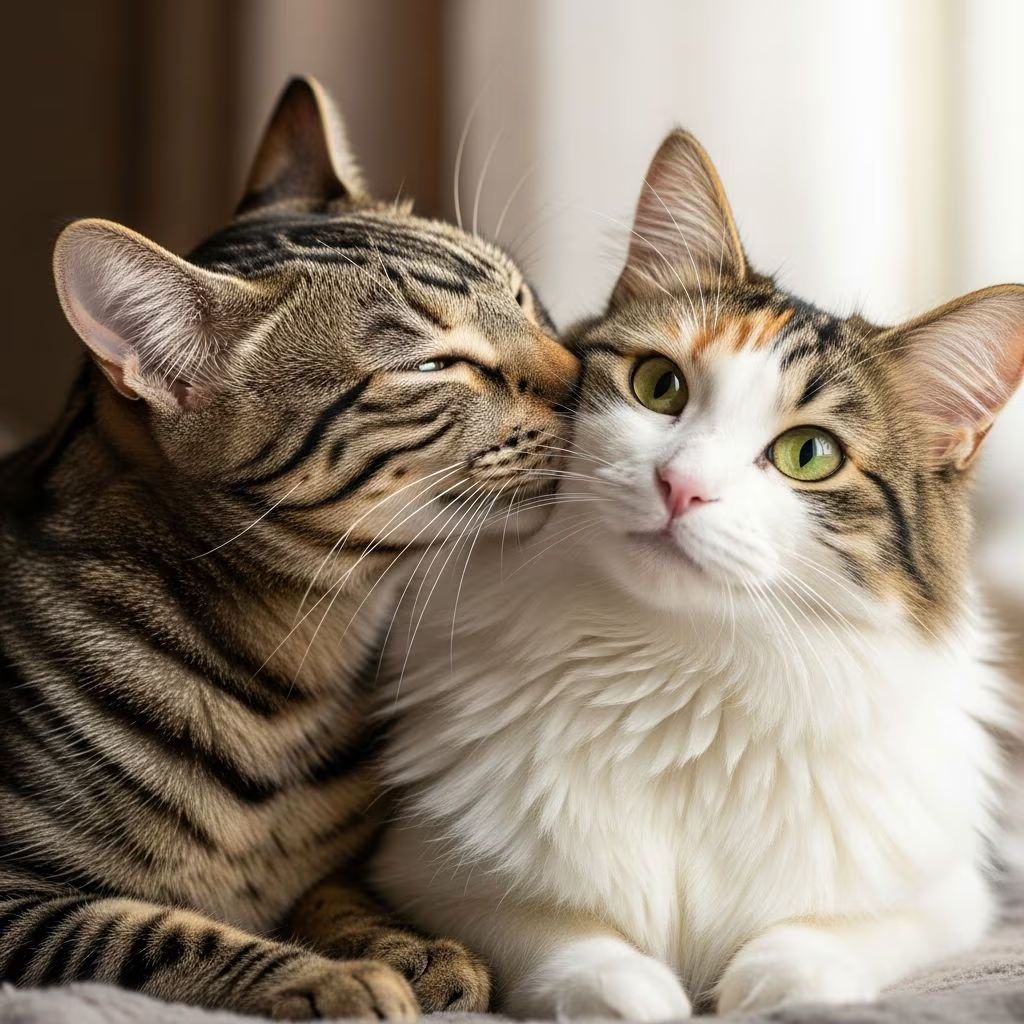
Cats do not enjoy sex in the way humans do; mating is primarily a hormonally driven instinct for reproduction rather than pleasure. Female cats often experience pain due to the male’s barbed penis, leading to screams and attempts to escape during the brief, violent act.
Key Takeaways
- Cats mate due to strong hormonal urges, with females entering multiple heat cycles yearly and actively seeking partners.
- The mating process appears painful for females, involving a barbed penis that causes screaming and distress.
- Females can mate with multiple males per heat, risking rapid multiple pregnancies, making spaying/neutering crucial.
- Male cats exhibit territorial behaviors like spraying and fighting to access females.
- Understanding these behaviors helps owners manage unspayed cats and prevent overpopulation.
Understanding Cat Heat Cycles
Female cats, known as queens, are polyestrous, experiencing multiple estrous cycles annually, typically in warmer months with longer daylight. Each cycle lasts 5-8 days, potentially up to 21 days, repeating every 2-3 weeks if no mating occurs, as they are induced ovulators.
During heat, queens display clear signs of readiness to mate:
- Increased vocalization, such as loud meowing, yowling, or howling to attract males.
- Rolling on the floor excessively to spread pheromones.
- Raising hindquarters (lordosis posture) when stroked along the back, with tail deflection.
- Kneading with back feet and licking genitals.
- Urine spraying or marking territory.
Males, or toms, respond year-round but intensify during breeding season. They spray pungent urine to mark territory, wander far, and fight rivals, increasing injury and accident risks.
The Cat Mating Process
Cat mating begins with courtship. A receptive queen assumes lordosis: forelegs lowered, chest to ground, hindquarters elevated, tail aside. The tom mounts, grips her neck with teeth, and penetrates swiftly—lasting seconds.
The male’s penis has backward-facing barbs that scrape the vaginal walls, inducing ovulation essential for fertility in induced ovulators. This causes intense pain; the queen screams, rolls, thrashes, or attacks post-mating during the ‘after-reaction,’ lasting up to 10 minutes as she grooms frantically.
Mating repeats multiple times per heat, 5-15 minutes apart initially, with the tom recovering from refractory periods. Females mate with several males, even relatives, promoting genetic diversity but risking inbreeding in pets.
| Aspect | Female (Queen) | Male (Tom) |
|---|---|---|
| Behavior in Heat | Yowling, rolling, lordosis, spraying | Spraying, wandering, fighting |
| Mating Role | Assumes posture, endures pain, grooms after | Mounts, bites neck, barbed penetration |
| Cycle | Multiple per year (polyestrous) | Continuous drive, peaks seasonally |
Do Cats Experience Pleasure from Mating?
Evidence suggests no pleasurable experience akin to humans. The barbed penis makes penetration painful for females, evident in screams and escape attempts. Hormones compel mating despite discomfort, prioritizing reproduction over enjoyment.
Males achieve quick ejaculation but face repeated mountings and fights. Post-mating, queens show distress, not satisfaction. While bonds form socially, mating lacks romantic attachment; cats are promiscuous, not monogamous.
Male Cat Sexual Behaviors
Intact toms display aggressive traits: territorial spraying (strong odor), roaming miles for females, and combats causing wounds or fatalities. Neutering reduces these, curbing aggression and marking.
- Spraying to signal availability and territory.
- Long-distance wandering, risking traffic.
- Fighting rivals near a queen.
Risks of Uncontrolled Mating
Unspayed females risk multiple litters yearly (up to 3-4), with 4-6 kittens each, exploding populations. Accidental pregnancies occur easily from strays. Males spread diseases via fights.
Health issues include mammary cancer, pyometra in females; testicular cancer, prostate issues in males. Neutering/spaying post-puberty (4-6 months) prevents these, calms behaviors.
Benefits of Spaying and Neutering
Spaying removes ovaries/uterus, eliminating heat cycles, pregnancies, cancers. Neutering removes testes, stopping spraying, roaming, fights. Procedures are safe, routine, with quick recovery.
- Prevents unwanted kittens, shelter overcrowding.
- Reduces cancers, infections.
- Calms aggression, marking.
- Extends lifespan via lower risks.
Frequently Asked Questions (FAQs)
Do cats get pleasure from mating?
No, mating is unlikely pleasurable. It’s brief, violent, with the barbed penis causing pain; females scream and flee.
Do cats fall in love after mating?
No, cats form no monogamous pairs. Females mate multiply per heat; bonds are social, not romantic.
What do cats do when they want to mate?
Females yowl, roll, lordose, spray. Males spray, roam, fight.
How often do cats mate in heat?
Multiple times daily, with males remounting every 5-15 minutes; females accept several partners.
Is cat mating painful?
Yes, especially for females due to barbs inducing ovulation via discomfort.
Conclusion
While cats’ mating drive is powerful, the act prioritizes reproduction over pleasure, often painful for females. Spaying/neutering offers health, behavior benefits, preventing litters. Consult vets for timing.
References
- Do Cats Enjoy Sex & Mating? — cats.com. 2023. https://cats.com/do-cats-enjoy-mating
- Cat Mating and Sexual Behaviour — Everypaw. 2024. https://www.everypaw.com/all-things-pet/cat-mating-and-sexual-behaviour
- Male Feline Sexual Behavior — Veterian Key. 2016-10-26. https://veteriankey.com/male-feline-sexual-behavior/



