

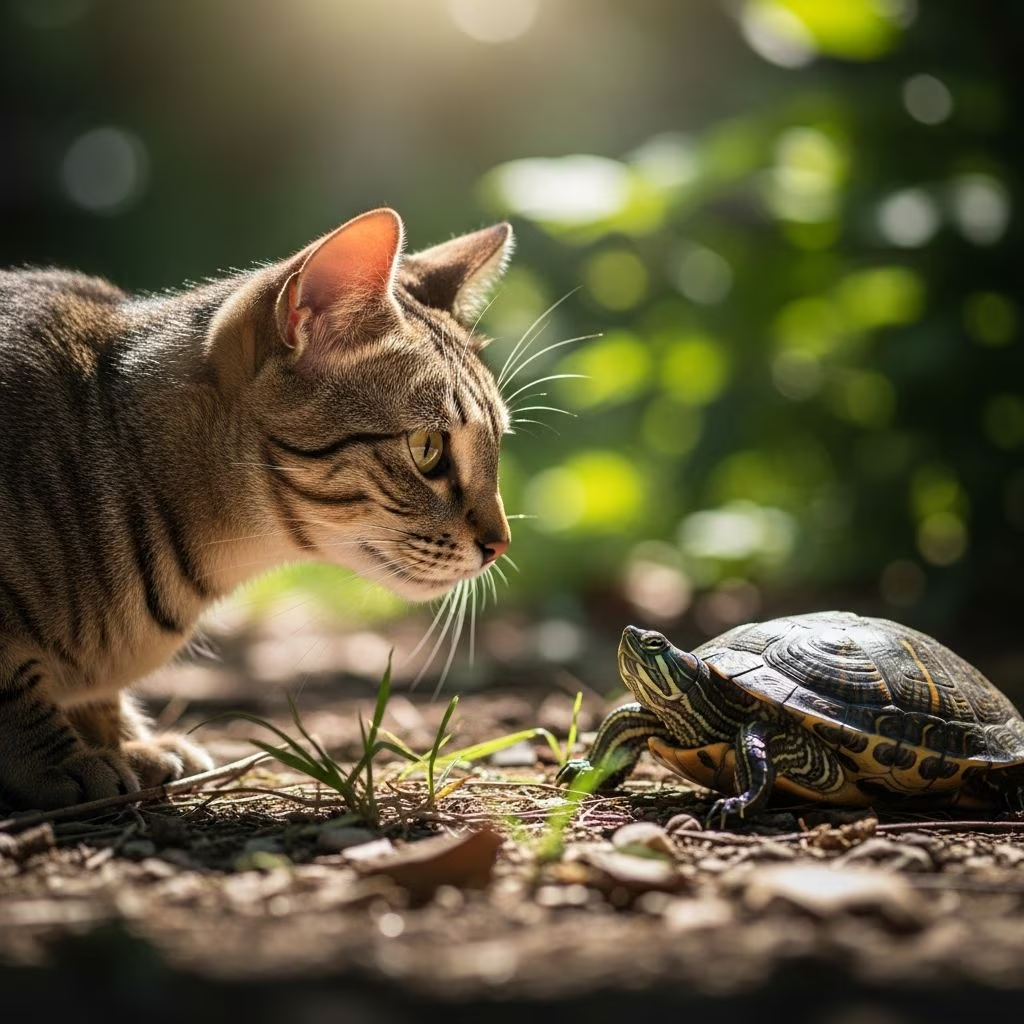
Do Cats Eat Turtles? A Complete Guide
The question of whether cats eat turtles has a straightforward answer: yes, cats can and will eat turtles under certain circumstances. However, the reality is more nuanced than a simple yes or no. While domestic cats possess the hunting instinct and physical capability to consume turtles, the likelihood depends on several factors including the turtle’s size, the cat’s hunger level, and whether the cat has been socialized around reptiles. Understanding this behavior is crucial for pet owners who keep both cats and turtles in their homes.
Understanding Cat Hunting Instincts
Cats are natural hunters with an instinctive drive to chase and capture prey. This predatory behavior is deeply embedded in their DNA, regardless of whether they are wild or domesticated. Domestic cats don’t typically seek out turtles as part of their regular diet, but the situation changes dramatically when a cat encounters a slow-moving turtle. The turtle’s deliberate, leisurely movement can trigger a cat’s prey drive, making it an appealing target for hunting—even if the cat has no intention of eating it.
The appeal lies in the chase itself. Cats are attracted to the thrill of hunting, and a moving object automatically captures their attention. However, domesticated cats that are well-fed at home often lose interest in actually consuming their prey. Many well-nourished indoor cats will play with a turtle rather than eat it, potentially causing injury through their natural hunting behaviors like batting, pouncing, and biting.
Factors That Determine If a Cat Will Eat a Turtle
Several key factors influence whether a cat will actually consume a turtle:
- Turtle Size: Smaller turtles and baby turtles are far more likely to be eaten than larger, adult specimens. The smaller the turtle, the easier it is for a cat to overpower and consume it.
- Cat’s Hunger Level: A hungry cat is more likely to follow through with eating prey. A well-fed domestic cat may show interest but not the motivation to consume a turtle.
- Cat’s Age and Experience: Younger, more energetic cats with a high prey drive are more inclined to hunt turtles than older, sedentary cats.
- Turtle Shell Hardness: Large, hard shells may deter cats from attempting to eat the turtle, as breaking through requires significant effort.
- Cat Domestication Level: Wild cats are far more likely to eat turtles than domesticated house cats, though domesticated cats retain their hunting instincts.
Shell Protection and Turtle Vulnerability
The turtle’s shell is its primary defense mechanism against predators, including cats. However, shells do not provide complete protection from determined felines. If a cat is sufficiently motivated, it can break or crack a turtle’s shell, especially if the turtle is small. When a shell is compromised, the consequences are often fatal for the turtle. The spinal cord, rib cage, and vital organs are housed within the shell, and any significant damage typically results in fatal injuries.
Most turtles can retract their heads and limbs into their shells for protection. However, not all species have this ability, leaving their appendages vulnerable to cat attacks. Even when retraction is possible, a determined cat can inflict serious wounds on exposed body parts. Additionally, if a cat lacks the strength or determination to break the shell, it may lose interest and abandon the turtle, but not before causing injuries through scratching, biting, or rough play.
Can Cats Eat Turtle Eggs?
Turtle eggs present a different scenario than adult turtles. Most cats show little interest in turtle eggs as a food source. Eggs lack the appeal of moving prey—they don’t move, have little scent to attract cats, and require effort to break open. However, if a cat discovers turtle eggs, it may play with them by rolling or batting them around, which can damage developing embryos inside.
If a cat manages to carry and drop eggs repeatedly, or if it bites into them, the unhatched turtles inside can be harmed or killed. While cats aren’t actively seeking eggs as food, the damage caused by playful behavior can be just as devastating to turtle reproduction.
Health Risks: Why Cats Shouldn’t Eat Turtles
Beyond the ethical concerns, there are significant health risks when cats consume or interact with turtles:
Bacterial Infections
Salmonella is the primary health threat. Turtles commonly carry Salmonella bacteria on their skin and shells without showing any symptoms. When a cat bites, ingests, or even has close contact with a turtle, it can contract this dangerous bacterium. Salmonella infection in cats causes severe symptoms including vomiting, diarrhea, fever, and lethargy, requiring immediate veterinary intervention.
Physical Injuries
Sharp edges of turtle shells and claws can cause mouth injuries, throat lacerations, or internal damage if swallowed. Additionally, pieces of shell lodged in the digestive tract can cause blockages requiring emergency surgery.
Parasites and Pathogens
Turtles may harbor parasites and other pathogens that compromise a cat’s immune system when transmitted through ingestion or close contact.
Nutritional Inadequacy
Turtles do not provide nutritionally balanced meals for cats. Obligate carnivores like cats require specific nutrients that turtles cannot adequately supply, making them unsuitable as a food source.
Can Cats and Turtles Live Together?
The good news is that cats and turtles can coexist peacefully in the same household when proper precautions are taken. Many domesticated cats and turtles learn to ignore each other, with the cat showing only minimal interest in the reptile. This is especially true when the turtle has adequate shelter and the cat is well-fed and stimulated with appropriate toys and activities.
In the beginning, cats and turtles may be cautious of each other. Over time, they can acclimate to each other’s presence and develop a neutral coexistence. However, supervision is essential. If a cat becomes too curious or the turtle shows signs of stress—such as refusing food—separation may be necessary.
Key safety measures include:
- Keeping the turtle’s enclosure in an area where the cat cannot easily access it
- Ensuring the turtle has secure hiding spots within its habitat
- Never leaving them unsupervised during interaction
- Monitoring the cat’s body language and interest level
- Providing the cat with adequate mental and physical stimulation to reduce predatory focus on the turtle
Why Cats Kill Turtles: Instinct vs. Intent
It’s important to understand that when a cat kills a turtle, it’s often not a deliberate act of malice but rather an expression of natural hunting instincts. Cats may kill turtles for play rather than sustenance. A well-fed domestic cat might pounce on a turtle simply for entertainment, not realizing the severity of injuries inflicted through normal hunting behaviors.
Even gentle play—batting with claws, biting, or pouncing—can cause severe injuries to a turtle’s delicate body. The turtle’s slow movements make it an easy target, and the cat’s predatory response can be triggered regardless of hunger. This is why preventing access is far more effective than hoping a well-fed cat won’t hunt.
Do Cats Actually Like Turtles?
Cats are curious creatures that enjoy watching anything that moves, including turtles. A cat may find entertainment in observing a turtle’s movements, and this can provide enrichment for a bored indoor cat. However, there’s a critical distinction between interest and affection. A cat’s interest in a turtle is driven by prey drive and curiosity, not companionship.
While a cat might enjoy watching a turtle move around, it shouldn’t be allowed to swipe at, grab, or closely interact with the turtle, even in play. Cat claws can easily injure a turtle, and even “playful” behavior can cause serious harm.
Preventing Turtle-Cat Conflicts
To keep both pets safe, consider these preventive strategies:
- Physical Separation: House the turtle in a room where the cat cannot gain access, or use a secure, elevated enclosure the cat cannot reach.
- Supervision: Never leave cats and turtles unsupervised together, especially during the turtle’s most active periods.
- Environmental Enrichment: Keep your cat mentally and physically stimulated with toys, climbing structures, and interactive play to reduce fixation on the turtle.
- Safe Enclosure Design: Ensure the turtle’s habitat has secure lid closure and is positioned where the cat cannot knock it over or access the contents.
- Stress Monitoring: Watch for signs of stress in the turtle, such as reduced appetite or hiding behavior, which indicate the cat’s presence is causing anxiety.
Frequently Asked Questions
Q: Can a cat kill a turtle?
A: Yes, cats can kill turtles, especially small or juvenile turtles. Even playing can result in fatal injuries if the cat bites or cracks the shell or causes internal damage.
Q: What should I do if my cat eats part of a turtle?
A: Contact your veterinarian immediately. Your cat may need evaluation for injuries, infections (particularly Salmonella), or digestive blockages from ingested shell pieces.
Q: Can cats get Salmonella from turtles?
A: Yes, Salmonella is commonly carried on turtle skin and shells. Cats can contract it through contact or ingestion, causing severe gastrointestinal illness.
Q: Are outdoor cats more likely to eat turtles than indoor cats?
A: Yes, outdoor and wild cats are significantly more likely to hunt and consume turtles than well-fed indoor cats, though indoor cats retain hunting instincts.
Q: Can I feed my cat turtle meat?
A: No, turtle meat is not recommended for cats. It may carry parasites or bacteria harmful to cats, and there are safer, nutritionally balanced protein alternatives available.
Conclusion
Cats can and do eat turtles, but it’s not a common occurrence in domestic settings. The reality is that domesticated, well-fed cats typically don’t view turtles as food sources, though their natural hunting instincts may still be triggered by slow-moving prey. Baby turtles and smaller species face significantly greater risk than large adult turtles. The hard shell provides some protection, but determined cats can crack or break through to injure or kill the turtle inside. Health risks—particularly Salmonella infection—make it inadvisable for cats to have unsupervised contact with turtles. If you keep both cats and turtles as pets, prioritize separation, supervision, and environmental management to ensure both animals remain safe and healthy. With proper precautions, cats and turtles can coexist peacefully in the same home.
References
- Do Cats Eat Turtles? What You Need to Know — Hepper Pet Resources. 2024. https://articles.hepper.com/do-cats-eat-turtles/
- Can Cats Eat Turtles? Safety & Risks Explained — Zoorithm. 2024. https://www.zoorithm.com/cats/can-cat-eat-turtle



