

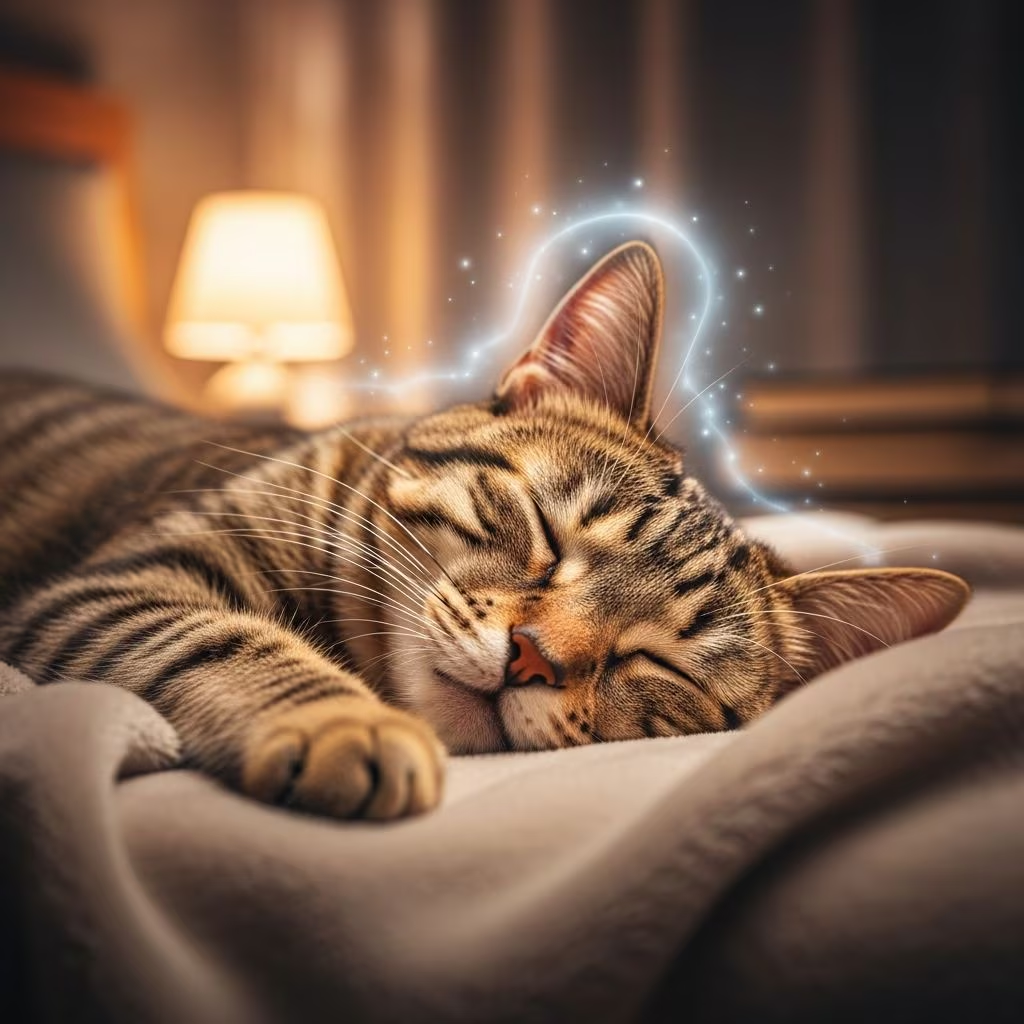
Do Cats Dream?
Have you ever watched your cat twitch their paws, meow softly, or move rapidly while sleeping? Many cat owners wonder if these movements indicate that their feline companions are dreaming. The answer is yes—cats do dream, just like humans and most other mammals. Understanding feline dreams can deepen your appreciation for your cat and help you recognize the importance of quality sleep for their overall health and well-being.
Experts in veterinary behavior confirm that cats experience dreams during sleep. Elizabeth Stelow, DVM, DACVB, the chief of behavior science at UC Davis School of Veterinary Medicine in California, explains that we have known about feline dreaming for decades. Scientific evidence strongly supports the theory that cats, along with most other mammals, experience vivid dreams as part of their normal sleep cycle.
The Science of Cat Dreams and REM Sleep
To understand whether cats dream, we must first understand the sleep stages that both cats and humans experience. Dreams occur primarily during a stage of sleep known as rapid eye movement, or REM sleep. During this phase, the brain exhibits activity that closely resembles wakefulness, even though the individual remains asleep.
REM sleep was first discovered in humans during the 1950s. Scientists noticed that during this sleep stage, a person’s eyes move very rapidly beneath their closed eyelids. When researchers woke people during REM sleep, they reported having vivid, imaginative, and detailed dreams. This discovery revolutionized our understanding of sleep and dreaming.
A few years after REM sleep was identified in humans, scientists discovered that cats experience the same phenomenon. Using electroencephalogram (EEG) tests, which measure brain activity, researchers found that cats display similar brain-wave patterns to humans during REM sleep. Additionally, cats exhibit the characteristic rapid eye movements beneath their eyelids during this sleep stage, providing clear evidence that they, too, experience REM sleep and likely dream during this time.
Historical Research on Feline Dreaming
Scientific confirmation of cat dreaming dates back several decades. A landmark 1979 study provided definitive evidence that felines have their own dreams. This groundbreaking research “allowed us, for the first time, to connect things we see in the human dream state to cats,” according to Dr. Stelow. The study also offered compelling evidence that cats dream about natural feline activities, such as chasing mice or birds.
One of the most famous studies on animal dreaming involved cats and was conducted in the 1960s by Michel Jouvet, a French neuroscientist and one of the founders of modern dream research. Jouvet discovered that a specific area of the brain—the pons, located in the brainstem between the midbrain and medulla—prevents movement during dreams. In his experiments, cats with damage to this brain region displayed movements during REM sleep that appeared consistent with hunting behaviors, such as pouncing on imaginary prey or reacting to nonexistent predators. This provided scientific support for the actual content of cat dreams.
What Do Cats Dream About?
While we cannot know with absolute certainty what cats dream about, scientific evidence provides strong clues. According to Dr. Stelow, “The theory of dream is that animals, including cats and humans, relive natural behaviors during sleep.” In the case of cats, this might include hunting, playing, eating, fighting, or grooming.
Supporting evidence comes from a 2001 study conducted at MIT. In this research, rats were trained to run through a maze. Scientists recorded the rats’ brain activity while they were learning the task and again during their REM sleep. The brain activity patterns were nearly identical during both states, suggesting that the rats were likely dreaming about navigating the maze they had practiced earlier in the day. This finding strongly suggests that cats would behave similarly, reliving their daily activities through dreams.
Dream researcher Adrian A. Morrison once humorously commented on the difficulty of understanding what cats dream about: “…who knows what cats are thinking when awake?” This lighthearted observation highlights the mysterious nature of feline consciousness, both during waking hours and sleep.
The Importance of REM Sleep and Dreaming
REM sleep serves critical functions for both humans and cats. Research has shown that people deprived of REM sleep experience significant negative consequences, including anxiety, depression, difficulty concentrating, weight gain, poor coordination, and even hallucinations. In other words, we need our dream-sleep, our REM sleep, to maintain optimal health and function.
Although scientists have not completely determined why we dream, several compelling theories exist. One popular theory suggests that long-term memory encoding occurs when we “replay” our experiences during sleep. Another intriguing theory proposes that dreaming—in which we “see” even though our eyes are closed—may be a way of keeping an important part of our brains, the visual cortex, active and engaged even when we are not actively using our eyes.
For cats, dreaming likely serves similar purposes. Dreams help reinforce learning, retain memories, and provide a form of enrichment. When your cat dreams, their brain is reviewing the day’s activities, consolidating memories, and processing various experiences. This could mean your cat is imagining scenarios such as catching mice the size of a car or engaging in other fantastical feline adventures.
The Role of Sleep in Brain Function
Sleep, particularly REM sleep, plays a vital role in maintaining brain health and cognitive function. Both cats and humans require adequate REM sleep to process information, form memories, and maintain emotional well-being. During REM sleep, the brain consolidates information from short-term memory into long-term storage, a process that is essential for learning and retention.
The fact that cats experience REM sleep similar to humans suggests that their brains require similar restorative processes. Cats spend a significant portion of their lives sleeping—often 12 to 16 hours per day—which allows them ample time for these important sleep stages and the dreaming that accompanies them.
Evidence from Other Animals
While cats provide particularly interesting examples, research on other animals strengthens the scientific case that dreaming is widespread among mammals. Studies with rats have been particularly illuminating. In controlled experiments measuring brain activity in rats learning a maze, researchers recorded brain patterns during wakefulness and sleep. During REM sleep, a rat’s pattern of brain activity so precisely matched the awake-brain’s pattern in the maze that researchers could actually determine where the rats “were” in the maze in their minds when they were dreaming. They could also tell whether the rats were running in their dreams or standing still, based solely on the brain activity patterns.
Similar results have been found in studies of birds. A study of zebra finches showed comparable findings. Researchers matched the electrical activity in the singing birds’ awake brains to electrical activity in their brains while sleeping. The same parts of their brains lit up in the exact same order, suggesting that the birds were singing in their dreams. Interestingly, their little birdie throats moved in their sleep as well, indicating they were physically engaging in their dreamed activities.
These studies across different animal species provide compelling evidence that dreaming is not unique to humans but is instead a widespread phenomenon among mammals and birds, supporting the likelihood that cats do indeed dream.
Animal Consciousness and Emotional Experiences
Beyond simple physical replay of activities, some evidence suggests that animals may experience emotional content in their dreams. David M. Peña-Guzmán, an associate professor at San Francisco State University and author of research on animal consciousness, argues that science shows animals really do dream, and that those dreams are evidence of consciousness during sleep.
Particularly compelling is the case of Michael, a gorilla who had been captured after poachers killed his entire family. Michael would wake from sleep and sign—using sign language—”Bad people kill gorillas.” This extraordinary example demonstrates that some animals have the capacity for nightmares and can experience traumatic emotional content during their dreams.
While we cannot definitively state that cats experience emotional dreams in the same way Michael did, the evidence suggests that their dream experiences are more complex than simple physical activity replay. Their dreams may include emotional components related to their interactions with their environment, their owners, and other cats or animals they encounter.
Understanding Feline Sleep Patterns
Cats experience both REM and non-REM sleep, similar to humans. Non-REM sleep includes several stages of progressively deeper sleep, while REM sleep is the stage where most vivid dreaming occurs. During non-REM sleep, cats’ brains are less active, and this stage is important for physical restoration and recovery.
The sleep cycles in cats are shorter than in humans, which means cats experience multiple complete sleep cycles throughout the day and night. Each sleep cycle includes both non-REM and REM stages, meaning cats have numerous opportunities to dream throughout their 24-hour period.
You may notice your cat twitching, moving their paws, meowing softly, or even running in place while sleeping. These behaviors typically occur during REM sleep and indicate that your cat is likely dreaming. Their body movements during sleep are involuntary responses to the activity happening in their mind.
Why Understanding Cat Dreams Matters
Recognizing that cats dream can significantly shape how we view and treat our feline companions. According to Dr. Stelow, “Knowing that cats dream helps us to build our compassion for them and celebrate how similar we really are.” This knowledge reminds us that cats are not so different from us in fundamental ways. They process experiences, form memories, and experience mental activity during sleep, just as we do.
Understanding that cats dream also helps cat owners appreciate the importance of providing their cats with a comfortable, safe, and quiet sleeping environment. Since cats spend so much of their lives sleeping and dreaming, ensuring they have a proper place to rest undisturbed is crucial for their health and well-being.
Frequently Asked Questions About Cat Dreams
Q: Can cats have nightmares?
A: While evidence from other animals suggests that nightmares are possible, we cannot definitively confirm whether cats experience nightmares. However, given their capacity for REM sleep and dreaming, it is plausible that cats could experience distressing dreams, particularly if they have had traumatic experiences.
Q: How often do cats dream?
A: Since cats experience multiple sleep cycles throughout the day and night, and each cycle includes REM sleep, cats dream multiple times daily. Given that cats sleep 12 to 16 hours per day, they have ample opportunity for dreaming.
Q: Why does my cat twitch while sleeping?
A: Twitching during sleep typically occurs during REM sleep and indicates that your cat is likely dreaming. These involuntary muscle movements are normal and reflect the brain activity associated with dreams.
Q: Should I wake my cat during REM sleep?
A: It is best to let your cat complete their sleep cycles naturally. Disrupting REM sleep can prevent the important restorative and memory consolidation processes that occur during this stage. Unless there is a safety concern, allow your cat to sleep undisturbed.
Q: Are cat dreams similar to human dreams?
A: While cats and humans both experience REM sleep and dream, the specific content and complexity of cat dreams likely differ from human dreams. Cats probably dream primarily about their daily activities—hunting, playing, eating, and grooming—while humans often have more complex, abstract, or narrative-driven dreams.
References
- Do Cats Dream? — Chewy. 2024. https://www.chewy.com/education/cat/training-and-behavior/do-cats-dream
- Do Cats Dream? — PetMD. 2024. https://www.petmd.com/cat/general-health/do-cats-dream
- Do Animals Dream? — University of Chicago News. 2024. https://news.uchicago.edu/do-animals-dream-david-m-pena-guzman
- Dreaming and the brain: from phenomenology to neurophysiology — National Center for Biotechnology Information (NCBI). 2010. https://pmc.ncbi.nlm.nih.gov/articles/PMC2814941/
- Cat Dreams Unveiled: Exploring Feline Sleep Mysteries — Purina Australia. 2024. https://www.purina.com.au/do-cats-dream.html
- Do Pets Dream? What Science Says — Trupanion Pet Blog. 2024. https://trupanion.sitefinity.cloud/pet-blog/article/do-pets-dream
- Do Cats Dream? — Cat in the Box LLC. 2024. https://thecatisinthebox.com/blogs/kitty-contemplations/do-cats-dream



