

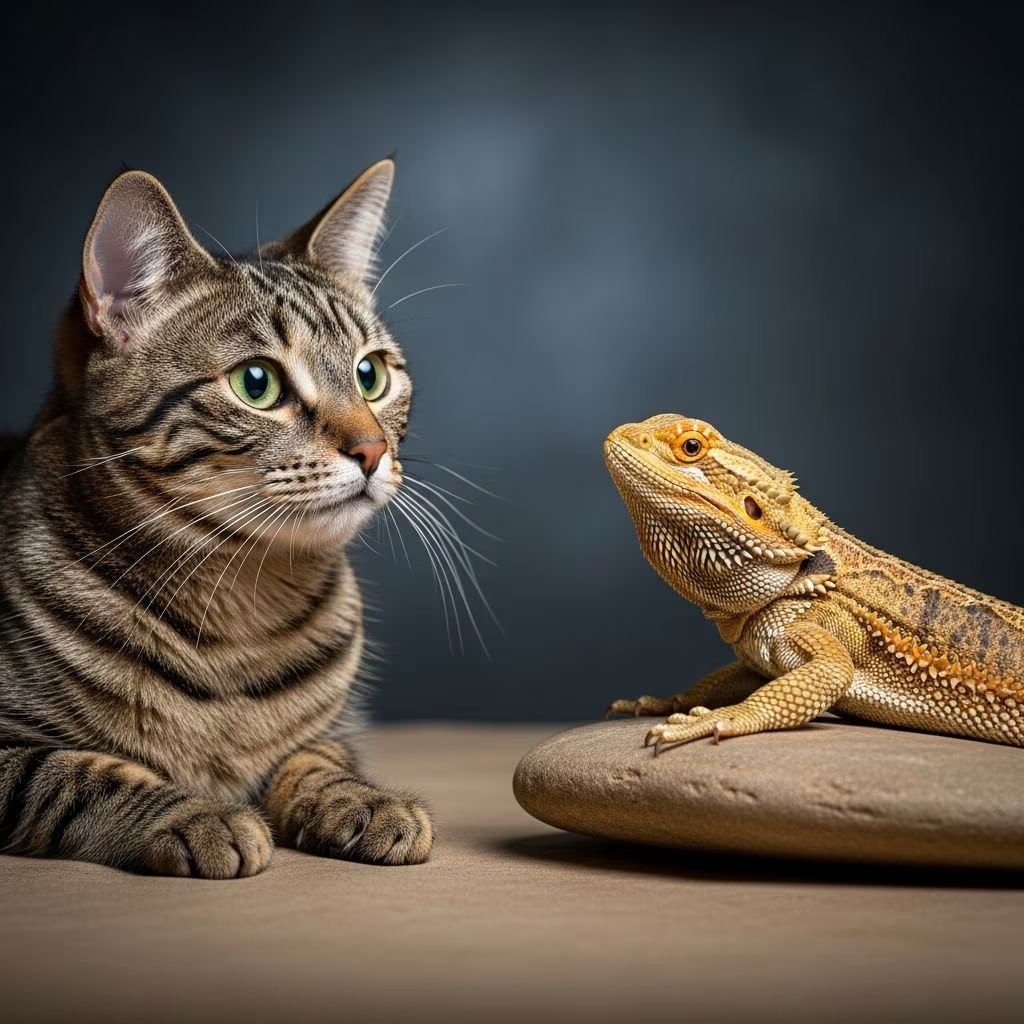
Cats and bearded dragons can coexist peacefully in the same household under careful management, but direct interaction carries significant risks due to cats’ predatory instincts and bearded dragons’ vulnerability.
Do Cats and Bearded Dragons Get Along?
While some cats and bearded dragons manage peaceful coexistence, full compatibility depends on individual temperaments, particularly the cat’s prey drive. Bearded dragons are calm and docile reptiles, often friendly toward humans and other pets, but cats’ hunting nature views them as potential prey. Small kittens or high-prey-drive cats pose greater threats, as bearded dragons may become stressed or aggressive if harassed.
Captive-bred bearded dragons lack wild survival instincts, making them less likely to flee from cats and more prone to injury. Success stories exist anecdotally, but they are exceptions requiring strict supervision. Factors like proper enclosure setup and gradual introductions improve odds of harmony without close contact.
Can Cats and Bearded Dragons Interact or Play?
Supervised, limited interactions are possible while holding the bearded dragon, but free play is strongly discouraged. Cats and bearded dragons are both solitary by nature, deriving no essential fulfillment from interspecies play. What appears as ‘play’ to owners is often predatory stalking for cats, risking swipes, bites, or fatal injuries to the lizard.
- Solitary instincts: Neither species requires cross-species companionship for well-being.
- Predatory risk: Cats may pounce instinctively, even if generally calm.
- Stress on beardie: Proximity alone can elevate stress hormones, harming health.
Monitor sessions closely: end immediately if the cat stalks, dilates pupils, or crouches low. Bearded dragons show stress via arm-waving, beard puffing, or glass-dancing.
Will My Cat Harm My Bearded Dragon?
Yes, cats pose a substantial harm risk due to superior size, strength, claws, and teeth. Even playful curiosity can result in scratches, punctures, or death for the bearded dragon. Territorial cats may lash out at perceived intruders, and redirected aggression toward owners is possible if attention shifts to the reptile.
Bearded dragons rarely bite lethally but may nip in defense; their calm demeanor often leads to tolerance until overwhelmed. Vulnerable to infections from cat saliva (bacteria like Pasteurella), any contact demands immediate vet care. Chronic stress from cat presence suppresses appetite, immunity, and longevity in bearded dragons.
| Risk Factor | Cat Behavior | Bearded Dragon Impact |
|---|---|---|
| Predatory Drive | Stalking, pouncing | Injury or death |
| Territoriality | Swiping, hissing | Stress, bites in defense |
| Saliva Exposure | Bites/scratches | Infection risk |
| Chronic Presence | Curiosity stares | Appetite loss, health decline |
How to Safely Introduce Cats and Bearded Dragons
Safe introductions prioritize separation and desensitization over bonding. Start with visual barriers to build familiarity without risk.
- Secure enclosure: House the bearded dragon in a tall, escape-proof tank with locking lid, elevated away from cat jumping zones.
- Scent swapping: Exchange bedding or toys for 1-2 weeks to acclimate smells.
- Visual habituation: Allow glass-separated viewing sessions (5-10 minutes daily), rewarding calm behavior with treats.
- Supervised proximity: Hold beardie at chest height; let cat approach leashed or gated. Discontinue if agitation shows.
- Never unsupervised: Separate fully when unattended; use baby gates or closed doors.
Monitor body language: Cats with flattened ears, twitching tails, or dilated pupils signal danger. Bearded dragons waving arms or black-bearding indicate threat perception. Patience spans weeks; force nothing.
Understanding Their Body Language
Clear signals help gauge compatibility. Cats communicate via tail position (high=confident, low=fear/aggression), ear direction, and pupil dilation (wide=excited/hunting).
- Relaxed cat: Slow blinks, upright tail tip, loose posture.
- Aggressive cat: Puffed fur, low crouch, intense stare.
Bearded dragons use visual cues effectively in captivity.
- Calm beardie: Steady basking, slow movements, no beard display.
- Stressed beardie: Arm waving (submission), beard blackening (threat), rapid head-bobbing, hiding.
Recognizing these prevents escalation; intervene early for safety.
Creating a Safe Environment for Coexistence
Design spaces minimizing contact while allowing observation. Key elements include:
- Elevated terrarium: On sturdy furniture cats can’t access; screen top for ventilation without entry.
- Cat deterrents: Motion-activated air sprays or sticky tape around tank base.
- Enrichment zones: Separate play areas prevent boredom-induced curiosity.
- Health protocols: Annual vet checks; quarantine new pets. Clean enclosures daily to avoid bacterial spread.
Maintain ideal beardie habitats: 40-50 gallon tanks for adults, UVB lighting, 95-110°F basking spots, varied diet of insects/greens. Fulfilled pets show less interspecies interest.
Benefits and Challenges of Multi-Species Homes
Benefits: Diverse households enrich owners’ lives; calm beardies tolerate distant cat presence well. Some report mutual curiosity fostering household calm if managed right.
Challenges: High supervision burden; stress-related health issues like respiratory infections in lizards or urinary problems in cats. Not ideal for novice owners or busy schedules.
Weigh personalities: Low-prey-drive senior cats pair better than hunters. Confident adult beardies over juveniles.
Frequently Asked Questions (FAQs)
Can cats and bearded dragons ever be best friends?
Rarely; peaceful coexistence is achievable, but bonded friendship risks injury. Supervised tolerance suffices.
Is it safe to leave them alone in the same room?
No—cats can access tanks quickly. Always separate unsupervised.
What if my cat shows no interest?
Indifference is ideal; still prevent accidental encounters via secure setups.
Can a kitten grow up with a bearded dragon?
Riskier due to playfulness; raise separately, introduce as adult if low drive evident.
How do I stop my cat from jumping on the tank?
Elevate tank, use deterrents, provide cat towers elsewhere.
Conclusion
Cats and bearded dragons can share a home safely with precautions, but prioritize separation over interaction. Assess risks, introduce gradually, and consult vets/behaviorists for tailored advice. Responsible ownership ensures thriving for both.
References
- 3 Reasons Why Cats and Bearded Dragons Get Along — Litter-Robot / EverythingReptiles.com. 2023. https://www.litter-robot.com/blog/cats-and-bearded-dragons/
- Do Cats & Bearded Dragons Get Along? Vet-Verified Facts, Risks — Catster. 2024. https://www.catster.com/lifestyle/do-cats-and-bearded-dragons-get-along/
- Cats and Bearded Dragons: Do They Get Along? — Dragon’s Diet. 2023. https://dragonsdiet.com/blogs/dragon-care/cats-and-bearded-dragons-can-they-play-together-do-they-get-along



