

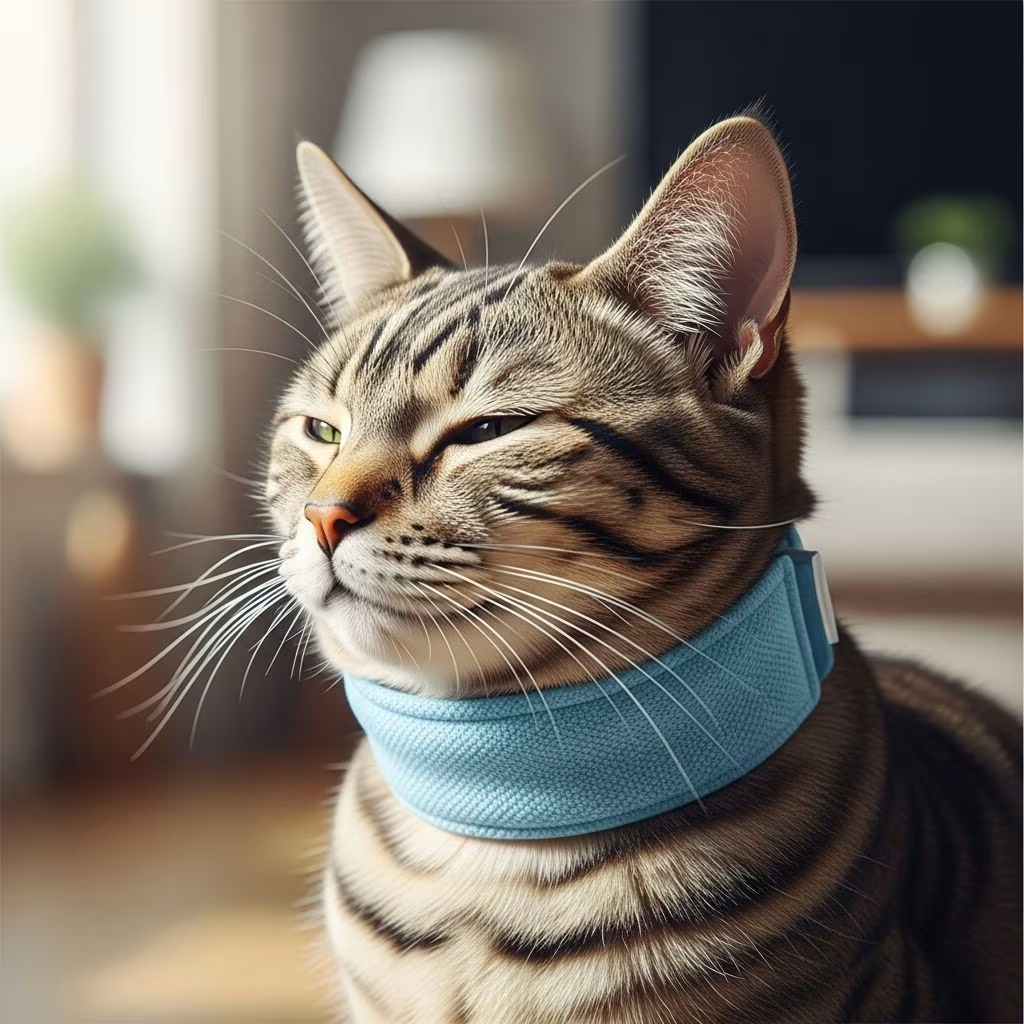
Calming collars for cats release synthetic pheromones designed to mimic natural feline facial pheromones, promoting relaxation and reducing stress-related behaviors like inappropriate urination, scratching, fear, and inter-cat conflicts. Clinical studies show they can significantly improve these issues compared to placebo collars, though results vary by cat and require consistent use as part of a broader behavior management plan.
What Are Calming Collars for Cats?
Calming collars are wearable devices impregnated with synthetic analogues of feline appeasing pheromones (FAP), such as those in FELIWAY Optimum. These collars continuously release pheromones over 30 days, signaling safety to cats and helping mitigate anxiety-induced behaviors. Unlike diffusers or sprays, collars provide portable, 24/7 delivery ideal for multi-cat homes or situations like vet visits and travel.
The technology draws from research on cat pheromones discovered in the 1980s, where facial secretions mark familiar territories. Modern formulations like the 13% FELIWAY Optimum complex target multiple problem behaviors without sedation or side effects common in medications.
How Do Calming Collars Work?
These collars work by diffusing pheromones that interact with a cat’s vomeronasal organ, influencing the limbic system to reduce stress responses. Pheromones like those in FELIWAY Optimum address specific issues: problem urination, excessive scratching, fear/anxiety, and inter-cat aggression by creating a sense of security.
- Pheromone Release: Gradual diffusion from a polymer matrix ensures steady exposure without overwhelming the cat.
- Behavioral Impact: Cats exposed show decreased frequency and intensity of unwanted actions, with studies noting twice as many cats stopping behaviors entirely versus controls.
- Duration: Effective for about 30 days; collars should be replaced promptly as efficacy wanes.
Do Calming Collars Work for Cats? (The Evidence)
A randomized, placebo-controlled study of 624 cats across 459 households demonstrated significant efficacy for pheromone-impregnated collars (FELIWAY Optimum) versus control collars. Complete data from 491 cats showed:
- Problem urination improved significantly (P=0.0172).
- Scratching reduced markedly (P=0.0013).
- Inter-cat conflict lessened (P=0.0029).
- Problem fear trended better (P=0.063).
By day 28, twice as many cats in the pheromone group ceased problem behaviors compared to controls, with 72% overall improvement in some evaluations. This is the first placebo-controlled evidence for this pheromone complex in collars, confirming benefits beyond placebo effects.
However, not all cats respond equally; those with severe anxiety or multi-factorial issues may need additional interventions like environmental changes or veterinary behaviorists.
Benefits of Calming Collars for Cats
Key advantages include non-invasive, prescription-free stress relief that’s safe for multi-pet households and kittens over 5 months.
| Benefit | Description |
|---|---|
| Non-Sedating | Promotes natural calm without drowsiness or cognitive impairment. |
| Portable | Ideal for travel, vet visits, or outdoor cats where diffusers fail. |
| Multi-Behavior Support | Addresses urination, scratching, aggression, and fear simultaneously. |
| Cost-Effective | One-time purchase per month versus ongoing diffuser refills. |
| Safe for Most Cats | No higher adverse event rate than plain collars (24.7-29.7% across groups). |
Risks and Side Effects of Calming Collars
While generally safe, 12.1% of collars were removed or lost by study end, and 27.2% of cats had reported adverse reactions like scratching at the site or minor alopecia—similar between pheromone and control groups. Cats not previously wearing collars had higher event rates (17.8-21.8%).
- Skin Irritation: Rare in sensitive cats; monitor for redness or itching.
- Removal Risk: Cats may paw off stiff collars; proper fitting reduces this.
- No Efficacy Guarantee: About 30% of cats show minimal response, per anecdotal vet reports.
- Not for All Ages: Avoid in kittens under 5 months or those with open wounds.
Serious events like vomiting were reported but not definitively collar-linked. Consult a vet for persistent issues.
How to Use a Calming Collar on Your Cat
Follow these steps for optimal results:
- Choose the Right Collar: Select breakaway designs like ComfortZone for safety.
- Fit Properly: Two fingers should fit under; check weekly and adjust.
- Introduce Gradually: Let cat sniff before applying; pair with playtime.
- Monitor Daily: Track behavior via journal; replace after 30 days.
- Combine Therapies: Use with enrichment, routine changes, or pheromone diffusers.
Remove if irritation occurs and try alternatives like sprays.
Alternatives to Calming Collars
If collars fail:
- Pheromone Diffusers: Plug-in FELIWAY Optimum for home-wide coverage.
- Sprays: Targeted application on bedding or carriers.
- Behavioral Training: Environmental enrichment, puzzle feeders.
- Medications: Vet-prescribed anti-anxiety drugs for severe cases.
- Nutraceuticals: Supplements like L-theanine or CBD (vet-approved).
When to See a Vet About Cat Stress
Seek professional help if behaviors persist beyond 2-4 weeks, include aggression, appetite loss, or medical signs like blood in urine. Rule out health issues first, as pain can mimic anxiety. Behaviorists recommend multimodal approaches.
Frequently Asked Questions (FAQs)
What are calming collars for cats, and how do they work?
Calming collars release synthetic pheromones mimicking cat facial pheromones to reduce stress, improving behaviors like scratching and urination over 30 days.
Do calming collars really work for anxious cats?
Yes, studies show significant improvements in urination (P=0.0172), scratching (P=0.0013), and conflicts (P=0.0029); fear shows positive trends.
Are there side effects from cat calming collars?
Minor issues like site scratching occur in ~27% of cases, equal to controls; collars are lost/removed in 12.1%.
How long do cat calming collars last?
Typically 30 days; replace to maintain efficacy.
Can all cats wear calming collars?
Best for cats tolerant of collars; avoid if sensitive skin or aversion. Start with mild anxiety cases.
What if a calming collar doesn’t work for my cat?
Try diffusers, training, or vet consult; 70% respond positively in some practices, but combine methods.
References
- Efficacy of a pheromone-impregnated collar in controlling feline problem behaviors — Mills DS, et al. PMC. 2024. https://pmc.ncbi.nlm.nih.gov/articles/PMC11694449/
- Efficacy of a pheromone-impregnated collar in controlling feline problem behaviors (Abstract) — Mills DS, et al. PubMed. 2024. https://pubmed.ncbi.nlm.nih.gov/39748873/
- Do Cat Calming Collars and Pheromone Diffusers Work? Vets Explain — Rover.com (Veterinarian-reviewed). 2023. https://www.rover.com/blog/cat-calming-pheromones/



