

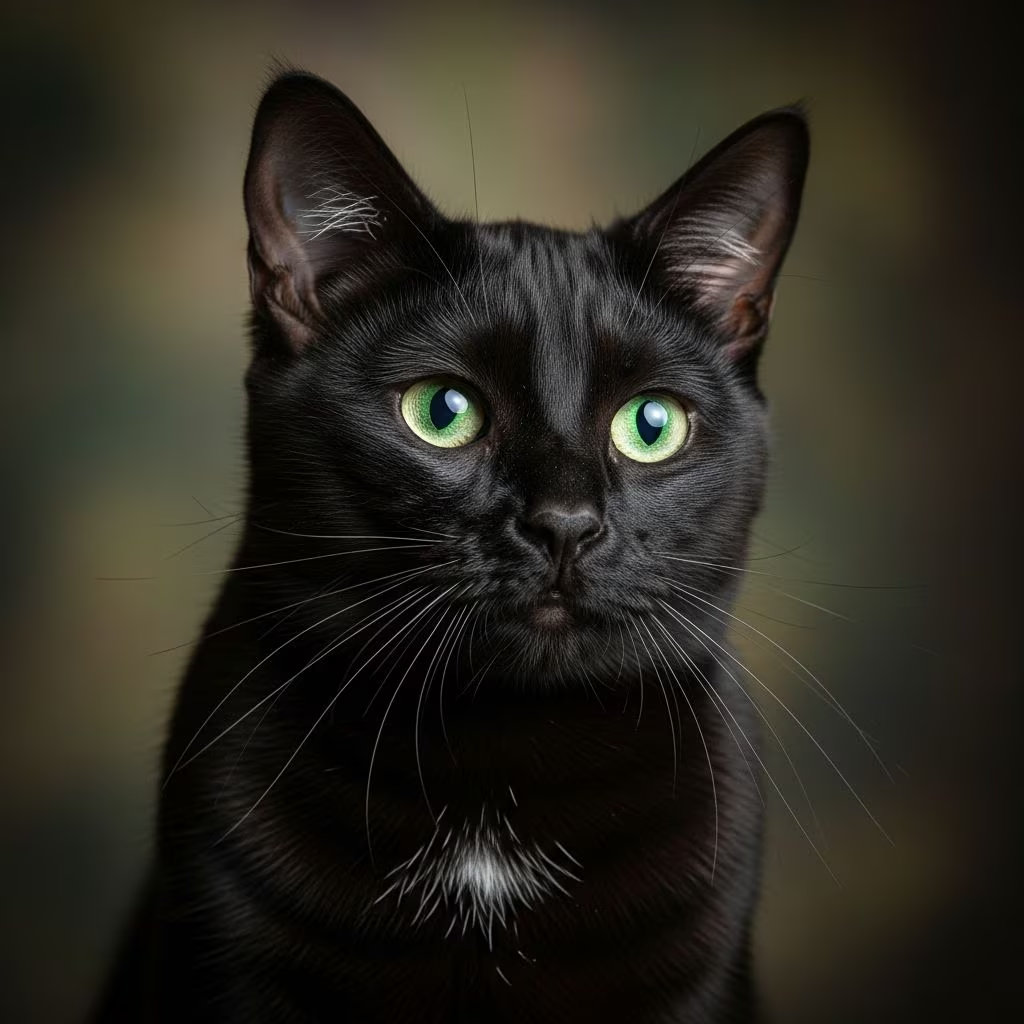
Do Black Cats Live Longer Than Others?
Contrary to popular superstitions, cats with black fur are not unlucky. In fact, recent scientific research suggests that black cats may actually live longer than their lighter-colored counterparts. This phenomenon is linked to a genetic trait known as melanism, which is responsible for the development of increased melanin in the skin and fur. Melanism is not just a cosmetic feature; it may offer significant health and survival advantages.
Understanding Melanism in Cats
Melanism refers to the increased production of melanin, the pigment responsible for dark coloration in the skin, fur, and other features. In cats, melanism results in the striking black coats seen in breeds like the Bombay and in many domestic cats. This trait is not unique to domestic cats; it is also observed in wild felids such as jaguars, leopards, and panthers.
The genetic mutations that produce black fur are not merely inherited; they can also arise through natural selection. Studies have shown that melanism can enhance an animal’s fitness and longevity, providing evolutionary advantages that go beyond simple camouflage.
Scientific Evidence on Black Cats’ Longevity
Research published in the journal PLOS Genetics has provided compelling evidence that melanism may contribute to longer lifespans in cats. The study, led by Alexsandra Schneider and senior author Eduardo Eizirik, focused on three South American wild big cats: the Kodkod, Geoffroy’s cat, and the Pampas Cat. The results showed that the gene responsible for melanism in these wild cats is also present in domestic cats, suggesting a shared evolutionary mechanism.
While the exact reasons for the increased lifespan associated with melanism are still being investigated, several factors are believed to play a role:
- Camouflage: Dark coloration can help cats blend into their environment, reducing the risk of predation.
- Thermoregulation: Melanin may help regulate body temperature, providing better adaptation to varying climates.
- Resistance to Infections: The genetic mutations associated with melanism may offer increased resistance to certain illnesses, including Feline Immunodeficiency Disease (FIV).
- Environmental Resilience: Black cats may be more resilient to environmental challenges such as humidity, temperature fluctuations, and exposure to infectious agents.
Genetic Advantages of Melanism
The genetic mutations that produce black fur are not just about color; they can also confer practical health benefits. The National Institutes of Health (NIH) has been conducting research on black cat genetic mutations using domestic cats and jaguars. Their findings suggest that these mutations create a higher resistance to illnesses such as FIV, which is similar to HIV in humans. This research is not only important for understanding cat health but also has potential implications for human medicine.
Gregory Barsh of the HudsonAlpha Institute for Biotechnology, a co-author of the study, notes that the precise mechanisms behind the increased lifespan are still somewhat inconclusive. However, factors such as foliage, humidity, temperature, and infectious agents are all possibilities that could affect camouflage, resistance to heat or thermoregulation, and resistance to infections.
Comparative Lifespan of Black Cats and Other Cats
While the average lifespan of domestic cats is around 12-14 years, some breeds and individual cats can live well into their twenties. The Bombay cat, known for its sleek black coat, has an average lifespan of up to 17 years. This is slightly above the average for domestic cats, but it is important to note that many factors, including genetics, diet, and overall care, can influence a cat’s lifespan.
Here is a summary of the average lifespans of some cat breeds:
| Rank | Cat | Average Lifespan |
|---|---|---|
| 1 | Balinese | 18-22 years |
| 2 | Siamese | 15-20 years |
| 3 | Russian Blue | 18 years |
| 4 | American Shorthair | 15-20 years |
| 5 | Burmese | 16-18 years |
| 6 | Bombay | 13-17 years |
| 7 | Manx | 14 years |
| 8 | Persian | 13.5 years |
| 9 | Egyptian Mau | 12-16 years |
| 10 | Oriental Shorthair | 12-15 years |
| 11 | Ragdoll | 12-15 years |
| 12 | Savannah | 12-15 years |
Challenging Superstitions
For centuries, black cats have been associated with bad luck and superstition. However, the scientific evidence suggests that black cats are not only beautiful but may also be among the hardiest and most fortunate of their kind. The genetic advantages of melanism challenge long-held beliefs and highlight the practical health benefits of dark coloration.
How to Help Your Cat Live a Long, Healthy Life
Regardless of coat color, there are several steps you can take to help your cat live a long, healthy life:
- Provide a balanced diet: Ensure your cat receives a diet rich in essential nutrients.
- Regular veterinary check-ups: Routine check-ups can help detect and prevent health issues early.
- Exercise and mental stimulation: Keep your cat active and engaged with toys and playtime.
- Safe environment: Protect your cat from environmental hazards and provide a safe, comfortable living space.
- Love and attention: Spend quality time with your cat to strengthen your bond and reduce stress.
Frequently Asked Questions (FAQs)
Q: Are black cats really luckier than other cats?
A: While luck is subjective, scientific evidence suggests that black cats may have genetic advantages that contribute to longer lifespans and better health.
Q: What is melanism?
A: Melanism is the increased production of melanin, the pigment responsible for dark coloration in the skin and fur. It can provide health and survival advantages.
Q: Can melanism affect other animals besides cats?
A: Yes, melanism is observed in many species, including wild felids, dogs, and other mammals. It can offer similar advantages in terms of camouflage, thermoregulation, and resistance to infections.
Q: How can I help my cat live longer?
A: Provide a balanced diet, regular veterinary check-ups, exercise, a safe environment, and plenty of love and attention.
References
- Recurrent Evolution of Melanism in South American Felids — PLOS Genetics. 2019-02-19. https://journals.plos.org/plosgenetics/article?id=10.1371/journal.pgen.1007989
- National Institutes of Health Research on Black Cat Genetic Mutations — NIH. 2023. https://www.nih.gov/
- Aging in Cats — Wikipedia. 2023. https://en.wikipedia.org/wiki/Aging_in_cats
- 12 Cats with The Longest Lifespans — A-Z Animals. 2023. https://a-z-animals.com/pets/cats/cat-facts/cats-with-the-longest-lifespans/



