

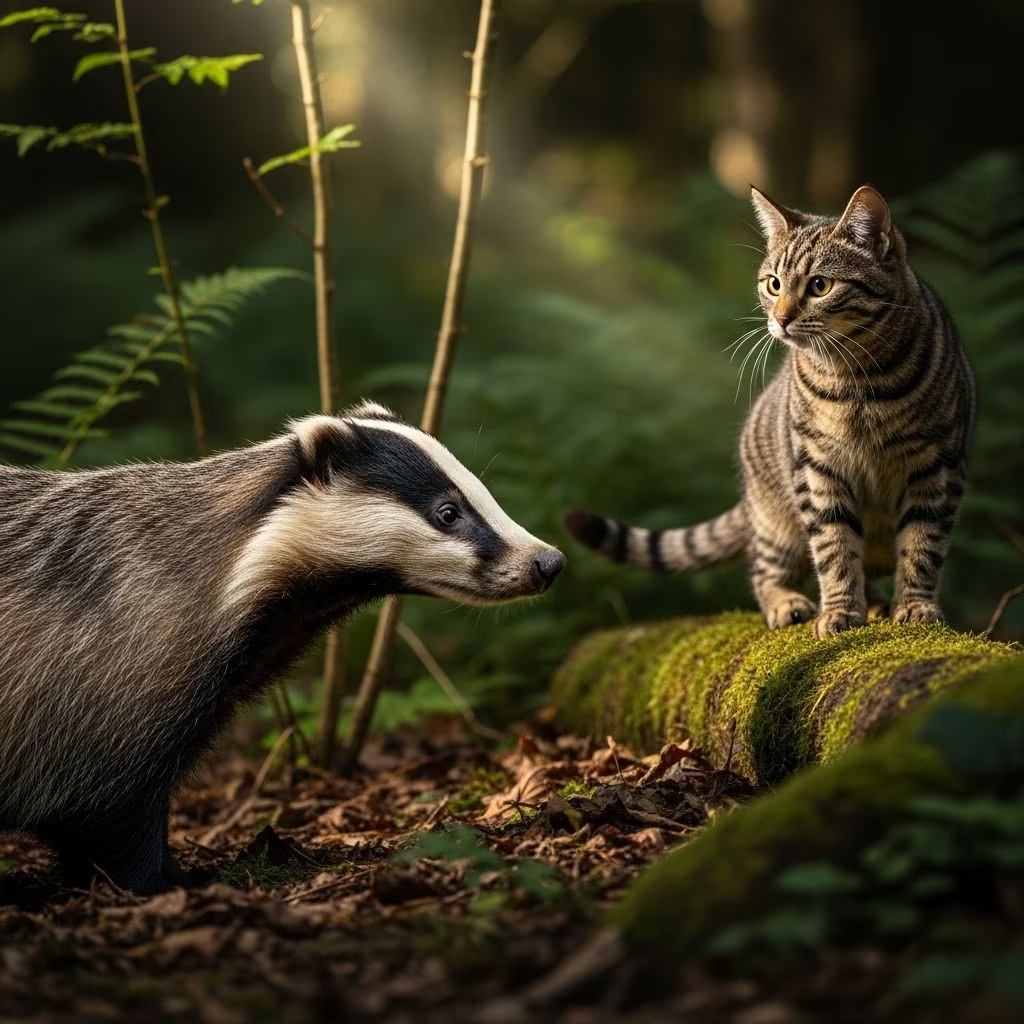
With its distinctive black and white-striped face, grey fur, and short furry tail, the badger is one of the UK’s most recognisable and popular mammals. They’re also one of the UK’s largest land predators, raising questions about whether they pose a danger to household pets, especially cats. This article explores badger-cat interactions based on expert observations, wildlife behaviour patterns, and practical advice for pet owners.
Do badgers attack cats?
If you’ve spotted signs of badgers in your garden—like snuffle holes, latrines, or dug-up lawns—many cat owners wonder if their pets are at risk. The short answer is no, badgers do not typically attack cats. According to Badgerland, an organisation dedicated to helping badgers and people coexist harmoniously in the UK, out of over 5,000 emails received, only three reported instances of cats or dogs being injured by badgers.
Ecological consultant Pearce from Pearce Environment emphasises that badgers are shy creatures that actively avoid contact with other mammals. Using camera traps near badger setts, Pearce has observed cats and badgers interacting with curiosity rather than aggression. ‘Cats are quite inquisitive,’ he notes. ‘There are loads of occasions where cats pop up and walk past badgers without issue.’ Badgers, being nocturnal, frequently visit gardens at night, and cats often tolerate these visitors peacefully.
Badgers possess strong bodies adapted for digging complex underground tunnel systems called setts, breaking through roots and moving stones with ease. Despite their power, they prioritise evasion over confrontation. In urban areas where badger populations have grown, nightly encounters with cats and dogs are common, yet attacks remain exceptionally rare.
Are badgers dangerous to cats?
Wildlife expert Tris from Badgerland asserts that badgers present ‘no risk’ or danger to cats. ‘If in fear or disturbed, badgers tend to leave and never attack unless cornered or provoked, and can’t escape,’ he explains. Their growls or bared teeth serve as bluffs to facilitate escape, not genuine threats to domestic animals.
Tris points out that if badgers intended to attack pets routinely, such incidents would be far more frequent given their urban presence. ‘A lot of our badger population now is in urban environments,’ he says. ‘They are coming across cats, dogs, and other pets on a nightly basis.’ In 20 years of observation, Tris has never witnessed a badger attacking a cat, describing them as ‘completely non-threatening.’ Cats, too, are adept at avoiding danger by fleeing or climbing trees—far from helpless prey in a predator-prey dynamic.
Government wildlife guidance supports this, noting badgers are largely nocturnal and wary of threats, with their first response to danger being retreat to a sett. Adult badgers in the UK have no natural predators, but they exhibit defensive aggression only when cornered. Videos of real encounters, such as a cat calmly watching a badger dig or brief standoffs resolving without injury, further illustrate peaceful coexistence.
Badger behaviour and habitat
Understanding badger ecology helps demystify their garden visits. Badgers do not hibernate in winter but reduce activity during cold spells, increasing it during mating season (late winter/early spring) and autumn for fat accumulation. This leads to peaks in road casualties but not aggression towards pets.
Badger clans maintain main and secondary setts, with disused ones sometimes occupied by foxes or rabbits. Recognising a sett involves spotting flattened runs, spoil heaps, clay balls with badger hairs, and fresh footprints—especially clear in snow. Feeding signs include conical snuffle holes (10-15cm across) for worms and beetles, distinct from rabbit scrapes.
Latrine pits with exposed droppings (unlike covered cat pits or fox scat on raised spots) and claw marks on trees or fences signal activity. Badgers scratch for grooming, muscle toning, or territory marking, standing on hind legs to reach high. These behaviours explain garden disturbances without implying threat to cats.
What to do if a badger is in your garden
Spotting badger signs need not alarm cat owners, but vigilance protects smaller pets. Tris advises securing outdoor hutches for rabbits or guinea pigs, as hungry, unwell, or injured badgers might rarely break in—though this is not typical predatory behaviour.
- Secure small pets: Ensure hutches are predator-proof with locks and reinforced wire.
- Illuminate before release: Pearce recommends turning on lights or making noise before letting cats or dogs out at night to avoid startling a badger.
- Badgers fear pets more: They are usually more scared of cats or dogs than vice versa.
- Address digging professionally: If badgers uproot your lawn, consult experts rather than intervening yourself to avoid legal issues or harm.
Badgers are protected under UK law, so disturbing setts is illegal. Promoting coexistence through secure gardens benefits all.
Bottom line: do badgers attack cats?
Experts unanimously agree: badgers do not pose a threat to cats. Misinformation portrays them as aggressive, but evidence shows they are shy, avoidance-oriented mammals. Urban adaptation has led to frequent but peaceful pet encounters. Focus on securing vulnerable animals and enjoying these iconic wildlife visitors.
Frequently asked questions
What animals do badgers attack?
Badgers may prey on mice, rats, rabbits, frogs, toads, hedgehogs, earthworms, beetles, and slugs for food. They do not target cats or dogs.
Do badgers attack cats in the winter?
No, badgers reduce winter activity but remain no more likely to attack cats than any other time. They aren’t a risk to cats year-round.
How can I identify badger activity in my garden?
Look for snuffle holes, exposed latrine droppings, fresh sett spoil, footprints, and claw marks on wood. These differ from fox or cat signs.
Are badgers protected in the UK?
Yes, badgers and their setts are strictly protected under the Protection of Badgers Act 1992. Interference requires licenses.
What should I do if I find a badger sett near my home?
Leave it undisturbed and contact local wildlife experts or authorities for advice on coexistence.
Badger vs. Cat: Interaction Table
| Aspect | Badger Behaviour | Cat Response | Risk Level |
|---|---|---|---|
| Avoidance | Flees to sett if threatened | Climbs trees or runs | Low |
| Nocturnal Encounters | Forages in gardens | Patrols territory curiously | Minimal |
| Defence | Growls, bluffs only when cornered | Hisses, retreats | Negligible |
| Urban Adaptation | Common in cities | Tolerates visitors | None |
This table summarises why confrontations are rare, supported by field observations and official data.
References
- Do Badgers Attack Cats? — Kinship (Rover.com UK). Accessed 2026. https://www.kinship.com/uk/cat-health/do-badgers-attack-cats
- Advice on Badgers — Department of Agriculture, Environment and Rural Affairs (DAERA), Northern Ireland Government. Accessed 2026. https://www.daera-ni.gov.uk/articles/advice-badgers
- Badger Vs. Cat in Yard — Deadly Passion (YouTube). 2018-08-14. https://www.youtube.com/watch?v=5NKSIc4K6rQ
- Cat Screams At A Badger (Part 2) — Kritter Klub (YouTube). Accessed 2026. https://www.youtube.com/watch?v=Ti08WY76X3A



