

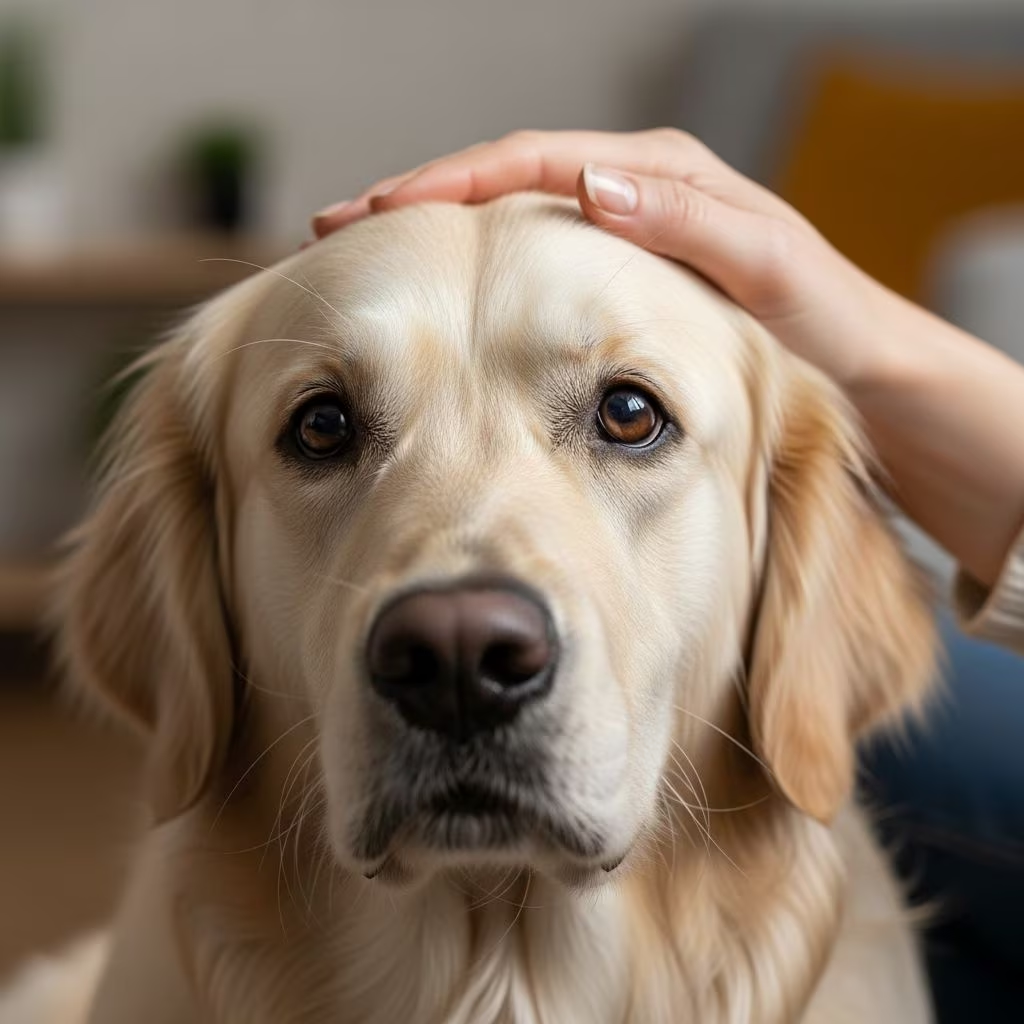
Your furry companion might be picking up on your stress more than you realize. Recent studies reveal that dogs mirror their owners’ anxiety levels, potentially leading to heightened stress in pups when pet parents are tense. This emotional contagion underscores the deep human-dog bond and highlights the need for mindful caregiving.
The Science Behind Emotional Contagion in Dogs and Owners
Dogs are highly attuned to human emotions, often syncing their physiological responses to those of their owners. A study from Queen’s University Belfast demonstrated that changes in pet parents’ heart rates directly predict shifts in their dogs’ heart rates during stressful situations. In the experiment, owners underwent a digital stress test followed by guided meditation. Post-test, both human and canine heart rates elevated; after meditation, they decreased in tandem.
“Changes in owner HR significantly predicted changes in the HR of their dogs, suggesting that dogs exhibit emotional contagion and social referencing towards their owners in novel situations,” noted lead author Aoife Byrne. This rapid response emphasizes how acute owner stress can trigger immediate canine physiological changes.
Over time, dogs’ heart rates tended to decrease, pointing to the value of acclimatization in new environments. Researchers suggest applying these insights to reduce stress during vet visits by first calming owners, which could indirectly soothe dogs.
Links Between Owner Personality and Dog Behavior
Research consistently links anxious or tense pet parents to dogs with behavioral issues. A 1997 study found that owners of “aggressive” dogs scored higher on tension scales compared to owners of non-aggressive dogs. Similarly, a 2018 analysis of Big Five personality traits showed that owners low in emotional stability were more likely to have dogs exhibiting problems.
Kim Brophey, author of Meet Your Dog: The Game-Changing Guide to Understanding Your Dog’s Behavior, explains: “Dogs belonging to high stress/anxiety clients are often higher than average in their stress levels and exhibit more anxiety or hyperarousal”. This pattern suggests that owner demeanor influences canine temperament during training, vet trips, or daily interactions.
Intergenerational Transmission of Parenting Styles to Dogs
Human parenting styles toward dogs may echo those experienced in childhood, creating intergenerational patterns. A mixed-methods study with 391 dog owners and 10 interviews found permissive parenting styles are often passed down, with childhood permissive experiences increasing their use with dogs.
Key factors include orientation toward dogs: protectionistic views reduce authoritarian tendencies, while humanistic and protectionistic attitudes boost compensatory permissive behaviors. Interviews revealed how early life shapes dog caregiving, blurring lines between child-parent and human-dog dynamics due to similar power imbalances.
Different styles impact welfare: warmer, permissive approaches correlate with increased proximity-seeking in threats, while authoritarian ones may heighten stress. Understanding these parallels can improve interactions, promoting positive outcomes for dogs and owners.
- Permissive Style: Passed intergenerationally; linked to humanistic views.
- Authoritarian Style: Less likely with protectionistic orientations.
- Impact: Affects attachment, sociability, and problem-solving in dogs.
Pet Parent Separation Anxiety and Its Effects
Separation anxiety isn’t just a dog issue—nearly 47% of pet parents experience it when leaving their dogs, per a CertaPet study. This can stem from rescue histories or deep bonds, like promising a traumatized pup the best life.
Experts advise preparing dogs (and selves) for alone time from day one. Behavior consultant Pamela Uncles notes: “Giving dogs the skills to be independent is one of the best gifts”. Avoid projecting emotions; instead, build canine confidence to ease owner guilt.
| Do | Don’t |
|---|---|
| Start independence training early | Project your anxiety onto your dog |
| Use positive reinforcement for alone time | Over-comfort during mild stress |
| Practice short separations gradually | Skip acclimatization to new settings |
Modern Pet Parents’ Stress and Concerns
Pet parenting brings joy but also worries. A Kinship report found 62% prioritize pet happiness, with 71% crediting pets for pandemic survival. Yet, 52% stress about being ‘bad’ parents, and 31% remain concerned post-adoption.
Pets provide mood boosts: 94% say they’re there after bad days, 89% for anxiety relief. This emotional reliance can amplify owner stress, cycling back to dogs.
Practical Tips to Reduce Anxiety Transmission
Break the cycle with these evidence-based strategies:
- Deep Breathing and Meditation: Lowers your heart rate, mirroring calm to your dog.
- Positive Affirmations: During training or vet visits, maintain upbeat energy.
- Acclimatization Time: Allow adjustment periods in novel spots.
- Self-Care Routines: Spa days benefit both—less stress means calmer pups.
- Independence Training: Gradual alone time builds resilience.
- Mindful Parenting: Reflect on your style; adjust for warmth without permissiveness.
Incorporate daily walks, play, and routines to stabilize both parties’ moods.
Frequently Asked Questions (FAQs)
Q: Can my stress really make my dog anxious?
A: Yes, studies show dogs’ heart rates sync with owners’ during stress, indicating emotional contagion.
Q: How do I know if I’m an anxious pet parent?
A: Signs include separation anxiety (47% prevalence), worries about parenting skills (52%), or reluctance to leave your dog.
Q: Does my childhood affect how I parent my dog?
A: Permissive childhood styles often transmit to dogs; orientations like protectionism modify this.
Q: What are quick ways to calm my dog during vet visits?
A: Calm yourself first via breathing; allow acclimatization time.
Q: Can training break the anxiety cycle?
A: Yes, independence and positive reinforcement training reduce reliance and stress transmission.
Child-Like Roles of Dogs in Families
Dogs often fill child-like roles, with morphological, behavioral, and physiological similarities to kids. This dynamic invites parental instincts, amplifying emotional mirroring and style transmission. Theoretical reviews highlight how these traits foster family-like bonds, influencing caregiving.
Pet food studies reinforce devotion: majorities splurge on premium nutrition, tying into welfare concerns.
References
- Dogs Stress Levels Mirror Humans’, New Study Finds — Kinship. 2023-10-01. https://www.kinship.com/dog-behavior/dogs-mirror-human-stress-levels-study
- Intergenerational Transmission of Human Parenting Styles to Dogs — National Institutes of Health (PMC). 2024-04-10. https://pmc.ncbi.nlm.nih.gov/articles/PMC11010965/
- Pet Parents Get Separation Anxiety, Too — Kinship. 2023-01-15. https://www.kinship.com/dog-lifestyle/tethered-love-separation-anxiety-humans
- Report by Kinship Reveals Modern Pet Parents’ Concerns — Business Wire. 2021-02-17. https://www.businesswire.com/news/home/20210217005677/en/
- Redefining Parenting and Family – The Child-Like Role of Dogs — Hogrefe Publishing. 2021-06-01. https://econtent.hogrefe.com/doi/10.1027/1016-9040/a000552
- Majority of Pet Parents Willing to Splurge on Food, Treats — Petfood Processing. 2021-01-20. https://www.petfoodprocessing.net/articles/14506-majority-of-pet-parents-willing-to-splurge-on-food-treats



