

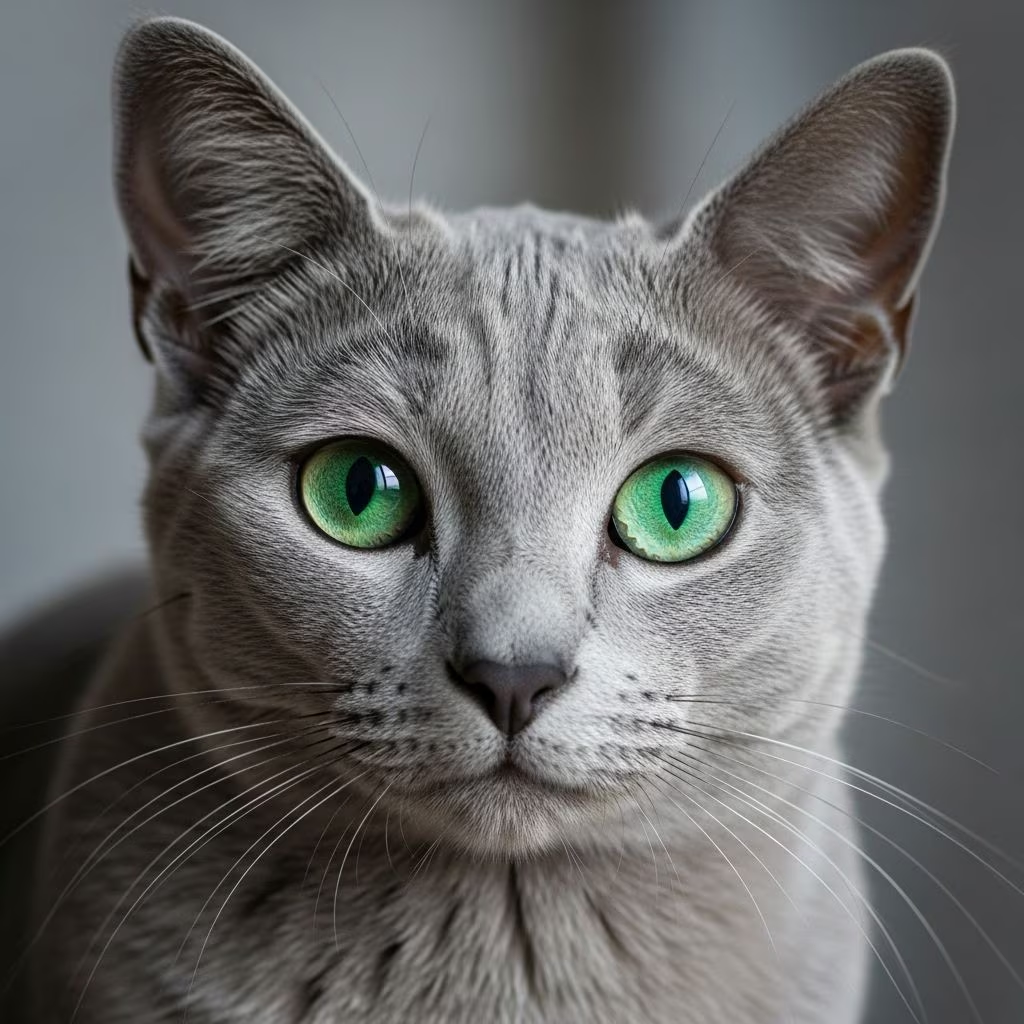
The Russian Blue cat is renowned for its shimmering blue-gray coat and piercing green eyes, often described as emerald or jade. This distinctive look has made the breed a favorite among cat lovers worldwide. But does every Russian Blue possess this vivid green gaze? While green eyes are the hallmark of the breed, there are nuances tied to genetics, age, breeding history, and standards set by major cat registries.
The Signature Look of the Russian Blue
Russian Blues stand out with their dense double coat that appears tipped in silver, creating a lustrous effect. Their body is elegant and muscular, with a modified wedge-shaped head and large, almond-shaped eyes set at a slight angle. The eye color—almost always a brilliant green—is what gives them their hypnotic stare. According to breed enthusiasts and genetic studies, this green hue results from specific pigmentation genes that produce moderate melanin levels in the iris.
Unlike many cats where eye color varies widely, the Russian Blue’s green eyes are so consistent that they’re a disqualifying factor in competitions if not present. This uniformity stems from careful breeding practices over generations, emphasizing the green-eyed trait.
Genetics Behind the Emerald Gaze
Cat eye colors are determined by melanin concentration in the iris, produced by melanocytes. Green eyes in Russian Blues arise from a balanced amount of eumelanin (black pigment), influenced by multiple genes. These cats carry the dilute gene, which lightens their black-based coat to blue-gray, but eye color genetics operate somewhat independently.
The dilute gene (recessive, denoted as ‘d’) requires inheritance from both parents for expression in the coat, but eye pigmentation follows a separate pathway. Green eyes emerge from moderate melanin, distinct from the high levels yielding copper or the low ones producing blue. Russian Blues also possess non-agouti genes (‘a’), ensuring a solid coat without tabby patterns, but this doesn’t directly affect eyes.
| Genetic Factor | Role in Russian Blue | Effect on Eyes/Coat |
|---|---|---|
| Dilute (d/d) | Recessive from both parents | Blue-gray coat; indirect eye influence |
| Non-agouti (a/a) | Solid color expression | Solid blue fur; no eye impact |
| Melanin balance | Moderate eumelanin | Vivid green eyes |
| Pointed gene (rare) | Siamese introgression | Potential colorpoint; eye variation |
This table summarizes key genetics. Note that while coat and eyes are linked through ancestry, exceptions like the pointed gene—traced to historical Siamese crosses—can introduce variations.
Eye Color Development from Kitten to Adult
Russian Blue kittens are born with blue eyes, a trait common to most felines due to initial low pigmentation. This blue phase is especially vivid in the breed, captivating new owners. Around 4-6 weeks, the color shifts as melanin develops.
- Birth to 4 weeks: Deep blue eyes, protected by minimal light exposure.
- 4-8 weeks: Transition begins; green appears at edges, blending with blue center.
- 3-6 months: Full green emerges, intensifying to emerald.
- 1 year+: Mature, luminous green stabilized.
By adulthood, eyes glow with an inner light, enhanced by the cat’s silver-tipped coat reflecting light. Factors like health and lighting can make them appear brighter or more yellowish. If eyes remain blue past 6 months, it may indicate a mix or health issue.
Historical Breeding and Eye Color Evolution
The Russian Blue originated from Russian Archangel Isles cats, imported to England in the 19th century. Early records by Harrison Weir note blue-coated kittens on farms, likely from recessive dilute genes. Post-WWI, numbers dwindled, prompting crosses with British Shorthairs and Persians to bolster the population.
Persian outcrosses aimed for orange eyes but failed; green persisted. Siamese mixes introduced colorpointing and blue eyes, but American breeders rigorously eliminated these, diverging lines from European ones. Today, CFA standards demand green eyes for championship, with no tolerance for yellow or blue in adults.
Are There Exceptions to the Green Eye Rule?
Strictly speaking, purebred Russian Blues per major registries like CFA and TICA must have green eyes. Kittens under 8 months may show transitional colors, but adults should not. Rare exceptions include:
- Colorpoint variants: Carrying recessive pointed genes from Siamese ancestry; eyes may be blue.
- Mixed breeds: Non-pedigree ‘Russian Blues’ with other genetics, possibly yellow or odd-eyed.
- Health anomalies: Dull or changing eyes signaling uveitis or jaundice.
- Regional lines: Some international breeders accept slight variations, though green dominates.
In shows, non-green eyes disqualify the cat. Related breeds like Korat (green eyes, similar coat) or Nebelung (longhair gray with green) share traits but aren’t identical.
Health Insights Linked to Eye Color
Russian Blues are robust, with few genetic issues, thanks to diverse founding stock. Green eyes indicate healthy pigmentation; sudden changes warrant vet checks for issues like inflammation. Unlike blue-eyed white cats prone to deafness (up to 40%), green-eyed breeds face no such link.
Breeders prioritize health screenings, avoiding lines with Siamese traits like kinked tails or crossed eyes. Regular exams ensure vibrant eyes reflect overall vitality.
Breed Standards and Show Requirements
Major registries enforce eye color rigidly:
| Registry | Eye Requirement | Notes |
|---|---|---|
| CFA | Vivid green | No yellow/blue in adults; kittens exempt till 8 months |
| TICA | Green, intense | Disqualification for other colors |
| FIFe | Green | European standard aligns closely |
These ensure breed purity. White or other color variants exist outside registries but aren’t true Russian Blues.
Caring for Your Russian Blue’s Eyes
Maintain eye health with weekly wipes using saline, balanced diet rich in taurine/omega-3s, and annual vet visits. Avoid bright lights that stress sensitive eyes. Early spaying/neutering prevents unwanted pointed kittens.
Frequently Asked Questions (FAQs)
Can Russian Blue cats have blue eyes as adults?
No, adult purebreds must have green eyes per standards. Blue eyes indicate mixed heritage or colorpoint genes.
Why do Russian Blue kittens have blue eyes?
All kittens start blue; Russian Blues transition to green by 3-6 months due to melanin development.
Are green eyes a sign of good health in cats?
Yes, bright green suggests healthy pigmentation. Dullness may signal issues like uveitis.
Can Russian Blues have yellow eyes?
Rare in purebreds; disqualifies in shows. Possible in outcrosses or poor breeding.
How do you identify a true Russian Blue?
Look for blue coat, green eyes, dense fur, and pedigree papers from CFA/TICA.
This elegant breed’s green eyes are more than aesthetic—they’re a testament to dedicated breeding preserving its natural allure.
References
- The Russian Blue Cat — Cat in the Box LLC. 2023. https://thecatisinthebox.com/blogs/kitty-contemplations/the-russian-blue-cat
- Russian Blue Cats: Hypnotic Eyes and Silky Fur — Russische Blauwe. 2024. https://russischeblauwe.com/blog/russian-blue-cats-hypnotic-eyes-and-silky-fur/
- What Cat Eye Colors Reveal About Their Health and Genetics — Pet Barn KW. 2024. https://petbarnkw.com/what-cat-eye-colors-reveal-about-their-health-and-genetics/
- The Russian Blue Breed Standard — Cat Fanciers’ Association (CFA). 2024-06-01. https://cfa.org/wp-content/uploads/2024/06/russian-blue-full-presentation.pdf



