

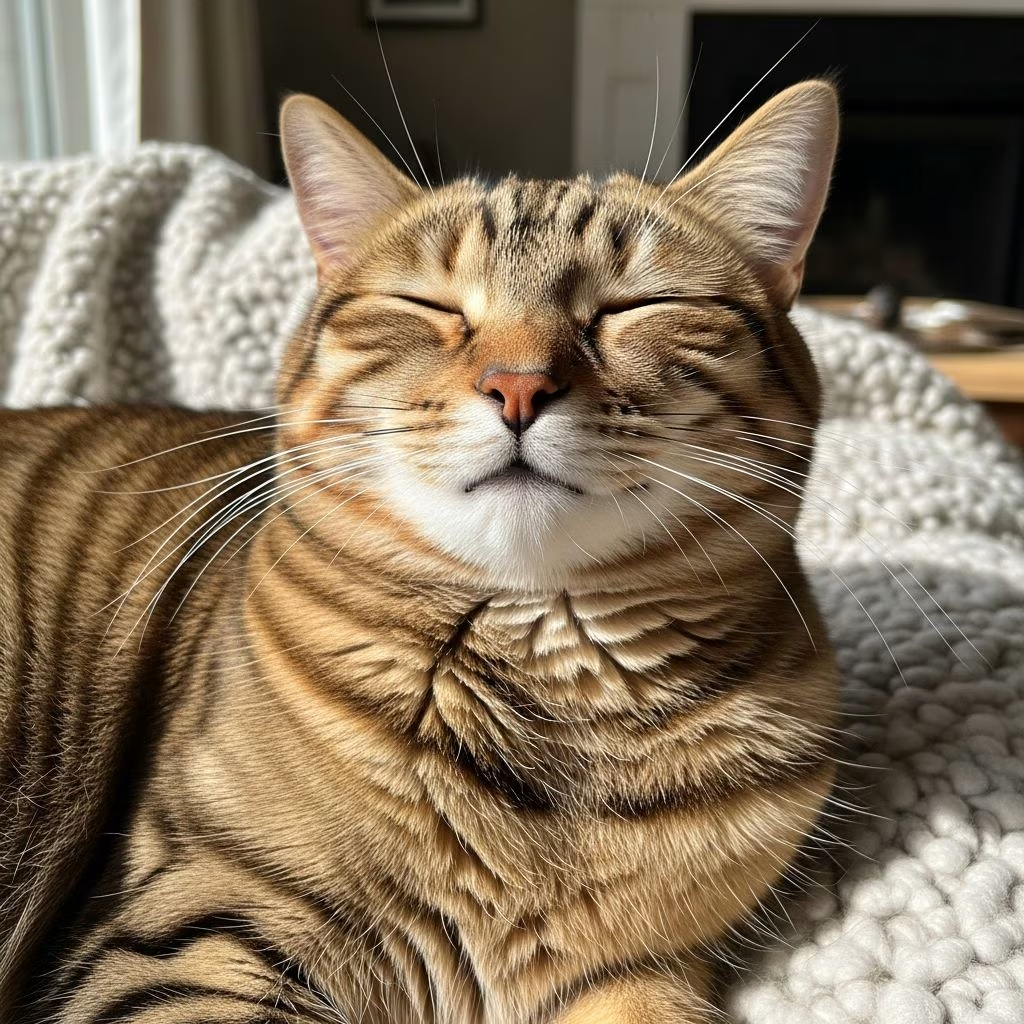
Do All Cats Purr? Understanding Feline Purring
One of the most enchanting aspects of cat ownership is hearing your feline companion purr contentedly in your lap. This rumbling sound has become synonymous with a happy cat, but a surprising fact puzzles many cat lovers: not all cats actually purr. This revelation challenges the common assumption that purring is a universal feline behavior. Understanding why some cats purr while others remain silent requires exploring the complex anatomy, evolutionary biology, and individual differences among cat species and individual animals.
The Science Behind How Cats Purr
Before addressing whether all cats purr, it’s essential to understand the mechanics of purring itself. The exact mechanism of how cats produce their distinctive purring sound has long puzzled scientists, though recent research has shed new light on this phenomenon.
The Vocal Cord Mechanism
For decades, scientists relied on the active muscle contraction (AMC) hypothesis to explain cat purring. This theory proposed that cats rapidly tighten and loosen their vocal cords approximately 20 to 30 times per second to generate the purring sound. However, recent groundbreaking research has challenged this long-held assumption.
A significant study published in Current Biology revealed that domestic cats possess special “pads” embedded within their vocal cords, which add an extra layer of fatty tissue. These structural elements allow the vocal cords to vibrate at low frequencies without requiring active muscle contractions. In this innovative experiment, researchers removed larynxes from humanely euthanized cats and pumped warm, humidified air through them. Remarkably, all eight larynxes produced purring sounds at frequencies between 25 and 30 hertz—without any input from the brain or active muscle movement.
The Role of the Larynx
The larynx, or voice box, plays a crucial role in purring production. Rather than being an actively controlled process, purring appears to be largely passive—a self-sustaining oscillation triggered by the initial signal from a cat’s brain to purr. This discovery suggests that purring functions similarly to “vocal fry” in human speech, where specialized tissues create distinctive vibrational frequencies.
Most scientists now agree that the intrinsic laryngeal muscles, the neural oscillator in the cat’s brain, and specialized anatomical structures work together to produce purring. The distinctive quality of a purr comes from its production during the entire respiratory cycle—both during inhalation and exhalation—which sets it apart from other cat vocalizations.
Not All Cats Purr: The Surprising Truth
Despite purring being one of the most recognizable feline sounds, the reality is that not all cats purr, and this fact surprises many cat owners. Purring behavior varies significantly across the feline family and even among individual domestic cats, stemming from differences in anatomical structures and individual social needs.
Individual Differences in Domestic Cats
While most domestic cats are capable of purring, some cats purr rarely or not at all. These differences can be attributed to:
- Genetic variations affecting vocal cord structure and laryngeal development
- Individual personality differences and temperament
- Neurological variations in brain regions controlling vocalization
- Past experiences and socialization history
- Health conditions affecting the larynx or respiratory system
A silent cat doesn’t necessarily indicate unhappiness or poor health. Some cats simply lack the anatomical predisposition for purring or choose alternative forms of communication, such as head bumps, slow blinks, or vocalizations like trills and chirps.
Big Cats and the Purr-Roar Divide
The distinction between purring and roaring among feline species reveals fascinating evolutionary patterns. The feline family is divided into two distinct groups based on their vocalization abilities:
Purring Cats vs. Roaring Cats
The subdivision of Felidae (the cat family) into “purring cats” (subfamily Felinae) and “roaring cats” (subfamily Pantherinae) is based on fundamental anatomical differences. No cat can both purr and roar—these abilities are mutually exclusive within the feline family.
This distinction historically centered on the ossification (hardening) of the hyoid bone in the larynx. The theory suggested that completely ossified hyoid bones in purring cats allowed for purring, while incompletely ossified hyoid bones in roaring cats enabled their powerful roars. However, recent research suggests this anatomical explanation may be oversimplified, as the degree of hyoid ossification alone doesn’t fully determine purring ability.
Which Big Cats Can Purr?
Among the larger wild cat species, the ability to purr is surprisingly limited:
- Cheetahs – The only big cat capable of purring
- Cougars – Cannot purr; instead make chirping and whistling sounds
- Bobcats – Cannot purr effectively
- Lions – Cannot purr; exclusively roar for communication
- Tigers – Cannot purr; use roars instead
- Jaguars – Cannot purr; roar is their primary vocalization
The cheetah stands as a unique exception among large cats, retaining the ability to purr despite its size. This suggests that the ability to purr isn’t simply a matter of body size but rather reflects specific evolutionary adaptations and anatomical characteristics.
Why Do Cats Purr? Beyond Contentment
While many people interpret purring as a sign of contentment, the reasons cats purr are more complex than simple happiness. Cats purr in various contexts, each serving different communicative and physiological functions:
Communication and Social Bonding
Purring serves as a powerful communicative tool between cats and their human companions. Research has demonstrated that cats modulate their purrs depending on context—for instance, cats asking for food produce purrs that humans perceive as more “urgent and less pleasant” compared to contentment purring.
Self-Soothing and Stress Relief
Many experts believe that purring functions as a form of self-soothing for cats. By purring, cats can calm themselves down and reduce their stress levels. This explains why cats often purr when they’re nervous, injured, or in unfamiliar situations.
Healing and Medical Significance
Purring has therapeutic properties that extend beyond emotional comfort. The frequencies at which cats purr—typically between 20 and 30 hertz—may promote bone and tissue healing. Cats also purr when their caregivers are hurt or sick, suggesting an empathetic or instinctive healing response. The healing power of purring has been recognized not just scientifically but also by cat lovers worldwide who report feeling comforted by their cat’s purring during times of stress or illness.
Understanding Purr Variations
Not all purrs are created equal. Research has shown that cats produce different types of purrs, each with distinct acoustic properties and purposes.
Types of Purrs
A 2009 study in Current Biology found that different types of purrs sound notably different:
- Contentment Purrs – Steady, low-frequency rumbles produced during relaxation and petting
- Demand Purrs – Higher-pitched, more insistent purrs used when cats want food or attention
- Healing Purrs – Produced during illness, injury, or stress
- Solicitation Purrs – Purrs combined with meowing to request specific things from their owners
Human listeners consistently rate demand purrs as more urgent and less pleasant than contentment purrs, and acoustical analysis of these different purrs confirms measurable differences in frequency and intensity.
Conditions That Affect Purring Ability
Several factors can influence whether a cat purrs or how effectively it produces purring sounds:
- Laryngeal Paralysis – Affects the cat’s ability to control vocal cord movement, preventing purring
- Vocal Cord Damage – Injury or scarring can impair purring production
- Respiratory Conditions – Asthma or other breathing problems may limit purring
- Age – Kittens develop purring ability as they mature; older cats may purr less frequently
- Breed Variations – Some domestic cat breeds may have anatomical variations affecting purring ability
- Neurological Factors – Variations in brain structure can affect vocalization control
Silent Cats: Why Some Felines Don’t Purr
If your cat doesn’t purr, don’t assume something is wrong. Some cats are simply non-purrers and communicate their contentment in other ways:
- Head Bumping – Rubbing their head against you to show affection and mark you as part of their territory
- Slow Blinks – Often called “cat kisses,” slow blinks indicate trust and contentment
- Trilling and Chirping – Alternative vocalizations that express happiness and greeting
- Kneading – Pushing their paws alternately against you, a leftover behavior from kittenhood
- Following Behavior – Staying close to you demonstrates affection and bonding
A silent cat can be just as happy, healthy, and affectionate as a purring one—it’s simply expressing itself through different communication channels.
The Evolutionary Perspective
Understanding why some cats purr and others don’t requires considering evolutionary biology. Cats that live solitary or primarily solitary lifestyles in the wild may have evolved alternative communication methods. In contrast, domestic cats, which depend on humans for food and care, have maintained or developed stronger purring abilities as a way to communicate needs and bond with their human caregivers.
The divide between big roaring cats and small purring cats likely reflects different survival strategies and hunting behaviors. Large predators use roars to establish territory and communicate across vast distances, while smaller cats use purring and other vocalizations for close-range communication and social bonding.
Frequently Asked Questions
Q: Do all domestic cats purr?
A: No, not all domestic cats purr. While most have the anatomical capability, some cats rarely or never purr due to genetic variations, individual personality, or health conditions. This is completely normal behavior.
Q: Is purring always a sign that a cat is happy?
A: Not exclusively. While contentment is the most common reason cats purr, they also purr when nervous, stressed, injured, or during labor. Purring serves multiple communicative and physiological purposes beyond indicating happiness.
Q: Can big cats like lions and tigers purr?
A: No, large roaring cats like lions, tigers, and jaguars cannot purr. Only the cheetah can purr among big cats. The ability to purr and roar are mutually exclusive in felines.
Q: How fast do cats purr?
A: Cats typically purr at frequencies between 20 and 30 hertz. The recent discovery that cats can produce these low-frequency sounds through passive vibration of specialized vocal cord pads—rather than active muscle contractions—represents a major breakthrough in understanding purring mechanics.
Q: What should I do if my cat doesn’t purr?
A: If your cat doesn’t purr, it’s not necessarily a problem. Some cats communicate affection through head bumps, slow blinks, following behavior, kneading, or trilling. As long as your cat appears healthy and content, lack of purring is simply a variation in individual communication style.
Q: Does purring have healing properties?
A: Research suggests purring may promote healing due to the specific frequencies at which cats purr. The 20-30 hertz vibrations may stimulate bone and tissue healing, which is why cats often purr when injured or ill.
References
- How Do Cats Purr? New Finding Challenges Long-held Assumptions — Science.org. 2025-01-13. https://www.science.org/content/article/how-do-cats-purr-new-finding-challenges-long-held-assumptions
- Purr — Wikipedia. Accessed 2026-01-14. https://en.wikipedia.org/wiki/Purr
- Why and How Do Cats Purr? — The Library of Congress. Accessed 2026-01-14. https://www.loc.gov/everyday-mysteries/zoology/item/why-and-how-do-cats-purr/
- Why Do Cats Purr? — Discover Magazine. Accessed 2026-01-14. https://www.discovermagazine.com/why-do-cats-purr-43184
- Behind Cats’ Purrs and Their Healing Power — InspireTheMind.org. Accessed 2026-01-14. https://www.inspirethemind.org/post/behind-cats-purrs-and-their-healing-power-sharing-the-benefits
- The Fascinating Science Behind a Cat’s Purr — El Gato Vet. Accessed 2026-01-14. https://elgatovet.com/blog/the-fascinating-science-behind-a-cats-purr/



