

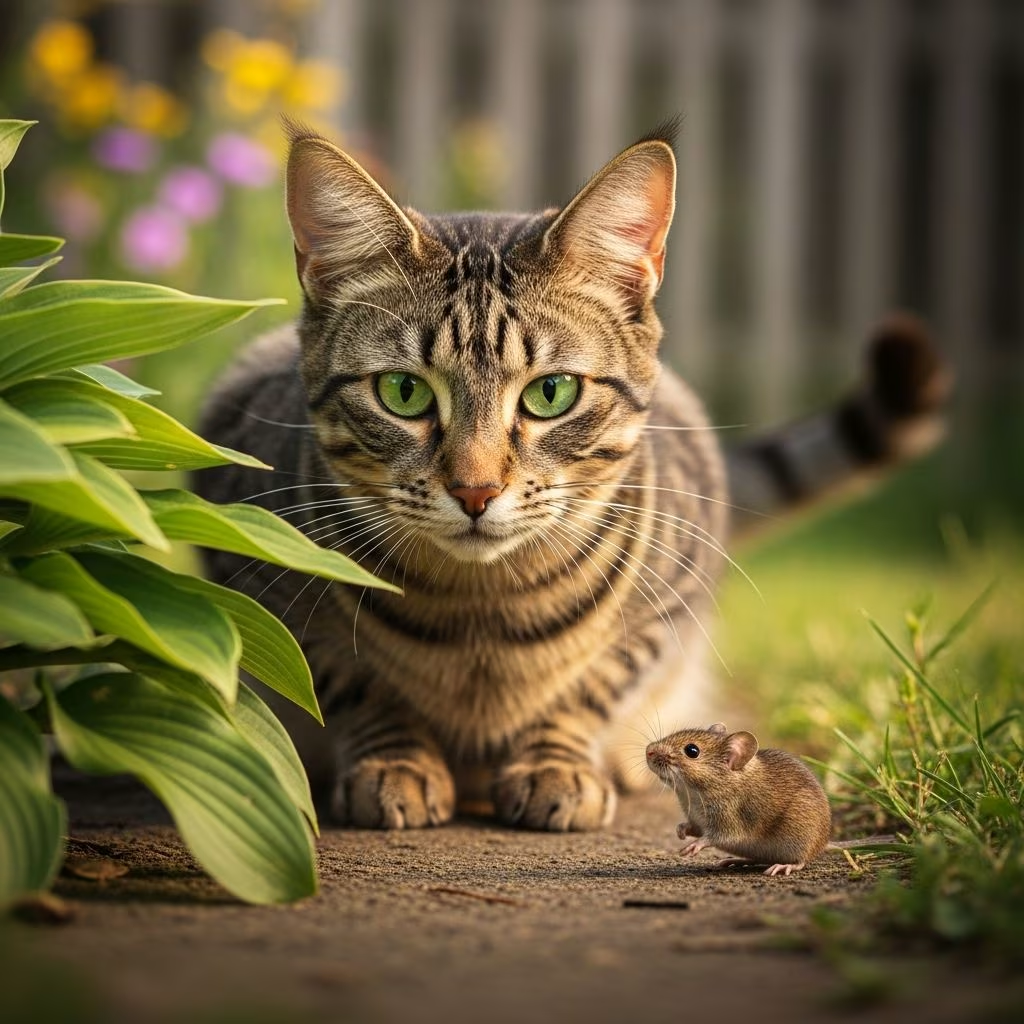
Cats have long been celebrated as masterful hunters of mice, a reputation rooted in their evolutionary history as skilled predators. However, not every domestic cat will chase, catch, or kill a mouse, as hunting prowess depends on a mix of innate instincts, learned behaviors, and individual personality traits.
The Innate Predatory Drive in Felines
At the core of feline behavior lies a powerful hunting instinct that has been genetically encoded over millennia. Cats, whether wild or domesticated, are obligate carnivores designed for predation, using acute senses like sharp vision, sensitive whiskers, and an exceptional sense of smell to detect and pursue small prey. This drive manifests in the classic ambush style: silent stalking, sudden pounce, and precise kill, behaviors shared with larger felines like lions.
Even well-fed house cats exhibit this urge, often triggered by movement rather than hunger. A twitching toy or scurrying shadow can ignite the same response as a real rodent, highlighting how deeply ingrained this trait is. Research shows cats dedicate hours daily to hunting-related activities, such as watching, waiting, and striking, underscoring its role in their daily routine.
Evolutionary Origins of Mouse Hunting
Cats’ affinity for mice traces back to their wild ancestors, small felids that thrived by targeting rodents in grasslands and forests. This specialization allowed survival during food shortages, as mice provided a consistent protein source. Domestication around 9,000 years ago, particularly in ancient Egypt, amplified this trait when humans valued cats for protecting grain stores from vermin.
Over generations, selective breeding preserved these skills, but modern indoor living has altered expression. While feral cats hunt for sustenance, pets channel the instinct into play, demonstrating its persistence despite abundant kibble.
Why Some Cats Never Hunt Mice
Contrary to myth, hunting is not purely instinctual; it’s significantly shaped by early learning. Classic experiments, like those by researcher Kuo Zing Yang in the early 20th century, revealed kittens raised without hunting mothers often failed to develop killing skills, merely chasing without dispatching prey. Those observing maternal hunts became proficient killers.
Individual variation plays a role too. Shy or lazy cats may ignore rodents, while bold ones pursue aggressively. Neutering doesn’t eliminate the drive, as it’s not hormone-dependent, but lack of opportunity—such as strictly indoor lifestyles—prevents skill honing. Breed differences exist; some like Siamese are more playful hunters, others less so.
- Learned Component: Kittens mimic mothers to master stalking and killing.
- Personality Factors: Confident cats hunt more readily.
- Environment: No exposure means no practice.
Health Risks of Cats Consuming Mice
While thrilling for cats, catching mice poses dangers. Rodents harbor parasites like toxoplasma and tapeworms, transmissible via ingestion, potentially causing illness in felines. Mice exposed to rodenticides transfer lethal toxins, leading to poisoning symptoms like seizures or bleeding. Bacterial infections, including salmonella, and diseases like Lyme add further risks.
Owners should discourage raw mouse consumption, opting for veterinary check-ups post-hunt and deworming routines. Indoor alternatives mitigate these hazards entirely.
| Risk Factor | Potential Issue | Prevention |
|---|---|---|
| Parasites | Toxoplasmosis, tapeworms | Regular deworming |
| Toxins | Rodenticide poisoning | Pest control without poisons |
| Bacteria | Salmonella, Leptospirosis | Vet monitoring |
Indoor Ways to Satisfy Hunting Urges
Pet owners can enrich lives without outdoor risks by mimicking prey. Interactive toys like laser pointers, feather wands, and automated mice encourage stalking and pouncing, providing exercise and mental stimulation. Puzzle feeders dispense food after ‘hunting’ efforts, fulfilling predatory needs.
Daily play sessions—10-15 minutes of chasing string or balls—burn energy and reduce stress. Hiding treats around the home simulates foraging, while cat trees offer vantage points for ‘ambush’ play. These outlets prevent boredom-induced behaviors like fabric sucking, a displaced hunting trait.
- Rotate toys to maintain novelty.
- Incorporate vertical spaces for observation.
- Join play to build bonds and extend sessions.
Understanding Play as Practice Hunting
Observe a cat batting toys or hiding them under furniture: this is hunting rehearsal. They ‘stash’ items like prey caches, returning later to ‘retrieve,’ mirroring wild behaviors. Fabric licking or feather-plucking from toys replicates grooming kills, evolutionary holdovers.
“Playing” isn’t frivolous; it’s essential for physical fitness and instinct satisfaction. Kittens especially benefit, developing coordination through mock hunts.
Cats as Natural Pest Controllers
Historically, cats curbed rodent populations in farms and homes, a mutually beneficial partnership. Today, outdoor cats still serve this role, though ethically, owners weigh wildlife impact—cats kill billions of birds and small mammals yearly. Supervised outdoor access or enclosed patios balances utility and conservation.
FAQ: Common Questions on Cats and Mouse Hunting
Is mouse hunting genetic or learned?
Both: instincts drive pursuit, but mothers teach killing techniques.
Do spayed/neutered cats still hunt?
Yes, as the drive isn’t hormonal.
What if my cat brings dead mice home?
Praise gently, dispose safely, and boost indoor play to redirect.
Can mice harm my indoor cat?
Absolutely—parasites and poisons are risks; keep cats indoors.
How to stop unwanted hunting?
Enrich environment with toys; consult vets for anxiety-related excess.
Benefits of Embracing Feline Instincts
Channeling hunts reduces obesity, anxiety, and destructive behaviors. Healthier, happier cats result from owners respecting their carnivorous heritage. While not all cats become mouse masters, every feline benefits from predatory outlets.
In summary, the iconic cat-mouse dynamic blends biology, upbringing, and circumstance. Understanding this empowers owners to nurture instincts safely.
References
- Do Cats Eat Mice? Understanding the Natural Hunting Instincts of Cats — PetLibro. 2023. https://petlibro.com/blogs/all/do-cats-eat-mice-understanding-the-natural-hunting-instincts-of-cats
- Why do cats hunt? Hunting behaviour in cats — CatsLove.com. 2023. https://www.catslove.com/en/hunting-behaviour-in-cats
- Cats and Their Hunting Behaviour — FOUR PAWS International. 2023. https://www.four-paws.org/our-stories/publications-guides/cats-and-their-hunting-behaviour
- Why all cats don’t hunt mice — PetBucket. 2023. https://www.petbucket.com/blog/64645/why-all-cats-dont-hunt-mice.html
- Is it Safe to Let Your Cat Get Rid of Mice? — PetCareRx. 2023. https://www.petcarerx.com/article/is-it-safe-to-let-your-cat-get-rid-of-mice/1482
- Why Do Cats Bring You Mice or Dead Animals as Gifts? — Purina US. 2023. https://www.purina.com/articles/cat/behavior/understanding-cats/why-do-cats-bring-you-dead-animals



