

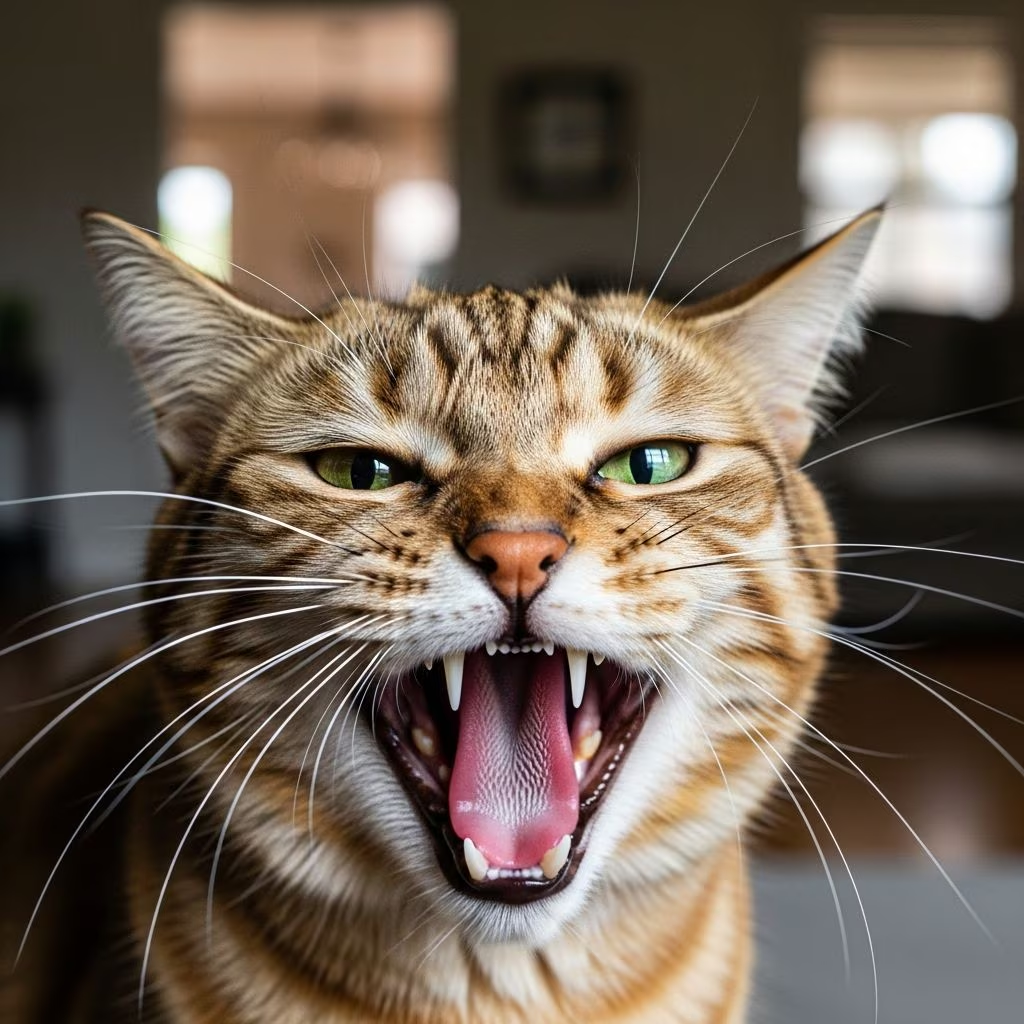
Cats communicate through a rich array of sounds and signals, with hissing standing out as one of the most striking. While many cats hiss under certain conditions, not every feline produces this sound with the same frequency or intensity. Hissing primarily acts as a defensive vocalization, signaling discomfort, fear, or a need for space rather than outright aggression. This behavior helps cats avoid physical confrontations, serving as a verbal boundary in their interactions with humans, other animals, or even toys.
The Science Behind a Cat’s Hiss
At its core, a cat’s hiss mimics the sound of a serpent, an evolutionary adaptation designed to intimidate potential threats. This startling noise, sharp and sudden, evolved in wild felines to deter predators by imitating one of nature’s most feared creatures. Domesticated cats retain this instinct, which dates back thousands of years to their ancestors in regions like the Fertile Crescent, where survival depended on such warnings to maintain social order without unnecessary fights.
Research from veterinary behaviorists confirms that hissing is more about self-preservation than hatred. It’s a low escalation on the aggression ladder, often paired with body language like flattened ears, arched backs, and piloerection (raised fur) to amplify the message. Not all cats hiss equally; some confident or socialized felines rarely do so, while skittish or less acclimated cats resort to it more often.
Common Triggers for Hissing in Cats
Understanding why cats hiss requires examining everyday scenarios. Here are the primary catalysts:
- Fear of the Unknown: New people, animals, or sudden changes in the environment can provoke hissing as a ‘back off’ signal. A cat encountering a stranger might flatten its ears and hiss to create distance.
- Territorial Defense: Cats fiercely guard their space. Intruding pets or even household rearrangements can trigger hisses to reassert boundaries.
- Pain or Discomfort: Physical ailments make cats reactive; touching a sore spot during petting or grooming often elicits a hiss as a warning against further contact.
- Overstimulation: Prolonged petting or intense play can overwhelm sensory input, leading to a hiss when thresholds are crossed.
- Maternal Protection: Queens fiercely hiss to shield kittens from perceived dangers, combining instinct with teaching moments for their young.
These triggers highlight hissing’s role as communication rather than malice. For instance, during vet visits, anticipation of pain amplifies the response.
Hissing During Play: When Fun Turns Tense
Playtime hissing confuses many owners, but it’s often due to overstimulation. Kittens and young cats, with developing boundaries, hiss when games become too rough or exciting. This isn’t true aggression but a signal to dial back intensity. Watch for precursors like twitching tails or dilated pupils before the hiss emerges.
In multi-cat homes, one playful cat might annoy another, prompting a hiss to enforce ‘no more’. Distinguishing play from real fights involves observing ears (forward in play, back in anger) and tails (relaxed vs. puffed).
| Play Hissing | True Aggression |
|---|---|
| Relaxed body, intermittent hisses, quick recovery | Rigid posture, intense stares, prolonged hissing |
| Ears forward or swiveling | Ears flattened sideways |
| Tail flicking playfully | Tail thrashing or puffed up |
This table aids quick assessment, helping owners intervene appropriately.
Do Certain Cats Never Hiss?
While hissing is instinctive, individual personalities vary. Bold, well-socialized cats from early kittenhood may seldom hiss, relying instead on confident postures or meows. Breeds like Siamese are more vocal but less prone to defensive hisses, favoring chatty chirps. Conversely, ferals or abused rescues hiss frequently as a learned survival tool.
Factors influencing hissing include genetics, early experiences, and environment. Cats in stable, low-stress homes hiss less, proving nurture shapes this trait alongside nature. Observing your cat’s baseline helps gauge anomalies.
Decoding Accompanying Body Language
Hissing rarely stands alone. Key signals include:
- Ears: Pinned back signals high alert; slight turns indicate mild irritation.
- Tail: Low and swishing shows annoyance; high and bushy denotes fear.
- Eyes: Dilated pupils mean arousal, from excitement to terror.
- Posture: Crouching or arching amplifies the threat display.
Integrating these cues provides a full picture. A lone hiss during greeting might just mean ‘give me space,’ while combined signs warrant caution.
How to Respond When Your Cat Hisses
Respect the signal: freeze, then slowly retreat to de-escalate. Never punish hissing; it suppresses communication, risking bites.
Strategies for reduction:
- Slow Introductions: Use barriers for new pets, allowing scent familiarization first.
- Enrichment: Provide scratching posts and hideouts to lower stress.
- Petting Awareness: Limit sessions to tolerated zones like cheeks; watch for tension.
- Vet Checks: Rule out pain with regular exams.
- Calming Aids: Pheromone diffusers soothe anxious cats.
Consistency builds trust, reducing hissing over time.
Health Concerns Linked to Excessive Hissing
Sudden or frequent hissing may signal illness. Conditions like arthritis, dental issues, or hyperthyroidism heighten irritability. Monitor for hiding, appetite loss, or litter avoidance alongside hisses, prompting a vet visit. Early detection prevents escalation.
Building a Hiss-Free Harmony
Fostering understanding transforms hissing from a mystery to a manageable cue. Daily routines respecting feline needs—quiet zones, play breaks, gentle handling—minimize triggers. Positive reinforcement, like treats for calm interactions, encourages desired behaviors.
In multi-pet homes, supervised sessions and equal resources curb territorial spats. Patient owners see hissing fade as bonds strengthen.
Frequently Asked Questions About Cat Hissing
Why does my cat hiss at me after petting?
This stems from petting-induced overstimulation. Cats enjoy touch up to a point; subtle cues like skin rippling precede hisses. Stop at the first sign.
Should I be worried if my cat hisses at other cats?
Occasional hisses during intros are normal. Persistent ones suggest resource guarding; separate and reintroduce gradually.
Can hissing indicate a medical problem?
Yes, especially with behavioral shifts. Pain amplifies defensiveness; consult a vet for unexplained changes.
Why do some cats hiss at vacuums or doors?
Sudden noises or movements trigger fear responses, mimicking threats. Desensitization with positive associations helps.
Is hissing during play dangerous?
Not usually, if monitored. Pause play, let cats self-regulate. Persistent issues may need behaviorist input.
(Word count: 1678)
References
- Why Do Cats Hiss? Exploring the Behavior and Its Origins — Stink Free. 2023. https://stinkfree.com/blogs/news/why-do-cats-hiss-exploring-the-behavior-and-its-origins
- Hissing Isn’t Hating: Why Cats REALLY Hiss — Sparkle Cat. 2023. https://www.sparklecat.com/diary/hissing-isnt-hating-why-cats-really-hiss
- Why Do Cats Hiss? What To Know About Cat Hissing — PetMD. 2024-01-15. https://www.petmd.com/cat/behavior/cat-hissing-what-you-need-know
- Why Do Cats Hiss — Purina. 2023. https://www.purina.com/articles/cat/behavior/understanding-cats/why-do-cats-hiss
- Why Do Some Cats Hiss When They Play? — Cats.com. 2024. https://cats.com/why-do-some-cats-hiss-when-they-play



