

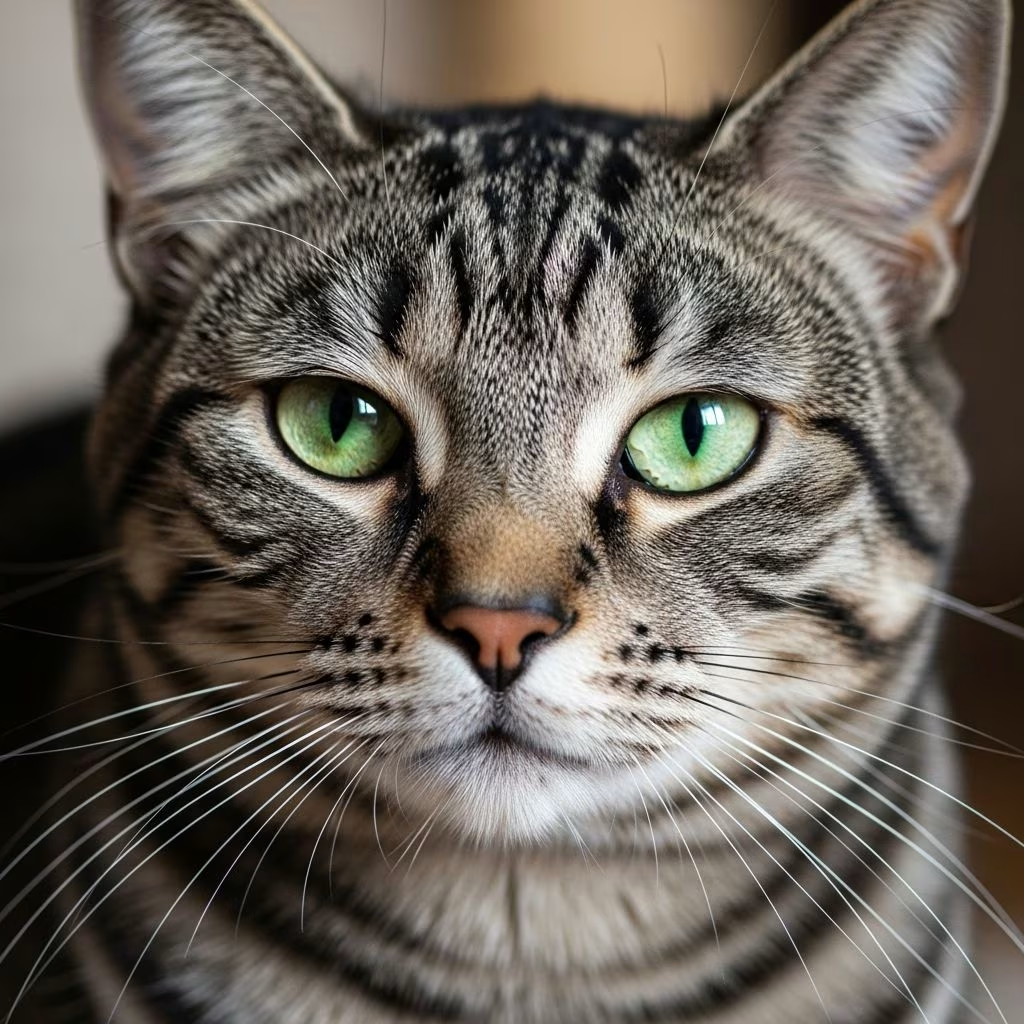
Whiskers, or vibrissae, are essential sensory tools for most cats, aiding navigation, hunting, and communication, but not all cats have them due to genetics or health issues.
What Are Cat Whiskers?
Cat whiskers are specialized, thick hairs known scientifically as vibrissae, derived from the Latin ‘vibrio’ meaning to vibrate. Unlike regular fur, whiskers erupt from deep follicles—three times deeper—with roots connected to sensitive nerves and muscles. They do not detect touch like human skin but vibrate in response to air currents or nearby objects, transmitting data on size, shape, speed, and distance to the cat’s brain.
These tactile hairs stand out due to their coarseness and strategic placement. Cats cannot focus closer than about 30 cm, so whiskers bridge this gap, sensing the immediate environment. Whiskers around the mouth match the cat’s body width, helping gauge if spaces are navigable.
Do All Cats Have Whiskers?
No, not all cats have whiskers. While nearly all felines possess them, certain hairless breeds like the Sphynx, Peterbald, Bambino, Dwelf, and Donskoy may lack them entirely or have sparse, short, curly versions due to genetic mutations affecting hair development. Even among these, variation exists—some Sphynx have full sets, others none.
Non-genetic causes include injury, trauma to the face (rostrum), bacterial/fungal infections, or feline acne, leading to temporary loss. Whiskers typically regrow unless the follicle is permanently damaged. Genetic mutations can also cause unusual growth patterns or absence in non-hairless cats, though rare.
How Many Whiskers Do Cats Have?
Most cats have a consistent, symmetrical arrangement: approximately 12 whiskers on each upper lip (mystacial), arranged in 4 rows of 3, totaling 24 on the muzzle. Additional counts include 3 over each eye (superciliary, at least 2-3), a few on the chin (mandibular/ventral), cheeks (genal), and back of front wrists (carpal).
Exact numbers vary slightly by individual and breed, ranging from 8-16 per cheek side, but the pattern remains ordered—shorter front, longer back. Kittens start with short whiskers that lengthen with age, and length varies by breed.
| Whisker Location | Average Number per Side | Primary Function |
|---|---|---|
| Upper Lip (Mystacial) | 12 (4 rows) | Object detection, navigation |
| Above Eyes (Superciliary) | 2-3 | Protect eyes, sense proximity |
| Chin (Mandibular/Ventral) | 3-4 shorter | Vibration detection |
| Cheeks (Genal) | Variable few | Width gauging, prey sensing |
| Foreleg Wrists (Carpal) | Few | Hunting aid, balance |
Where Are Whiskers Located on Cats?
- Muzzle/Upper Lip: Mystacial whiskers form the prominent ‘moustache,’ 12 per side in rows.
- Above Eyes: Superciliary whiskers protect eyes and detect overhead objects.
- Cheeks: Genal whiskers, longer and flexible, between lip and eyes.
- Chin/Throat: Ventral/mandibular whiskers sense vibrations like purring.
- Forelegs (Wrists): Carpal whiskers aid precise hunting strikes.
- Near Ears: Smaller sets for spatial awareness.
Patterns vary by breed, but symmetry is key for sensory balance.
Types of Cat Whiskers
Cats have specialized whisker types, each with distinct roles:
- Mystacial Whiskers: Longest on upper lip; primary for environmental sensing, navigation in dark.
- Genal Whiskers: Cheek whiskers; detect opening widths, prey size/shape for hunting.
- Ventral/Mandibular Whiskers: Chin-based; shorter, for close-range vibrations.
- Superciliary Whiskers: Eyebrow-like; protect eyes, sense approaching dangers.
- Carpal Whiskers: Leg-based; guide paw placement during hunts.
Why Do Cats Have Whiskers? (Functions)
Whiskers are a cat’s sixth sense:
- Navigation: Detect air currents for mapping spaces, even blindfolded.
- Hunting: Judge prey distance/speed; carpal whiskers pinpoint strikes.
- Spatial Awareness: Measure tight spaces matching body width.
- Communication: Forward for curiosity, flattened for aggression/fear.
- Protection: Eye whiskers signal blinks; balance aid.
Without whiskers, cats struggle with depth perception and confidence.
What Happens If a Cat Loses Its Whiskers?
Temporary loss from shedding, fights, or illness leads to clumsiness, misjudged jumps, and poor hunting. Regrowth takes weeks. Permanent loss in hairless breeds or damaged follicles impairs senses, but cats adapt using eyes, ears, smell. Never cut whiskers—it’s cruel and disorienting.
Do Kittens Have Whiskers?
Yes, kittens are born with short whiskers that grow longer, aiding early navigation and mother recognition.
Can You Touch a Cat’s Whiskers?
Avoid touching; whiskers are highly sensitive. Cats may flinch or become irritated, as it overloads sensory input.
Frequently Asked Questions (FAQs)
Do all cats have whiskers?
No, hairless breeds like Sphynx may lack them due to genetics, though most cats do.
How many whiskers does a cat have?
Around 24 on the muzzle (12 per side), plus others on eyes, chin, cheeks, legs.
Why do cats have whiskers on their legs?
Carpal whiskers on foreleg wrists help precise hunting and balance.
Do cat whiskers grow back?
Yes, unless follicles are destroyed; regrowth takes 2-3 months.
Are Sphynx cats born without whiskers?
Often sparse or absent, but some have short/curly ones.
Can cats live without whiskers?
Yes, they adapt, but lose key sensory advantages.
References
- Why Do Cats Have Whiskers? — VCA Animal Hospitals. 2023. https://vcahospitals.com/know-your-pet/why-do-cats-have-whiskers
- Why Do Cats Have Whiskers? — PetMD. 2023. https://www.petmd.com/cat/behavior/evr_ct_why_do_cats_have_whiskers
- How Many Whiskers Do Cats Have — Cat Box Classics. 2024. https://catboxclassics.com/blogs/cat-news/how-many-whiskers-do-cats-have
- Cat Whiskers 101 — Zoetis Petcare. 2023. https://www.zoetispetcare.com/blog/article/cat-whiskers-101
- Why Do Cats Have Whiskers — Blue Cross. 2024. https://www.bluecross.org.uk/advice/cat/wellbeing-and-care/why-do-cats-have-whiskers
- Are There Cats Without Whiskers? Vet Reviewed Facts & FAQ — Catster. 2024. https://www.catster.com/cat-health-care/are-there-cats-without-whiskers/



