

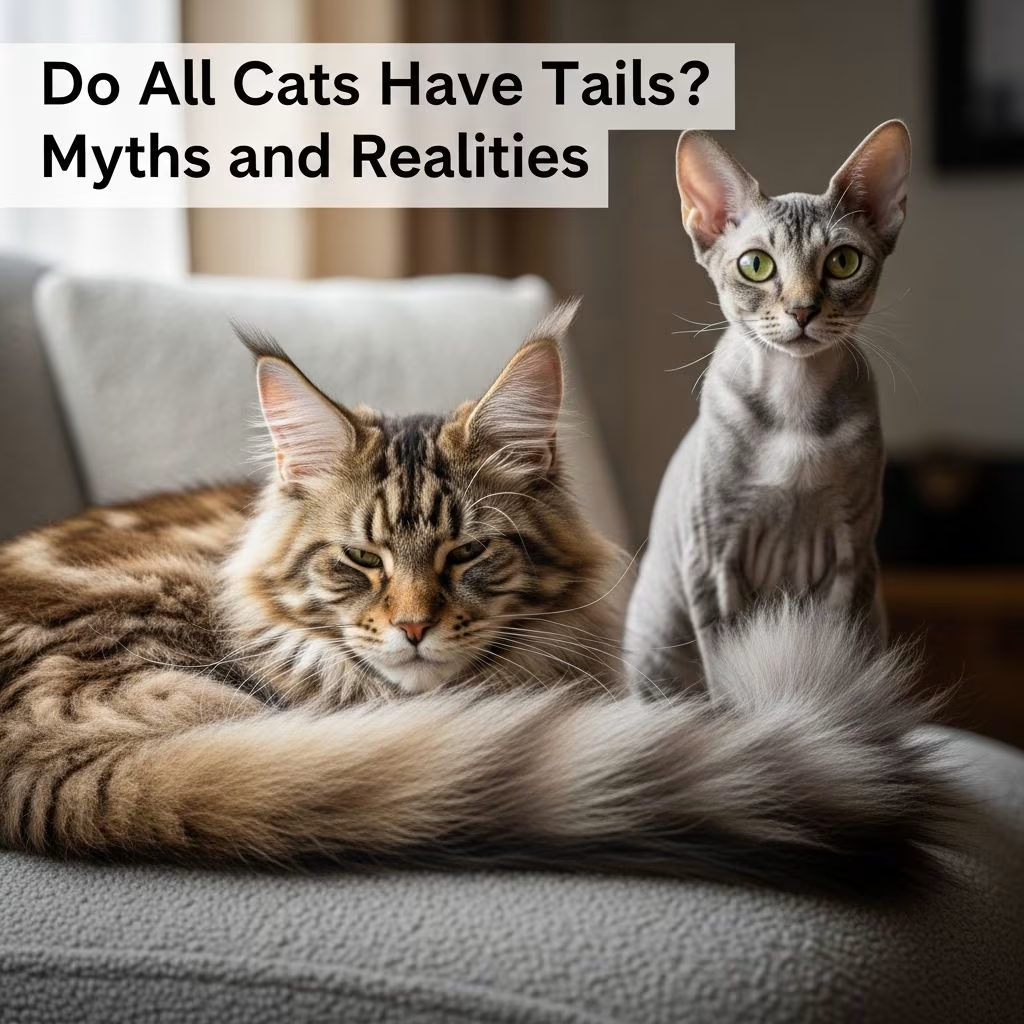
The image of a cat gracefully leaping with a swishing tail is iconic, but not every cat fits this picture. Genetic variations, selective breeding, and natural mutations mean some felines are born with short tails, kinked ones, or none at all. Understanding these differences reveals the adaptability of cats and the crucial roles tails play—or don’t—in their lives.
The Anatomy of a Feline Tail
A typical cat’s tail is an extension of the spine, composed of 18 to 23 caudal vertebrae that decrease in size toward the tip. These bones interlock flexibly, supported by muscles, tendons, ligaments, nerves, and blood vessels. The tail averages about 12 inches long and houses roughly 10% of the cat’s total bones.
Key components include:
- Cauda equina nerves: A bundle transmitting pain, motor signals, and sensory data from the tail to the brain.
- Caudal muscles: Four groups—lateral, medial, intertransverse, and vertical—providing strength and flexibility, capable of supporting over three times the cat’s body weight.
- Scent glands: Located near the base, used for marking territory.
- Major blood vessels: Including the tail vein along the underside for circulation.
This structure enables precise control, allowing cats to move their tails voluntarily in response to emotions or needs, though involuntary twitches can occur during sleep.
Why Cats Evolved Tails: Essential Functions
Tails are not mere ornaments; they are multifunctional tools honed by evolution. Primary roles include balance, communication, and sensory feedback.
Balance and Agility
During high-speed chases, leaps, or tightrope walks on fences, the tail acts as a counterweight. It adjusts the center of mass, enabling sharp turns and landings with minimal wobble. Snow leopards exemplify this in dramatic falls recovered mid-air. Even tailless cats adapt by relying more on core muscles and inner ear balance.
Communication Signals
Tails convey emotions through nuanced positions and movements, signals processed via the pudendal nerve for rapid response. Common cues include:
- Tail up: Friendly greeting, a domestication-specific signal absent in wild cats.
- Quivering tail: Excitement or spraying intent.
- Twitching tip: Irritation, focus, or hunting concentration.
- Thrashing or thumping: Anger or annoyance.
- Puffed low tail: Fear or aggression.
Cats combine tail signals with ear, whisker, and body posture for complex messages.
Sensory and Other Roles
Tails detect environmental changes, like air currents, aiding navigation in low light. They also aid swimming in some breeds and house glands for chemical signaling.
Tailless and Short-Tailed Cats: Genetic Origins
No, not all cats have tails. Mutations and breeding have produced varieties with reduced or absent tails.
| Breed/Type | Tail Characteristic | Genetic Basis | Health Notes |
|---|---|---|---|
| Manx | Tailless or stub | T-box gene mutation | Risk of Manx syndrome: spina bifida, incontinence, paralysis |
| Japanese Bobtail | Short, pom-pom like | HES7 gene (c.5T>C) | Generally healthy; common in Asia |
| American Bobtail | Short, rabbit-like | Bred for length | Low health risks if responsibly bred |
| Cymric | Tailless (long-haired Manx) | Same as Manx | Similar spinal issues |
| Khao Manee | Sometimes kinked | Regional mutation | Usually benign |
Short tails trace back to observations by Charles Darwin in 1868 among Malayan cats. Modern genomics pinpoints HES7 mutations on chromosome E1 for Asian short tails, distinct from Manx genetics. At least three independent evolutionary events explain global taillessness. Injured tails may be amputated, but cats compensate well.
Health Implications of Tail Variations
Tails are pain-sensitive due to dense nerves; injuries cause sharp cries, aggression, or hiding. Tailless breeds face unique risks:
- Manx syndrome: From homozygous dominant mutations, leading to fatal defects or lifelong pain, incontinence, and mobility issues. Ethical breeding avoids tailless-to-tailless matings.
- Short tails: Often harmless, but kinks may hide nerve damage.
- Amputations: Post-trauma, cats adapt balance via other means; monitor for infection or phantom pain.
Regular vet checks ensure spinal health in at-risk breeds. Pain signals mimic human responses via dorsal horn neurons to the cortex.
Caring for Cats With or Without Tails
Owners of tailless cats should:
- Provide stable environments to ease balance challenges.
- Watch for urinary/fecal issues in Manx types.
- Avoid breeding carriers without genetic testing.
- Support mobility with ramps and soft bedding.
For tailed cats, prevent tail pulls or slams in doors, as fractures are common despite flexibility. Clean caudal glands if blocked, causing ‘stud tail’.
Common Myths About Cat Tails Debunked
- Myth: Tailless cats can’t balance. False—they adapt using superior spinal flexibility.
- Myth: All short tails are from injury. Many are genetic, like bobtails.
- Myth: Tails are vestigial. They serve vital roles in survival.
- Myth: Wild cats use tails like domestics. ‘Tail up’ is a domesticated trait.
Frequently Asked Questions (FAQs)
Can cats live happily without tails?
Yes, breeds like Manx thrive, compensating with other agility mechanisms, though health monitoring is key.
Why do some cats have kinked tails?
Kinks often stem from HES7 mutations or birth injuries, common in Asian ferals.
Do cat tails grow back?
No, once damaged or amputated, they don’t regenerate; fur may grow over stubs.
Is tail docking ethical in cats?
Unlike dogs, it’s rare and discouraged due to pain and balance disruption.
How can I tell if my cat’s tail hurts?
Look for limping, swelling, hiding, aggression, or excessive grooming.
From ancient mutations to modern breeds, cat tails showcase evolutionary ingenuity. Whether full-length or absent, these appendages—or their lack—highlight feline resilience. Consult vets for breed-specific advice to ensure your cat’s well-being.
References
- Whole Genome Sequencing Identifies a Missense Mutation in HES7 … — PubMed. 2016-08-23. https://pubmed.ncbi.nlm.nih.gov/27560986/
- Why Do Cats Have Tails? — Rover.com. N/A. https://www.rover.com/blog/why-do-cats-have-tails/
- Study on the Physiological Structure and Pain Perception of Cat Tails — Oreata AI. N/A. https://www.oreateai.com/blog/study-on-the-physiological-structure-and-pain-perception-of-cat-tails/50e9560b5de11cf7e52d09585f6fbfd7
- Do cats communicate with their tails? — Live Science. N/A. https://www.livescience.com/animals/domestic-cats/do-cats-communicate-with-their-tails
- Why Do Cats Have Tails? — Cats.com. N/A. https://cats.com/why-do-cats-have-tails
- 5 Fascinating Vet-Verified Cat Tail Facts You Need to Know — Catster. N/A. https://www.catster.com/lifestyle/cat-tail-facts/



