

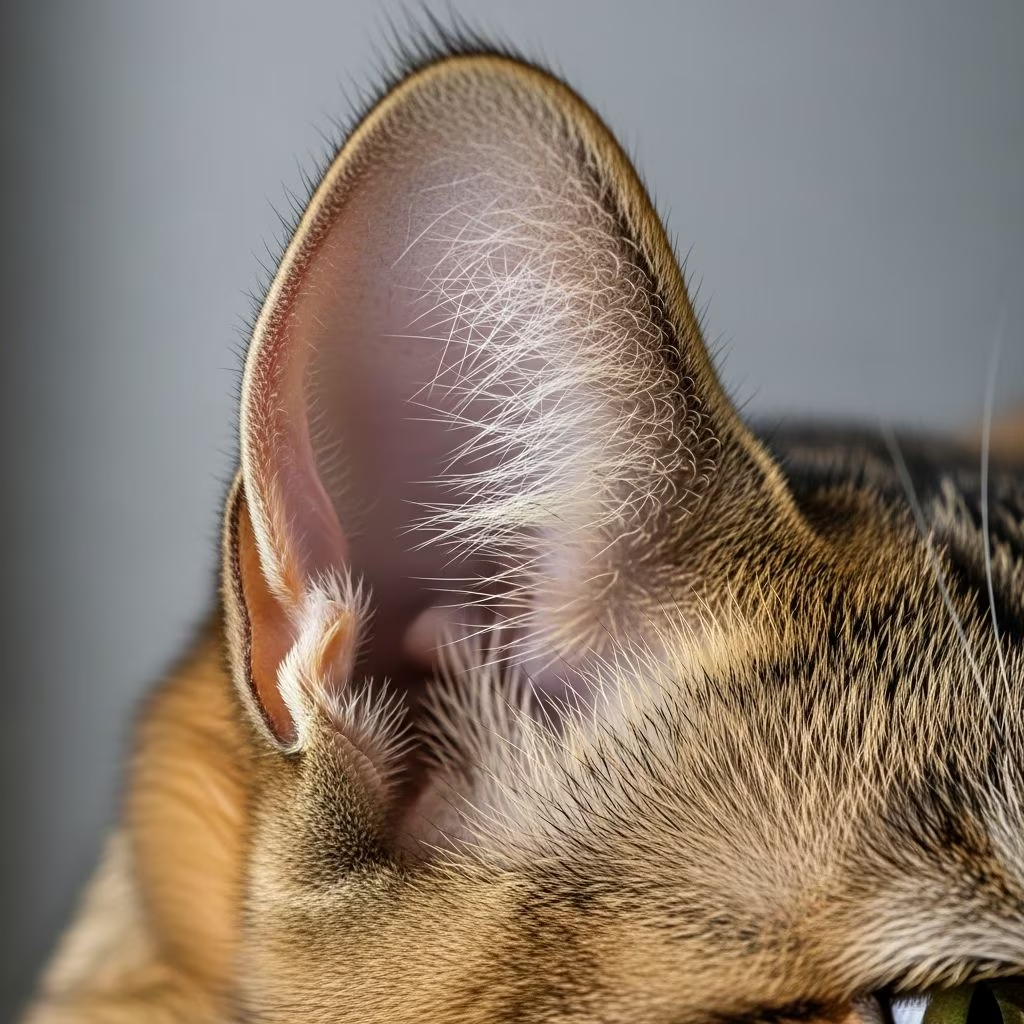
The fold of skin on a cat’s ear, commonly known as Henry’s pocket or the cutaneous marginal pouch, sparks curiosity among cat enthusiasts. This small, vertical crease at the lower rear edge of the external ear raises questions about its prevalence and purpose across feline populations. While prominent in many domestic cats, its presence varies, challenging the notion that every cat possesses it identically.
Unveiling the Anatomy of Feline Ears
Cat ears, or pinnae, serve as remarkable sensory organs beyond mere aesthetics. Composed of cartilage covered by skin and fur, they pivot independently to capture sounds from all directions. The triangular shape, typical in most breeds, points upward for optimal sound funneling. Unlike dogs, where flap-eared varieties abound, cats rarely exhibit folded ears except in mutants like Scottish Folds.
At the base of the ear, Henry’s pocket forms a pouch-like structure. This feature divides the lower ear cartilage, creating a distinct fold. Anatomically, it appears in the posterior-inferior region, aiding in the ear’s flexibility. Cats possess straight, erect ears that flatten backward during aggression or play, enhancing expressive communication.
Does Every Cat Feature This Ear Pouch?
Not all cats display Henry’s pocket prominently. While common in domestic shorthairs and longhairs, its visibility diminishes in certain breeds. For instance, sphynx cats, lacking fur, showcase it clearly due to exposed skin, whereas heavily furred breeds like Persians may obscure it. Wild felines, such as lions or tigers, exhibit subtler versions, suggesting evolutionary conservation with variations.
- Domestic cats: Usually prominent, enhancing ear mobility.
- Breed exceptions: Scottish Folds have altered cartilage, potentially affecting pouch formation.
- Wild cats: Present but less pronounced, adapted to diverse environments.
Genetic factors influence its development. Studies on cat anatomy confirm its near-universality in healthy domestic cats, though size and depth vary individually. Kittens often show it early, which may flatten with age or injury.
Theories on the Function of Henry’s Pocket
Despite its prevalence, the exact role of Henry’s pocket remains elusive. One hypothesis posits it aids sound localization by altering ear shape, allowing better discrimination of high-frequency noises vital for hunting small prey. Cats detect sounds up to 64 kHz, far surpassing human limits, and this pouch may filter or amplify specific pitches.
Another theory links it to vertical ear folding. The pouch enables tighter compression against the head, streamlining the profile during leaps or evasion. This complements the spine’s flexibility, with 30 vertebrae enabling extreme twists—more than humans’ 24. Observations note cats swiveling ears 180 degrees, where the pouch prevents tissue bunching.
| Theory | Potential Benefit | Supporting Anatomy |
|---|---|---|
| Sound Filtering | Enhances high-pitch detection | Ear cartilage division |
| Ear Folding | Streamlines during motion | Flexible skin pouch |
| Sensory Aid | Improves directional hearing | Independent ear pivoting |
These functions align with cats’ predatory prowess, where acute hearing detects rodent ultrasounds. The pouch’s unknown definitive purpose underscores ongoing veterinary research.
Variations Across Feline Species and Breeds
Henry’s pocket appears in big cats too, though less studied. Lions flatten ears similarly, hinting at homologous structures. Domestic breeds show diversity: orientals accentuate it with sleek ears, while exotics minimize visibility via fur.
Health issues can alter it. Ear mites or infections cause swelling, temporarily hiding the pouch. Congenital defects in tailless breeds like Manx indirectly affect ear development due to spinal anomalies. Age-related cartilage stiffening may reduce prominence in seniors.
Caring for Your Cat’s Ears and Henry’s Pocket
Regular ear checks prevent issues impacting this feature. Gently fold the ear to inspect for wax, debris, or the pouch itself. Clean with vet-approved solutions, avoiding cotton swabs that risk injury. Signs of trouble include head shaking, odor, or discharge—prompt vet visits essential.
- Examine weekly: Look for symmetry and pouch visibility.
- Monitor behavior: Excessive scratching signals parasites.
- Professional grooming: For breeds with dense fur.
Nutrition supports ear health; omega-3s reduce inflammation, preserving flexibility.
Myths and Facts About Cat Ear Anatomy
Folklore claims Henry’s pocket predicts personality—alert cats have larger pouches. Scientifically baseless, such myths persist online. Fact: It’s a standard anatomical trait, not temperament-linked. Another misconception: All cats hear identically. Breed variations affect ear shape, influencing sound capture.
- Myth: Absent pouch means hearing loss.
- Fact: Variations normal; function intact.
- Myth: Only domestic cats have it.
- Fact: Observed in wild felids.
Henry’s Pocket in Evolutionary Context
Evolutionarily, cats descended from agile hunters favoring enhanced audition. The pouch likely arose to optimize ear dynamics in nocturnal pursuits. Compared to canines, felines prioritize precision over volume, with pouch aiding pinpoint accuracy.
Comparative anatomy reveals uniqueness: Dogs lack it, relying on larger pinnae. Cats’ 250+ bones, including free-floating clavicles, pair with ear features for supreme agility. This pouch exemplifies adaptations for stealthy predation.
FAQs on Henry’s Pocket and Cat Ears
What exactly is Henry’s pocket?
It’s the skin fold at the lower back of a cat’s ear, dividing the cartilage.
Do all cats have it?
Nearly all do, but prominence varies by breed, age, and genetics.
Does it affect hearing?
Possibly aids sound directionality, though unproven definitively.
Can it be absent due to health issues?
Yes, infections or injuries may obscure or alter it.
Is it unique to cats?
Primarily feline; rare in other mammals.
How to check for it safely?
Gently lift the ear base; consult vets if concerned.
Advanced Insights into Feline Auditory Systems
Beyond the pouch, cats boast sophisticated ears. The tympanic membrane vibrates to middle ear ossicles, amplifying signals. Cochlea hairs detect frequencies humans miss, crucial for echolocation-like hunting.
Ear muscles, like the temporalis, stabilize during motion, preventing blur. Integrated with vomeronasal organs, ears contribute to scent-taste synergy via tongue papillae. This holistic system underscores why Henry’s pocket intrigues researchers.
In veterinary practice, pouch inspection aids diagnostics. Asymmetry signals mites or polyps. Recent studies (post-2024) explore genetic markers for ear traits, promising breed-specific care.
References
- Cat anatomy – Wikipedia — Wikipedia. 2024-01-15. https://en.wikipedia.org/wiki/Cat_anatomy
- Cat Anatomy & Physiology 101 | Purina US — Purina. 2023-11-20. https://www.purina.com/articles/cat/behavior/understanding-cats/cat-anatomy
- Feline – Anatomy, Behavior, Hunting – Britannica — Britannica. 2024-05-10. https://www.britannica.com/animal/feline/Form-and-function
- Cat’s Specialized Anatomy – Quick Overview – Hill’s Pet Nutrition — Hill’s Pet Nutrition. 2023-08-05. https://www.hillspet.com/cat-care/behavior-appearance/cat-anatomy
- 2024 Ultimate Guide to Cat Anatomy – VetCheck — VetCheck. 2024-12-01. https://vetcheck.it/cat_anatomy/
- Physical Description of Cats – Cat Owners – Merck Veterinary Manual — Merck Veterinary Manual. 2024-02-28. https://www.merckvetmanual.com/cat-owners/introduction-to-cats/physical-description-of-cats



