

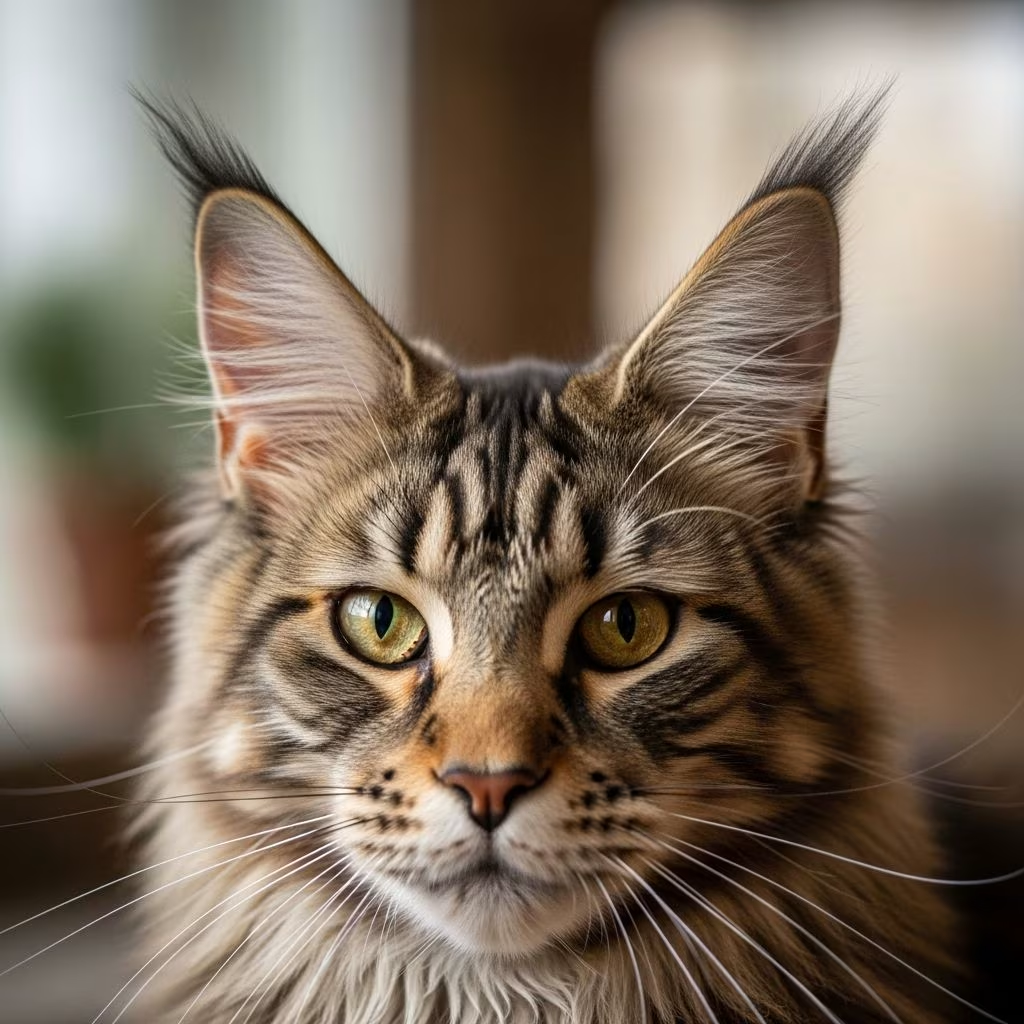
Not all cats possess ear tufts, those distinctive wisps of fur at the tips of their ears also called lynx tips. While common in certain breeds, they serve practical purposes like sound guidance and debris protection in felines that have them.
Understanding Feline Ear Features
Cat ears are marvels of evolution, equipped with specialized structures for survival. The outer ear, or pinna, captures sounds efficiently due to its shape and mobility, funneling them into a deep ear canal. Inside, hairs known as ear furnishings line the canal, trapping dust and aiding sound transmission, present in every cat.
Ear tufts differ, appearing only on ear tips externally. They resemble those in wild felids like lynxes, adding a wild aesthetic but providing functional benefits.
Primary Functions of Ear Tufts
Ear tufts enhance auditory capabilities by directing sound waves into the ear canal, improving prey detection for hunting cats. They also block debris, reducing infection risks in the sensitive canal.
In cold climates, breeds like Maine Coons and Norwegian Forest Cats benefit from tufts’ insulation, shielding ears from wind and frost while preserving hearing acuity.
- Sound Filtration: Tufts channel vibrations downward, amplifying faint noises.
- Debris Protection: Act as a barrier against dirt and parasites.
- Temperature Regulation: Provide warmth in harsh environments.
Ear Tufts vs. Ear Furnishings: Key Differences
Many confuse ear tufts with furnishings. Furnishings are internal canal hairs in all cats, essential for cleanliness and sound. Tufts are external tip hairs, ornamental yet helpful, absent in most domestic cats.
| Feature | Ear Tufts (Lynx Tips) | Ear Furnishings |
|---|---|---|
| Location | Ear tips (external) | Inside ear canal |
| Prevalence | Select breeds only | All cats |
| Main Role | Sound direction, insulation | Debris trapping, sound aid |
| Appearance | Long, wispy fur | Short, dense hairs |
Breeds Famous for Prominent Ear Tufts
Certain long-haired breeds showcase striking tufts, enhancing their majestic look and functionality.
- Maine Coon: Long tufts up to 3 inches protect against cold and aid hunting.
- Norwegian Forest Cat: Thick tufts insulate for winter hunts, improving sound precision.
- Highlander: Curled ears with tufts mimic wild ancestors.
- American Bobtail: Rugged tufts for outdoor versatility.
- Siberian: Dense tufts for harsh climates.
Short-haired cats like Siamese or Abyssinians rarely have noticeable tufts.
The Anatomy Behind Cat Ears
Cat ears comprise outer, middle, and inner sections. The pinna, with 32 muscles per ear, rotates 180 degrees for precise sound localization. The deep canal, deeper than humans’, funnels sound to the eardrum.
Middle ear bones amplify vibrations; inner ear handles balance via semicircular canals, enabling agility. Henry’s pocket, a skin flap at the base, may aid high-pitch detection, though its role is debated.
Kittens are born with sealed canals, opening around one week for hearing development.
Caring for Cats With and Without Ear Tufts
Regular checks prevent issues. Gently wipe outer ears with a damp cloth; avoid deep cleaning. Watch for infections: head shaking, odor, discharge.
If tufts are trimmed, they regrow with the coat cycle, minimally impacting health. Sudden loss signals mites, allergies, or infections—consult a vet.
Health Issues Related to Feline Ears
Ear problems affect balance and hearing. Common signs include:
- Excessive scratching or shaking.
- Redness, swelling, or discharge.
- Balance loss or head tilting.
Infections thrive in deep canals; tufts and furnishings help prevent but don’t eliminate risks. Breeds with tufts may face frostbite in extremes without care.
Evolutionary Insights into Ear Tufts
Tufts likely evolved for wild survival: camouflage in lynxes, sound enhancement for hunters. Domestic breeds retain them as breed standards, blending utility and beauty.
FAQs About Cat Ear Tufts
Can I trim my cat’s ear tufts?
Yes, safely for grooming, but they regrow. Avoid if unnecessary, as they protect ears.
Why does my cat lack ear tufts?
Most cats don’t have them; it’s breed and genetics, not a health issue.
Do ear tufts improve hearing?
They filter sound into the canal, aiding detection, especially in tufted breeds.
Are ear tufts the same as ear mites?
No; tufts are fur. Mites cause itching—check with a vet.
Which cat has the longest ear tufts?
Maine Coons often boast the longest, up to 3 inches for insulation.
References
- Ear tuft – Wikipedia — Wikipedia. 2023-10-15. https://en.wikipedia.org/wiki/Ear_tuft
- What are Those Special Hairs in Your Cat’s Ears? — Cat Behavior Associates. 2022-05-20. https://catbehaviorassociates.com/what-are-those-special-hairs-in-your-cats-ears/
- All About Cats’ Ears — Basket of Cats. 2023-08-10. https://basketofcats.com/all-about-cats-ears/
- Maine Coons and their stunning ear tufts — Talynn King Coons. 2024-01-12. https://talynnkingcoons.com/maine-coons-and-their-stunning-ear-tufts/
- 7 Cat Ear Facts — PetMD. 2025-03-05. https://www.petmd.com/cat/general-health/cat-ear-facts
- Norwegian Forest cat ear tufts—explained in detail — Untamed. 2024-11-18. https://untamed.com/blogs/cat-breeds/norwegian-forest-cat-ear-tufts
- Is It True That All Cats Have Ear Tufts? Vet-Reviewed Facts & FAQ — Catster. 2025-07-22. https://www.catster.com/lifestyle/is-it-true-that-all-cats-have-ear-tufts/



