

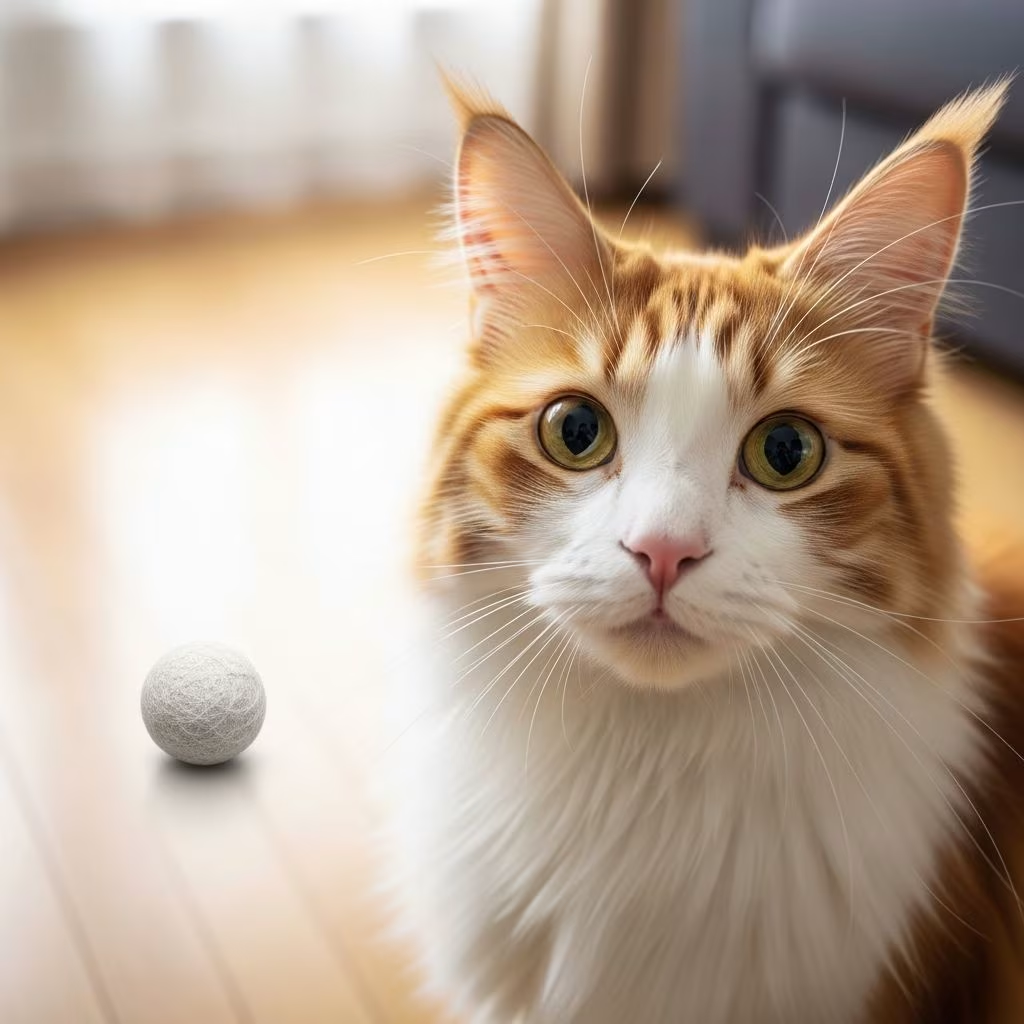
Do All Cats Get Hairballs? The Truth Revealed
One of the most common assumptions among cat owners is that hairballs are an inevitable part of cat ownership. However, the reality is more nuanced. Not all cats experience hairballs, and understanding which felines are susceptible can help you provide better care for your pet. The answer to whether all cats get hairballs is a straightforward no – but the reasons why some cats do and others don’t involve several interconnected factors related to breed, age, grooming habits, and overall health.
Understanding What Hairballs Actually Are
Before diving into which cats are prone to hairballs, it’s important to understand exactly what a hairball is. A hairball is a clump of swallowed hair mixed with digestive fluids and bile that accumulates in a cat’s stomach. The scientific term for this condition is trichobezoar, derived from the Greek word “tricho” meaning hair, and “bezoar” referring to an indigestible mass that collects in the digestive tract.
When a cat grooms herself, the backward-slanting projections called papillae on her tongue catch loose hairs and propel them down her throat into the stomach. While most ingested hair passes through the digestive system and is excreted naturally in feces, some hair accumulates in the stomach and gradually forms a wet, sticky clump. When this mass becomes large enough, the cat’s body triggers a vomiting reflex to expel it.
Which Cats Don’t Get Hairballs
Certain groups of cats are naturally less prone to developing hairballs. Understanding these categories can help explain why the myth that “all cats get hairballs” is simply not true.
- Kittens: Young kittens rarely develop hairballs because they haven’t yet developed proficient grooming skills. Since they spend relatively little time licking their coats, they simply don’t ingest enough loose hair to form problematic clumps.
- Hairless Breeds: Cat breeds without fur, such as the Sphynx and Peterbald, cannot develop hairballs because there is no hair to ingest during grooming.
- Many Short-Haired Cats: A significant portion of short-haired cat owners report that their cats never experience hairballs. Research published in the Journal of Feline Medicine and Surgery found that 43% of owners of short-haired cats stated their cats had never had a single hairball.
Cats That Are Most Susceptible to Hairballs
While not all cats get hairballs, certain characteristics make some felines considerably more prone to developing them. The primary factors that increase hairball risk include:
Coat Length and Type
Long-haired cat breeds are significantly more likely to develop hairballs than their short-haired counterparts. Breeds such as Persians, Maine Coons, and other long-haired varieties have more surface area covered in fur, meaning more loose hair is available to be ingested during grooming sessions. Research indicates that hairballs are roughly twice as common in long-haired cats as in short-haired cats. Additionally, studies found that 24% of long-haired cat owners reported their cats had never experienced a hairball, compared to 43% of short-haired cat owners making the same claim.
Age and Grooming Proficiency
As cats mature, they become increasingly skilled groomers. Kittens and young cats naturally spend less time grooming themselves, which correlates with fewer hairball incidents. However, older cats, having perfected their grooming techniques over years, tend to spend significant portions of their waking hours meticulously licking their coats. This increased grooming activity directly translates to more hair ingestion and a higher likelihood of hairball formation.
Seasonal Shedding Patterns
Hairballs occur with increased frequency during specific seasons when cats shed their coats more heavily. Spring and fall typically see a spike in hairball occurrences as cats shed their winter or summer coats respectively. During these shedding seasons, more loose hair becomes available for ingestion, naturally leading to more hairballs.
Compulsive Grooming Behavior
Some cats are naturally more fastidious groomers than others. Cats that groom compulsively ingest significantly more hair than their more relaxed counterparts. Additionally, over-grooming can sometimes indicate underlying health issues, stress, allergies, or pain – all factors that warrant veterinary attention.
Hairball Frequency: What’s Normal and What Isn’t
Understanding normal hairball frequency is crucial for distinguishing between occasional, manageable hairball incidents and signs of potential health problems. Healthy cats should not be routinely vomiting hairballs. Research suggests that occasional hairballs – approximately 1-2 times per year during seasonal shedding – are relatively common, particularly in long-haired breeds.
However, if your cat experiences hairballs more frequently than this, it may indicate an underlying issue. Recurring hairballs suggest one of several possibilities: excessive hair accumulation due to coat type and shedding, compulsive over-grooming that could signal stress or pain, or gastrointestinal issues that prevent normal hair passage through the digestive tract.
According to veterinary research, approximately 31% of short-haired cat owners and 21% of long-haired cat owners report their cats have roughly one hairball per year – a frequency considered within the normal range. Anything exceeding one hairball monthly warrants veterinary evaluation.
Common Symptoms of Hairball Issues
While occasional hairball vomiting is relatively benign, frequent occurrences or difficulty expelling hairballs may present warning signs:
- Repeated retching or gagging without producing a hairball
- Loss of appetite or reduced eating
- Lethargy or unusual behavior changes
- Constipation or difficulty with bowel movements
- Vomiting that occurs more than once monthly
These symptoms could indicate that hair is causing an obstruction or that an underlying digestive condition is preventing normal hair passage through the system.
Do Wild Cats Get Hairballs?
An interesting question often arises: are hairballs unique to domestic cats, or do wild felines experience them too? The answer reveals something fundamental about cat physiology. All cat species, including wild cats, can develop hairballs. According to animal behaviorist Letitia Fanucchi at Washington State University, hairball formation is a characteristic shared across the entire feline family.
This was dramatically illustrated in 2015 when veterinarians at Colorado State University surgically removed a four-pound hairball from the stomach of Arthur, an African lion at the Wild Animal Sanctuary in Colorado. This remarkable case demonstrates that even large wild cat species with different diets and living conditions can develop significant hairball issues, suggesting that hairball formation is an inherent risk for all cats regardless of environment or domestication status.
Managing and Preventing Hairballs
Regular Grooming
One of the most effective hairball prevention strategies is regular brushing. By removing loose hair before your cat ingests it during self-grooming, you significantly reduce the amount of hair entering the digestive system. This is particularly important for long-haired breeds, which benefit from daily brushing, and for short-haired cats during shedding seasons.
Dietary Interventions
Some studies suggest that high-fiber diets may help with hairball management. Research indicates that long-haired cats fed high-fiber diets showed up to 113% more fur in their feces, suggesting increased hair passage through the digestive system. However, similar effects weren’t clearly demonstrated in short-haired cats, and further research is needed to fully understand fiber’s role in hairball prevention.
Hydration and Digestive Health
Ensuring your cat stays well-hydrated and maintaining overall digestive health can support normal hair passage through the gastrointestinal tract. Some veterinarians recommend specialized hairball-control cat foods formulated to facilitate easier hair movement through the digestive system.
When to Consult Your Veterinarian
While occasional hairballs are relatively common in certain cats, frequent vomiting – whether hairball-related or not – warrants professional evaluation. Your veterinarian should examine cats experiencing:
- More than one hairball monthly
- Difficulty expelling hairballs (repeated retching without success)
- Vomiting accompanied by lethargy, appetite loss, or behavioral changes
- Signs of gastrointestinal obstruction or distress
These symptoms could indicate allergies, inflammatory bowel disease, gastrointestinal obstruction, hyperthyroidism, parasitic infections, or other conditions requiring treatment.
Frequently Asked Questions
Q: Are hairballs truly normal for cats?
A: While hairballs are common, particularly in long-haired breeds and older cats, they are not considered completely normal. Occasional hairballs during shedding season are relatively benign, but frequent hairballs suggest underlying issues requiring veterinary attention.
Q: Can hairless cat breeds get hairballs?
A: No, hairless cat breeds like the Sphynx cannot develop hairballs because they have no fur to ingest during grooming.
Q: At what age do cats typically start getting hairballs?
A: As cats mature and develop more proficient grooming skills, hairball frequency increases. Young kittens rarely experience hairballs, but as cats reach adulthood and beyond, they become increasingly susceptible.
Q: What percentage of cats never get hairballs?
A: Research indicates that 43% of short-haired cat owners report their cats have never had a hairball, while 24% of long-haired cat owners report the same.
Q: How can I reduce my cat’s hairballs?
A: Regular brushing removes loose hair before ingestion, potentially high-fiber diets may help facilitate hair passage, and maintaining overall digestive health supports normal gastrointestinal function. For persistent issues, consult your veterinarian.
Q: Is vomiting hairballs a sign of a health problem?
A: Occasional hairballs are relatively benign, but frequent vomiting can indicate over-grooming due to stress or pain, gastrointestinal issues, allergies, or other underlying health conditions requiring veterinary evaluation.
References
- Cats and Hairballs — Cat in the Box LLC. https://thecatisinthebox.com/blogs/kitty-contemplations/cats-and-hairballs
- A Hairy Dilemma — Cornell University College of Veterinary Medicine. https://www.vet.cornell.edu/departments-centers-and-institutes/cornell-feline-health-center/health-information/feline-health-topics/hairy-dilemma
- Is Your Cat Getting Hairballs & Throwing Up? What You Should Know — Purina. https://www.purina.com/articles/cat/health/digestion/cat-hairball-vomit
- Hairballs in Cats: Causes, Symptoms, & Remedies — WebMD. https://www.webmd.com/pets/cats/what-to-do-about-hairballs-in-cats
- The Yucky Truth About Cat Hairballs — Animal Medical Clinic. https://www.animal-medical-clinic.com/services/vet-education/blog/yucky-truth-about-cat-hairballs



