

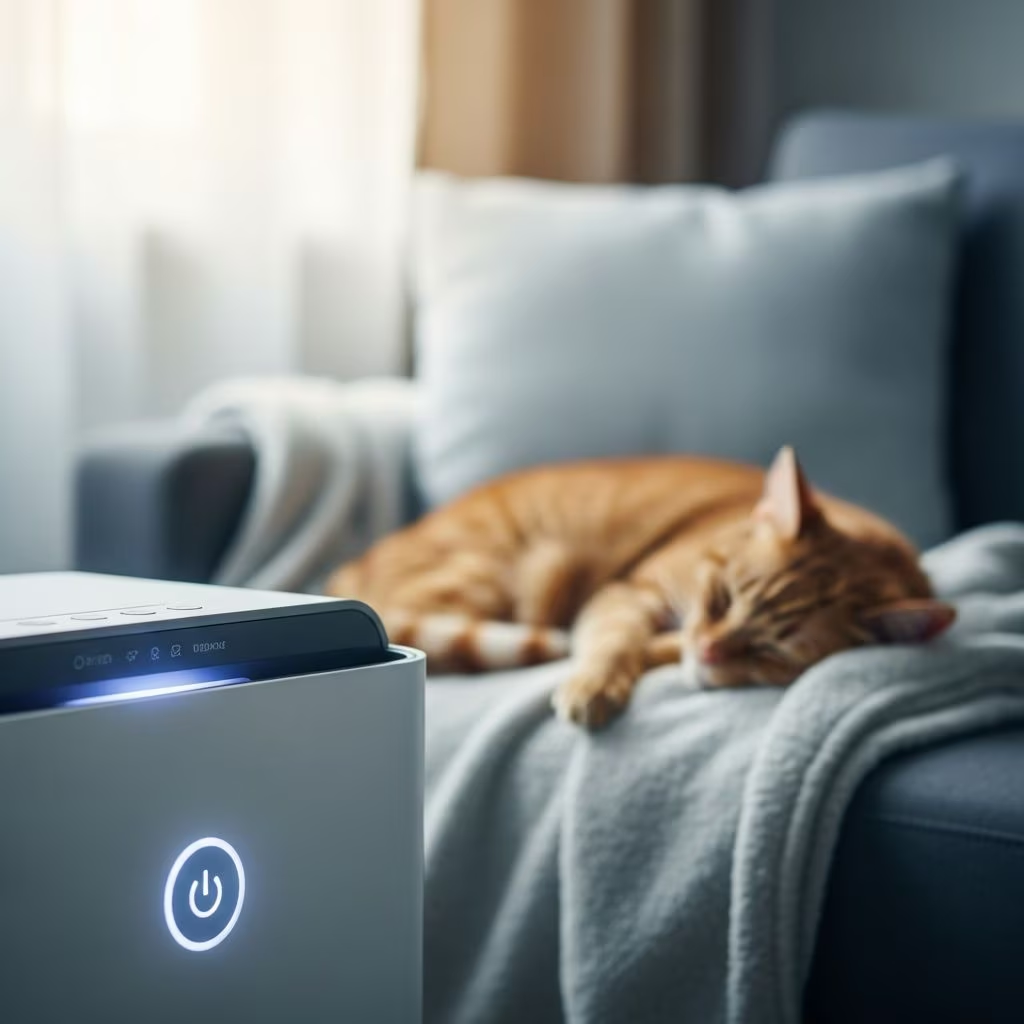
Air purifiers can help reduce airborne cat allergens like Fel d 1, potentially easing symptoms for allergic individuals, though clinical benefits vary and work best alongside other measures.
What Are Cat Allergies?
Cat allergies affect millions worldwide, triggered primarily by Fel d 1, a potent protein produced in cats’ salivary and sebaceous glands. This allergen sticks to fur, skin flakes, and becomes airborne on tiny particles, lingering in homes even after cats leave rooms. Symptoms include sneezing, itchy eyes, runny nose, coughing, wheezing, and skin irritation, impacting both humans and sometimes cats exposed to environmental allergens.
Fel d 1 provokes IgE-mediated responses in 90-95% of cat-allergic patients, leading to asthma exacerbations or rhinitis. Indoor air often harbors higher concentrations of these allergens than outdoor air, exacerbating issues in pet households. Understanding this helps explain why air purification targets airborne Fel d 1 effectively.
Understanding Cat Allergens
The main culprit, Fel d 1, is small enough (often under 0.3 microns when aerosolized) to stay suspended in air for hours, inhaled deeply into lungs. Other allergens like dander, urine proteins, and saliva contribute less but compound exposure. Studies show airborne Fel d 1 levels drop with interventions, but settled dust reservoirs require multifaceted cleaning.
- Fel d 1 sources: Saliva (spread via grooming), skin oils, urine.
- Particle size: 1-10 microns typically, but fragments <0.3 microns evade basic filters.
- Spread: Cats rub against surfaces; allergens cling to fabrics, walls, clothing.
Reducing airborne levels is key, as settled allergens resuspend during activity.
How Do Air Purifiers Work?
Air purifiers draw room air through filters, trapping particles via mechanical or electrostatic means. High-Efficiency Particulate Air (HEPA) filters capture 99.97% of particles ≥0.3 microns, ideal for cat dander. Fans cycle air multiple times hourly, based on Clean Air Delivery Rate (CADR) matching room size.
Multi-stage units include pre-filters for large debris, activated carbon for odors/VOCs, and HEPA for fine allergens. Portable models suit bedrooms; whole-house systems integrate with HVAC. Effectiveness hinges on airflow (CFM), filter quality, and maintenance.
Do Air Purifiers Help with Cat Allergies?
Research shows air purifiers reduce airborne Fel d 1 levels significantly. A 2020 review found portable HEPA cleaners cut early/late asthmatic responses in exposure chambers. Another trial reduced bedroom airborne Fel d 1 by modest amounts (e.g., from 2.9 to 2.0 ng/m³ over months) when combined with cat exclusion and encasings, though symptom improvements were not always statistically significant.
ACAAI notes HEPA filtration lowers allergens like pet dander, providing relief, especially >99.97% efficiency for 0.3-micron particles. However, settled dust allergens persist, limiting standalone efficacy. Benefits are clearer for airborne exposure in controlled settings.
Best Air Purifiers for Cat Allergies
Select True HEPA (certified, not ‘HEPA-type’) with high CADR (100+ for 200 sq ft rooms), low noise (<50 dB sleep mode), and auto-sensors. Avoid ionizers/ozone producers, which irritate airways.
| Feature | Why It Matters | Recommendations |
|---|---|---|
| True HEPA Filter | Captures 99.97% of 0.3μ particles | Mandatory for Fel d 1 |
| CADR Rating | Air changes/hour | 2/3 room volume per min |
| Carbon Filter | Odors, VOCs from litter | Bonus for multi-allergen homes |
| Room Coverage | Matches space | Calculate: Length x Width x 8ft height |
| Maintenance | Filter life 6-12 mo | Easy access, affordable replacements |
Top picks prioritize AHAM-verified CADR >200 for pet allergens.
Types of Air Purifiers
- HEPA Portable: Best for bedrooms; proven Fel d 1 reduction.
- HEPA Furnace Filters: Whole-home, but replace quarterly; ineffective fiberglass types.
- UV/Ionizers: Avoid; ozone irritates, poor allergen removal.
- Hybrid PECO/HEPA: Emerging; oxidize VOCs plus filter particles.
Limitations of Air Purifiers
Air purifiers excel at airborne particles but ignore settled allergens on surfaces. Trials show no consistent symptom/medication reductions despite lower Fel d 1 air levels, possibly due to non-airborne exposure or small samples. Not a cure; ineffective alone in high-dander homes. Ozone models worsen respiratory issues.
Other Ways to Reduce Cat Allergens
Combine purifiers with:
- Cat exclusion: Keep cats out of bedrooms.
- Encasings: Allergen-proof mattress/pillow covers.
- Washing: Bathe cats weekly (reduces Fel d 1 84% temporarily).
- Cleaning: HEPA vacuums, damp dusting; low-pile rugs.
- Humidity: <50% to curb mold.
- Ventilation: Exhaust fans, open windows seasonally.
Multi-step approaches yield best results, per EPA indoor air guidelines.
Tips for Using Air Purifiers Effectively
- Place centrally, 1-3ft off floor, away from walls.
- Run 24/7 on auto-mode.
- Size correctly: 4-6 air changes/hour.
- Seal rooms; close doors.
- Replace filters per schedule; clean pre-filters weekly.
- Monitor with particle counters for efficacy.
FAQs
Do air purifiers remove cat dander?
Yes, HEPA models trap 99.97% of airborne dander ≥0.3 microns, reducing Fel d 1 exposure.
Can air purifiers cure cat allergies?
No, they manage symptoms by lowering allergens but don’t eliminate sensitivity.
How often change HEPA filter for cats?
Every 6-12 months or when indicator signals; pets accelerate clogging.
Will air purifier let me keep my cat if allergic?
Often yes, combined with other strategies; many report relief.
Are expensive air purifiers better for allergies?
Not always; prioritize True HEPA, CADR over brand.
Conclusion
Air purifiers, particularly HEPA, offer valuable support against cat allergies by slashing airborne Fel d 1, with research backing reductions in allergen levels and some asthmatic responses. Pair with exclusion, cleaning, and encasings for optimal relief. Consult allergists for personalized plans.
References
- Does Air Filtration Work for Cat Allergen Exposure? — Alina Gherasim et al. Curr Allergy Asthma Rep. 2020-05-14. https://pubmed.ncbi.nlm.nih.gov/32409912/
- HEPA Air Cleaner for Cat Allergy Treatment Trial — American Thoracic Society. Am J Respir Crit Care Med. 1998. https://www.atsjournals.org/doi/10.1164/ajrccm.158.1.9712110
- Air Filters for Allergies — American College of Allergy, Asthma & Immunology (ACAAI). Accessed 2026. https://acaai.org/allergies/management-treatment/living-with-allergies/air-filters/



