

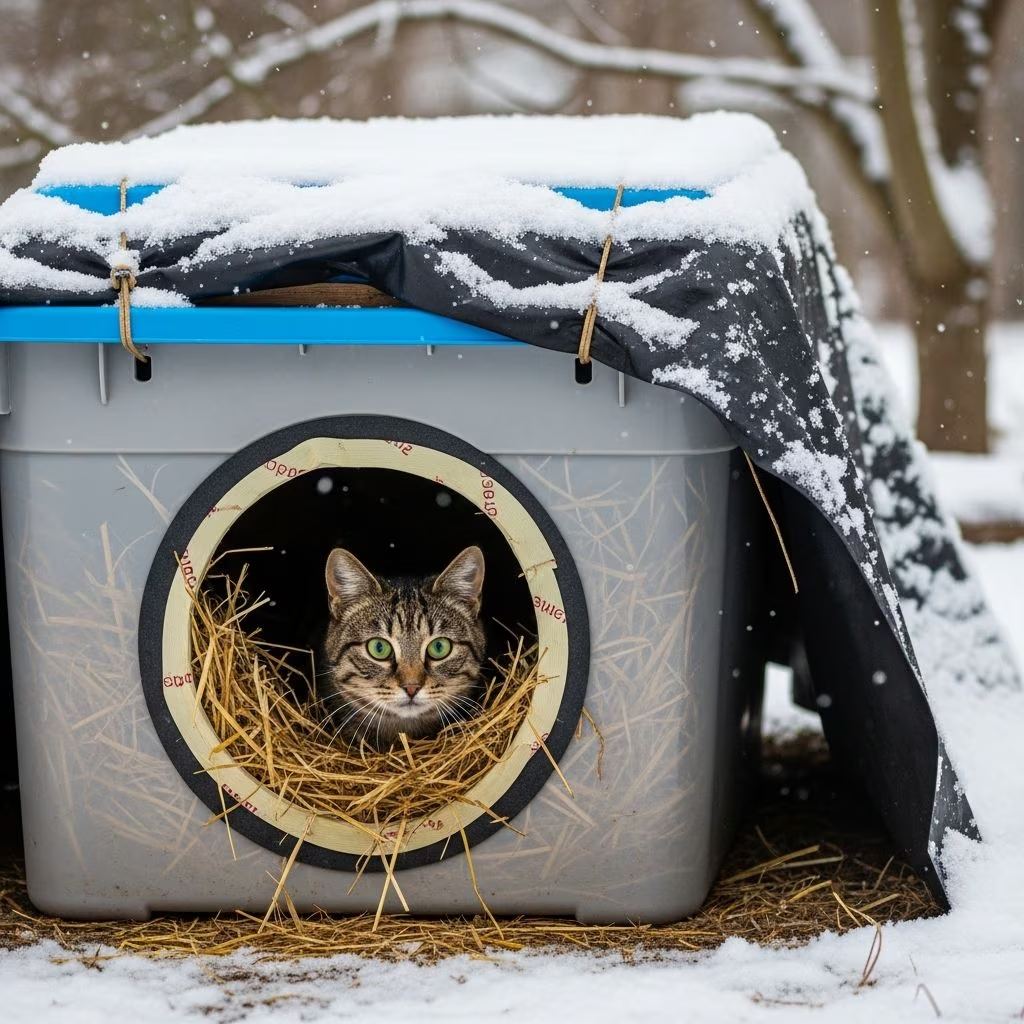
Outdoor cats, often called community or feral cats, face life-threatening cold during winter months. Providing insulated shelters can make the difference between survival and hypothermia. These DIY structures are inexpensive, quick to assemble, and highly effective when built with proper materials like plastic bins and foam insulation. Caregivers worldwide use these designs to support cat colonies in Trap-Neuter-Return (TNR) programs.
Why Feral Cats Need Winter Protection
Feral cats lack access to indoor warmth, relying on body heat and natural insulation. In temperatures below freezing, they curl into tight balls to conserve energy, but wind, snow, and rain exacerbate risks. Well-designed shelters trap body heat, block drafts, and elevate them above ground moisture. Organizations emphasize that a single entrance minimizes heat loss while cats’ agility allows easy exit if needed.
Key principles for effective shelters include thermal insulation, weatherproofing, and moisture resistance. Straw bedding outperforms blankets by wicking away dampness and allowing burrowing for extra warmth. Placement matters too: position shelters in quiet, elevated spots near feeding areas, shielded from prevailing winds.
Essential Materials for Building
Gather these common items, available at hardware stores or recycled from home:
- Plastic storage bin: 18-55 gallon opaque tote with lid (avoids UV degradation in clear plastic)
- Rigid foam insulation: ¾- to 2-inch thick Styrofoam sheets (reflective side inward for heat retention)
- Straw bedding: Bale of loose straw (not hay, which molds; fill halfway to three-quarters full)
- Tools: Box cutter, utility knife, hole saw (6-inch diameter), duct tape, zip ties, drill or scissors
- Optional enhancements: Garden hose or PVC pipe for entrance tunnel, mylar emergency blankets, concrete blocks for weighting
Total cost per shelter: under $25. For multi-cat units, scale up to larger bins or nest two sizes.
Beginner-Friendly Single-Bin Shelter Design
This straightforward build houses one to two cats and takes under an hour. It’s portable, stackable, and excels in extreme cold.
- Prepare the entrance: On a long side, 3-4 inches from the bottom and off-center, cut a 6×6-inch hole using a box cutter or hole saw. This height prevents flooding while allowing easy access. Smooth edges with tape to avoid injury.
- Insulate interior walls and floor: Measure bin’s inner dimensions. Cut five Styrofoam pieces: four walls and one floor panel. Press-fit them snugly; trim for tight seal. Reflective foil faces inward to bounce back heat.
- Recut entrance through insulation: Trace and slice the foam matching the outer hole precisely.
- Reinforce entryway: Slice a garden hose lengthwise to form a flap. Wrap it around the hole’s edge, securing with duct tape inside and out. This windbreak keeps rain out.
- Add drainage: Poke ¼-inch holes in four bottom corners outside the insulation.
- Fill with straw: Pile loose straw to half or three-quarters height. Don’t compact—cats burrow naturally.
- Insulate and secure lid: Line lid underside with foam or mylar, tape securely (avoid rim). Drill holes through lid and bin lip; fasten with zip ties.
Weigh down with bricks. Test by checking if a cat-sized pet fits comfortably.
Advanced Double-Bin Nesting Shelter
For superior insulation, nest a smaller bin inside a larger one, creating an air-gapped thermal barrier. Ideal for 2-4 cats.
| Component | Large Bin | Small Bin |
|---|---|---|
| Size | 30-55 gallon | 18-30 gallon (fits snugly inside) |
| Entrance | 6×6-inch hole, low side | Matching hole aligned |
| Insulation | Styrofoam in gap + walls | Full interior lining + straw |
- Cut aligned 6×6-inch entrances in both bins’ corresponding sides.
- Line large bin floor with foam; insert small bin.
- Stuff annulus (space between bins) with foam scraps and straw for air pockets.
- Insulate small bin’s interior fully; recut its entrance.
- Insert PVC tube or hose through both entrances, protruding 2 inches forward as a rain hood. Tape securely.
- Fill small bin with straw; cap both lids, securing outer one.
This design mimics commercial units, retaining heat up to 30°F warmer than outside air.
Placement and Maintenance Best Practices
Site selection: Elevate on pallets or bricks 6-12 inches off frozen ground. Face entrance away from wind; cluster 2-3 shelters for communal warming. Camouflage with brush for predator deterrence.
Winter upkeep:
- Weekly: Check for compacted straw; fluff and replace if soiled.
- Monthly: Inspect tape seals, reinforce as needed.
- Spring: Disassemble, clean, store dry.
Monitor usage via paw prints or fur. Combine with daily feeding (wet food warmed) and fresh water.
Common Mistakes to Avoid
- Blankets or hay: Trap moisture, leading to mold and chills.
- Multiple/large entrances: Cause heat escape and predator entry.
- Clear plastic: Cracks under sun, scares privacy-seeking cats.
- No weighting: Tumbles in wind, stressing cats.
- Overpacking straw: Blocks access; let cats shape it.
Scaling Up for Cat Colonies
For larger groups, build modular arrays. A 55-gallon bin houses 3-4 cats; connect multiples with covered walkways from plywood scraps. Alley Cat Allies and Neighborhood Cats recommend one shelter per 3-4 cats, refreshed seasonally.
Budget option: Cardboard boxes lined with mylar and newspaper for emergencies, but upgrade to plastic for longevity.
Health and TNR Integration
Shelters complement TNR by stabilizing colonies. Insulated cats expend less energy on warmth, improving fertility control and health. Pair with vet checks for fleas, ear mites. In sub-zero climates, heated pads (solar-powered) add luxury but require safety cords.
Frequently Asked Questions
How warm do these shelters get?
Interior temps can reach 20-40°F above ambient, depending on cat occupancy and wind.
Will cats use them?
Yes, if sized right (cat fits through entrance) and placed near food. Familiarize with scent-soiled straw.
Straw vs. other bedding?
Straw only: insulates, dries fast. Cedar chips risk respiratory issues.
Cost and sourcing?
$15-30. Reuse bins; free foam from packaging; straw bales ~$5.
Legal concerns?
Most areas allow feeding/sheltering with TNR compliance. Check local ordinances.
Community Impact and Success Stories
Volunteers report zero winter losses in sheltered colonies. BC SPCA and similar groups document thriving cats post-installation. Start small, expand via neighborhood networks.
References
- How to build a winter shelter for community cats — YouTube (Community Cats Podcast). Accessed 2026. https://www.youtube.com/watch?v=Ij8OJRAR0tA
- Save a Feral Cat’s Life With a $15 DIY Winter Shelter — Autostraddle. 2018-12-03. https://www.autostraddle.com/save-a-feral-cats-life-with-a-15-diy-winter-shelter-356360/
- Building Winter Shelters for Community Cats — Alley Cat Advocates. Accessed 2026. https://alleycatadvocates.org/creating-winter-shelters/
- Feral Cat Winter Shelters — Neighborhood Cats. Accessed 2026. https://www.neighborhoodcats.org/how-to-tnr/colony-care/feral-cat-winter-shelter
- Easy DIY: Winter Cat Shelter — SPCA of Wake County. Accessed 2026. https://spcawake.org/easy-diy-feral-cat-shelter/
- How to build a winter cat shelter — BC SPCA (YouTube). Accessed 2026. https://www.youtube.com/watch?v=f8WKpIrHevM



