

by Dr. Shea Cox, DVM, CVPP, CHPV | expert review by Dr. Sagen Woolery, DVM
In this final installment of our DIY physical exam series, pet parents will gain the confidence to conduct thorough at-home health checks focusing on the stomach and musculoskeletal system. Building on previous parts—vitals, head, and thorax—this guide equips you to palpate the abdomen for abnormalities and evaluate your dog’s skeleton, joints, muscles, and gait. Regular exams when your dog is healthy establish baselines for early detection of issues like pain, lumps, or mobility problems, potentially saving lives through prompt veterinary intervention.
Why Perform a DIY Physical Exam on Your Dog?
Conducting routine physical exams at home empowers owners to monitor their dog’s health proactively. While veterinarians use advanced tools, you can detect subtle changes in posture, behavior, or physical findings that signal trouble. Start these checks during wellness periods to know your dog’s ‘normal’—posture, energy, and feel under your hands. Subtle shifts, like a new lump or reluctance to be touched, warrant a vet visit. Early recognition of abdominal distention, pain, or skeletal asymmetry can prevent serious conditions.
This series covers a systematic approach: Part 1 (vitals and posture), Part 2 (head: eyes, ears, nose, mouth), Part 3 (thorax: neck, chest, breathing, skin), and now Part 4 (abdomen and musculoskeletal). Mastering these prepares you for comprehensive screening exams.
Examining the Stomach: Step-by-Step Guide
The abdominal exam is straightforward yet revealing. It involves gentle palpation to assess organ position, detect masses, and gauge comfort. Always perform in a calm environment with treats to keep your dog relaxed. If your dog recently ate, note any normal stomach fullness on the left side under the ribs.
How to Check Your Dog’s Stomach
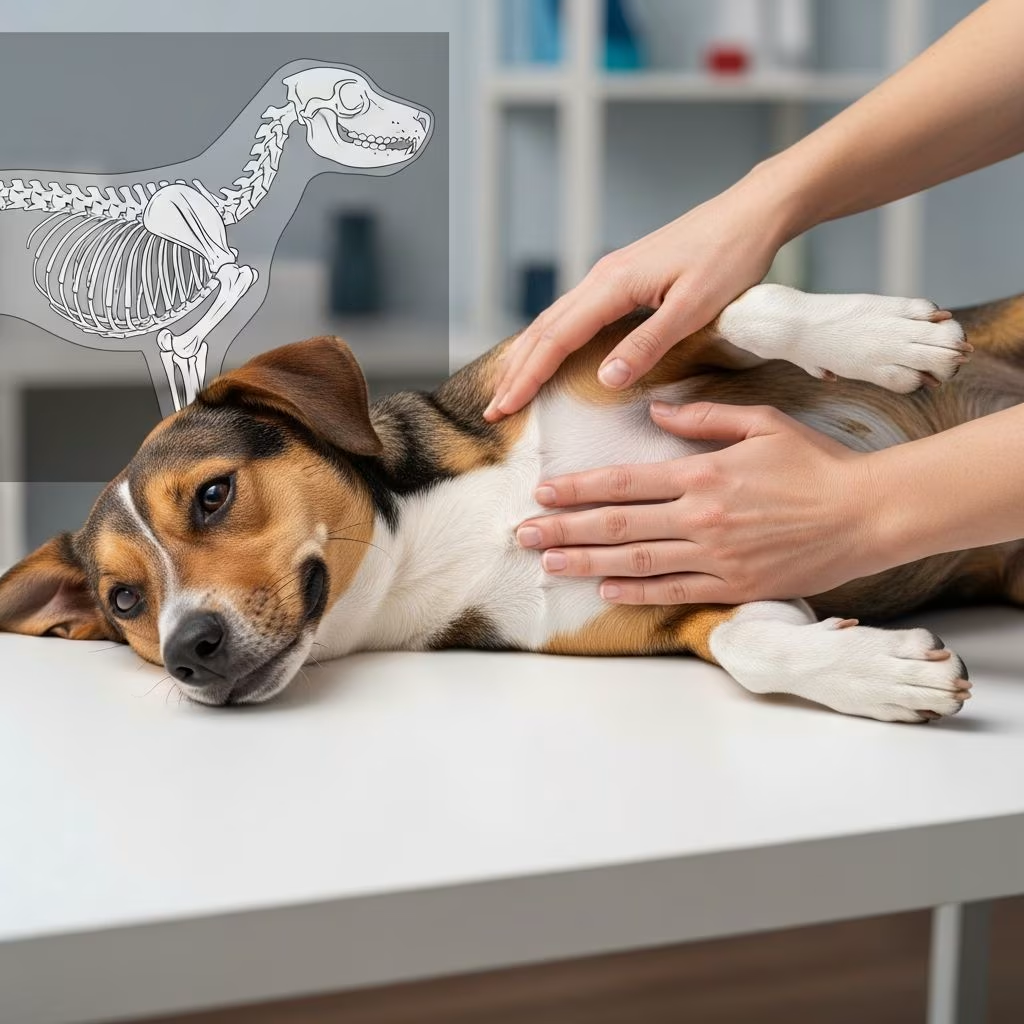
- Position your dog: Have them stand or lie on their back/side comfortably. Use a non-slip surface and secure if wiggly.
- Visual inspection: Look at the belly from multiple angles. Note symmetry, distention (bloating), scars, or visible lumps. A healthy abdomen appears soft and proportional without unnatural bulging.
- Gentle palpation: Start behind the ribs, using flat hands or fingertips. Press lightly in quadrants: cranial (front), middle, caudal (rear). Feel for:
- **Smoothness:** Normal is soft, dough-like (not tense or fluid-filled).
- **Lumps/bumps/masses:** Any hard or soft growths need vet evaluation.
- **Pain response:** Whining, tensing, biting, or avoidance indicates discomfort—stop and call vet.
- **Organ feel:** Kidneys (bean-shaped, mid-abdomen), bladder (caudal, firm if full), intestines (tubular, non-painful).
- Check both sides: Compare left/right for asymmetry, like spleen enlargement (left) or liver issues.
- Listen if possible: Ear to belly for gut sounds (gurgling every 5-10 seconds normal).
Practice weekly to familiarize with normals. Puppies have more rounded bellies; seniors may have looser skin. Avoid if post-surgery or known issues.
Common Stomach Exam Findings and When to Worry
| Finding | Normal | Abnormal (See Vet) |
|---|---|---|
| Texture | Soft, pliable | Hard, tense, doughy, fluid-wave |
| Pain | None | Guarding, vocalizing, aggression |
| Masses | Smooth | Lumps >1cm, fixed, growing |
| Distention | Mild post-meal | Severe bloating (GDV risk) |
| Symmetry | Even | One-sided swelling |
Gastric dilatation-volvulus (GDV/bloat) is life-threatening in deep-chested breeds—rapid distention + retching needs emergency care.
Examining the Musculoskeletal System
Beyond the belly, assess skeleton, muscles, joints for mobility, pain, or injury. This ‘nose-to-tail’ finish ensures full coverage.
Step-by-Step Skeleton and Joint Check
- Gait observation: Walk/run your dog. Note limp, stiffness, circling, or reluctance. Normal: fluid, even strides, full weight-bearing.
- Spine and back: Run hands along vertebrae. Feel for swayback, kyphosis, or pain (arching, yelping). Check tail base for sensitivity.
- Shoulders/hips: Palpate joints for heat, swelling, crepitus (grinding). Compare sides.
- Legs and limbs: Feel bones (humerus, femur, etc.) for fractures/misalignment. Flex/extend elbows, stifles (knees), hocks smoothly without pain.
- Feet and nails: Inspect pads (no cracks/foreign objects), nails (not overgrown), dewclaws. Test proprioception: flip paw—quick correction normal.
- Muscle tone: Squeeze gently; firm, not wasted/atrophied.
Seniors may show arthritis (stiff rise); athletes risk strains. Video gait for vet sharing.
Red Flags in Musculoskeletal Exam
- Lameness: Persistent hobbling, favoring one leg.
- Joint instability: ‘Orifice’ feel, drawer sign in knees/hips.
- Muscle loss: Asymmetry, common in seniors/illness.
- Pain on manipulation: Immediate vet for possible luxation/fracture.
- Swelling/heat: Infection, sprain indicators.
Tips for Successful DIY Exams
- Frequency: Monthly or after play/injury.
- Tools: Treats, flashlight, notebook for baselines.
- Dog comfort: Short sessions, positive reinforcement.
- Breeds: brachycephalics (GDV risk), giants (joint issues).
- Post-exam: Track changes; annual vet integrates findings.
Frequently Asked Questions (FAQs)
Q: How often should I check my dog’s stomach?
A: Weekly during full exams, daily if symptoms like vomiting/diarrhea appear. Establish normal feel early.
Q: What if my dog yelps during belly palpation?
A: Stop immediately—indicates pain. Seek vet for ultrasound/X-ray to rule out obstruction/peritonitis.
Q: Can I detect cancer at home?
A: New/enlarging lumps yes, but biopsy needed. Early find improves prognosis.
Q: Normal puppy belly vs. adult?
A: Pups pot-bellied from worms/milk; adults flatter. Deworm/treat as needed.
Q: How to check for hip dysplasia?
A: Observe bunny-hopping gait, positive Ortolani test (vet confirms via X-ray).
Q: Is bloating always emergency?
A: In large breeds with unproductive retching, yes—GDV kills fast without surgery.
Mastering these skills transforms you into your dog’s first health advocate. Consult vets for concerns—DIY complements, doesn’t replace professional care. Practice consistently for a healthier, happier pup!
References
- DIY Physical Exam Part 1 — How to Check Your Dog’s Vitals — Kinship (Dr. Shea Cox, DVM). 2023. https://www.kinship.com/dog-health/diy-physical-exam-owners-manual-your-dog-part-1
- DIY Pet Physical Exam: How to Check Your Dog’s Breathing & Skin — Kinship (Dr. Shea Cox, DVM). 2023. https://www.kinship.com/dog-health/diy-physical-exam-owners-manual-your-dog-part-3
- DIY Physical Exam Part 4—How to Examine Your Dog’s Stomach and Skeleton — Kinship (Dr. Shea Cox, DVM). 2023. https://www.kinship.com/dog-health/diy-physical-exam-owners-manual-your-dog-part-4
- Performing a Physical Exam in Veterinary Medicine — VETgirl on the Run (Dr. Justine Lee, DVM). 2023. https://vetgirlontherun.com/performing-a-physical-exam-in-veterinary-medicine-vetgirl-veterinary-continuing-education-blog/
- Performing a DIY Physical Exam on Your Dog — The Honest Kitchen. 2024. https://www.thehonestkitchen.com/blogs/pet-wellness/performing-a-diy-physical-exam-on-your-dog



