

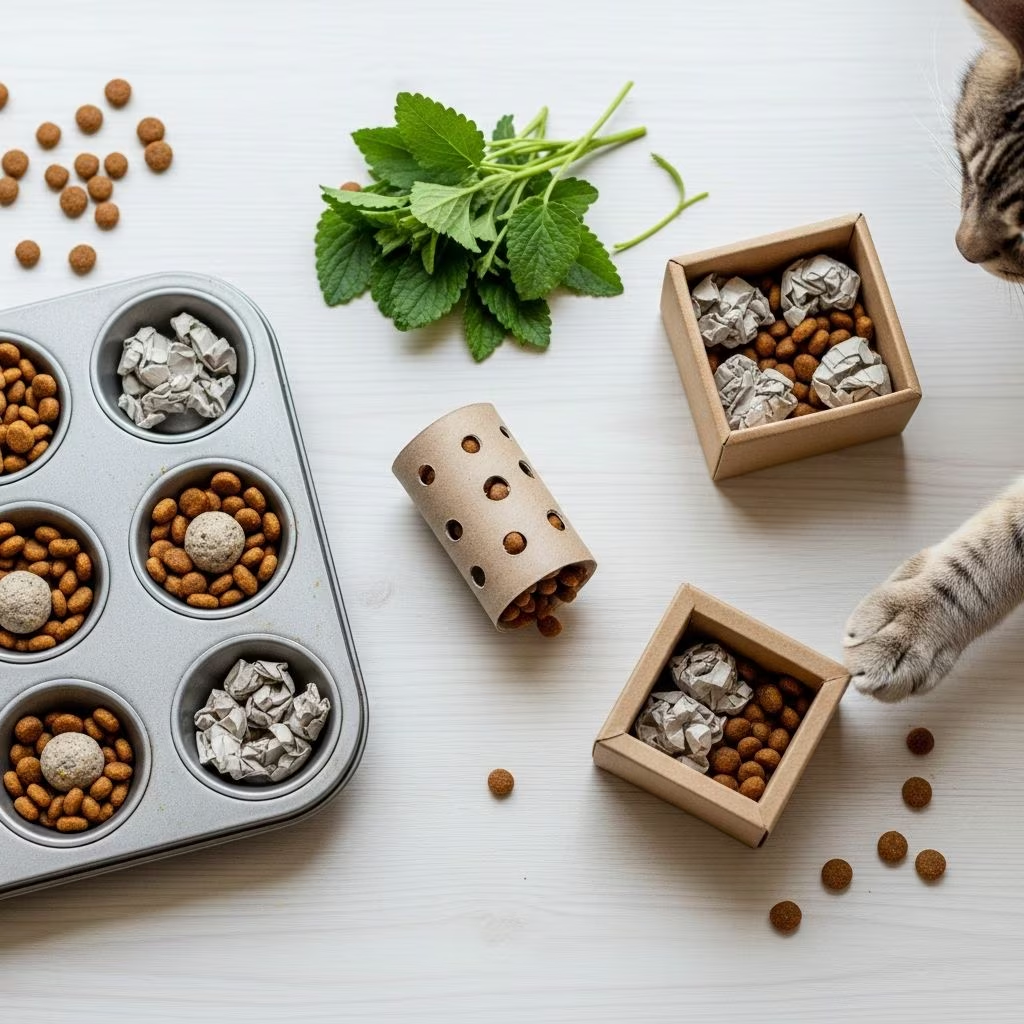
DIY Food Puzzles for Cats: Keep Your Feline Friend Mentally Engaged
Cats are naturally curious and intelligent animals that thrive with mental stimulation. One of the best ways to keep your cat entertained and engaged is through food puzzles—interactive toys that require cats to work for their meals. Making cats work for food helps keep them mentally stimulated and can reduce boredom-related behavioral issues. The wonderful news is that you don’t need to spend a fortune on commercial puzzle feeders. With a few household items and some creativity, you can create engaging DIY food puzzles that your cat will love.
Why Food Puzzles Matter for Your Cat
Food puzzles serve multiple important purposes in your cat’s daily life. They encourage cats to express their natural hunting behavior, which is essential for their psychological well-being. When cats use food puzzles, they’re not just eating—they’re actively engaging their problem-solving skills, staying mentally sharp, and burning calories in the process. This is especially beneficial for indoor cats or those that may be less active. Additionally, food puzzles can help slow down cats that eat too quickly, promoting better digestion and reducing the risk of overeating.
The Muffin Tin Puzzle Feeder
One of the simplest yet most effective DIY food puzzles is the muffin tin puzzle feeder. This creative solution uses an everyday kitchen item that most households already have on hand.
Supplies You’ll Need:
- 1 muffin tin
- Scissors
- Cardboard
- Wet or dry cat food
Step-by-Step Instructions:
Step 1: Create Cardboard Squares
Cut out a cardboard square large enough to cover one individual muffin cup on the tin. Use your first cardboard square as a template and cut the remaining squares to match. You’ll need one square for every cup in your muffin tin—so if your tin has 12 cups, cut 12 squares total.
Step 2: Fill the Cups
Using a spoon, place small portions of food into various cups of the muffin tray. For an extra challenge, fill only a certain number of muffin cups with food and leave others empty, so your cat has to work harder to find her prize and figure out which cups contain treats.
Step 3: Cover the Cups
Place the cardboard squares over all of the cups in the muffin tray, completely covering each one. Make sure they’re secure enough that your cat needs to actively push them to access the food underneath.
Step 4: Let Your Cat Play
Feed your cat her meal in this puzzle toy instead of in her normal bowl. Watch her hunting instincts come to life as she sniffs around to determine which cups have food in them and pushes the cardboard off each cup before eating the food inside.
The Paw Bottle: A Rolling Food Puzzle
Keep your cat’s mind fresh and body active by creating a slow-feeding DIY toy that encourages physical movement. The bottle method is particularly great for getting cats active, especially if you have an inactive or overweight cat. By batting and manipulating the bottle around to get food, your cat is working for her food and burning calories simultaneously.
Supplies You’ll Need:
- Empty plastic bottle (any size)
- X-ACTO knife or sharp scissors
- Dry cat food
Instructions:
Use the X-ACTO knife to cut 3 to 4 holes into the side of the bottle. The size of your bottle determines how many holes you should make—larger bottles can accommodate more openings. The holes should be large enough so that your cat’s dry food will fall out as the bottle gets batted around, but not so large that the food falls out too easily. The smaller the holes you make, the more of a challenge it will be for your cat to get the food out, making this an excellent option for adjusting difficulty levels based on your cat’s skill and motivation.
Simple Yet Effective Puzzle Options
Beyond these two main designs, there are numerous other simple DIY food puzzles you can create using common household items.
The Toilet Paper Roll Puzzle
One of the easiest puzzles to make, toilet paper rolls can be transformed into engaging food puzzles in multiple ways. You can fold the ends inward to partially close them, creating small openings that your cat must manipulate to access treats inside. Alternatively, you can cut holes of various sizes to adjust the difficulty level. These are perfect for cats just beginning their puzzle experience.
The Egg Carton Feeder
Perhaps one of the easiest food puzzle toys you can make, an egg carton requires minimal preparation. Simply put food in the carton and let your cats have at it. You can cut some larger holes if you want to give your cat a better chance of scooping out the food, or you can simply leave the box open and let your kitty use their paws to bat the food out. This option is perfect for slow feeding and helps cats with natural foraging instincts.
The Plastic Container with Holes
Take a simple plastic container, cut paw-sized holes in the lid, and add a bell if you’d like to give your kitty something extra to bat at. One of the advantages of this toy is that it will probably last longer than paper-based options, and it will encourage your kitty to use problem-solving skills to get at the treats.
The Cardboard Puzzle Board
For a more elaborate DIY project, create a cardboard puzzle board that combines multiple feeding stations in one interactive toy. Take a flat piece of cardboard that serves as your base and glue various containers—paper towel rolls, plastic containers, and egg boxes—to it in an appealing arrangement. You can arrange them in any way you like, then put food in the openings. This puzzle will challenge your cat to figure out how to get at the food and will slow your kitty down if they eat too fast.
Supplies for a Puzzle Board:
- Four toilet roll inner tubes
- A cardboard sheet of at least 40x40cm
- Empty plastic containers (yoghurt and sauce pots work well)
- Empty egg boxes
- Scissors or a craft knife
- Super glue
Assembly Instructions:
Cut a piece of cardboard to about 40x40cm to form the base of your activity feeder. Take one toilet roll tube and cut it in half horizontally so it looks like two mini tubes. With the other three tubes, arrange them in a pyramid formation with two at the bottom and one lying on top. Glue these into place. Remove the lid from your egg box and keep both pieces. Glue the pyramid and egg boxes in separate corners of the base. In the gaps, glue the mini tubes and any additional containers upright so they can hold treats inside. Once everything is stuck to the cardboard, leave it to dry for around one hour, then start hiding treats and let your cat enjoy.
Design Considerations and Safety Tips
When creating DIY food puzzles for your cat, several important factors should guide your decisions. Always ensure that any adhesives used (such as super glue) are completely dry and that your cat doesn’t come into contact with the glue while it’s setting. Treats should be given in moderation and alongside a well-balanced diet. Always check with your vet if your cat has any special dietary requirements.
Consider your individual cat’s skill level, age, and physical abilities when designing puzzles. Younger, more agile cats may enjoy more challenging designs with smaller holes and more complex arrangements, while senior cats or those new to puzzles may benefit from simpler designs with larger openings. You can always adjust difficulty by making holes larger or smaller, adding or removing obstacles, or changing the number of filled versus empty cups.
Adjusting Difficulty Levels
One of the best aspects of DIY food puzzles is their customizable nature. You can easily adjust the challenge level to match your cat’s abilities and keep them engaged over time.
| Difficulty Level | Features | Best For |
|---|---|---|
| Easy | Large openings, simple designs, most or all cups filled with food | Kittens, senior cats, or cats new to puzzles |
| Medium | Medium-sized holes, some empty cups mixed with filled ones, moderate complexity | Average adult cats with some puzzle experience |
| Hard | Small holes, mostly empty cups with few filled, complex multi-chamber designs | Highly motivated, active, intelligent cats seeking serious challenges |
Using Household Items Creatively
The beauty of DIY cat food puzzles is that you likely already have most materials in your home. Items destined for the recycling bin can be transformed into enriching toys. Plastic bottles, cardboard boxes, paper towel rolls, egg cartons, and yogurt containers are all excellent puzzle components. This approach not only saves money but also reduces waste and encourages creative reuse of household materials.
Additional items to consider include old food storage containers, cheese crates (which make excellent foraging boxes), and decorative boxes that are no longer needed. The possibilities are truly limited only by your imagination and your cat’s preferences.
Frequently Asked Questions
Q: How often should I use food puzzles with my cat?
A: Food puzzles can be used daily as part of your cat’s regular feeding routine. Many cats enjoy the mental stimulation and physical activity, and rotating between different puzzle designs keeps things interesting and prevents boredom.
Q: Can I use both wet and dry food in these puzzles?
A: Yes, you can use either wet or dry cat food depending on the puzzle design. Dry food works best in most puzzle feeders as it won’t make a mess, but wet food can work in muffin tin puzzles or other designs where the food is contained within cups.
Q: Are DIY food puzzles safe for all cats?
A: Most DIY puzzles are safe when made with non-toxic materials and assembled securely. However, supervise your cat initially to ensure they don’t chew or ingest puzzle materials. Consult your veterinarian if your cat has any health concerns or special dietary needs.
Q: How long does it take to make these puzzles?
A: Most simple puzzles like the egg carton or toilet paper roll designs take just minutes to prepare. More complex projects like the cardboard puzzle board may take 15-30 minutes plus drying time for adhesives.
Q: What if my cat doesn’t seem interested in the puzzle?
A: Try using higher-value treats that your cat particularly enjoys, start with an easier design, or place the puzzle in a different location. Some cats need time to understand how puzzles work, so patience and positive reinforcement help.
Conclusion
DIY food puzzles represent an inexpensive, creative way to provide essential mental and physical enrichment for your cat. Whether you choose the simple egg carton approach or invest time in building an elaborate puzzle board, these homemade toys offer countless benefits including increased mental stimulation, improved physical activity, slower eating habits, and reduced boredom. By using materials you already have at home, you can create engaging enrichment toys that keep your feline friend happy, healthy, and mentally sharp. Start with a simple design, observe your cat’s preferences and abilities, and gradually introduce more challenging puzzles as they become more experienced puzzle solvers. Your cat will thank you with engaged, playful behavior and a healthier lifestyle.
References
- How To Make A Cat Food Puzzle — Blue Cross. 2024. https://www.bluecross.org.uk/advice/cat/how-to-make-a-cat-food-puzzle
- DIY Food Puzzles for Cats — Chewy. 2024. https://www.chewy.com/education/cat/pet-parenting/pet-parenting-diy-recipes-diy-food-puzzles-for-cats
- Homemade Puzzles — Food Puzzles for Cats. 2024. https://foodpuzzlesforcats.com/homemade-puzzles
- 7 DIY Cat Food Puzzle Toys That Will Keep Your Kitty’s Brain Active — CatTime. 2024. https://cattime.com/cat-facts/how-to/18621-diy-cat-food-puzzle-toys
- Puzzle feeders for your cat — International Cat Care. 2024. https://icatcare.org/articles/puzzle-feeders-for-your-cat



