

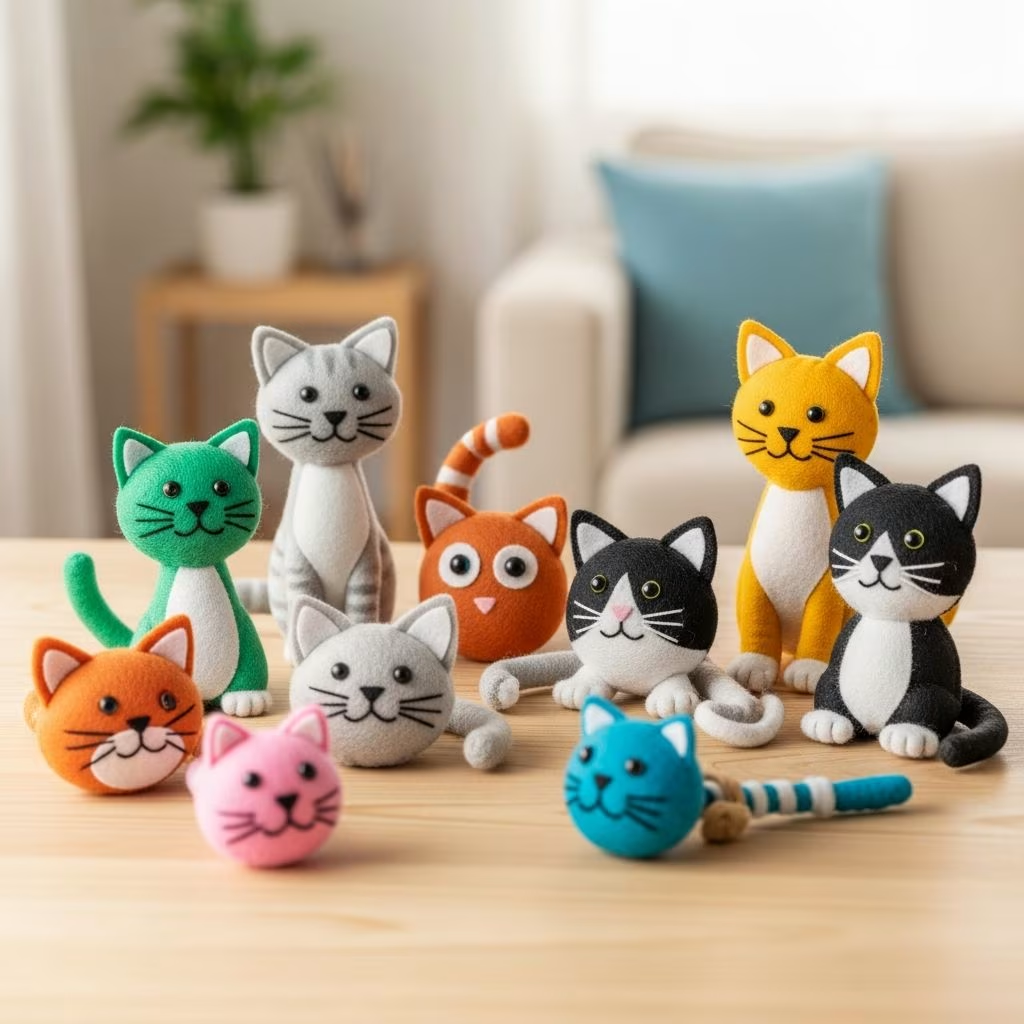
Handcrafting toys from felt offers cat owners a rewarding way to provide stimulation for their pets. These soft, durable creations can be infused with catnip to heighten appeal, encouraging active play that supports physical health and mental well-being. Using accessible materials like wool felt, thread, and stuffing, anyone can produce a variety of shapes tailored to a cat’s preferences.
Why Choose Felt for Cat Toys?
Felt stands out as an ideal material for pet toys due to its softness, which prevents injury during vigorous pouncing and batting. Unlike plastic or rubber alternatives, felt resists splintering and holds up to repeated chewing without sharp edges forming. Its natural wool composition also allows for easy customization through dyeing or layering colors, mimicking prey like rodents or fish that trigger instinctive hunting behaviors.
Moreover, felt toys are lightweight yet substantial enough to be tossed or dragged, promoting exercise. When filled with catnip—a herb from the mint family that elicits euphoria in many cats through nepetalactone compounds—these toys become irresistible lures for extended sessions of engagement.
Essential Materials and Tools
Gathering the right supplies ensures smooth crafting. Core items include:
- Wool felt sheets in various colors for body shapes and details.
- Embroidery floss or thread matching the felt hues for secure stitching.
- Catnip (loose, not powdered to avoid leakage).
- Stuffing such as polyester fiberfill or foam scraps for plumpness.
- Scissors, sharp and precise for clean cuts.
- Needles, including embroidery and felting types for assembly and detailing.
Optional additions like twine for tails, pom-poms for accents, or wool roving for needle felting expand creative possibilities. All materials are inexpensive and widely available at craft stores.
Simple Mouse Toy Tutorial
A classic felt mouse captivates cats with its whisker-like details and scamper-mimicking design. Start by sketching a basic oval body (about 4 inches long), two small ears, and a tail on paper.
- Trace and cut two body pieces from gray felt, adding pink inner ears from contrasting scraps.
- Sew ears to one body side using blanket stitch along curved edges, then attach both sides right-sides out, leaving a 1-inch gap at the belly.
- Thread twine through the rear for a tail, knot securely, and insert stuffing mixed with catnip through the gap.
- Close with tight whipstitches, adding embroidered eyes and whiskers for realism.
This toy rolls unpredictably, sparking chase instincts. Variations include yarn whiskers or jingle bells inside for auditory stimulation.
Needle-Felted Ball for Endless Batting
Felted balls offer a textured, bouncy option perfect for solo play. Begin with a styrofoam core or practice golf ball wrapped in wool roving.
- Layer roving in three directions, needling ends to secure loosely.
- Encapsulate in nylon stocking, knot between multiples, and agitate in a washing machine with hot water and towels for felting.
- Air-dry fully (1-2 days), then extract core via a small slit.
- Refill with catnip and polyfill, seal the slit, and needle on stripes or spots using contrasting roving.
The resulting ball is solid yet lightweight, with a fuzzy exterior that invites pawing. Safety tip: Discard if torn to prevent ingestion.
No-Sew Fish Flopper
For beginners avoiding needles, a no-sew design uses slits and knots. Cut two 9×9-inch felt squares in fish scale colors.
- Mark a central 3-inch square inset from edges on stacked pieces.
- Snip diagonal triangles at corners and 45-degree fringes along sides.
- Double-knot fringes top-to-bottom, stuff opening with batting and catnip, then knot remaining strips.
- Attach fin-shaped felt scraps with knots or glue.
This flat, floppy fish mimics swimming prey, ideal for dragging.
Creative Food-Inspired Designs
Elevate play with whimsical shapes like tacos or donuts, using layered felt cutouts.
| Toy Type | Felt Layers | Stitching Tip |
|---|---|---|
| Taco | Beige shell, green lettuce, red tomato, yellow cheese | Match thread to each layer |
| Donut | Brown base, pink glaze, sprinkles from scraps | Stuff halfway, then sew shut |
Assemble by stacking shapes and blanket-stitching perimeters after partial stuffing. These quirky toys double as decor.
Advanced Needle-Felted Fish
Master needle felting for a koi-style fish with sculpted fins. Form a spindle-shaped body from roving, felting firmly.
- Felt rectangular tail and pectoral fins, notching for shape.
- Attach to body by repeated needling from both sides.
- Add scales via surface punching and eyes with tiny roving balls.
- Stuff lightly if desired, though solid felting suffices.
This detailed toy rewards skilled crafters with lifelike appeal.
Safety Guidelines for Homemade Toys
While fun, prioritize pet safety:
- Use non-toxic glues and avoid small detachable parts like beads.
- Supervise initial play; inspect regularly for wear.
- Opt for pure wool felt to minimize synthetic shedding.
- Limit catnip to prevent overstimulation.
Monitor your cat’s interaction; replace toys showing damage promptly.
Customization Ideas to Suit Your Cat
Tailor toys to preferences: Add feathers for bird mimics, crinkle plastic inside for noise, or scents beyond catnip like silver vine. Test shapes—some cats prefer balls, others flat lures. Track playtime to refine future makes.
Benefits of DIY Toys for Cats and Owners
Beyond entertainment, these projects foster bonding during crafting and use. Economical production means a steady supply, reducing store-bought waste. Environmentally, felt scraps repurpose into eco-friendly playthings.
Frequently Asked Questions
Can all cats enjoy catnip toys?
About 70-80% of cats respond to catnip; sensitivity is genetic. Alternatives like valerian work for others.
How long do felt toys last?
With care, 3-6 months; heavy chewers may destroy faster.
Is needle felting difficult for beginners?
It requires practice but starts simple with basic shapes.
What if my cat ignores the toy?
Drag it enticingly or add motion; patience builds interest.
Are these toys machine-washable?
Spot clean; full washes may release catnip prematurely.
Expanding Your Craft Repertoire
Once basics are mastered, experiment with hybrid designs combining techniques—like a felted ball with sewn appendages. Batch-produce for gifts or sales, as seen in bulk felting methods using pantyhose loads. These toys not only entertain but enrich lives, proving simple materials yield profound joy.
References
- Felt Mouse DIY Cat Toy — Lia Griffith. Accessed 2026. https://liagriffith.com/felt-mouse-diy-cat-toy/
- Felt Catnip Fish, Easy DIY Toy for Cats — YouTube. Accessed 2026. https://www.youtube.com/watch?v=yl5x6-dpQsA
- How To Make Felted Cat Toys — CyberSeams.com. Accessed 2026. https://cyberseams.com/patterns/craft-patterns/how-to-make-felted-cat-toys/
- How To Make: A No Sew Cat Toy — YouTube. Accessed 2026. https://www.youtube.com/watch?v=CeZwYDDsywk
- Felted Cat Toy Tutorial — Felting and Fiber Studio. 2013-12-05. https://feltingandfiberstudio.com/2013/12/05/felted-cat-toy-tutorial/
- Junk Food Cat Toy DIY! — A Beautiful Mess. Accessed 2026. https://abeautifulmess.com/junk-food-cat-toy-diy/
- Learn to Needle Felt – Felted Koi Fish – DIY Cat Toy — YouTube. Accessed 2026. https://www.youtube.com/watch?v=1ayieWOPbZg



