

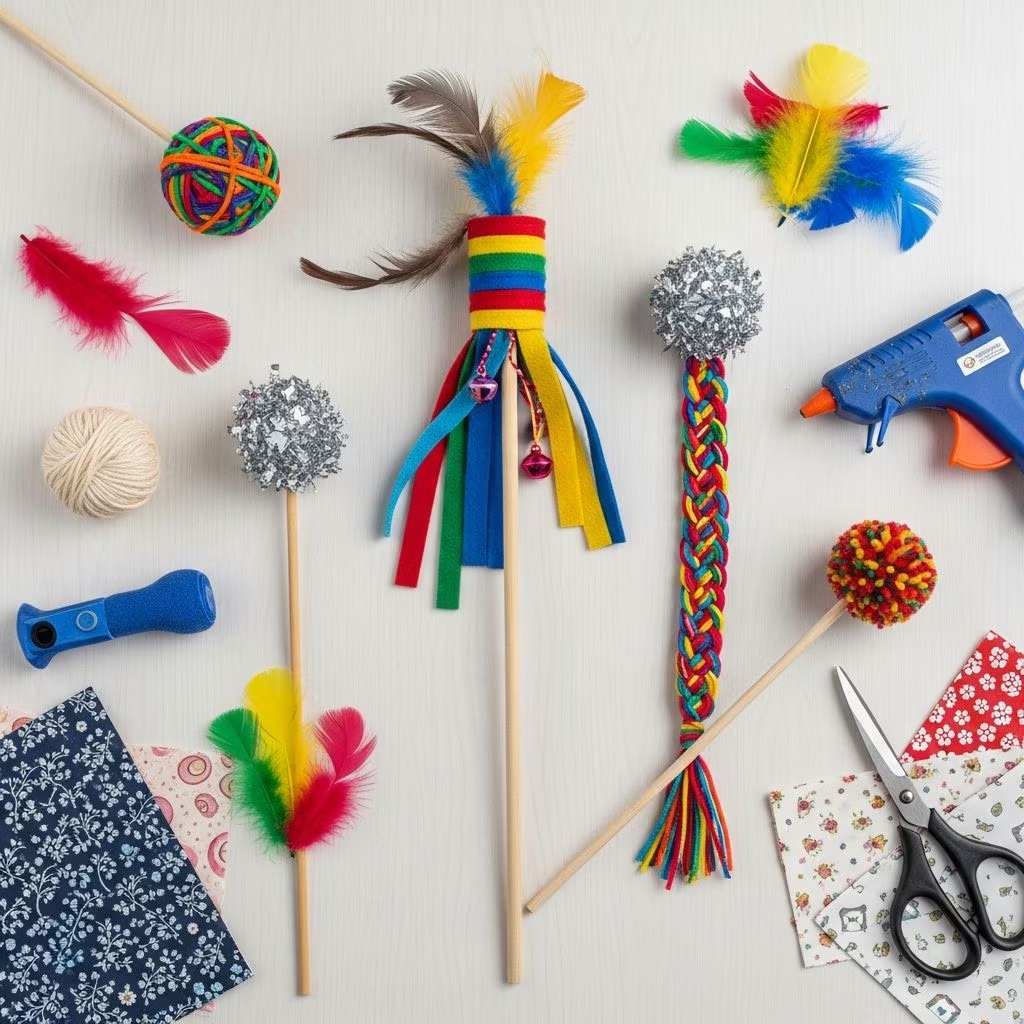
Creating your own cat wand toys offers an affordable and creative way to engage your feline friend’s innate predatory instincts. These interactive tools mimic prey movement, encouraging exercise, mental stimulation, and stronger bonds between you and your cat. By using everyday materials, you can customize toys to suit individual play styles, from aerial leaps to ground chases.
Why Wand Toys Matter for Cat Health
Interactive play fulfills the full prey sequence—stalk, chase, pounce, and catch—essential for cats’ well-being. Indoor cats, lacking natural hunting opportunities, benefit immensely from such activities to prevent boredom, obesity, and destructive behaviors like furniture scratching. Veterinary experts note that regular play sessions help maintain physical fitness and reduce stress, particularly as cats age.
Wand toys stand out because they allow safe human interaction without direct contact, minimizing bite or scratch risks during excited moments. Studies on feline behavior highlight how play mimics survival skills, keeping even pampered pets mentally sharp.
Understanding Your Cat’s Play Personality
Not all cats play alike; identifying preferences enhances toy effectiveness. Observe reactions to ensure sessions end positively, avoiding frustration.
- Aerial Enthusiasts (Birding Play): Cats fixated on overhead movement leap for feathered lures. Ideal for window bird-watchers.
- Ground Hunters (Chasing/Stalking): Prefer scurrying toys dragged across floors, simulating mice or insects.
- Paw Battlers (Swatting): Love batting suspended or rolling objects, building paw-eye coordination.
- Ambush Lovers (Surprise/Pounce): Thrive on hidden toys or sudden reveals, practicing stealth attacks.
- Wrestlers (Kick Play): Grab and bunny-kick larger attachments, releasing energy through ‘kill’ motions.
Match wands to these styles: flexible poles with varied ends keep things fresh. Kittens need frequent short bursts for skill-building, adults consistent routines, and seniors gentler options.
Gathering Safe Materials for DIY Builds
Opt for non-toxic, durable items to ensure safety. Avoid small parts that could be swallowed and check for wear during use.
| Material | Use | Safety Notes |
|---|---|---|
| Dowels or garden canes (18-36 inches) | Wand handle | Smooth edges; lightweight wood or plastic |
| Fishing line or paracord (3-5 ft) | Connection string | Nylon-coated to prevent chewing through |
| Feathers, ribbons, or fabric scraps | Lure attachments | Washable, securely knotted |
| Pipe cleaners or yarn | Flexible extensions | No loose ends; catnip-infused optional |
| Wooden beads or pom-poms | Weights/rattles | Large enough to avoid ingestion |
Household staples like old shoelaces or cut-up socks work wonders. Catnip enhances appeal for some, but rotate to prevent habituation.
Step-by-Step Guide: Basic Feather Flicker Wand
- Prepare the Handle: Select a 24-inch dowel. Wrap one end with tape or fabric for grip comfort.
- Attach the Line: Drill a small hole 2 inches from the tip or tie securely with strong cord. Thread 4 feet of fishing line, knotting firmly.
- Craft the Lure: Bundle 5-7 feathers (craft store or natural molts). Secure to line end with wire or glue, adding a small bell for sound.
- Test and Tweak: Swing gently; adjust length for your cat’s jump height. Add ribbons for swat appeal.
This design suits birding cats, prompting spectacular leaps. Sessions of 10-15 minutes twice daily mimic natural activity cycles.
Advanced Designs for Variety
Slithering Serpent Toy
For stalking fans, fashion a sock snake: stuff a knee-high sock with fabric scraps, sew shut, attach via string to wand. Drag erratically to trigger chase instincts.
Bouncing Bunny Kicker Extension
Combine with a larger fabric tube for kick play. Use fleece for softness; cats hug and thump it vigorously.
Fluttering Butterfly Teaser
Layer tissue paper wings on a pipe cleaner frame. Ideal for swatting; the rustle excites paw action.
Rotate designs weekly to sustain interest, as familiarity reduces engagement.
Mastering Play Sessions for Maximum Fun
Timing aligns with crepuscular peaks—dawn and dusk—when cats are most active. Start slow, building speed to simulate real hunts.
- Observe body language: forward ears and loose tails signal play; hissing or rigid postures mean stop.
- Allow ‘catches’: Let them nab the toy periodically to complete the sequence, preventing frustration.
- End positively: Offer treats or meals post-play to reinforce the cycle.
In multi-cat homes, supervise to differentiate play from aggression—relaxed bodies versus arched backs.
Safety First: Avoiding Common Pitfalls
Inspect toys pre-use; discard frayed strings. Never leave wands unattended to prevent tangles. Overstimulation signs include dilated pupils or swatting at hands—pause immediately. For seniors, limit jumps to protect joints.
Boosting Enrichment Beyond Wands
Complement with solitary options like puzzle feeders or window perches. Bird videos or feeders add passive stimulation. Track play evolution: kittens roughhouse socially, adults refine predatory moves.
Frequently Asked Questions
How often should I play with my cat using a wand toy?
Two 10-15 minute sessions daily suffice for most adults, adjusting for age and energy.
Can I add catnip to DIY wands?
Yes, sprinkle on fabric lures sparingly; refresh monthly to maintain potency.
What if my cat loses interest quickly?
Introduce novel movements or scents; observe for preferred styles like pouncing versus chasing.
Are DIY toys as good as store-bought?
Often better, as they’re customizable and rotated frequently for sustained appeal.
How do I store homemade wands safely?
Hang out of reach or in a box; clean weekly with mild soap to remove oils.
Benefits Summary: Transform Playtime
DIY wand toys deliver cost-free enrichment, fostering healthier, happier cats. Tailored play reduces behavioral issues and deepens companionship. Experiment confidently—your cat’s joyful pounces will reward every effort.
References
- 6 styles of play for your cat — Ontario SPCA and Humane Society. 2024-09-26. https://ontariospca.ca/blog/6-styles-of-play-for-your-cat/
- Cat Play Behavior — Taylorsville Veterinary Clinic. 2025-11-14. https://mtairyvets.com/2025/11/14/cat-play-behavior/
- Cat-Cat Play: The Good, the Bad, and the Ugly — IAABC Journal. N/A. https://journal.iaabcfoundation.org/play-the-good-the-bad-and-the-ugly/
- Behavior Challenges: Overexcited and Energetic Cats — San Diego Humane Society. N/A. https://sdhumane.org/resources/behavior-challenges-overexcited-and-energetic-cats/
- Behaviour Tips: Is my cat playing or aggressive? — University of Prince Edward Island Veterinary Teaching Hospital. 2023-05. https://vth.upei.ca/wp-content/uploads/2023/05/Behaviour-Tips-2022-Is-my-cat-playing-or-aggressive.pdf
- Are These Cats Playing? A Closer Look at Social Play in Cats — PMC (PubMed Central). 2021. https://pmc.ncbi.nlm.nih.gov/articles/PMC8343019/
- Feline Behavior Problems: Aggression — Cornell University College of Veterinary Medicine. N/A. https://www.vet.cornell.edu/departments-centers-and-institutes/cornell-feline-health-center/health-information/feline-health-topics/feline-behavior-problems-aggression



