

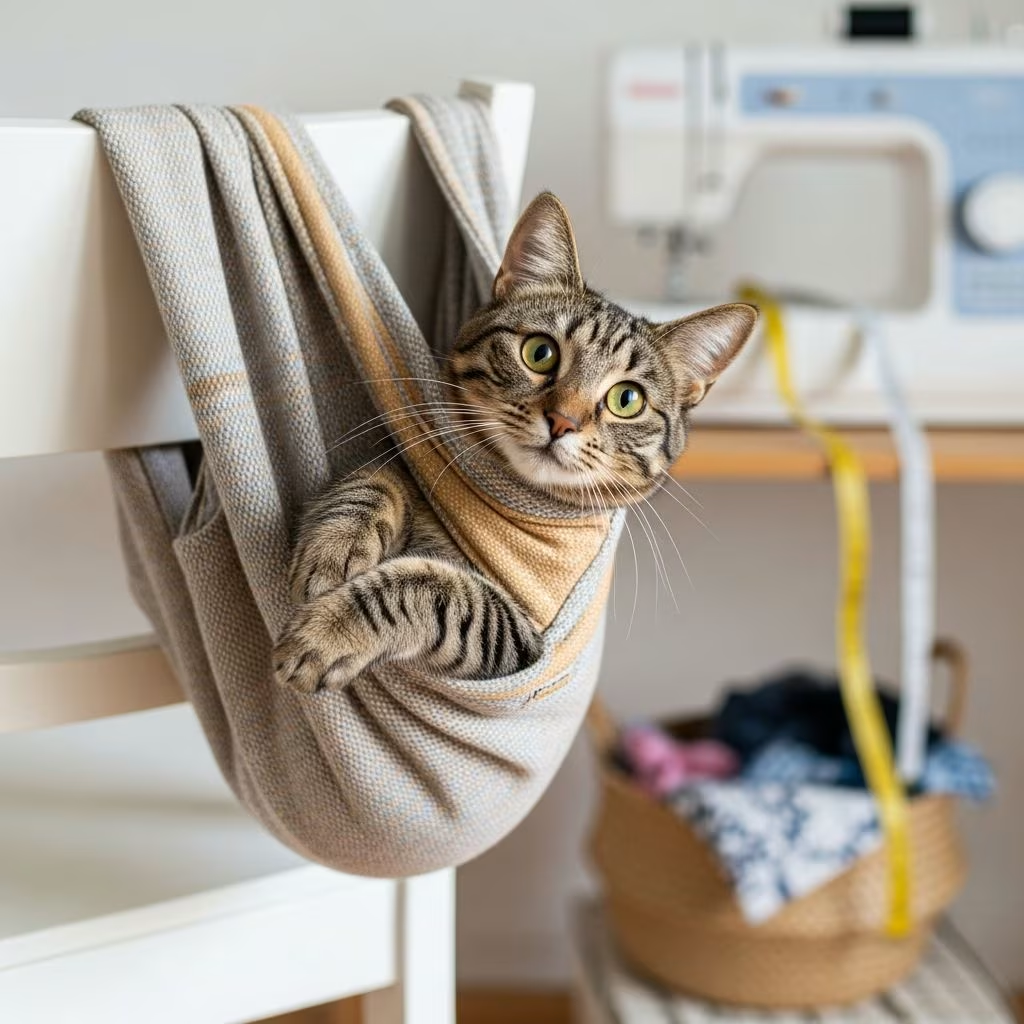
Cat slings offer a practical way to keep your feline companion close while freeing your hands for daily tasks. These carriers mimic the secure feeling of a mother’s pouch, helping with socialization, vet visits, or casual outings. Crafting one yourself saves money and allows customization for your cat’s size and your style preferences. Below, we explore seven distinct designs ranging from no-sew options to more structured sewn versions, all using accessible materials like fabric scraps, old clothing, and basic tools.
Why Build a Cat Sling?
Homemade cat slings provide benefits beyond convenience. They foster bonding by keeping your cat at chest level, where they can hear your heartbeat and feel safe. For kittens, regular use aids in habituating to human touch, reducing stress during handling. Adult cats benefit from the gentle pressure that promotes relaxation, similar to swaddling techniques used in veterinary care. Unlike rigid crates, slings allow natural movement and airflow, making them ideal for short trips or home use.
- Cost-effective: Most projects cost under $10 using household items.
- Customizable: Adjust size for small kittens or larger breeds.
- Portable: Lightweight and foldable for easy storage.
- Safe socialization tool: Helps shy cats build confidence.
Design 1: Fleece Blanket Pouch Carrier
This beginner-friendly sling uses a single layer of soft fleece for a cozy, breathable hold. It’s perfect for kittens under 5 pounds and requires minimal sewing.
Required Materials and Tools
| Item | Quantity | Notes |
|---|---|---|
| Polyester fleece fabric | 1 yard (24″ x 60″) | Choose soft, non-fraying type |
| Safety pins or needle/thread | A few | For hand-sewing option |
| Tape measure & scissors | 1 each | Standard household tools |
Assembly Steps
- Cut fleece into a rectangle: 24 inches wide by 60 inches long to fit most adult torsos.
- Fold lengthwise, right sides together, and pin the long edges, leaving short ends open.
- Sew a 1/2-inch seam along pinned edges using a blanket stitch or machine. Turn right-side out.
- Slip over your shoulder like a bandolier; the tube forms a natural pouch for your cat.
- Secure with safety pins if needed for smaller openings.
Test fit with a stuffed toy first. This design supports up to 8 pounds comfortably.
Design 2: No-Sew Scarf Tie Sling
Ideal for instant use, this wrap-style sling relies on a large scarf for a secure, adjustable fit without any cutting or stitching.
Required Materials and Tools
- Extra-large scarf or pashmina (75″ x 25″ minimum)
- No tools needed
Assembly Steps
- Drape the scarf over one shoulder, crossing to the opposite hip.
- Tie a firm knot at the front to create a base loop.
- Form a pouch by twisting the hanging fabric into a pocket shape.
- Place cat inside feet-first, adjusting fabric to cradle their body snugly.
- Tie ends behind your back for waist support.
This method distributes weight evenly across your torso, preventing strain during extended wear.
Design 3: T-Shirt Cross-Body Cradle
Repurpose old t-shirts for a quick, layered carrier that forms a hammock-like support. Great for medium cats up to 10 pounds.
Required Materials and Tools
| Item | Quantity |
|---|---|
| Large t-shirts | 2 |
| Scissors | 1 |
Assembly Steps
- Cut each t-shirt just below the armpits, creating tube shapes.
- Wear first shirt bandolier-style over one shoulder.
- Layer second shirt across the opposite shoulder, forming an X on your chest.
- Overlap fabrics to create a pocket; tuck cat inside with legs dangling comfortably.
- Adjust for fit—no ties needed as elasticity holds shape.
The cotton blend provides breathability, and the cross design offers superior back support.
Design 4: Ring-Supported Fabric Sling
A step up in stability, this uses plastic rings for a backpack-style carrier that’s adjustable and durable.
Required Materials and Tools
| Item | Quantity | Notes |
|---|---|---|
| Large plastic rings (2-3 inch diameter) | 2 | Craft store finds |
| Fabric (cotton or canvas) | 2 yards | 60″ wide |
| Scissors, ruler, sewing machine | 1 each | Thread matching fabric |
Assembly Steps
- Cut fabric into two 30″ x 36″ panels; hem all edges.
- Fold each panel lengthwise and sew into tubes, inserting rings at one end of each.
- Thread tubes through rings to form shoulder straps.
- Cross straps over chest; the overlapping fabric creates the sling pouch.
- Sew reinforcements around rings for longevity.
This holds heavier cats securely, with rings allowing quick adjustments.
Design 5: Lined Mei Tai-Inspired Wrap
Drawing from traditional carriers, this padded version offers lumbar support and a luxurious feel for stylish outings.
Required Materials and Tools
- Cotton outer fabric: 2 yards
- Fleece lining: 1.5 yards
- Sewing machine, scissors, thread
Assembly Steps
- Cut two body panels (20″ x 40″) and four straps (8″ x 24″ each) from both fabrics.
- Sew lining to outer panels right-sides together; turn and topstitch.
- Attach straps to panel corners, doubling fabric for strength.
- Tie straps around waist and shoulders to form a supportive frame with central pouch.
The fleece interior prevents slipping, ideal for active cats.
Design 6: Pillowcase Stretch Pouch
Transform a stretchy pillowcase into a hands-free holder for multi-tasking around the house.
Required Materials and Tools
- Jersey knit pillowcase
- Scissors
Assembly Steps
- Cut off the closed end of the pillowcase.
- Loop open end around your neck like a necklace.
- Gather sides to form a pouch; cat sits inside against your chest.
- Tuck fabric edges for security.
Stretch fabric conforms to any cat size, promoting calm through close contact.
Design 7: Curved Pouch Shoulder Bag
A semi-structured bag with ergonomic curves for all-day comfort, using layered fabrics.
Required Materials and Tools
| Item | Details |
|---|---|
| Outer fabric & lining | 1 long strip (60″x9″), 2 half-circles (8″ radius) |
| Sewing tools | Machine, pins, scissors |
Assembly Steps
- Cut pieces: one strap strip and two curved ends per fabric type.
- Pin and sew half-circles to strap centers, forming pouches.
- Nest lining inside outer, sew perimeter leaving one end open.
- Turn right-side out, close final seam, and attach strap ends.
Curves distribute weight evenly, reducing shoulder fatigue.
Safety Guidelines for All Slings
Always prioritize your cat’s well-being:
- Supervise constantly; never leave cat unattended.
- Ensure head and airways remain free.
- Limit use to 30-60 minutes per session.
- Check for overheating; choose breathable fabrics.
- Test weight limits; reinforce for larger cats.
Frequently Asked Questions
Can all cats use slings?
Best for small to medium cats under 12 pounds. Consult a vet for seniors or those with health issues.
Do I need sewing experience?
No—three designs are no-sew. Start simple and progress.
How do I clean my sling?
Spot clean fabrics; machine wash removable liners on gentle cycle.
Are slings good for travel?
Yes, for short trips. Pair with a harness for security.
What if my cat hates it?
Introduce gradually with treats; some cats prefer gradual acclimation.
Tips for Success and Customization
Measure your cat’s girth and your torso for best fit. Add pockets for toys or treats. Experiment with patterns for personality. These projects not only save money but strengthen your bond through quality time.
References
- 5 Amazing DIY Cat Slings You Can Create at Home — Catster. 2023. https://www.catster.com/lifestyle/diy-cat-sling-plans/
- 6 DIY Cat Slings You Can Make Today — Hepper. 2023. https://articles.hepper.com/diy-cat-sling-plans/
- DIY Soft and Cozy Pet Sling — My So Called Crafty Life. 2015-09-23. https://www.mysocalledcraftylife.com/2015/09/23/diy-soft-and-cozy-pet-sling/
- Diy Dog and Cat sling Tutorial — YouTube (Crafty ECHO). 2020. https://www.youtube.com/watch?v=qtwu2f4izAA



