

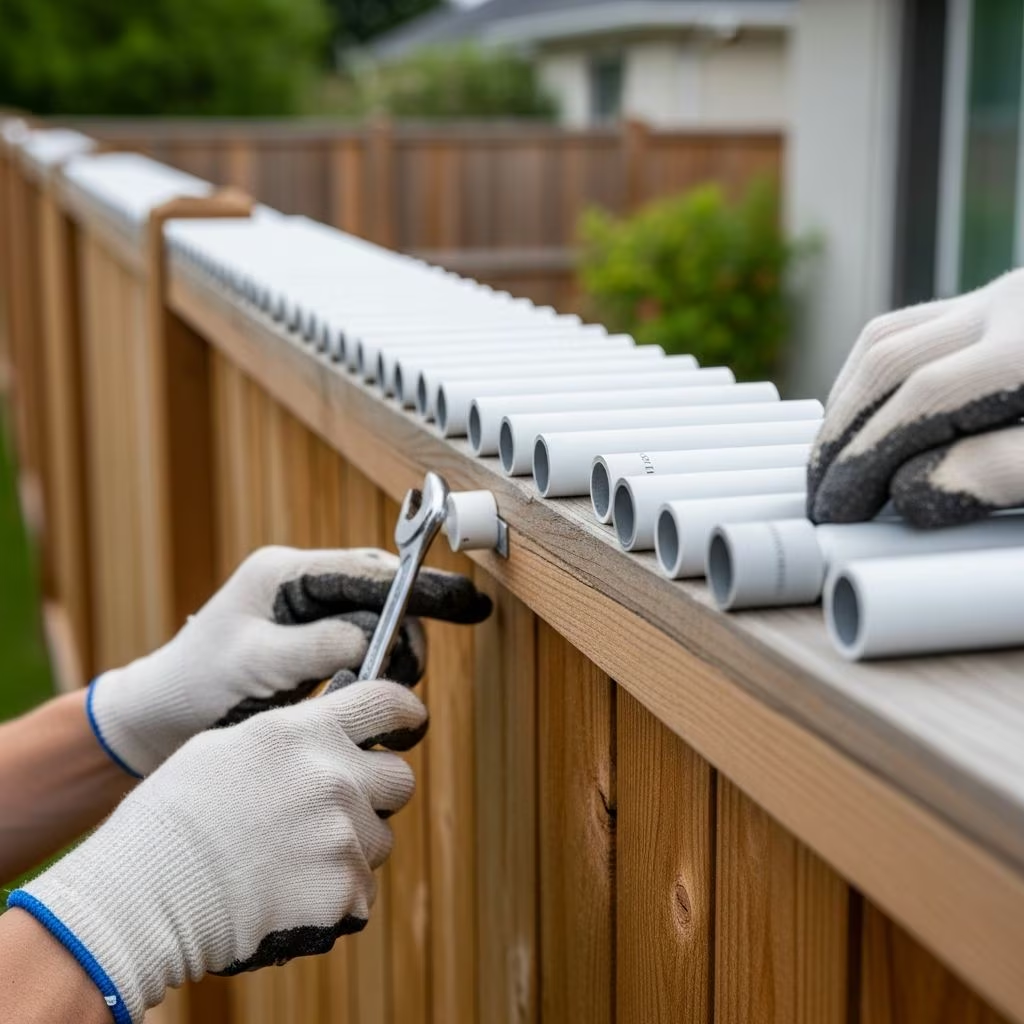
Cat fence rollers provide a clever, low-cost way to secure your yard by making it impossible for cats to grip and climb over fences. These spinning barriers, often called coyote rollers, deter escapes and block intruders like coyotes or raccoons. Perfect for pet owners with existing fences at least 6 feet tall, DIY versions save hundreds compared to commercial options.
Why Cat Fence Rollers Work for Pet Safety
Felines are agile climbers, but a freely rotating pipe atop the fence causes them to slip off when they try to hook their claws. This non-harmful method trains cats to stop attempting escapes over time. For fences under 6 feet, rollers alone may not suffice as cats can leap over; combine with height extensions if needed. These setups also safeguard against wildlife entry, promoting a secure outdoor space for supervised play.
Benefits include affordability (under $100 for most yards), customizability for wood, vinyl, brick, or metal fences, and durability with weather-resistant PVC. Installation typically takes a weekend, requiring basic tools.
Plan 1: Simple Horizontal PVC Barrier
This beginner-friendly design mounts thick PVC pipes horizontally along the inner fence edge, creating a subtle roller that spins on contact. Ideal for privacy fences or HOA-restricted areas where visible additions are discouraged.
Required Materials
- 4-inch storm drain PVC pipes (length matching fence sections)
- Heavy-duty PVC brackets (one pair per 4-foot section)
- Stainless steel screws or bolts
Essential Tools
- PVC pipe cutter or hacksaw
- Power drill with bits for fence material
- Tape measure and level
Step-by-Step Assembly
- Measure fence top and cut PVC to fit snugly between bracket mounts, leaving 1/4-inch play for rotation.
- Position brackets 4 feet apart on the inner fence lip, ensuring the open side faces inward.
- Drill pilot holes and secure brackets firmly.
- Slide PVC into brackets; test spin by pushing manually.
- Repeat across the entire perimeter, overlapping sections slightly for seamless coverage.
Difficulty: Easy. Time: 2-4 hours for 50-foot fence. Pro tip: Use UV-resistant PVC for longevity in sun exposure.
Plan 2: Free-Spinning Wood-Plug Roller System
Achieve ultra-smooth rotation with this innovative setup using wooden end caps and oversized screws as axles. Great for flat-top fences needing maximum glide without sagging.
Required Materials
- 3-inch diameter PVC pipes
- Wood scraps for plugs (scrap 2x4s work)
- 3-inch wood screws
- L-shaped metal brackets
- Wood glue and sandpaper
Essential Tools
- Jigsaw or hole saw
- Drill with variable speeds
- Sandpaper (medium and fine grit)
Step-by-Step Assembly
- Cut PVC to 4-foot lengths.
- Shape wood plugs to fit snugly inside PVC ends; drill a central hole slightly larger than screw diameter.
- Sand plugs for smoothness and glue into PVC ends.
- Mount L-brackets to fence top, 4 feet apart, with screw holes aligned.
- Insert screws through plug holes into brackets, allowing free spin.
Difficulty: Easy to moderate. Time: 4-6 hours. The loose screw fit ensures effortless rolling, outperforming friction-based designs.
Plan 3: Dual-Pipe Rolling Barrier
Employ a nested pipe system—a smaller inner pipe rotates inside a larger outer one—for superior stability and spin. Detailed visuals make this accessible even for novices.
Required Materials
- 1-inch and 3-inch PVC pipes
- Braided steel wire or cable
- L-brackets (4-inch size)
- Wire crimps and tension locks
Essential Tools
- Hacksaw
- Wire cutters
- Power drill and wrench
- Tape measure
Step-by-Step Assembly
- Calculate needs: wire and pipes equal to fence length plus 10% extra.
- Cut inner pipes to 4-foot sections; thread wire through them.
- Slide outer 3-inch pipes over inner ones, leaving 1/2-inch gaps at ends.
- Attach L-brackets every 4 feet, L facing inward; secure wire ends with crimps.
- Tension wire tautly and test dual-layer rotation.
Difficulty: Easy. Time: 5-7 hours. This paint-by-numbers approach includes precise measurements for flawless results.
Plan 4: Roller for Non-Wood Fences
Adapt rollers to brick walls or wrought-iron gates using anchors and cables. Robust for heavy-duty materials.
Required Materials
- 1/2-inch and 1-inch PVC tubing
- Angle irons or corner braces
- Masonry anchors (brick) or carriage bolts (iron)
- Steel wire cable and rope locks
Essential Tools
- Heavy-duty power drill with masonry/metal bits
- PVC cutter and bolt cutters
- Screwdriver set and wrench
Step-by-Step Assembly
- Drill holes in fence top for anchors every 4 feet.
- Secure angle irons firmly.
- Run cable through small PVC, cover with larger tubing.
- Lock cable ends and adjust tension.
- Verify smooth operation on uneven surfaces.
Difficulty: Moderate. Time: 6-8 hours. Ensures compatibility beyond standard wood fencing.
Materials Comparison Table
| Plan | Key Materials | Cost Estimate (50 ft) | Best For |
|---|---|---|---|
| 1: Horizontal PVC | PVC pipe, brackets | $40-60 | Privacy fences |
| 2: Wood-Plug | PVC, wood, screws | $50-70 | Smooth spin needs |
| 3: Dual-Pipe | PVC duo, wire, brackets | $60-80 | Stability-focused |
| 4: Non-Wood | PVC, anchors, cable | $70-90 | Brick/iron |
Tips for Long-Lasting Installation
- Choose UV-stabilized PVC to resist cracking.
- Secure all hardware with corrosion-resistant fasteners.
- Test rollers weekly; lubricate with silicone spray if sticky.
- Paint to match fence for aesthetics.
- For gates, use shorter sections with reinforced brackets.
Alternative Cat-Proofing Methods
If rollers aren’t feasible, consider these options:
- Angled Wire Extensions: Attach 12-18 inch chicken wire at 45 degrees inward.
- Bird Spikes or Netting: Plastic deterrents on fence tops.
- Full Enclosures: Catios or screened porches for safe play.
- Commercial Kits: Pre-made toppers for quick setup.
Fence height remains key: minimum 6 feet with no gaps.
Frequently Asked Questions (FAQs)
Will a 4-foot fence with rollers work?
No, cats can jump 5-6 feet easily. Aim for 6+ feet.
How do I maintain rollers?
Clean debris monthly and check wire tension seasonally.
Are these safe for other pets?
Yes, effective for dogs under 40 lbs too; coyotes can’t grip.
Can I install on a sloped yard?
Yes, cut sections to follow contour and use flexible wire.
What if my cat still tries to escape?
Combine with supervision and indoor enrichment; retraining takes 1-2 weeks.
References
- 4 Amazing DIY Cat Fence Roller Plans You Can Create at Home — Catster. 2023. https://www.catster.com/lifestyle/diy-cat-fence-roller-plans/
- Roll Bar Fence DIY – Keep Your Pets In & Others Out — Your Sassy Self. 2022-05-15. https://yoursassyself.com/roll-bar-fence-diy-keep-your-pets-in-others-out/
- 10 Simple Ways To Cat-Proof A Fence — Cats.com. 2024. https://cats.com/ways-to-cat-proof-a-fence



