

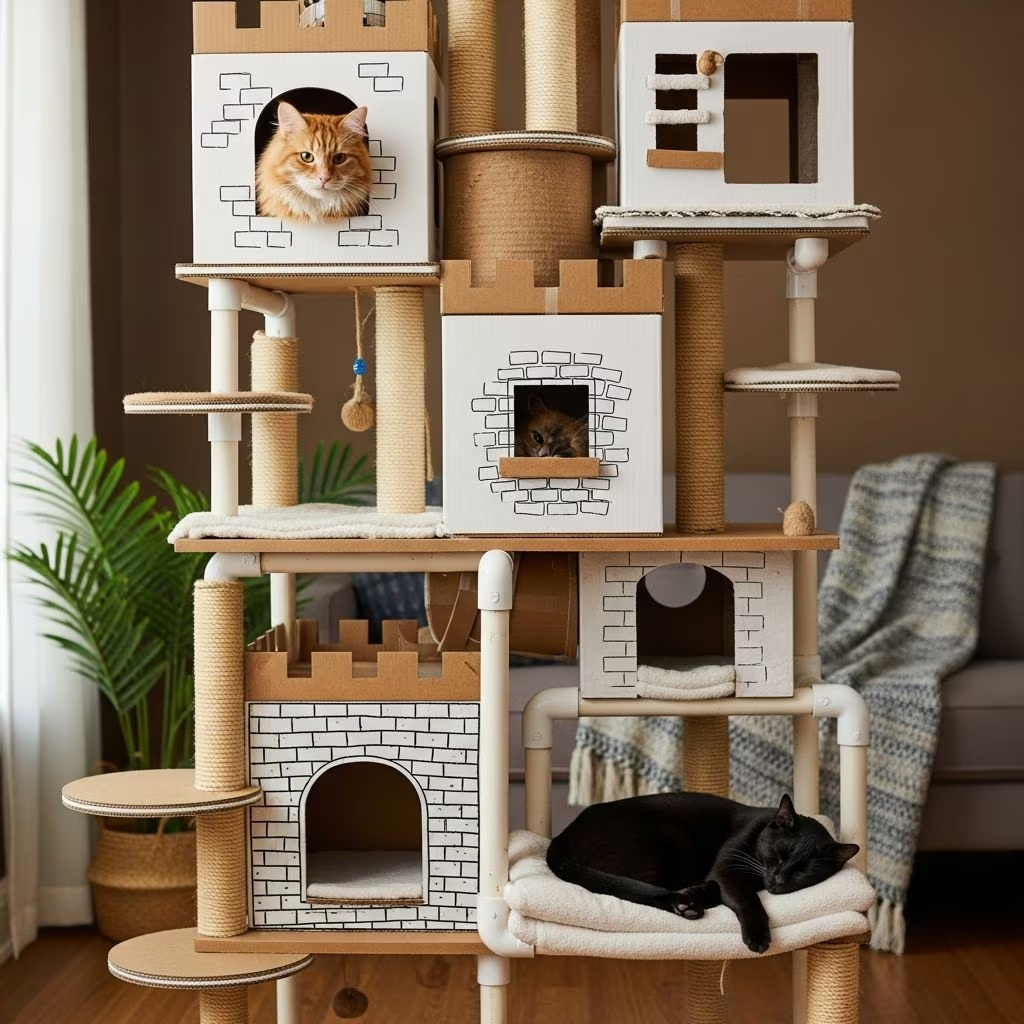
Cats have an innate love for boxes, turning simple packaging into playgrounds of imagination. Elevate this instinct by crafting a DIY cat castle, a multi-level haven that combines hiding spots, climbing challenges, and scratching surfaces. These projects use affordable, recycled materials like cardboard boxes, making them perfect for pet owners seeking creative enrichment without high costs.
Why Cats Adore Custom Castles
Feline behavior experts note that cats thrive in environments mimicking their wild ancestors’ territories—elevated perches for observation, enclosed dens for security, and textured surfaces for claw maintenance. A homemade cat castle fulfills these needs, reducing stress and boosting activity levels. Unlike commercial cat trees, DIY versions allow personalization to match your cat’s size, agility, and preferences.
- Provides vertical space for jumping and lounging.
- Offers multiple entry points to prevent territorial disputes in multi-cat homes.
- Encourages natural scratching, sparing your furniture.
- Serves as a low-cost alternative to pricey pet furniture.
Gathering Materials for Success
Start with sturdy cardboard boxes in various sizes—medium moving boxes for bases, smaller ones for towers, and scraps for reinforcements. Essential tools include a utility knife for precise cuts, duct tape or non-toxic glue for assembly, and a ruler for measurements. Optional embellishments like fabric scraps or non-toxic paint add flair without compromising safety.
| Material | Purpose | Quantity Suggestion |
|---|---|---|
| Cardboard boxes (various sizes) | Main structure | 4-6 boxes |
| Duct tape or hot glue | Securing pieces | 2 rolls |
| Utility knife & scissors | Cutting openings | 1 each |
| Ruler & marker | Templates & measurements | 1 set |
| Decorative paper or fabric | Aesthetic finish | As needed |
Choose boxes free of staples or tape residue to avoid ingestion hazards. Test stability by shaking the final structure—cats demand secure footing.
Designing Your Cat Castle Blueprint
Sketch a simple floor plan before cutting. Consider a central base with attached towers for height variation. Account for your cat’s size: entrances should be 6-8 inches wide and tall enough for comfortable passage, typically 7-10 inches. Incorporate escape routes like top openings between levels to mimic natural agility paths.
Popular layouts include:
- Gatehouse Design: A wide base with flanking towers, ideal for social cats.
- Tower Stack: Vertical multi-story with internal stairs for adventurous climbers.
- Balcony Fortress: Open perches for observation, perfect for window-gazing.
Step-by-Step: Basic Two-Tier Cat Castle
This beginner-friendly project yields a sturdy two-level retreat in under two hours.
- Prepare the Base Box: Select a large box as the foundation. Fold and tape bottom flaps securely. Cut a large arched entry on one side, leaving the bottom flap hinged as a drawbridge for fun access.
- Add Windows and Vents: On remaining sides, draw narrow, pointed-arch windows (4-6 inches tall, 2-3 inches wide). These allow paw play while maintaining enclosure. Cut carefully to avoid jagged edges.
- Build Supports: From scraps, craft thick rafters (3-4 inches wide) spanning the box’s interior. Notch and interlock them for mutual reinforcement, protruding slightly for the upper level.
- Construct Stairs: Cut two right-angled triangular sides from cardboard. Add 7-8 rectangular treads, spacing them 4 inches apart. Tape securely against one wall for gradual ascent.
- Install Upper Floor: Cut a matching box for the second story. Remove its bottom flaps and create a central hole aligning with the base’s roof corner. Tape rafters to support this floor.
- Finalize Towers: Stack smaller boxes atop for turrets. Cut matching doorways for seamless transitions. Add battlement strips—scalloped cardboard edges—around upper rims for medieval charm.
Advanced Multi-Tower Fortress
For avid crafters, expand to a three-tower setup. Use a long rectangular box as the gatehouse core, attaching cylindrical towers via aligned doorways. Reinforce joints with internal bracing to support active play. Include a rooftop walkway by taping flat scraps between towers, creating a patrol path.
Safety Tip: Ensure all weight-bearing supports are double-layered cardboard. Test with your body weight scaled to cat size (e.g., 10-20 lbs pressure).
Customization Ideas to Delight Your Cat
Tailor the castle to your cat’s quirks:
- Scratching Integration: Line interiors with corrugated cardboard inserts for built-in posts.
- Themed Decor: Cover exteriors in paw-print contact paper or faux stone textures.
- Sensory Additions: Embed catnip pouches in hidden pockets or attach dangling toys via string.
- Modular Design: Use Velcro for detachable rooms, allowing reconfiguration.
For multi-cat households, add separate entrances to minimize conflicts, promoting harmonious sharing.
Safety Essentials for Long-Lasting Play
Prioritize durability and health. Avoid small loose parts that could be swallowed. Use only pet-safe adhesives—hot glue requires adult supervision. Regularly inspect for wear, collapsing unstable sections promptly. Place in low-traffic areas away from heat sources to prevent melting or fire risks.
- Supervise initial interactions to monitor acceptance.
- Disinfect weekly with pet-safe wipes.
- Recycle and rebuild every 3-6 months as cardboard degrades from claws.
Benefits Beyond Fun: Enrichment and Wellness
These castles combat boredom-induced behaviors like excessive meowing or furniture destruction. Vertical space promotes exercise, aiding weight management in indoor cats. Hidden nooks reduce anxiety during household changes, such as new pets or visitors.
Frequently Asked Questions (FAQs)
Can any cat enjoy a DIY castle?
Most cats do, but shy ones prefer enclosed designs, while bold explorers favor open towers. Observe preferences and adjust.
How much does it cost?
Under $10 using free recycled boxes; mainly tape and tools.
What if my cat ignores it?
Enhance with catnip or place treats inside. Give time—cats warm slowly.
Is it stable for large cats?
Yes, with reinforced rafters; scale boxes to breed size (e.g., Maine Coon needs bigger bases).
Can I paint it?
Use non-toxic, water-based paints; ensure full dry time before access.
Troubleshooting Common Builds
Issue: Wobbly Structure – Solution: Add diagonal braces and double-tape joints.
Issue: Cat Won’t Enter – Solution: Start with familiar scents like used bedding.
Issue: Collapsing Floors – Solution: Layer multiple cardboard sheets for platforms.
References
- How to Build a Cat Castle — Lincoln Animal Ambassadors. 2018-12-01. https://lincolnanimalambassadors.wordpress.com/2018/12/01/how-to-build-a-cat-castle/
- Cat Castle: 6 Steps — Instructables. N/A. https://www.instructables.com/Cat-Castle/
- Chewy Box Craft: DIY Cat House Cat Furniture Castle Craft — Chewy. N/A. https://www.chewy.com/education/cat/pet-parenting/chewy-box-cat-castle
- DIY: 10 Steps For Building Your Own Cardboard Cat Castle — The Honest Kitchen. N/A. https://www.thehonestkitchen.com/blogs/diy/diy-10-steps-for-building-your-own-cardboard-cat-castle



