

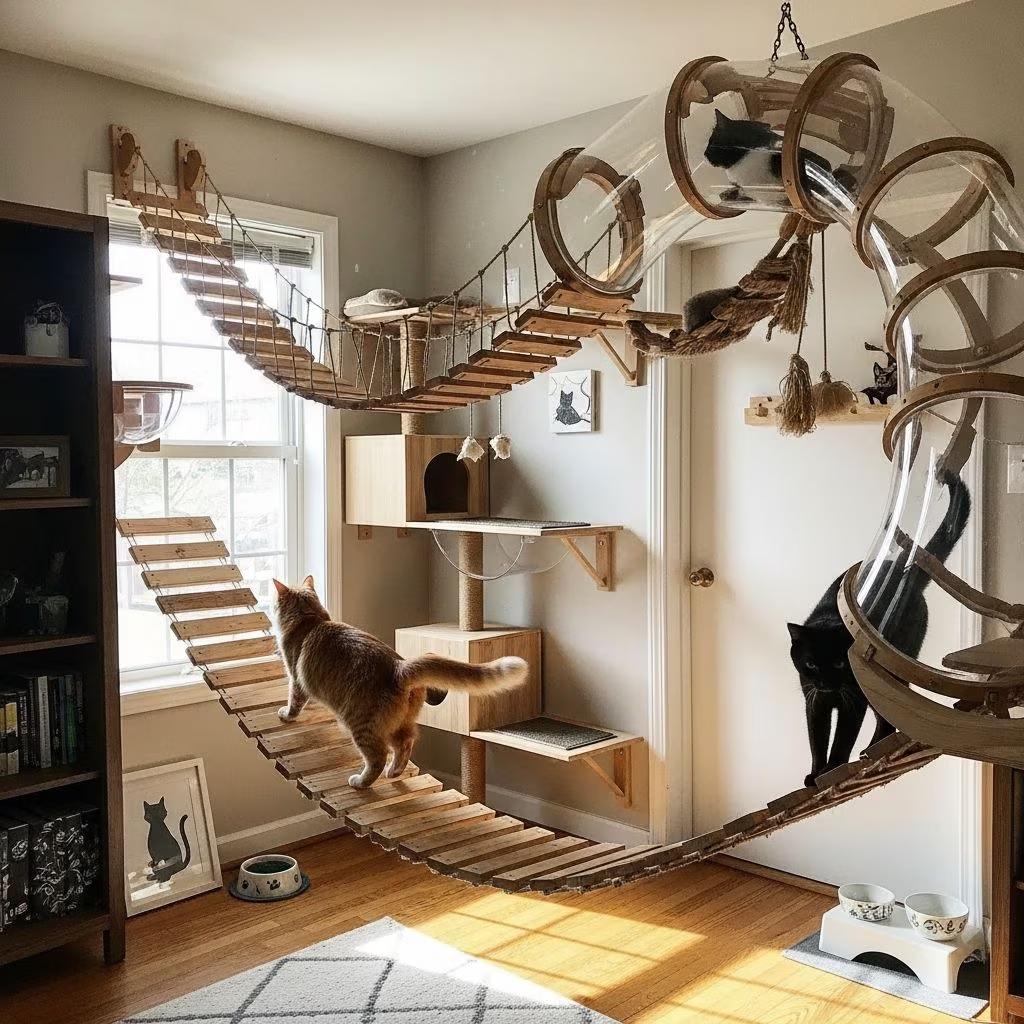
Cat bridges offer an exciting way to expand your pet’s living space, allowing them to traverse rooms or enclosures at new heights. These structures promote exercise, reduce boredom, and satisfy natural climbing instincts. Whether connecting cat trees indoors or linking catio sections outdoors, DIY versions are cost-effective and customizable. This guide presents fresh project ideas drawn from proven concepts, complete with materials, tools, and construction steps.
Why Build Cat Bridges for Your Feline Friends?
Cats thrive on vertical territory, and bridges provide safe pathways above ground level. They encourage physical activity, helping maintain healthy weight and muscle tone. Indoor bridges prevent clutter on floors, while outdoor ones enhance catios for fresh air exploration. Custom builds let you match your home’s decor and your cat’s size or agility level.
Safety remains paramount: ensure sturdy anchors, smooth edges, and weight limits suited to your cat (typically 15-20 lbs per section). Test thoroughly before full use.
Project 1: Simple Rope Suspension Bridge
This beginner-friendly design mimics adventurous rope walks, perfect for spanning between shelves or cat trees. It sways gently, adding thrill without instability.
Materials Needed
- 1×6-inch wood boards (12+ pieces, cut to 12 inches each)
- Thick sisal or nylon rope (50 feet)
- Baling wire or U-nails for securing
- Shelf brackets or hooks for mounting
- Carpet scraps or sisal covering for grip
Tools Required
- Miter or circular saw
- Drill with bits
- Hammer and pliers
- Measuring tape
Step-by-Step Construction
- Prepare planks: Cut boards to 12×6 inches. Sand edges smooth to prevent splinters.
- Assemble base ropes: Cut two 6-foot ropes. Tie knots at ends and loop baling wire for hooks.
- Attach planks: Space planks 1-2 inches apart along ropes. Nail or wire each end securely, aligning for even weight distribution.
- Mount supports: Install brackets on walls or trees at matching heights (e.g., 5-6 feet). Hook ropes to brackets.
- Add grip and sides: Staple carpet to top. Weave side ropes in zigzag for safety rails.
- Test stability: Load with weights simulating cat weight; adjust tension.
Finished length: 5 feet. Time: 2-3 hours. Cost: Under $50.
Project 2: Sturdy Catio Connector Bridge
For outdoor enclosures, this arched tunnel bridge joins platforms securely, using weather-resistant materials. Ideal for multi-level patios.
Materials List
| Item | Quantity | Source Idea |
|---|---|---|
| Pressure-treated 2×10 wood (8 feet) | 1 piece | Walkway base |
| Galvanized wire mesh (16-inch high arch) | 8 feet | Tunnel sides |
| Stairs stringers | 2 sets | Access ramps |
| Nylon cable ties & fence staples | Assorted | Fasteners |
| 24×24-inch patio stones | 2-4 | Supports |
Essential Tools
- Wire cutters and grinder
- Saw for wood
- Heavy gloves
- Drill
Building Instructions
- Base setup: Position patio stones under catio frame for ramp support.
- Form tunnel: Bend mesh into 16-inch arch over wood plank. Staple ends firmly.
- Ramp assembly: Attach stringers to frame with longer beams spanning to bridge.
- Entry vestibule: Cut flap in catio mesh; secure semi-circle extension with ties. Grind sharp edges.
- Secure bridge: Fasten tunnel atop catio roof, aligning with ramps.
- Add lattice panels on top half for shade.
This durable setup withstands weather and active play. Expandable for longer spans.
Project 3: Paracord Plank Walkway
Inspired by shelter designs, this wall-mounted bridge uses strung planks and ropes for a hammock-like feel. Great for open rooms.
Key Materials
- 1.25-inch dowels for railings
- Shelf brackets and strap toggles
- Paracord (100+ feet)
- Wood planks (1×12 inches)
- Beads or spacers
Tools
- Drill
- Hammer
- Measuring tape
Assembly Guide
- Build shelves: Attach brackets to walls 8-10 feet apart.
- String base: Thread paracord through shelf holes, knot securely.
- Add planks: Drill holes; slide two beads, then plank, repeating along length.
- Install railings: Drill post holes; weave paracord horizontally with slack.
- Side netting: Zigzag long paracord from bottom to top for enclosure.
Quick-release knots aid adjustments. Supports multiple cats.
Safety Tips for All Cat Bridge Projects
- Edge smoothing: Grind or sand all cuts to avoid injuries.
- Secure anchors: Use wall studs or heavy-duty toggles for indoor mounts.
- Weight testing: Simulate 20 lbs per foot; monitor for sagging.
- Material choice: Opt for non-toxic, pet-safe finishes like varnish.
- Supervise initially: Watch cat interactions to tweak design.
Enhancing Bridges with Custom Features
Add sisal scratching zones, dangling toys, or LED lights for night visibility. For multi-cat homes, widen paths or add parallel bridges. Indoor versions pair well with wall shelves; outdoors, integrate with fencing.
Common Mistakes to Avoid
| Mistake | Solution |
|---|---|
| Insufficient tension | Use turnbuckles or extra knots |
| Sharp wires | Grind and cover ends |
| Uneven spacing | Measure planks consistently |
| Poor grip | Carpet or rope overlay |
Benefits of Vertical Feline Spaces
Bridges reduce stress by mimicking wild perches. Studies show enriched environments lower aggression and improve litter habits. Vary designs for different ages: wobbly for kittens, rigid for seniors.
FAQ
What materials are safest for cat bridges?
Pressure-treated wood, galvanized mesh, and natural ropes like sisal resist chewing and weather.
How long should a cat bridge be?
4-8 feet for most spaces; match to your room or catio dimensions.
Can I build without power tools?
Yes, pre-cut lumber and hand tools work for rope styles.
Are outdoor bridges predator-proof?
Use tight mesh (1/2-inch gaps) and sturdy framing to deter entry.
How do I clean cat bridges?
Vacuum weekly; spot-clean with pet-safe wipes. Disassemble for deep washes.
Advanced Variations
Combine bridges with tunnels or hammocks. For lofts, create multi-tier networks. Repurpose pallets for eco-friendly bases, wrapping in rope for durability.
These projects transform ordinary spaces into cat paradises. Start small, scale up, and enjoy watching your pets leap into action.
References
- How to build an outdoor cat bridge for your catio – Chirpy Cats — Chirpy Cats. 2023. https://www.chirpycats.com/build-a-catio-cat-bridge/
- 4 DIY Cat Bridges You Can Build Today (With Pictures) – Catster — Catster. 2024. https://www.catster.com/lifestyle/diy-cat-bridges/
- Rescue Rebuild DIY Projects | Building Cat Bridges – YouTube — YouTube (Rescue Rebuild). 2022-10-15. https://www.youtube.com/watch?v=bOwa77mv6EE
- DIY suspension bridge between cat trees – YouTube — YouTube. 2023. https://www.youtube.com/watch?v=FPdQPjCkRXc



