

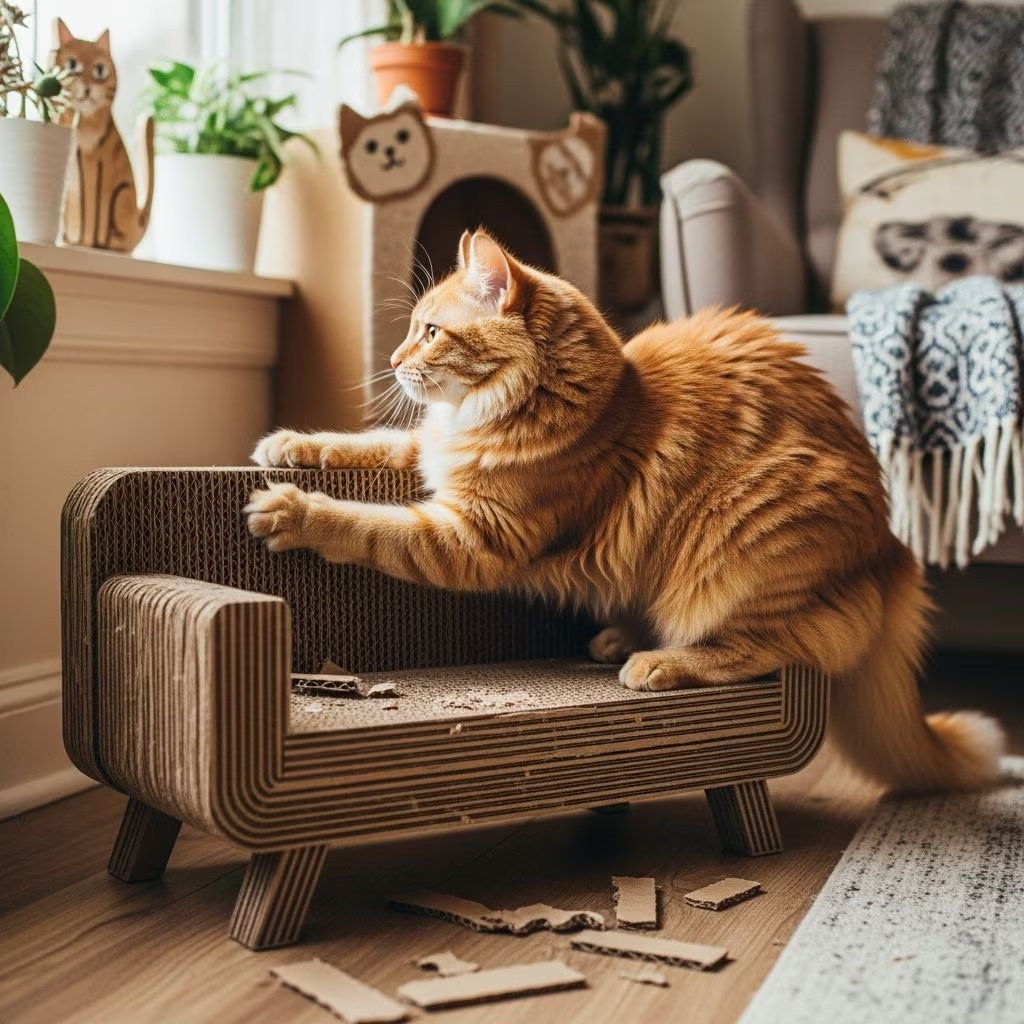
Creating a homemade cat scratcher from cardboard offers pet owners a cost-effective way to satisfy their cat’s natural scratching instincts while repurposing household waste. These projects require minimal tools and can be completed in under an hour, resulting in a durable toy that outlasts many commercial options.
Benefits of Homemade Cardboard Scratchers for Cats
Cats scratch to maintain claw health, mark territory, and stretch muscles. Commercial scratchers often cost $20 or more, but DIY versions use free or recycled cardboard, cutting expenses dramatically. They also promote sustainability by diverting boxes from landfills.
- Cost savings: Under $5 using recycled materials.
- Customization: Tailor size and shape to your cat’s preferences.
- Durability: Sturdy corrugated cardboard withstands heavy use.
- Health perks: Prevents furniture damage and supports claw shedding.
Environmental benefits include reduced plastic waste from disposable toys. Cats prefer the texture of exposed corrugations, mimicking natural bark.
Essential Materials and Tools
Gather these items before starting. Most are household staples or inexpensive purchases.
| Item | Purpose | Notes |
|---|---|---|
| Corrugated cardboard (boxes, sheets) | Main structure | Thicker flutes last longer; aim for 50-100 strips per project. |
| Utility knife or box cutter | Cutting strips | Sharp blade for clean edges; use cut-resistant gloves. |
| Ruler or measuring tape | Precise measurements | Metal ruler for straight lines. |
| Strong adhesive (hot glue gun, Gorilla Glue) | Securing layers | Non-toxic; hot glue for speed, liquid for strength. |
| Rubber bands or clamps | Holding during drying | Multiple large bands for tight compression. |
| Pencil or marker | Marking cuts | Erasable for adjustments. |
| Optional: Catnip, decorative paper | Attraction and aesthetics | Sprinkle catnip post-construction. |
Source sturdy cardboard from shipping boxes or grocery packaging. Avoid printed or taped areas to ensure safety.
Planning Your Scratcher Design
Choose dimensions based on your cat’s size. Small cats suit 12×8 inch scratchers; larger breeds need 18×12 inches or more.
- Rectangle: Easiest for beginners; stack strips vertically.
- Spiral coils: Compact, space-saving rolls.
- Box frame: Elevated base for stability.
Calculate cardboard needs: For a 16×10 inch scratcher with 1-inch strips (corrugations perpendicular to scratching surface), expect 5-6 strips per inch of width, totaling 50-60 strips at 16 inches long.
Step-by-Step Construction: Vertical Strip Method
This popular technique creates a flat, textured surface ideal for aggressive scratchers.
- Prepare cardboard sheets: Flatten boxes, remove tape, and cut into large rectangles matching your scratcher length (e.g., 16 inches).
- Mark strips: Use a ruler to draw lines every 1-2 inches across the width. Cut across corrugations for optimal texture—view the edge to confirm wavy lines appear.
- Cut strips precisely: Wear gloves, score lightly first, then slice fully. Trim ends to uniform length.
- Stack and align: Stand strips on edge, corrugations facing out, against a straight edge like a wall or board. Rubber band one end tightly.
- Apply glue: Dot or line glue between strips from loose end toward banded side. Work in sections to avoid mess.
- Secure opposite end: Add rubber bands, compressing firmly. Glue middle and far side similarly.
- Dry and finish: Let cure 30-60 minutes under bands. Remove bands, sprinkle catnip, and place near litter box or bed.
Safety tip: Work on a protected surface; ventilate for glue fumes.
Alternative: Spiral Roll Technique
For curved, artistic designs, roll strips into coils.
- Cut 2-inch wide strips, longer than straight method (20-30 inches each).
- Score lightly along one edge for easier rolling.
- Roll tightly into a spiral, applying glue sparingly inside to secure.
- Glue end tab down. Stack multiple coils side-by-side or pyramid-style for height.
- Hot glue coils together on a cardboard base for stability.
This method uses less space and appeals to cats who paw at edges.
Advanced Variations and Customizations
Elevate your project with these ideas:
- Two-sided scratcher: Glue two blocks back-to-back for reversible use.
- Platform add-on: Attach to a wood or cardboard platform with hidden toys underneath.
- Themed covers: Wrap in neutral fabric or paint edges (avoid toxins).
- Modular design: Create interchangeable panels for rotation.
Test prototypes small-scale to match your cat’s habits—some prefer wavy edges, others flat planes.
Troubleshooting Common Issues
| Problem | Solution |
|---|---|
| Scratcher falls apart | Use more glue dots and tighter bands; opt for stronger adhesive. |
| Cat ignores it | Sprinkle catnip liberally; place on worn furniture spots initially. |
| Uneven surface | Trim strips meticulously; sand edges post-assembly. |
| Not durable enough | Double-layer strips or use thicker cardboard. |
Monitor for wear; refresh with new layers every 3-6 months.
Maintenance and Longevity Tips
Vacuum shreds weekly to prevent litter box confusion. Flip or rotate to even wear. When shredded, peel off top layers or rebuild affordably.
Store spares wrapped in plastic for quick swaps. This keeps cats engaged without constant buying.
Frequently Asked Questions
Is cardboard safe for cats to scratch?
Yes, untreated corrugated cardboard is non-toxic and claw-friendly. Avoid glued printed areas.
How much time does this take?
Prep and assembly: 30-45 minutes; drying: 1 hour.
Can I use shipping box cardboard?
Absolutely—it’s ideal due to strength. Just flatten and clean first.
What if my cat still scratches furniture?
Combine with deterrents like double-sided tape on furniture and positive reinforcement on the scratcher.
Alternatives to glue?
Duct tape works temporarily, but glue ensures longevity.
Encouraging Cat Use
Introduce gradually: Rub with worn blanket for scent, tap claws gently on surface during play. Reward with treats nearby. Most cats adapt within days.
References
- How to Build a DIY Cardboard Cat Scratcher — Cardboard Cat Homes. 2023. https://cardboardcathomes.com/blogs/info/build-your-own-diy-cardboard-cat-scratcher
- How To Make A DIY Cardboard Cat Scratcher — Cat Box Classics. 2023. https://catboxclassics.com/blogs/cat-news/how-to-make-a-diy-cardboard-cat-scratcher
- DIY Cat Scratcher from Upcycled Corrugated Cardboard Boxes — Craft Knife Blog. 2023-08-01. https://craftknife.blogspot.com/2023/08/diy-cat-scratcher-from-upcycled.html
- DIY Cardboard Cat Scratcher — Dream a Little Bigger. 2023. https://www.dreamalittlebigger.com/post/diy-cardboard-cat-scratcher.html
- How to Make a Corrugated Cardboard Cat Scratcher: Two Tutorials! — Crafting a Green World. 2023. https://craftingagreenworld.com/articles/how-to-make-a-cardboard-cat-scratcher/



