

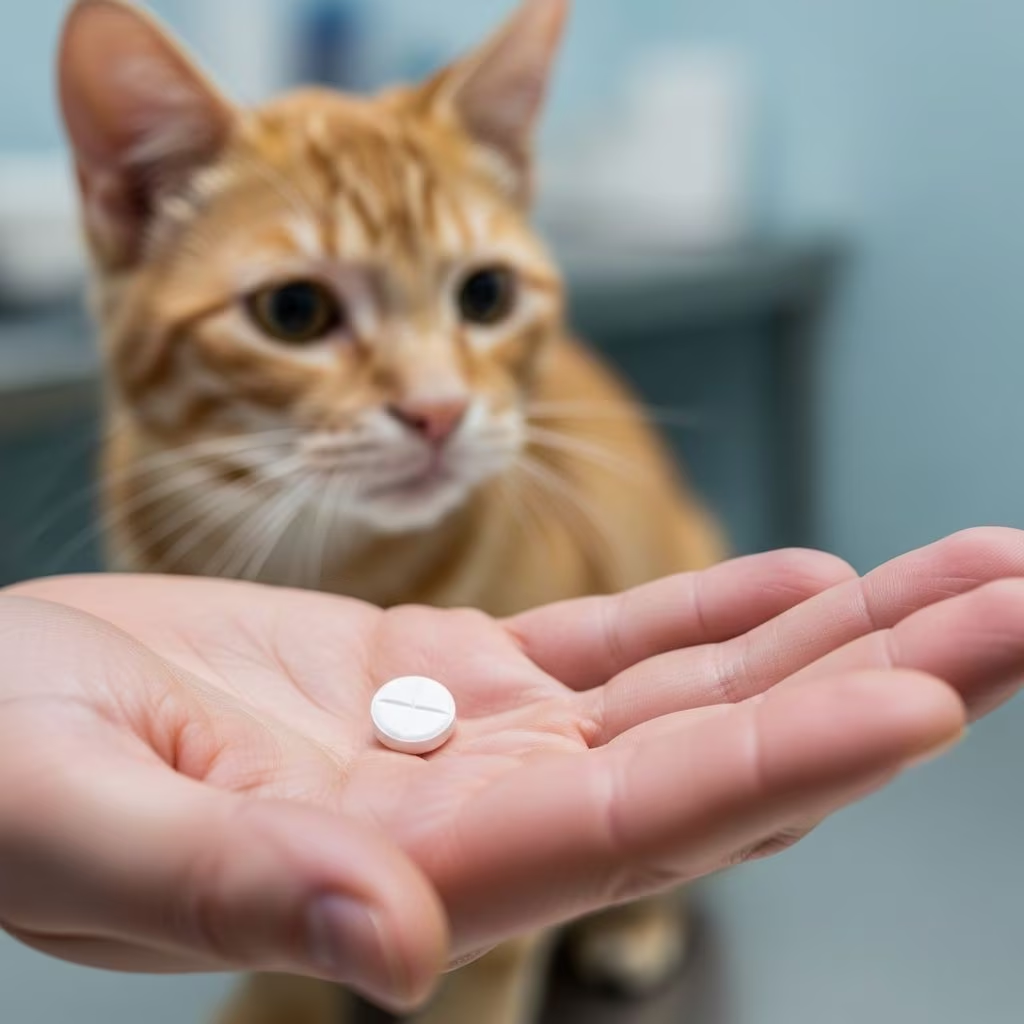
What Is Furosemide and How Does It Work?
Furosemide is a potent loop diuretic medication that functions by targeting specific mechanisms within the kidneys to eliminate excess fluid from a pet’s body. The medication operates by blocking the reabsorption of essential electrolytes—sodium, chloride, and potassium—within the loop of Henle, a critical filtration structure in the kidney. By preventing this reabsorption, furosemide increases urine production, which facilitates the removal of accumulated fluid from the body’s tissues and organ systems.
Available under the brand name Lasix, furosemide has become the most frequently prescribed diuretic for managing various fluid-related conditions in companion animals. Veterinarians select this medication specifically for its effectiveness in addressing life-threatening fluid accumulation and its well-established safety profile when used under professional supervision.
Primary Applications in Veterinary Medicine
The most common clinical indication for furosemide administration involves managing congestive heart failure, particularly when the condition results in pulmonary edema—a dangerous accumulation of fluid within lung tissues. When cardiac output decreases, blood backs up within pulmonary vessels, forcing fluid from the bloodstream into the alveoli. Furosemide effectively reduces this life-threatening fluid burden by promoting diuresis.
Beyond cardiac applications, veterinarians prescribe furosemide for several other conditions:
- Management of systemic fluid overload from kidney or liver dysfunction
- Treatment of edema resulting from tissue trauma or inflammatory conditions
- Correction of dangerous electrolyte imbalances, particularly elevated calcium or potassium levels
- Restoration of adequate urine output in pets with urinary retention
- Control of hypertension in patients where fluid reduction is therapeutically beneficial
Each application requires specific dosing considerations and careful veterinary oversight to ensure optimal therapeutic outcomes while minimizing adverse effects.
Dosing Guidelines for Dogs and Cats
Appropriate dosing of furosemide varies significantly between species and depends on multiple individual factors including body weight, the severity of the underlying condition, and the pet’s overall health status. Understanding these variations is essential for pet owners to ensure their companions receive effective treatment.
Canine Dosing Parameters
Dogs typically receive furosemide dosages ranging from 1 to 3 milligrams per pound of body weight, administered orally one to four times daily as tablets or liquid formulations. In metric measurements, this translates to 2 to 6 milligrams per kilogram daily. For emergency situations involving acute pulmonary edema, injectable dosages of 2 to 4 milligrams per kilogram may be administered intravenously, intramuscularly, or subcutaneously at intervals ranging from every one to six hours.
For dogs with established heart failure, maintenance therapy commonly employs 2 milligrams per kilogram orally twice daily as a standard baseline dose. However, individual responses to therapy may necessitate adjustments based on clinical response and tolerance.
Feline Dosing Considerations
Cats demonstrate significantly greater sensitivity to furosemide compared to their canine counterparts, necessitating substantially lower dosages for safe and effective treatment. Most feline patients require only 1 to 2 milligrams per kilogram orally administered every 12 to 24 hours for long-term management of pulmonary edema. In acute emergency scenarios, injectable dosages of 0.5 to 2 milligrams per kilogram may be given intravenously, intramuscularly, or subcutaneously at intervals of one to eight hours.
Cats with severe heart failure accompanied by significantly compromised renal perfusion may occasionally require higher dosages than typically recommended, reflecting the complex interplay between cardiac and renal function in feline patients.
Formulation Options
Furosemide is available in multiple pharmaceutical formulations to accommodate different patient needs and preferences. Oral tablets come in various strengths, with 12.5 milligram formulations frequently used for smaller dogs or pets requiring dose reduction. Liquid formulations provide flexibility for precise dose adjustments and facilitate administration in cats and small breed dogs. Injectable solutions are reserved for hospital or emergency clinic settings where rapid diuresis is critical.
Potential Adverse Effects and Safety Concerns
While furosemide is generally considered safe when administered under veterinary supervision, pet owners should remain vigilant for potential adverse effects. The medication’s mechanism of action—increasing urine output—inherently carries risks related to electrolyte depletion and dehydration.
Common Side Effects
The most frequently observed adverse reactions to furosemide relate directly to its diuretic properties and include:
- Increased urination frequency and volume requiring more outdoor bathroom breaks
- Elevated thirst and increased water consumption
- Dehydration despite compensatory drinking behaviors
- General weakness or lethargy
- Gastrointestinal disturbances including nausea or vomiting
These effects typically manifest during initial treatment phases as the body adjusts to enhanced fluid elimination. Pet owners should ensure unrestricted access to fresh water throughout the day to help mitigate dehydration risks.
When Furosemide Is Contraindicated
Certain medical conditions and circumstances create safety concerns that contraindicate furosemide use or require careful risk-benefit evaluation by a veterinarian. Pets with existing kidney disease face particular vulnerability, as furosemide-induced dehydration can further compromise renal function. Similarly, animals with pre-existing dehydration, diabetes, liver dysfunction, or electrolyte imbalances require careful consideration and potentially modified dosing strategies.
Critical warning signs demanding immediate veterinary attention include collapse, severe weakness, rapid or abnormal heartbeat, persistent vomiting, and complete cessation of urine production—any of which may indicate dangerous electrolyte depletion or acute kidney injury.
Monitoring and Follow-Up Care
Successful furosemide therapy extends beyond simply administering the medication. Ongoing veterinary monitoring ensures that the treatment remains effective while adverse effects remain minimal. Veterinarians typically evaluate treatment response through physical examination, assessing respiratory effort, heart sounds, and the presence or absence of abnormal fluid accumulation.
Regular blood work monitors kidney function, electrolyte balance, and hydration status. These laboratory parameters guide dose adjustments, as dogs demonstrating excellent clinical response may permit dose reduction, while others may require increased dosages or alternative therapeutic agents. Pet owners should never alter furosemide dosing without explicit veterinary guidance, even if their pet appears clinically improved.
Alternative and Adjunctive Diuretic Options
Certain pets develop resistance to furosemide, requiring blood and urine production levels exceeding 6 milligrams per kilogram daily—a phenomenon prompting veterinary exploration of alternative strategies. Torsemide, another loop diuretic, demonstrates greater potency and longer duration of action than furosemide and is increasingly employed as an alternative, particularly in dogs developing furosemide resistance. Typical canine dosing for torsemide ranges from 0.13 to 0.25 milligrams per kilogram every 24 hours as initial therapy for mild pulmonary edema.
Hydrochlorothiazide, a thiazide diuretic, may be combined with furosemide in refractory cases. When added to existing furosemide therapy, initial hydrochlorothiazide dosing typically begins at 2 milligrams per kilogram orally every 12 hours for dogs, with feline patients receiving 0.5 to 2 milligrams per kilogram every 12 to 24 hours.
Important Patient Care Considerations
Pets receiving furosemide require modifications to their daily routines. Increased urination necessitates more frequent outdoor access or readily available indoor elimination options to prevent accidents and associated stress. Some pets benefit from dietary sodium restriction, which complements diuretic therapy by reducing fluid retention through osmotic mechanisms.
Pet owners should maintain a log of urination frequency, water consumption, and any observed behavioral changes. This information proves invaluable during follow-up appointments, allowing veterinarians to make informed dose adjustments. Consistency in medication timing optimizes therapeutic benefits, and owners should administer furosemide at the same times each day when possible.
Regulatory Status and Off-Label Use
Furosemide tablets have received FDA approval for use in both dogs and cats at labeled doses, providing veterinarians with regulatory confidence in their prescription practices. However, liquid furosemide formulations may carry approval only for canine use, though veterinarians can legally prescribe such formulations off-label in feline patients when clinical judgment supports this decision. Off-label prescriptions remain common in veterinary medicine and represent accepted practice when evidence supports efficacy and safety.
FAQs About Furosemide Use in Pets
Q: Can I adjust my pet’s furosemide dose on my own?
A: No. Dose adjustments should only occur under veterinary supervision through follow-up examinations and laboratory monitoring. Inappropriate adjustments risk either inadequate disease control or dangerous adverse effects.
Q: How long will my pet need furosemide therapy?
A: Pets with confirmed heart failure typically require furosemide indefinitely, as the underlying cardiac condition remains irreversible. However, dosages may be adjusted based on therapeutic response.
Q: Why does my cat need lower doses than larger dogs?
A: Cats demonstrate inherent sensitivity to furosemide, likely reflecting differences in renal function and drug metabolism compared to canines. Individual variation exists, but conservative dosing protects feline patients from excessive adverse effects.
Q: What should I do if I miss a dose?
A: Administer the missed dose as soon as you remember unless the next scheduled dose approaches. Never double-dose to compensate for a missed administration.
References
- Diuretics for Use in Animals – Pharmacology — Merck Veterinary Manual. https://www.merckvetmanual.com/pharmacology/systemic-pharmacotherapeutics-of-the-cardiovascular-system/diuretics-for-use-in-animals
- Furosemide (Lasix) for Dogs and Cats: Uses, Dosage & Side Effects — PetPlace. https://www.petplace.com/article/drug-library/drug-library/library/furosemide-lasix-for-dogs-and-cats
- Furosemide for Cats and Dogs: Uses, Side Effects, Dosage & More — GoodRx. https://www.goodrx.com/furosemide/what-is/pets
- Furosemide — VCA Animal Hospitals. https://vcahospitals.com/know-your-pet/furosemide
- DOs and DONʼTs for Furosemide Use in Dogs — VETgirl Veterinary Continuing Education Blog. https://vetgirlontherun.com/dos-don%CA%BCts-furosemide-use-dogs-vetgirl-veterinary-continuing-education-blog/
- Pharmacokinetics and diuretic effect of furosemide after single dose administration — PubMed Central. https://pmc.ncbi.nlm.nih.gov/articles/PMC8420016/



