

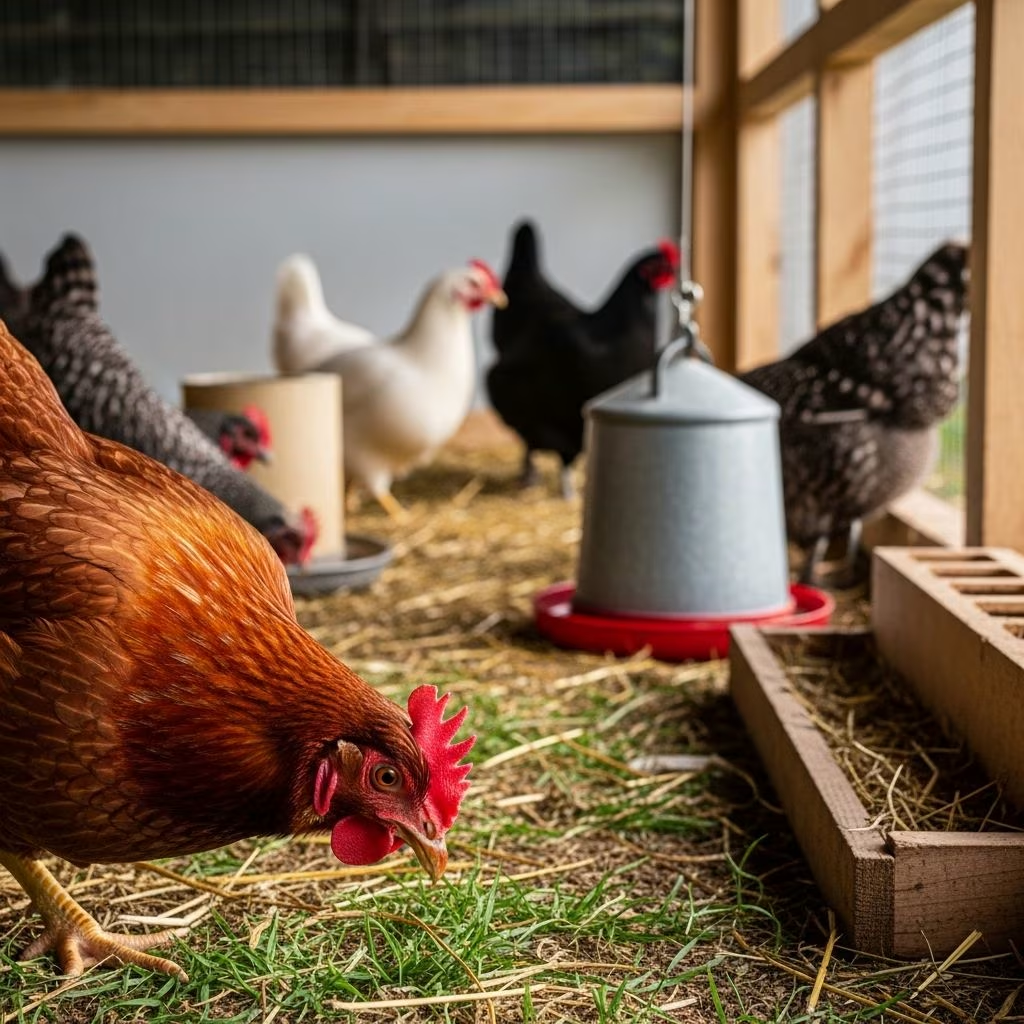
Maintaining healthy backyard poultry requires a comprehensive understanding of the diseases that threaten flock productivity and welfare. Whether raising chickens, turkeys, or other domestic birds in a home setting, poultry owners encounter various infectious agents that can spread rapidly through flocks and cause significant economic and emotional loss. This guide examines the major disease categories affecting backyard poultry operations and provides practical information on recognition, prevention, and management strategies.
Understanding Disease Transmission in Small Flocks
Backyard poultry operations face unique disease challenges distinct from commercial facilities. Small-scale producers typically integrate their birds into home environments, allowing for closer human contact and exposure to wild bird populations, rodent vectors, and environmental contaminants. The relatively limited biosecurity measures in many backyard settings create conditions favorable for disease establishment and spread.
Disease transmission occurs through multiple pathways: direct contact between infected and susceptible birds, consumption of contaminated feed and water, inhalation of airborne particles, and indirect transmission via contaminated equipment, clothing, and footwear. Understanding these transmission routes forms the foundation for effective prevention strategies.
Viral Infections: The Primary Challenge
Viral diseases represent some of the most significant threats to backyard poultry health. These infections spread efficiently through flocks and often produce severe clinical consequences with limited treatment options.
Marek’s Disease: A Leading Cause of Mortality
Marek’s disease stands as a predominant concern in backyard poultry operations, particularly in flocks lacking vaccination programs. This disease presents multiple forms, with nervous manifestations producing characteristic clinical signs including paralysis, twisted neck, and loss of coordination. Other presentations affect skin and internal organs, though the neurological form often becomes most apparent in affected birds.
The disease spreads through feather dander and respiratory secretions, making it easily transmitted in multi-bird environments. Young birds prove most susceptible to severe disease. No treatment exists for Marek’s disease; prevention through vaccination of day-old chicks represents the only effective management strategy. Vaccination ensures protection throughout the bird’s lifespan, making it essential for any backyard operation housing multiple birds.
Newcastle Disease and Its Variants
Newcastle disease exists in multiple forms, ranging from mild to highly virulent strains. Virulent Newcastle disease produces severe respiratory signs including sneezing, coughing, and breathing difficulty. Affected birds often develop distinctive twisted neck appearance due to neurological involvement. Gastrointestinal signs manifest as greenish diarrhea, while egg production drops sharply in laying flocks.
Treatment remains supportive only, with antibiotics used to prevent secondary bacterial infections. Vaccination availability varies by region and regulatory status. Strict biosecurity measures prove critical for preventing introduction into unvaccinated flocks, including equipment disinfection and avoiding contact with potentially infected birds from unknown sources.
Infectious Bronchitis and Respiratory Disease
Infectious bronchitis causes respiratory inflammation and produces sneezing, coughing, and watery eye discharge. Laying flocks experience significant production impacts, including reduced egg output and production of misshapen, thin-shelled eggs. The disease may persist in recovering birds’ reproductive organs, affecting future egg quality.
Vaccination availability varies regionally, though no specific treatment exists. Recovery relies on supportive care through improved nutrition, reduced environmental stress, and protection from secondary infections. Some strains of infectious bronchitis persist in flocks indefinitely once established.
Fowl Pox: Cutaneous and Respiratory Forms
Fowl pox manifests in two distinct presentations: dry form with characteristic wart-like lesions on combs, wattles, and eyelids, and wet form with lesions inside the mouth and respiratory tract. The dry form typically resolves within several weeks with supportive care, while wet form presents greater morbidity and potential mortality.
Vaccination prevents this disease effectively in most circumstances. Unlike highly contagious viral diseases, fowl pox spreads more slowly through flock contact and mosquito vectors. Isolation of affected birds can prevent spread to uninfected flock members.
Bacterial Infections in Backyard Operations
Bacterial diseases in poultry often develop secondary to other infections or stressful management conditions, making prevention through proper husbandry practices particularly important.
Colibacillosis and E. coli Infection
Escherichia coli infection develops secondary to other diseases, poor ventilation, or contaminated environments. The infection affects multiple organ systems, producing respiratory disease, reproductive tract inflammation, or intestinal disease depending on bacterial strain and host factors.
Biosecurity and sanitation form the cornerstone of prevention. Several antimicrobial classes prove effective for treatment, including tetracyclines and macrolides, though emerging resistance increasingly limits options. Early treatment during infection’s initial stages improves outcomes significantly. Regulations governing antimicrobial use in food-producing poultry should always be consulted before treatment initiation.
Infectious Coryza: Chronic Respiratory Disease
Infectious coryza produces facial swelling, foul-smelling nasal discharge, watery eyes, and breathing difficulty. The disease spreads readily through respiratory secretions and direct contact. Birds surviving acute infection frequently become chronic carriers, shedding bacteria and perpetuating infection in flocks.
Antibiotic treatment can control acute outbreaks but fails to eliminate carriers. Once established in a flock, eradication proves difficult. Prevention emphasizes strict biosecurity to avoid introduction of infected birds. Testing new additions before incorporating them into existing flocks provides an additional protective measure.
Fowl Cholera: Acute Septicemic Disease
Fowl cholera produces sudden deaths in affected flocks, often without preceding clinical signs. Birds showing signs display swollen wattles, nasal discharge, greenish diarrhea, and marked depression. The disease spreads through direct contact with sick birds and contaminated environments.
Vaccination may help in areas with high disease prevalence, though protection remains inconsistent. Antibiotic treatment can reduce losses but may not eliminate carrier birds. Prompt identification and isolation of affected birds prevents continued disease spread.
Salmonella: Public Health and Flock Concerns
Salmonella species produce different disease presentations depending on serotype. Pullorum and Gallinarum serotypes cause severe disease in young birds, while other serotypes primarily affect older birds or remain asymptomatic while transmitted to human consumers.
Prevention focuses on maintaining clean flocks through elimination of infected birds, complete environmental sanitation, and acquisition of birds from clean sources. Birds surviving acute infection become carriers, shedding organisms in feces throughout their lives. No treatment eliminates carrier status once established.
Parasitic Diseases and Infestations
Parasites represent nearly universal challenges in backyard poultry, affecting flock productivity and welfare even at low infection intensities.
Internal Parasites: Roundworms and Tapeworms
Roundworms and tapeworms comprise the most frequently encountered internal parasites in poultry. Infection typically results from contaminated soil and poor management practices that allow repeated exposure to parasite eggs and larvae. Most backyard poultry harbor some degree of internal parasitism even without showing obvious clinical signs.
Heavy infestations produce weight loss, poor growth, and reduced egg production. Diagnostic fecal examinations should precede treatment to assess infection extent and establish baselines for monitoring treatment effectiveness. Regular parasite control programs prevent heavy infestations from developing.
External Parasites: Lice and Mites
Lice and mite infestations cause feather damage, itching, and skin irritation. Affected birds display ruffled feathers, restlessness, and reduced feed consumption. Heavy infestations compromise thermoregulation and increase stress susceptibility.
Dust baths using diatomaceous earth provide effective natural control when performed regularly. Environmental sanitation and coop disinfection reduce parasite populations. Treating all flock members simultaneously ensures complete parasite elimination.
Coccidiosis: Protozoan Intestinal Infection
Coccidiosis, caused by Eimeria species protozoa, produces severe intestinal disease particularly in young birds. Clinical signs include bloody diarrhea, general malaise, decreased feed consumption, and stunted growth. Mortality can be significant in affected flocks.
The disease thrives in damp conditions, making litter management critical for prevention. Keeping coops dry and performing regular cleaning breaks the parasite life cycle. Medication can treat acute outbreaks, though prevention through environmental management proves most cost-effective.
Fungal Infections: Aspergillosis
Aspergillus species fungal infections develop primarily through inhalation of contaminated dust and mold spores in poorly maintained environments. Moldy feed, wet litter, and inadequate ventilation create conditions favoring fungal growth.
Respiratory signs predominate, including sneezing, wheezing, and breathing difficulty. Diagnosis requires fungal culture or identification of characteristic fungal structures in tissue samples. Treatment proves expensive and often ineffective, making prevention through environmental sanitation and proper ventilation paramount.
Reproduction and Metabolic Issues
Non-infectious health problems frequently affect backyard flocks, requiring prompt recognition and management.
Egg Binding and Reproductive Disorders
Egg binding occurs when hens cannot expel eggs due to enlarged eggs, weak musculature, or calcium deficiency. Affected birds show straining, lethargy, abdominal distention, and reduced appetite. This condition represents a medical emergency requiring immediate veterinary intervention to prevent death.
Prevention relies on providing balanced nutrition with adequate calcium throughout the laying period. Environmental temperature optimization and proper body conditioning minimize binding risk.
Nutritional Deficiencies
Inadequate nutrition produces multiple clinical manifestations including poor growth, weak legs, soft-shelled eggs, and feather loss. Formulated poultry feeds provide appropriate nutrient balance, though supplementation may be necessary for laying flocks receiving extensive scratch grains or treats.
Feed quality deterioration over time requires regular feed replacement to prevent oxidation of nutrients. Offering limited kitchen scraps prevents nutritional imbalances when incorporated into balanced diets.
Disease Prevention Through Biosecurity and Management
Effective disease prevention integrates multiple strategies targeting different transmission pathways. Vaccination programs form the foundation for controlling diseases with available vaccines, including Marek’s disease, Newcastle disease, and fowl pox.
Biosecurity measures encompassing multiple components prove most effective:
- Restricting visitor access to poultry areas and requiring footwear changes or disinfection
- Quarantining newly acquired birds for 2-4 weeks before integration into existing flocks
- Disinfecting equipment, feeders, and waterers regularly
- Maintaining separate equipment for each flock when managing multiple groups
- Controlling access of wild birds and rodents to feed and water sources
- Ensuring proper ventilation to minimize dust and airborne pathogen accumulation
- Maintaining clean, dry litter conditions through regular replacement
Sanitation practices reduce pathogen survival in the environment. Complete cleaning and disinfection of facilities between flocks prevents disease carryover. Regular coop cleaning removes accumulated feces and contaminated organic material that harbor pathogens.
Recognizing Illness and Seeking Veterinary Assistance
Early recognition of illness enables rapid intervention and prevents flock-wide spread. Signs warranting immediate veterinary consultation include sudden unexplained deaths, paralysis, labored breathing, persistent diarrhea, inability to stand, and rapid weight loss.
Isolating sick birds immediately prevents disease transmission while treatment proceeds. Providing supportive care including accessible food, water, and comfortable resting areas maximizes recovery potential. Monitoring isolated birds closely for clinical progression guides management decisions.
Treatment Considerations and Antimicrobial Use
Antimicrobial selection for backyard poultry treatment requires careful attention to approved uses, label instructions, and withdrawal periods before consuming eggs or meat. Not all antimicrobials are approved for all poultry species, and certain drugs are prohibited in food-producing animals.
Antimicrobial resistance increasingly limits treatment options, making judicious use essential. Using antimicrobials only when appropriate, administering complete treatment courses, and consulting label information minimize resistance development. Early-stage disease responds more favorably to treatment than advanced infections.
Conclusion
Managing infectious diseases in backyard poultry requires integration of vaccination, biosecurity, sanitation, and proper management practices. Understanding disease transmission, recognition of clinical signs, and knowledge of prevention strategies enable poultry owners to maintain healthy flocks. Establishing relationships with veterinary professionals familiar with backyard poultry medicine ensures appropriate guidance for disease management and prevention. By prioritizing preventive measures over reactive treatment, backyard poultry operations can achieve excellent health outcomes and sustainable productivity.
References
- Common Infectious Diseases in Backyard Poultry — Merck Veterinary Manual. 2024. https://www.merckvetmanual.com/exotic-and-laboratory-animals/backyard-poultry/common-infectious-diseases-in-backyard-poultry
- Common Viral Diseases of Pet and Backyard Chickens — VCA Animal Hospitals. 2024. https://vcahospitals.com/know-your-pet/common-viral-diseases-of-pet-and-backyard-chickens
- Diseases of Small Poultry Flocks — University of Minnesota Extension. 2023. https://extension.umn.edu/poultry-health/diseases-small-poultry-flocks
- Common Poultry Diseases — University of Florida IFAS Extension (PS047/PS044). 2023. https://edis.ifas.ufl.edu/publication/PS044
- Backyard Poultry: Healthy Pets, Healthy People — Centers for Disease Control and Prevention. 2024. https://www.cdc.gov/healthy-pets/about/backyard-poultry.html



