

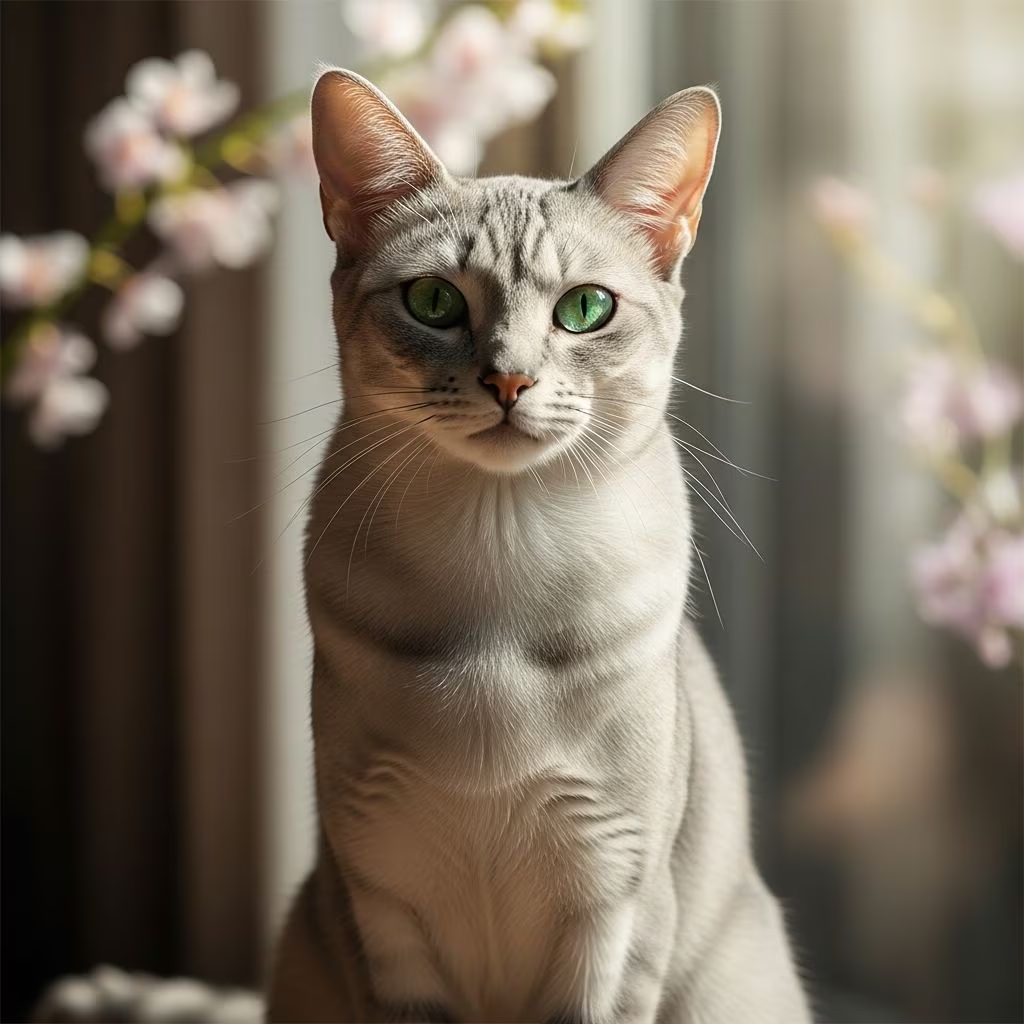
The Korat cat stands out as one of the most enchanting and historically significant feline breeds, originating from Thailand with a legacy spanning centuries. Known for its distinctive **silver-blue coat** that shimmers like sea foam on rain clouds, this breed combines elegance, athleticism, and deep loyalty, making it a cherished companion for dedicated owners.
Ancient Roots in Thai Tradition
The Korat’s story begins in the lush landscapes of Thailand, where it has been documented since at least the 14th century. Ancient manuscripts like the Tamra Maew, or Cat-Book Poems, from around 1350 AD, describe and illustrate this breed among others considered harbingers of prosperity and good fortune. In Thai culture, Korats symbolized luck, often gifted to newlyweds or dignitaries rather than sold, embedding them deeply in folklore and tradition.
Unlike many modern breeds shaped by selective breeding, the Korat has preserved its original form remarkably well. Historical records show little variation between depictions in ancient texts and today’s specimens, highlighting its status as a ‘natural’ breed. Thais refer to it as Si-Sawat, grouping it with other traditional cats like Siamese under the Maew Boran category, where interbreeding was common without rigid distinctions.
Global Journey and Recognition
Korats first appeared in Western cat shows in Great Britain around 1889, exhibited as ‘blue Siamese’ due to their Thai origins and coat color. However, their unique features prevented them from competing effectively against the more angular Siamese. Importation to the United States occurred much later, in 1959, when siblings Nara and Darra arrived from Thailand’s Mahajaya Cattery. Nearly all American Korats today trace their lineage to this foundational pair, with subsequent imports helping maintain genetic diversity without altering the breed standard.
Championship recognition by organizations like The Cat Fanciers’ Association (CFA) came in 1966, cementing the Korat’s place in the international cat fancy. This slow but steady rise reflects the breed’s rarity and the breeders’ commitment to authenticity over mass production.
Distinctive Physical Traits
Korat cats captivate with their harmonious physique and striking coloration. Adults weigh between 6 to 11 pounds, boasting a compact, muscular build described as ‘cobby’—robust yet graceful, with smooth curves that convey power and agility.
The head forms a prominent **heart shape**, framed by large, wide-set ears that blend seamlessly into the contours. Eyes are oversized, luminous, and peridot green in maturity (developing from blue at birth over 2-4 years), giving an alert, perceptive expression. The short, single-layered coat is the breed’s crowning glory: each hair is silver-tipped blue-gray, lighter at the roots and darkening toward silvery tips, creating a halo-like shimmer. Kittens may show faint ghost tabby patterns that fade completely.
| Feature | Description |
|---|---|
| Coat | Silver-tipped blue, short, glossy single layer |
| Eyes | Large, round, vivid green (blue in kittens) |
| Body | Compact, muscular, 6-11 lbs |
| Head | Heart-shaped with prominent whisker pads |
| Ears | Large, alert, set high |
Temperament and Daily Life
Korats are renowned for their **affectionate and intelligent** nature, forming profound bonds with their humans. They thrive on interaction, often shadowing owners throughout the day, yet they retain an independent streak that prevents clinginess. Playful and athletic, they excel at simulated hunting games, leaping with precision and curiosity.
While not as vocal as Siamese relatives, Korats communicate through a varied repertoire of chirps, trills, and meows when seeking attention. They are perceptive to moods, offering comfort during stress, but demand a calm environment—boisterous households may overwhelm them. Socialization with other pets is possible if introduced early, though they prefer quiet companionship.
- Highly loyal and devoted to family
- Active and inquisitive, needing enrichment
- Reserved with strangers but warms up
- Intelligent problem-solvers
- Moderately talkative
Care Essentials for Optimal Health
Maintaining a Korat’s vitality is straightforward due to their hardy heritage from Thailand’s tropical climate. Their single coat requires minimal grooming—a weekly brush suffices to distribute oils and reduce loose hair. Regular nail trims, ear checks, and dental care round out the routine.
Diet should emphasize high-quality protein for their muscular frames, with portion control to prevent obesity. Ample vertical spaces, interactive toys, and puzzle feeders cater to their mental acuity and prevent boredom. Outdoor access in secure enclosures is ideal, but indoor living works with sufficient stimulation.
Health Profile and Longevity
Korats generally enjoy robust health, often living 15+ years with proper care. As a pedigreed breed, they may be prone to hypertrophic cardiomyopathy (HCM), a common feline heart condition, and patellar luxation. Reputable breeders screen for these via genetic testing and cardiac ultrasounds.
Annual veterinary check-ups, vaccinations, and parasite prevention are crucial. Their Thai origins confer resistance to some tropical diseases, but vigilance against obesity and dental issues remains key. Early spaying/neutering supports longevity.
Is the Korat Right for Your Home?
Ideal owners are experienced cat enthusiasts who can provide a serene, enriched space. Korats flourish in quiet homes without young children or high chaos, though they bond well with respectful older kids. Multi-cat households succeed with gradual introductions. Those seeking a low-maintenance lap cat may find the Korat’s energy mismatched; it craves engagement.
Pros:
- Stunning, low-shed coat
- Deep loyalty and affection
- Minimal grooming needs
- Long lifespan
Cons:
Frequently Asked Questions
Are Korat cats good with children?
Korats can be gentle with older, calm children but may feel overwhelmed by toddlers due to their sensitive nature.
How much do Korat cats shed?
Very little; their short single coat is low-shedding and easy to maintain with weekly brushing.
Do Korats get along with dogs?
Yes, many adapt well to dogs if socialized early, respecting their space.
What is the average lifespan of a Korat?
Typically 15-20 years with excellent care and health screenings.
Are Korat cats hypoallergenic?
Not truly hypoallergenic, but their low-shed coat produces fewer allergens than double-coated breeds.
Bringing a Korat into Your Life
Acquiring a Korat demands research into ethical breeders who prioritize health testing and preserve the breed’s purity. Rescue organizations occasionally have Korats or mixes. Prepare with scratching posts, cat trees, and toys to match their vigor. Once home, patient bonding unlocks their full devotion, rewarding you with a shimmering guardian of luck.
This breed’s unchanged allure from ancient Thailand to modern homes underscores its timeless appeal—a testament to selective preservation over alteration.
References
- The Korat cat – Cat in the Box LLC — Cat in the Box. Accessed 2026. https://thecatisinthebox.com/blogs/kitty-contemplations/the-korat-cat
- What Is a Korat Cat? Personality and Lifestyle – ASPCA Pet Insurance — ASPCA Pet Insurance. Accessed 2026. https://www.aspcapetinsurance.com/resources/korat-cat-facts/
- Korat – Cat breed genetic test — Koko Genetics. Accessed 2026. https://www.kokogenetics.com/en/results/cat-dna-test-breed/korat
- Korat Cat Breed Information | Purina UK — Purina UK. Accessed 2026. https://www.purina.co.uk/find-a-pet/cat-breeds/korat
- Korat Article – The Cat Fanciers’ Association — CFA. Accessed 2026. https://cfa.org/korat-article/
- Korat – The Cat Fanciers’ Association — CFA. Accessed 2026. https://cfa.org/breed/korat/



