

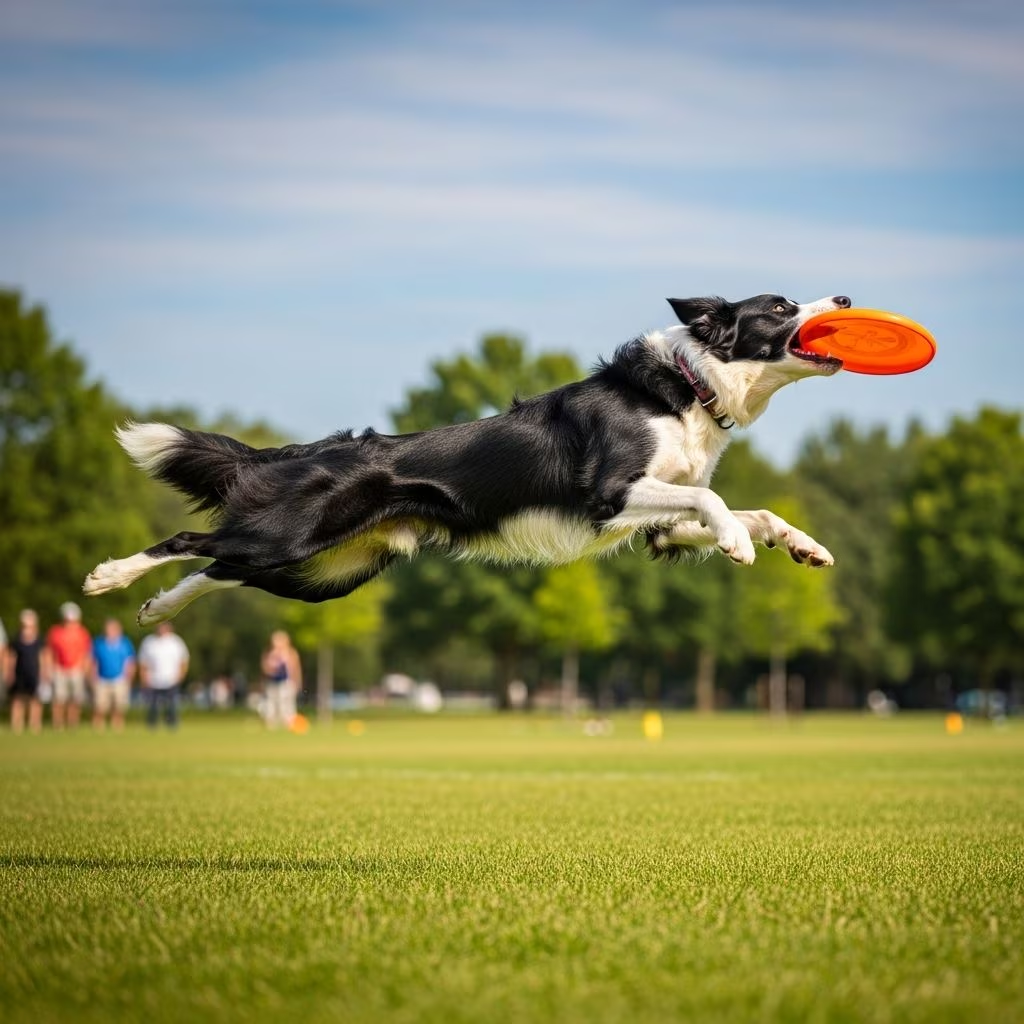
The sport of disc dog competitions has evolved into a dynamic and highly organized athletic pursuit that combines the natural instincts of dogs with the precision and skill of their handlers. These events showcase the remarkable athleticism, intelligence, and bond between canine partners and their owners, creating an engaging spectacle that continues to grow in popularity worldwide. Whether you’re a casual observer or considering participating in these competitions, understanding the fundamentals of this sport provides valuable insight into what makes disc dog events so compelling.
Understanding the Competitive Landscape
Disc dog competitions represent a structured athletic format where dogs and handlers work together to demonstrate catching ability, distance performance, and choreographed routines. The sport has established itself as a legitimate canine athletic pursuit with standardized rules, organizational structures, and recognition from major kennel clubs and sporting organizations. The competitive environment includes various levels of participation, from recreational divisions for newcomers to elite championship series that attract top competitors from around the globe.
The organizational framework supporting disc dog competitions ensures consistency across events while allowing individual organizers to maintain their own specific standards. Multiple competition series operate simultaneously, including championship-level events and local qualifying tournaments that provide pathways for dogs and handlers to progress through the sport’s ranking system.
Primary Competition Formats in Disc Dog Sports
Disc dog competitions typically feature distinct event categories, each designed to test different aspects of canine and handler performance. Understanding these formats helps participants and spectators appreciate the unique demands of each competition type.
Distance and Accuracy Events
The toss and catch format represents one of the foundational competition styles in disc dog sports. In this event, handlers have a designated time period—typically around 60 seconds—to throw a single disc as many times as possible. The handler and dog must remain behind a designated throwing line during the start of each throw, though handlers can move freely between throws to retrieve discs or reposition themselves. Competitors attempt to complete catches at increasing distances, with the scoring system rewarding longer catches more generously than shorter ones. Each zone on the competition field corresponds to a specific point value, encouraging handlers to push their dogs to greater distances while maintaining accuracy.
The field layout for this event includes clearly marked zones that extend outward from the throwing line. Dogs that catch discs farther from the thrower earn higher point totals, creating a strategic element where handlers must balance distance attempts with the reliability of their throws and their dog’s catching capabilities. Dogs participating in toss and catch competitions must meet minimum age requirements, typically 12 months old, to ensure they have sufficient physical development for the demands of the sport.
Freestyle Routines and Choreography
Freestyle competitions offer a completely different competitive experience compared to distance-based events. In freestyle rounds, handlers create choreographed performances set to music, combining trick sequences, athletic catches, and creative presentations. Judging in freestyle events evaluates multiple factors including the difficulty level of throws and trick combinations, the variety and innovation of the routine, the dog’s athletic performance and execution, and the overall choreography and presentation quality. This format allows handlers to showcase their dog’s individual talents and personality while demonstrating the physical coordination and bond between handler and canine partner.
Freestyle routines typically have defined time parameters and specific field requirements. Props such as hoops, sticks, or ribbons are generally not permitted in freestyle performances, keeping the focus on the dog, handler, and disc. Dogs competing in freestyle must typically be at least 18 months old, reflecting the greater physical demands and technical skills required for this advanced competition format.
Eligibility and Age Requirements
Understanding the age and health requirements for disc dog competitions is essential for anyone considering entering their dog in these events. Different competition categories impose specific minimum age thresholds to ensure dogs have adequate physical development for the particular demands of each format.
| Competition Division | Minimum Age Requirement | Additional Requirements |
|---|---|---|
| Recreational (Rec) Division | 6 months | No competitive scoring |
| Toss and Catch Events | 12 months | Competitive format |
| Freestyle Events | 18 months | Choreographed routine |
Beyond age requirements, all participating dogs must demonstrate good health on the day of competition. Event organizers retain the authority to evaluate a dog’s condition and may dismiss dogs that appear visibly injured, are limping noticeably, or show signs of illness or distress. Dogs should be current on all vaccinations required by local law, and handlers are encouraged to consult with their veterinarian regarding any medical or health conditions that might affect their dog’s ability to safely compete.
Equipment Standards and Specifications
The type of disc used in competitions is subject to specific standards designed to ensure safety while maintaining consistent competitive conditions. Acceptable competition discs must be soft or floppy in construction, perfectly round in shape, and solid throughout with no holes or perforations. Discs designed with safety as a priority are preferred to harder alternatives that could pose injury risks to dogs. Certain popular flying toys do not meet competition standards and would result in disqualification if used, so handlers should verify their equipment with event organizers before competing.
Different games specify maximum disc limits, and judges carefully track the number of discs used throughout a round. Using more discs than allowed for a particular game constitutes a violation that may result in no score being awarded, particularly in qualifying events or championships.
Canine eyewear designed specifically for dogs, such as protective spectacles, may be permitted under specific circumstances. In non-crossover disc-only games, protective eyewear can be used without special authorization. However, when competing in hybrid games that combine disc and agility elements, handlers must provide a signed letter from a veterinarian documenting a medical condition that necessitates eyewear protection during disc play.
Scoring and Advancement Systems
The scoring methodology in disc dog competitions rewards successful catches and punishes errors through systematic point allocation. The distance-based scoring system means that catches completed farther from the handler earn significantly more points than shorter catches, encouraging handlers to execute longer throws and push their dogs’ capabilities. Scoring accumulates across multiple games, allowing dogs to earn medal achievements through UpDog systems and similar tracking mechanisms.
Advancement through competitive tiers typically follows an achievement-based structure. Dogs that accumulate medal achievements in multiple games become eligible for official title recognition through major kennel clubs and sporting organizations. For example, earning bronze medal achievements across three different games qualifies a dog for official recognition, while achieving bronze medals in six games may qualify for elite title status. This tiered advancement system provides motivation for handlers to compete in diverse game formats and continue improving their dogs’ performances.
Competition Field Requirements and Safety
Hosting disc dog competitions requires specific field conditions and safety specifications to protect both dogs and handlers. Competition fields must provide a flat surface free of dangerous obstructions such as ruts or holes that could cause injuries. The field area is clearly defined and bordered with visible barriers such as plastic cones, flags, or fencing that discourage spectators from accidentally or intentionally entering the competition area.
Fields should not be fully enclosed in ways that prevent dogs from retrieving discs that have landed beyond the boundary markers. Most championship-level events utilize high-quality grass surfaces that provide cushioning for impact and reduce injury risks. Host clubs must comply with detailed hosting requirements and standards to ensure competitive fairness and competitor safety across all events.
General Rules and Conduct Standards
Competition Restrictions and Regulations
Disc dog competitions impose several restrictions on handler and dog conduct to maintain competitive integrity and safety. Dogs must remain leashed at all times except during their actual competition rounds, preventing distractions to competing teams. Only the competing dog, designated throwers, and official personnel are permitted on the field during active competition.
Dogs are typically limited to a maximum number of competition rounds per day, regardless of handler preferences or the number of different competitions available. This restriction protects dog welfare by preventing excessive physical exertion and cumulative fatigue that could lead to injury.
Disqualification and Conduct Violations
Event organizers and judges maintain the authority to remove competitors or disqualify teams from competition for various violations. Animal abuse, endangerment, or displays of excessive aggression from participating dogs constitute grounds for immediate disqualification. Human participants who demonstrate aggressive or disruptive behavior toward other competitors, judges, or staff members may also face removal from events. Unethical conduct including cheating, bribery, or intentional interference with fellow competitors’ performances can result in disqualification and potential bans from future events.
Head judges retain final authority regarding all scoring decisions, rule interpretations, and disqualifications. This centralized authority structure ensures consistent enforcement of rules and provides a clear appeal mechanism for disputed decisions.
Special Competition Rules and Rulings
Roller Management
Discs that continue rolling along the ground after landing are considered “live” catches in level 1 and 2 competitions, meaning dogs can catch rolling discs as long as they maintain forward momentum in any direction. Once a disc loses momentum and begins to teeter on its edge like a spinning coin, it transitions to “dead” status and cannot be caught for scoring purposes. Judges make the final determination regarding whether rollers should be classified as “live” or “dead,” and any close calls are ruled in favor of the dog to maintain fairness and encourage athletic performance.
Handler Positioning Requirements
In toss and catch events, handlers must remain behind the designated throwing line when releasing the disc. If a handler steps on or crosses the throwing line at the moment of disc release, that throw will not be scored regardless of whether the dog successfully catches the disc. Between throws, handlers may move freely around the field to reposition themselves for the next throw or retrieve discs.
Some competition formats allow dogs a “free start,” meaning dogs can cross the throwing line and begin running downfield before the handler throws the disc. This rule adaptation encourages dynamic athletic performances and accommodates different throwing styles and handler strategies.
Frequently Asked Questions About Disc Dog Competitions
What breeds are best suited for disc dog sports?
While certain athletic breeds traditionally excel in disc dog competitions, dogs of various breeds and sizes can successfully compete. Border Collies, Australian Shepherds, and other herding breeds dominate elite competition levels due to their natural athleticism and intelligence, but mixed breeds and dogs of all sizes participate successfully at recreational and intermediate levels. The key factors for success include individual drive, athleticism, trainability, and the handler’s commitment to training and conditioning.
How should I prepare my dog for disc dog competition?
Preparation involves gradual conditioning, basic obedience training, and disc-specific skill development. Dogs should be introduced to discs at their own pace in low-pressure environments before advancing to competitive scenarios. Handlers should focus on building their dog’s drive and catch motivation while maintaining the dog’s health through proper nutrition and gradual physical conditioning. Consulting with experienced handlers and trainers familiar with disc dog sports can accelerate the learning process.
Are there different competition levels for beginners?
Yes, most organized disc dog competitions offer recreational divisions specifically designed for newcomers and less experienced teams. These divisions allow handlers and dogs to participate in a supportive environment while developing skills and building confidence. Recreational divisions typically do not use competitive scoring systems and prioritize participation and enjoyment over strict rankings.
What is the typical cost of competing in disc dog events?
Competition entry fees vary depending on the specific event, organization, and competition level. Local events and recreational divisions typically charge lower entry fees than championship-level competitions. Additional costs may include travel, equipment, training instruction, and entry fees for multiple games or divisions at the same event.
The Growth and Future of Disc Dog Sports
Disc dog competitions have experienced significant growth as more handlers discover this dynamic sport and kennel club recognition has increased the sport’s legitimacy. Championship series such as major world qualifying events attract competitors from multiple countries and generate substantial spectator interest. The establishment of standardized rules, judging criteria, and title recognition systems has professionalized the sport while maintaining its accessible and inclusive culture.
The sport continues to evolve with new game formats, innovative scoring systems, and expanding championship opportunities. As more communities recognize the value of disc dog sports for promoting canine athletic health, handler skill development, and human-animal bonding, participation rates and event availability will likely continue to increase.
References
- General Rules — UpDog Challenge. 2024. https://updogchallenge.com/general-rules/
- Throw & Catch Rules — UFO World Cup. 2024. https://www.ufoworldcup.org/content/Rules/TnC.php
- General Rules – Colorado Disc Dogs — Colorado Disc Dogs. 2024. https://www.coloradodiscdogs.com/rules.php
- Disc Dog Information and Guides — ShowSight Magazine. 2024. https://showsightmagazine.com/dog-sports/disc-dog/
- Disc Dog — American Kennel Club. 2024. https://www.akc.org/sports/title-recognition-program/disc-dog/
- General Competition Rules — Skyhoundz. 2024. https://skyhoundz.com/general-competition-rules/
- Dog Frisbee Competition | High-Flying Disc Dogs | Canine Sports — Platinum Performance. 2024. https://www.platinumperformance.com/articles/disc-dogs.html



