

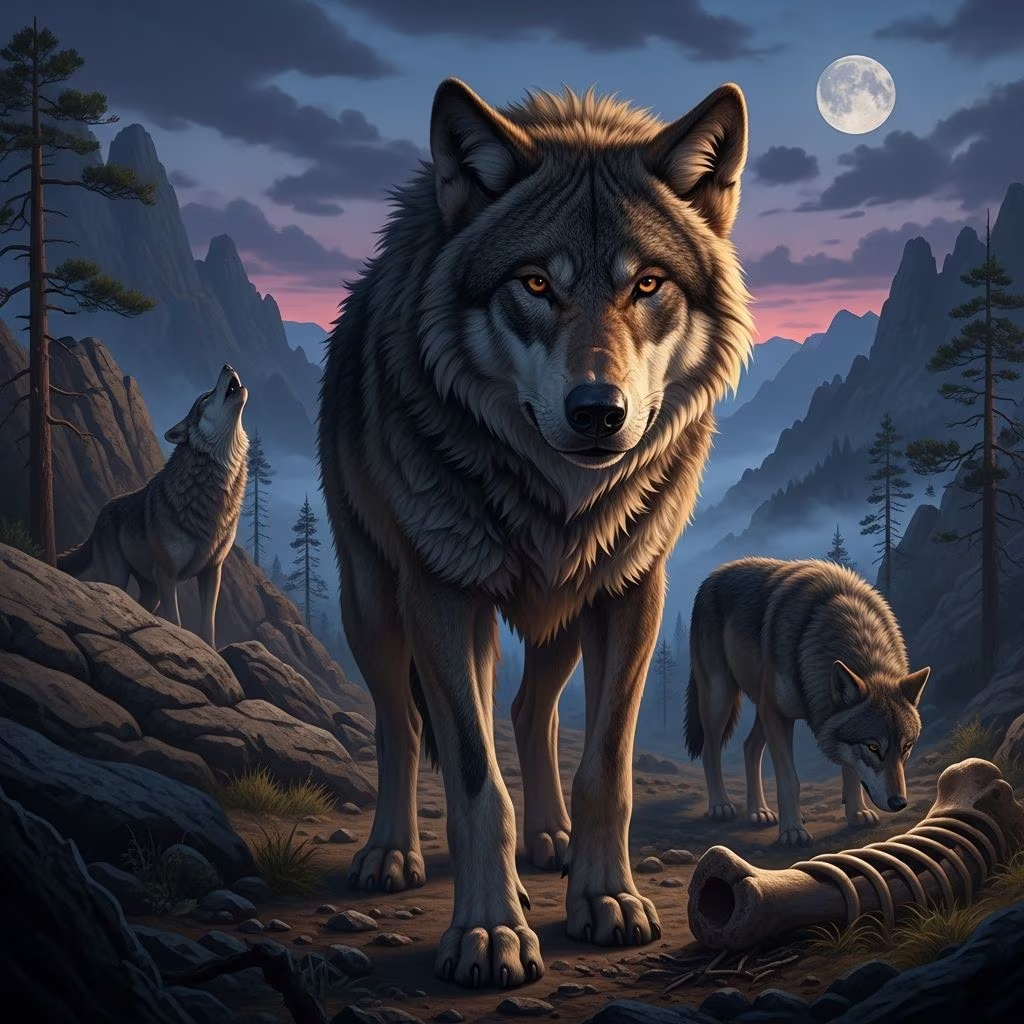
The dire wolf, an emblematic beast from the icy realms of Game of Thrones, captivates imaginations as the loyal companions of Stark family members. Yet, these fictional guardians draw from a real prehistoric predator that roamed North America during the Pleistocene epoch. Far more than fantasy fodder, dire wolves (Canis dirus) were apex carnivores whose story blends paleontological discovery, evolutionary adaptation, and contemporary biotechnology.
The Prehistoric Powerhouse: Physical Traits and Size
Dire wolves stood out among Pleistocene canids for their imposing build. Adults measured up to 5 feet in length from nose to tail base, with shoulder heights reaching 3 feet, and weights averaging 150-175 pounds—larger than today’s gray wolves. Their skulls stretched 12 inches long, featuring broader profiles, thicker jaws, and robust dentition optimized for crushing bone.
Fossil evidence reveals key distinctions from gray wolves: wider heads, fuller snouts, and denser musculature, particularly in the legs and shoulders. This bulkier frame supported pursuits across varied terrains, from open plains to forested areas. Tooth wear patterns, especially from La Brea Tar Pits specimens, indicate frequent bone-cracking (osteophagy), a survival tactic during prey shortages.
| Feature | Dire Wolf | Gray Wolf |
|---|---|---|
| Skull Width | Wider, more massive | Narrower |
| Leg Structure | Thicker, muscular | Slender, agile |
| Bite Force | Stronger at canines | Less shearing power |
| Body Weight | 150-175 lbs | 80-120 lbs |
This table highlights anatomical edges that made dire wolves formidable hunters of megaherbivores like ancient bison and horses.
Hunting Strategies and Pack Dynamics
Dire wolves thrived as pack hunters, mirroring modern gray wolves but scaled up for larger quarry. Groups likely numbered 5-15 members, led by an alpha pair, enabling coordinated takedowns of prey outweighing individuals by factors of 5-10. Their mandibular structure—featuring a weaker symphysis for multiple shallow bites—suited endurance chases over grappling, much like African wild dogs.
- Territoriality: Packs defended vast ranges (140-400 square miles), marking boundaries and fending off rivals.
- Prey Preference: Isotopic analysis shows favoritism for ruminants like bison, with flexibility to horses, camels, and even scavenged marine mammals.
- Social Bonds: Genetic markers suggest adaptations for pack cohesion, including vocalizations and scent communication.
La Brea Tar Pits yield thousands of dire wolf fossils—10 carnivores per herbivore—implying social groups swarmed trapped prey, leading to their own entrapment. Sexual dimorphism noted: males larger and more robust than females, aiding roles in defense and hunting.
Habitat, Adaptations, and Daily Life
From 250,000 to 10,000 years ago, dire wolves spanned North and South America, adapting to fluctuating climates via cranial plasticity. Colder phases favored bulkier builds; warmer ones slimmer forms. Their keen senses—enhanced night vision and smell—spotted threats and prey in diverse lighting.
Coat traits likely included thicker fur for cold adaptation, with pigmentation genes yielding varied pelts, possibly darker for camouflage. Pups exhibited wild behaviors early: howling at two weeks, stalking prey, and shying from humans, as seen in modern analogs.
Competition intensified late-Pleistocene, with humans and climate shifts forcing bone-gnawing and fractured teeth from nutrient stress.
Extinction: Climate, Humans, and Ecosystem Collapse
Dire wolves vanished around 13,000-9,000 years ago amid megafauna die-offs. Dansgaard-Oeschger climate cycles disrupted habitats, slashing large prey. Human arrival overlapped, heightening rivalry for scarce resources; dental damage signals starvation-driven scavenging.
Unlike flexible gray wolves, dire wolves’ specialization on megaherbivores proved fatal as grasslands shrank and herds dwindled. Stable isotopes confirm dietary desperation, shifting from preferred bison to whatever survived.
Pop Culture Legacy: From Fossils to Fantasy
Dire wolves leaped from museum cases to stardom via Game of Thrones, where Ghost, Nymeria, and others symbolized Stark resilience. These CGI giants amplified real traits—size, loyalty, ferocity—fueling public fascination. The show’s direwolves blend wolfish independence with mythical stature, echoing paleontological truths while inspiring de-extinction dreams.
De-Extinction Frontiers: Reviving the Giant
Colossal Biosciences leads efforts to resurrect dire wolves using ancient DNA from fossils like La Brea. Cloned pups Romulus, Remus, and Khaleesi display pure lupine traits: distance from humans, early howling, and predatory stalking. Genomic studies identify 80 evolving genes for muscle, senses, and pack behaviors, distinct from gray wolves.
Challenges persist: ethical concerns over reintroducing apex predators, ecological impacts on modern herds, and behavioral wildness unfit for domestication. Success could restore lost biodiversity, but dense populations risk stressing prey like elk.
Modern Comparisons and Lessons
Gray wolves offer the closest living proxy, but dire wolves’ hyena-like bite and bulk set them apart. Both pack hunters, yet dire wolves cracked bigger bones, hinting at more scavenging. Conservation insights from their fall underscore climate’s role in predator decline, paralleling today’s wolf recoveries.
Frequently Asked Questions (FAQs)
Did dire wolves exist alongside humans?
Yes, late Pleistocene overlap occurred, with competition likely contributing to their demise.
Could dire wolves be domesticated like Game of Thrones direwolves?
Unlikely; revived specimens show innate wildness, avoiding human contact.
What caused the most dire wolf fossils at La Brea?
Social packs pursued trapped megaherbivores, leading to mass entrapment.
Are de-extinction efforts real?
Yes, Colossal Biosciences has produced dire wolf clones exhibiting authentic behaviors.
How did dire wolves hunt?
In packs, using endurance chases and shallow bites to exhaust large prey.
Potential Impacts of Dire Wolf Return
- Boost trophic cascades, controlling herbivores.
- Risk to livestock and endangered species.
- Scientific gains in genomics and ecology.
Balancing revival with safeguards remains key.
References
- The Return of the Dire Wolf — TIME. 2024-10-01. https://time.com/7274542/colossal-dire-wolf/
- Dire Wolf Biology — Colossal Biosciences. 2024-01-01. https://colossal.com/direwolf/biology/
- Dire wolf — Wikipedia (citing peer-reviewed sources). 2024-01-01. https://en.wikipedia.org/wiki/Dire_wolf
- The Remarkable Journey of Dire Wolf DNA — Daily Emerald. 2024-01-01. https://dailyemerald.com/168327/promotedposts/the-remarkable-journey-of-dire-wolf-dna/
- Dire Wolf — U.S. National Park Service. 2024-01-01. https://www.nps.gov/articles/000/dire-wolf.htm
- Dire wolf — Britannica. 2024-01-01. https://www.britannica.com/animal/dire-wolf



