

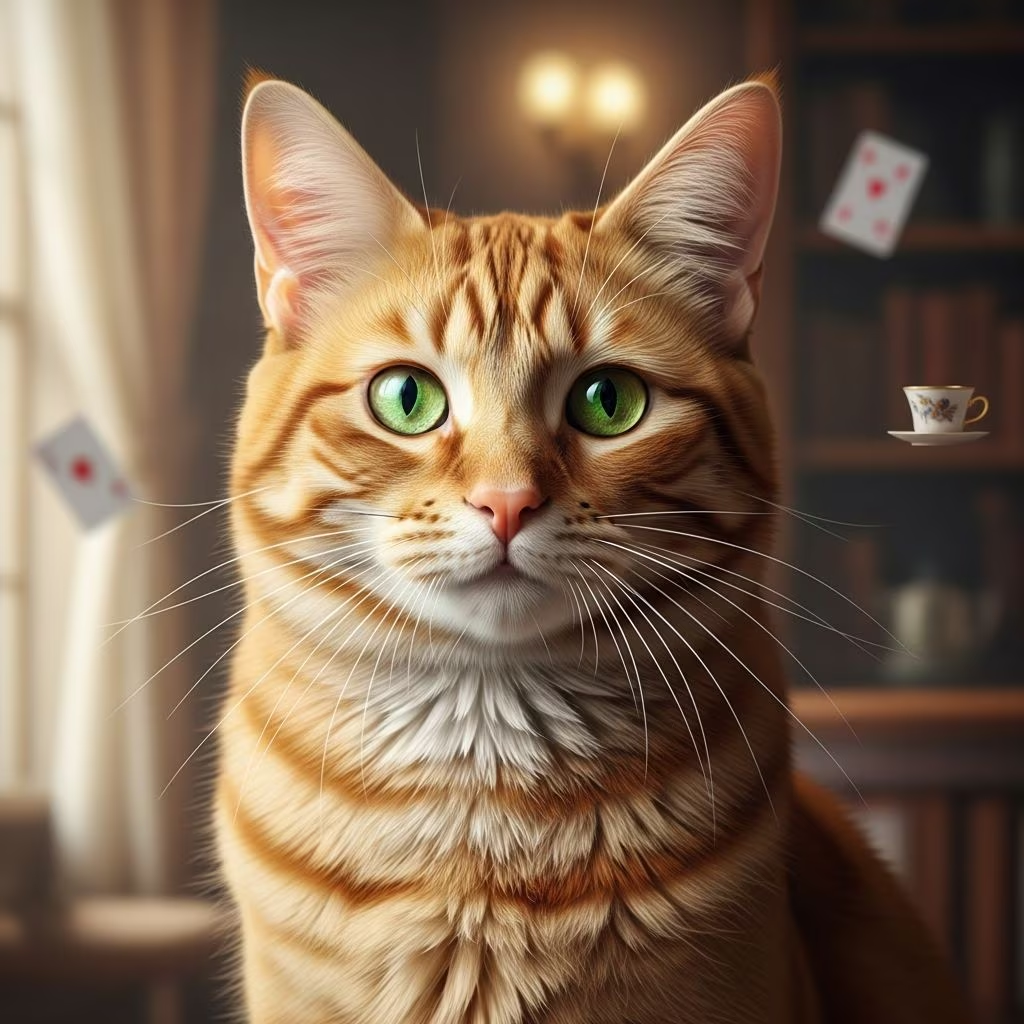
At the heart of Lewis Carroll’s timeless tale Alice’s Adventures in Wonderland lies a subtle yet poignant companion: Dinah, Alice’s cherished cat. Though never venturing into the surreal depths of Wonderland herself, Dinah’s presence echoes through Alice’s thoughts, serving as a grounding force amid chaos. This article delves into Dinah’s literary footprint, her Disney transformation, potential breed inspirations drawn from Victorian-era cats, and why her exact feline heritage sparks endless fascination among literature lovers and cat enthusiasts alike.
Dinah’s Role in Carroll’s Masterpiece
Dinah first appears in the story’s opening moments, as Alice lounges on the riverbank with her sister. Alice strokes Dinah’s fur, conversing with her as if she were a confidante, highlighting the young girl’s imaginative spirit. This interaction sets the tone for Alice’s adventure, contrasting the ordinary world with the absurdity awaiting below.
Throughout Wonderland, Alice invokes Dinah repeatedly, especially when navigating prickly encounters. During the Caucus Race, amid a menagerie of damp, irritable creatures, Alice wistfully remarks on Dinah’s prowess as a hunter, detailing how the cat swiftly pursues birds and mice. This offhand comment sends the assembly into panic; birds flutter away with flimsy excuses, terrified of the predator Alice describes so vividly. The Mouse, already irked by Alice’s interruptions, bristles at the mention, underscoring Dinah’s symbolic role as a reminder of natural order clashing with Wonderland’s disorder.
- Alice yearns for Dinah’s company to manage argumentative animals, revealing her homesickness.
- Dinah embodies familiarity and comfort, a touchstone of reality in a dreamlike realm.
- Her hunting tales amplify tensions, mirroring themes of predation and fear in the narrative.
At the Mad Tea Party, Alice’s reference to Dinah terrifies the Dormouse, igniting chaos as the group fixates on the cat’s imagined threat. These moments portray Dinah not merely as a pet but as a catalyst for humor and conflict, emphasizing Alice’s ties to the ‘real’ world.
Historical Inspirations Behind Dinah
Lewis Carroll, born Charles Dodgson, drew from real-life muses for many characters, including Alice Liddell, the girl for whom the story was crafted. Alice Liddell indeed owned cats, including a black kitten named Dinah or a similar pet from her family’s menagerie. Historical accounts note the Liddell household’s fondness for felines; Alice’s dark, straight-banged hair and love for pets mirrored her portrayal.
Dinah likely stemmed from these domestic cats common in mid-19th-century Oxford. British shorthairs, with their sturdy builds and rounded faces, dominated Victorian homes, valued for rodent control. Tabby patterns—striped or spotted coats—were ubiquitous, as selective breeding for distinct breeds was nascent. Dinah’s depiction aligns with these everyday mousers: agile hunters capable of swift bird chases, as Alice boasts.
| Victorian Cat Traits | Link to Dinah |
|---|---|
| Sturdy, muscular frame | Suited for hunting prowess Alice describes |
| Short, dense fur in tabby patterns | Practical for British climates; no breed-specific visuals in book |
| Independent yet affectionate | Matches Alice’s intimate, conversational bond |
Carroll’s own life offers clues; he photographed children and animals, capturing cats in relaxed poses akin to Alice’s initial scene. Dinah transcends a single pet, symbolizing childhood innocence preserved against Wonderland’s trials.
Breed Speculations: What Might Dinah Have Been?
Carroll provides no explicit breed details—no color, size, or markings—leaving room for speculation. Original John Tenniel illustrations omit Dinah entirely, focusing on human characters. This ambiguity fuels debates: Was she a quintessential British domestic shorthair, evoking plush, blue-gray fur and copper eyes? Or perhaps a tabby mackerel, with bold stripes mirroring her fierce reputation?
Consider the Persian influence; by the 1860s, longhaired imports gained popularity among the elite, though less likely for an active hunter. Siamese cats arrived in Britain around then, but their sleek, vocal nature doesn’t fit Dinah’s stealthy profile. Most scholars lean toward a mixed domestic, reflecting average Victorian pets: resilient, short-furred tabbies adept at prowling gardens.
- British Shorthair: Plump, calm demeanor; hunter roots trace to Roman introductions.
- American Shorthair precursor: Similar to British kin, emphasizing utility.
- Tabby variants: Classic, brown, or ginger—versatile coats suiting any cat lover’s fancy.
Modern enthusiasts project favorites, from elegant Russian Blues to mischievous Bengals, but evidence points to unpretentious origins. Dinah’s allure lies in this blank canvas, inviting personalization.
Dinah’s Disney Reimagining
In Disney’s 1951 animated Alice in Wonderland, Dinah blossoms into a visual star. Voiceless yet expressive, she’s a diminutive red tabby kitten with white paws and bib, wide green eyes radiating curiosity. The film opens with Alice crowning Dinah ‘flower girl cat’ amid a tree perch, ignoring a dull history lesson. As Alice pursues the White Rabbit, she bids Dinah farewell down the rabbit hole, cementing their bond.
Dinah reappears in dream sequences via Alice’s mentions—at the tea party, her name sparks pandemonium. Post-awakening, Alice scoops her up for tea, blending reverie with reality. Disney stylized her as an orange fluffball, amplifying cuteness; this portrayal influenced pop culture, spawning merchandise and fan art.
Compared to the book:
| Aspect | Book Dinah | Disney Dinah |
|---|---|---|
| Appearance | Unillustrated; implied hunter | Red tabby kitten, adorable features |
| Role | Mentioned for effect | On-screen companion, symbolic |
| Personality | Fierce predator via tales | Playful, innocent pet |
Dinah’s Echoes in Sequels and Adaptations
Dinah persists in Through the Looking-Glass, Alice’s second adventure. Here, her kittens—Chessie (Cheshire Cat inspiration?) and others—enter the fray, expanding the family lore. Adaptations like Tim Burton’s live-action films nod to her indirectly, while stage plays and ballets feature feline motifs.
In broader culture, Dinah symbolizes loyalty amid whimsy. Cat fanciers debate her ‘breed’ at shows, drawing parallels to modern pedigrees. Her story underscores cats’ timeless appeal: enigmatic, affectionate predators woven into human fantasies.
Why Dinah Captivates Modern Audiences
Beyond literature, Dinah represents the Victorian cat’s evolution into pampered companions. Today, with 600+ breeds recognized, her ambiguity celebrates the domestic cat’s diversity. Owning a ‘Dinah-like’ pet—perhaps a shelter tabby—evokes Wonderland magic.
Psychologically, Dinah anchors Alice’s growth: from self-doubting child to assertive youth. Her mentions reaffirm identity, paralleling themes of change. For cat lovers, she embodies the joy of shared whimsy with pets.
Frequently Asked Questions
Was Dinah based on a real cat?
Yes, inspired by Alice Liddell’s family pets, likely a black or tabby kitten cherished in their home.
What breed is Dinah in the book?
No specific breed; portrayed as a typical British domestic hunter, tabby patterns probable.
How does Disney’s Dinah differ?
Animated as a cute red tabby kitten with prominent screen time, contrasting the book’s verbal references.
Does Dinah appear in Wonderland?
No, she remains in the real world, invoked by Alice for comfort and to stir reactions.
Are there Dinah kittens in other stories?
In Through the Looking-Glass, Dinah has kittens, linking to Cheshire Cat lore.
References
- Alice’s Adventures In Wonderland Character Analysis — SuperSummary. 2023. https://www.supersummary.com/alice-s-adventures-in-wonderland/major-character-analysis/
- Wonderland Characters — University of Maryland Libraries. 2015-10-15. https://www.lib.umd.edu/alice150/alice-in-wonderland/wonderland-characters
- Dinah — Disney Wiki (Fandom). 2024-01-12. https://disney.fandom.com/wiki/Dinah
- Mouse Tails and Dinah: Analysis of Chapter Three — Alice Project (WordPress). 2009-11-07. https://aliceproject7.wordpress.com/2009/11/07/mouse-tails-and-dinah-analysis-of-chapter-three-part-2-of-2/
- Dinah (Lewis Carroll) — Goodreads. Accessed 2026. https://www.goodreads.com/characters/84267-dinah-lewis-carroll
- Dinah — Alice in Wonderland Wiki (Fandom). 2024. https://aliceinwonderland.fandom.com/wiki/Dinah



