

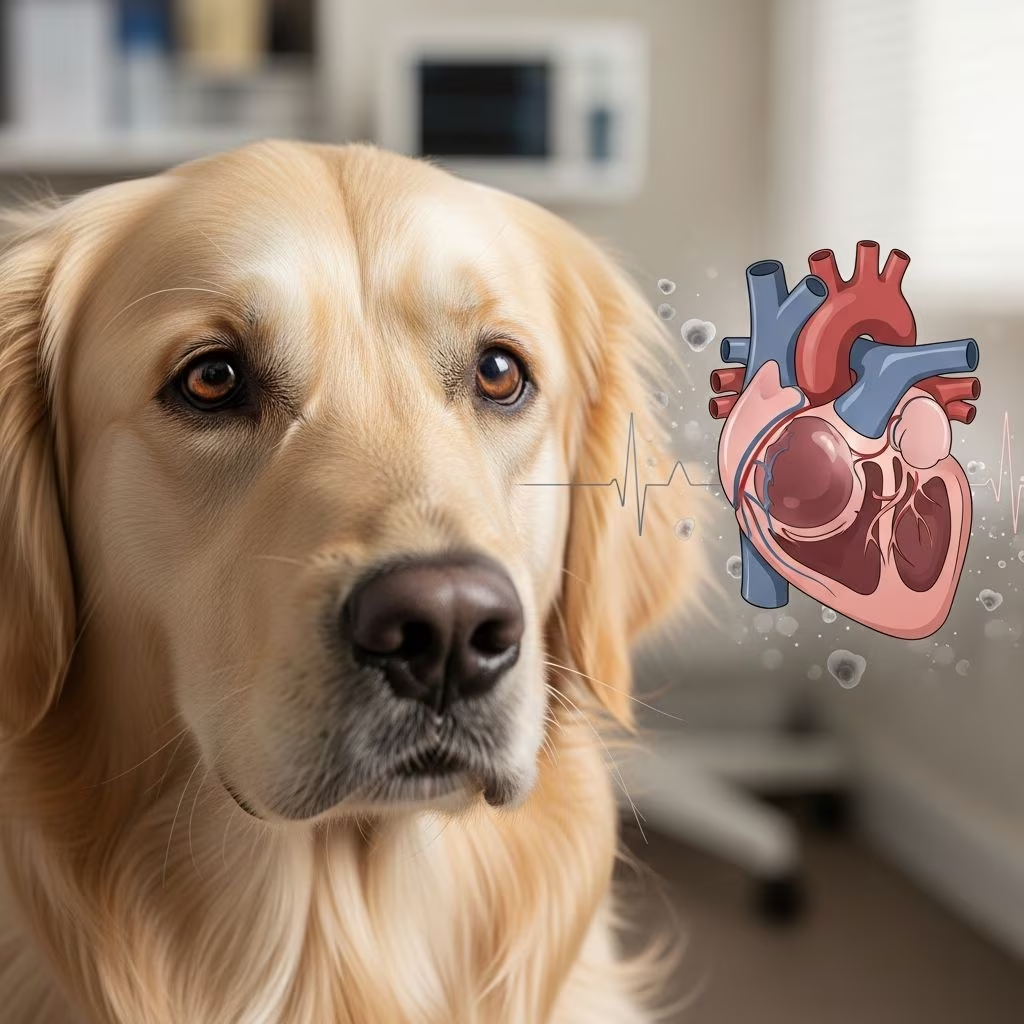
Dilated cardiomyopathy (DCM) represents a serious heart condition in dogs and cats where the heart muscle weakens and chambers enlarge, impairing blood pumping efficiency. This leads to progressive heart failure if untreated, but early detection and management can extend life quality.
Understanding the Heart’s Role and DCM Pathology
The heart’s primary job is to pump oxygenated blood throughout the body. In DCM, myocardial cells degenerate, reducing contractility and causing ventricular dilation. This stretching strains valves, often resulting in regurgitation, and activates compensatory mechanisms like the renin-angiotensin-aldosterone system (RAAS), which initially helps but later promotes fluid overload.
In dogs, DCM frequently targets the left ventricle, while cats may experience bilateral involvement, leading to rapid pulmonary edema. Unlike hypertrophic forms, DCM thins the myocardium, contrasting with thickening seen in other cardiomyopathies.
Primary Risk Factors Across Species
Genetic predisposition dominates in dogs, especially large breeds. Doberman Pinschers, Boxers, Great Danes, and Irish Wolfhounds face heightened risks due to inherited mutations affecting heart muscle. Smaller breeds or those on grain-free diets have shown taurine-responsive cases recently.
Cats once suffered widespread taurine deficiency-induced DCM, but fortified commercial foods have drastically reduced incidence since 1987. Idiopathic or non-taurine cases persist, particularly with home-cooked or vegetarian diets lacking supplements.
| Breed/Group | Species | Risk Level | Key Factor |
|---|---|---|---|
| Doberman Pinscher | Dog | High | Genetic |
| Boxer | Dog | High | Genetic/Taurine |
| Great Dane | Dog | High | Genetic |
| Domestic Shorthair (poor diet) | Cat | Moderate | Nutritional |
Other triggers include toxins like doxorubicin, viruses (e.g., parvovirus), and rarely hypothyroidism or parasites.
Recognizing Early Warning Signs
DCM often progresses silently before overt symptoms emerge. Dogs may show a protracted subclinical phase, with arrhythmias like ventricular tachycardia in Dobermans preceding failure.
- Respiratory distress: Rapid breathing, coughing, or dyspnea from pulmonary edema.
- Exercise intolerance: Lethargy, weakness, or collapse due to poor cardiac output.
- Fluid accumulation: Distended abdomen (ascites) or pleural effusion.
- Cardiac irregularities: Weak pulses, murmurs, gallop rhythms, or fainting from arrhythmias.
- Other indicators: Pale gums, hypothermia, weight loss.
Cats present more acutely with severe breathing issues, often warranting emergency care. Sudden death can occur from arrhythmias even without prior signs.
Diagnostic Approaches for Confirmation
Veterinarians start with auscultation, detecting systolic murmurs at the apex or gallops. Pulse quality and deficits signal arrhythmias.
Electrocardiography (ECG): Identifies ventricular premature complexes, tachycardia, or atrial fibrillation, especially predictive in at-risk breeds.
Echocardiography: Gold standard, revealing dilated left atrium/ventricle, reduced fractional shortening, and valve insufficiency.
Radiographs assess enlargement and congestion, while bloodwork rules out taurine deficiency (plasma levels).
Management Strategies and Therapies
Treatment focuses on symptom relief, contractility support, and arrhythmia control. No cure exists for primary DCM, but interventions slow progression.
- Diuretics: Furosemide reduces edema.
- ACE Inhibitors: Enalapril or benazepril counter RAAS overactivation.
- Inotropes: Pimobendan enhances contractility in dogs.
- Antiarrhythmics: Sotalol or mexiletine for ventricular issues.
- Nutritional: Taurine supplementation if deficient.
Cats require aggressive oxygen therapy and hospitalization for acute crises. Diet adjustments to commercial taurine-rich formulas prevent recurrence.
Prognostic Outlook and Monitoring
Dogs with mild DCM may live years with therapy, but advanced cases with arrhythmias fare poorly (months). Cats have guarded prognoses due to rapid decline.
Regular echoes track remodeling; Holter monitoring assesses arrhythmias. Owners should watch for worsening signs prompting re-evaluation.
Prevention Through Breed Awareness and Diet
Select breeders screening for genetic DCM in predisposed breeds. Avoid grain-free or boutique diets without veterinary approval, pending FDA investigations.
Cats thrive on AAFCO-approved foods; test homemade recipes for taurine. Routine senior wellness exams catch preclinical changes via radiographs or echoes.
FAQs on Dilated Cardiomyopathy
What breeds are most prone to DCM in dogs?
Large breeds like Dobermans, Boxers, Great Danes, and Irish Wolfhounds.
Is DCM curable in cats?
No, but taurine-responsive cases improve dramatically with supplementation.
Can diet cause DCM?
Yes, taurine deficiency historically in cats and recently grain-free diets in dogs.
How is DCM diagnosed?
Primarily via echocardiography showing dilation and poor contractility.
What is the emergency sign for DCM?
Respiratory distress, collapse, or blue gums—seek immediate vet care.
Recent Advances in DCM Research
Ongoing studies explore genetic markers for early screening in breeds like Dobermans. Dietary links, particularly legumes in grain-free foods, prompt reformulations. Pimobendan trials expand to cats, showing promise.
References
- Enlarged Heart in Cats — PetMD. 2023. https://www.petmd.com/cat/conditions/cardiovascular/enlarged-heart-cats
- Dilated Cardiomyopathy in Dogs and Cats — Merck Veterinary Manual, Mark D. Kittleson, DVM, PhD, DACVIM. 2023-10-17. https://www.merckvetmanual.com/circulatory-system/cardiomyopathy-in-dogs-and-cats/dilated-cardiomyopathy-in-dogs-and-cats
- Dilated Cardiomyopathy (DCM) — Texas A&M University Veterinary Hospital. 2018-01. https://vethospital.tamu.edu/hospital/wp-content/uploads/sites/15/2018/01/cardiology-DCMHalfBooklet.pdf
- Dilated Cardiomyopathy (DCM) in Dogs – In-depth — VCA Animal Hospitals. 2023. https://vcahospitals.com/know-your-pet/dilated-cardiomyopathy-dcm-in-dogs–indepth
- Common Causes & Symptoms of Cardiomyopathies in Dogs & Cats — Four Paws Pet Vet. 2023. https://www.fourpawspetvet.com/cardiomyopathies-in-dogs-cats.pml
- Dilated Cardiomyopathy — Cornell University College of Veterinary Medicine. 2024-02-01. https://www.vet.cornell.edu/departments-centers-and-institutes/riney-canine-health-center/canine-health-topics/dilated-cardiomyopathy
- Canine Dilated Cardiomyopathy: Essential Tips and Insights — Morris Animal Foundation. 2023. https://www.morrisanimalfoundation.org/article/dilated-cardiomyopathy-in-dogs



